Feed: All That's Interesting
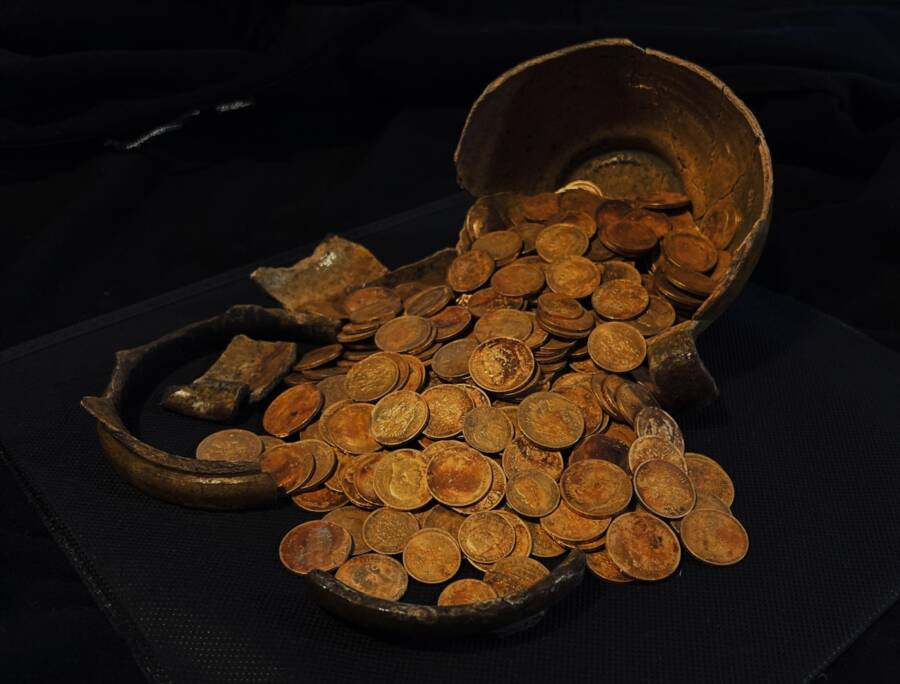
Russian Academy of Sciences Institute of ArchaeologyThe coin hoard was seemingly hidden by someone who was unable to later return to retrieve it.
While excavating the site of a future structure in Torzhok, Russia, archaeologists spotted a glimmer of gold in the dirt. Upon further examination, they unearthed an astounding hoard of hundreds of gold coins.
The coins, which date to the late 19th and early 20th centuries, were likely hidden away for safekeeping by someone who never had the chance to return and collect them later. Given the coins’ age, archaeologists suspect that the hoard was buried sometime around the Russian Revolution of 1917, but this discovery still remains largely shrouded in mystery.
The Enormous Hoard Of Gold Coins Discovered In Torzhok
According to a statement from the Institute of Archaeology of the Russian Academy of Sciences, the coin hoard was discovered in 2025, during excavations at the site of a new planned structure at 10 Sadovaya Street, in Torzhok. The area has been occupied since the 12th century C.E. and, while excavating the old foundations of bygone buildings, archaeologists discovered this hidden haul of gold coins.

Russian Academy of Sciences Institute of ArchaeologyThe coins were found in the dirt, having spilled out of a broken pot.
The coins had spilled out of a broken pot, a brownish-yellow clay vessel with a handle that was identified as a kandyushka. After collecting them, archaeologists determined that the hoard consisted of 409 coins of varying worth, adding up to 4,070 rubles. But given the value of the gold itself, estimates have placed the modern value of the coins at roughly $500,000.
They date to between 1848 to 1911, but the bulk of the coins were from the reign of Emperor Nicholas II (1894 to 1917), the last Russian monarch. He was ultimately murdered alongside his family during the Russian Revolution.
“The treasure was likely hidden during or after the revolutionary events of 1917,” the statement notes. “Apparently, its owner never returned for it.”
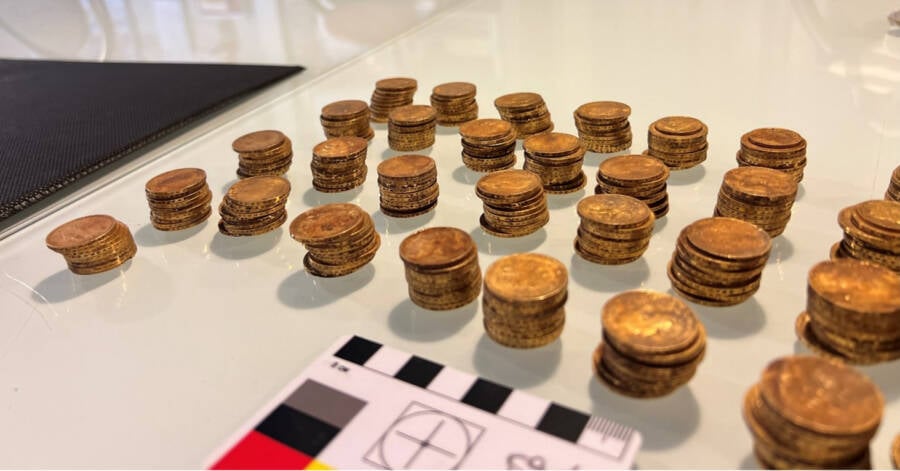
Russian Academy of Sciences Institute of ArchaeologyArchaeologists determined that there were 409 gold coins, most of which dated from the reign of Nicholas II, the last Russian monarch.
Indeed, the identity of the Torzhok coin hoard’s owner has proven elusive.
The Long History Of 10 Sadovaya Street In Torzhok
The history of 10 Sadovaya Street in Torzhok dates back more than 800 years. By the 13th century, residential buildings had been built at the site, and by the 16th and 17th centuries, limestone slabs were used to build basements.

Russian Academy of Sciences Institute of ArchaeologyExcavations at 10 Sadovaya Street in Torzhok, which has a history dating back to roughly the 12th century.
By the 20th century, there was a house at the site that was destroyed during World War II. After the war ended, a wooden house was rebuilt atop the old house’s foundation. And it was beneath this house that archaeologists found the hoard of gold coins, which they believe was hidden there decades earlier, sometime “during or after the revolutionary events of 1917.”
But though the history of the area is somewhat well documented, it’s proven challenging to determine who lived at this address in the early 20th century. Though archival documents record 24 households on this street in the late 19th and early 20th centuries, the house numbers before 1917 were different than they are today. What’s more, several different people occupied 10 Sadovaya Street during the time when the coins were likely buried.
According to the statement, the “known owners” of the house between 1914 and 1921 include “priests of the Church of St. Demetrius, two merchants, a treasurer, an accountant, a shoemaker, a mechanic, a secretary, a tailor, a member of the judicial commission, an overseer, and a laborer.”

Russian Academy of Sciences Institute of ArchaeologyA closer look at the coin hoard that was uncovered at 10 Sadovaya Street.
“It remains to be seen,” the statement notes, “which of them owned the treasure.”
Indeed, the owner of the treasure — and the exact reason why they hid the coins in a pot, and did not or could not return for them — may remain unknown. But given that most of the coins date to the tumultuous years before the Russian Revolution, it’s easy to hazard a guess.
In the face of violent and unpredictable times, someone tucked the hoard of coins away and hoped that they would be able to recover them. But instead, for reasons unknown, the hoard went unclaimed and eventually forgotten beneath an assuming house for more than a century — until now.
After reading about the hoard of gold coins that was just uncovered in Russia, look through these rare photos of the Soviet Union in the 1960s and 1970s. Then, learn more about the collapse of the Soviet Union with this collection of stunning photos.
The post A Hidden Cache Of Century-Old Gold Coins Worth About $500,000 Was Just Found During House Construction In Russia appeared first on All That's Interesting.

Mexico’s National Institute of Anthropology and History (NIAH)The foundation of the sweat lodge is 16.4 feet long and 9.7 feet wide. Goddesses were once worshipped within its walls.
A pre-Hispanic Mesoamerican sauna dating to the 14th century has been uncovered by archaeologists in Mexico City’s historic La Merced neighborhood. The BBC reports that several primary components of the sweat lodge are still remarkably intact.
These indigenous saunas, known as temazcals, were built by the Mesoamericans for medicinal, spiritual, and fertility purposes and rituals. Mexico’s National Institute of Anthropology and History (NIAH) said the find clarified a slew of historical questions.
Unearthing the pre-Hispanic site helped experts locate Temazcaltitlán — one of the very first settled areas of the ancient city of Tenochtitlán. The site was primarily used for purification ceremonies for the ill, for warriors after a battle, and for ensuring successful childbirth.

Mexico’s National Institute of Anthropology and History (NIAH)Alongside practical purification purposes, these saunas served as a place to recover after battle, prepare for childbirth, and worship goddesses of lust, vice, land, and water.
A foundation house and a colonial tannery were found at the site as well. Researchers believe Mexica nobles — the Mexica were the indigenous people of the Valley of Mexico who comprised the Aztec Empire between 1428 and 1521 — lived in the former between 1521 and 1620, while the tannery is currently dated to between 1720 and 1820.
For excavation lead Víctor Esperón Calleja, these discoveries have shed enormous light on the region’s history and culture.
“Tenochtitlán was divided into four parts and we are in the part called Teopan in a neighborhood called Temazcaltitlán where the sweat lodges were,” he said. “The [house and tannery] findings suggest that in the 16th century this area was more populated than we initially thought.”

Mexico’s National Institute of Anthropology and History (NIAH)The foundations of a house and a tannery were discovered at the site, as well. Experts believe a noble family lived in the home after Hernán Cortés conquered the city of Tenochtitlán from Moctezuma II in 1521.
The house, built after the Spanish conquistador Hernán Cortés took the Aztec city of Tenochtitlán and defeated Moctezuma II in 1521, was decorated with red motifs on the interior walls. Researchers believe its owners were a noble and respected family. Tenochtitlán was, after all, a major metropolis home to a wide strata of social and economic classes in Aztec society.
“The site is part of a protected area and that is why Archaeological Rescue Office of the INAH has intervened,” said Calleja in reference to the INAH taking the lead on this discovery.

Mexico’s National Institute of Anthropology and History (NIAH)Many of the sauna’s main components, such as the pits themselves, have remained intact for centuries.
In terms of the temazcal’s size, INAH confirmed the foundation is 16.4 feet long and 9.7 feet wide. A bathtub and a bench were built into its walls, the discovery of which lends credence to another known historical record.
An Aztec record says that a Mexica noblewoman named Quetzalmoyahuatzin regularly bathed in a temazcal before giving birth. Now that a sweat lodge like the one described in this record has actually been discovered, that written document is largely verified as fact.
Researchers believe the whole neighborhood was one centered on worship, and not just of Tlazolteotl — the Aztec deity dedicated to purification, steam baths, lust, and vice.

Mexico’s National Institute of Anthropology and History (NIAH)Lead excavator on the project Víctor Esperón Calleja explained that the Archaeological Rescue Office of the INAH took over because the site is located in a historically protected area.
Other deities such as Ixcuina, the goddess of labor, Ayopechtli, the goddess of birth itself, and goddesses who represented land or water — such as Coatlicue, Toci, Chalchiuhtlicue, and Mayahuel — were honored there, too.
As it stands, there may be further revelations stemming from this discovery that will contextualize this history even more.
After learning about the pre-Hispanic Mesoamerican sweat lodge unearthed in Mexico City’s La Merced neighborhood, read about this ancient matrilineal society discovered in New Mexico. Next, learn about the Aztec temple with 32 children’s severed necks found in Mexico.
The post Pre-Hispanic Mesoamerican Sweat Lodge From The 14th Century Unearthed In Mexico City appeared first on All That's Interesting.
It is no secret that the lives of Hollywood performers are often fraught with difficulties. But when the performers in question are children, the results of living in the spotlight are often even more tragic. Indeed, the intense scrutiny that comes with maturing in Hollywood has spelled the downfall of some of the industry’s most beloved child actors.
There are more fortunate cases, which sadly seem few and far between, where some young performers were able to transcend the bizarre and concerning circumstances of their upbringing to lead productive and even grounded lives.
From the trials and tribulations of a 16-year-old Judy Garland on the notoriously difficult set of the beloved The Wizard of Oz to the shocking details behind Drew Barrymore’s underage foray into the very adult inner sanctum of Hollywood, the passage of time into a more enlightened and modern world has not guaranteed that life for a child star will be any easier.
While more rigid regulations and guidelines are now in place to prevent outward abuse and overworking, the ethical concerns regarding the privacy and overall well-being of child actors remain.
Perhaps by remembering the stories of young stars from yesteryear in the context of better understanding mental health and substance abuse, we can undo this stigma of young has-beens.
Remembering Shirley Temple’s Infant Burlesque

Getty ImagesChild actor Shirley Temple was renowned for her innocent charm, but her beginnings were not so.
The Curly Top child star of the Great Depression had a questionable Hollywood origin story — not that she could be held accountable for this at just three years old.
Shirley Temple was perhaps the nation’s first true child star, known as she was far and wide at the dawn of the film industry. Famous for her plucky attitude, adorable dancing, and maybe most famously, her mop of curly red hair, Temple quickly became a beacon of innocence and joy in the midst of the Great Depression of the 1930s.
Yet while she is closely associated with happy-go-lucky films such as Curly Top and The Littlest Rebel, the beginning of her storied career is undoubtedly marred by some rather seedy practices. Indeed, before she was a bonafide Hollywood phenomenon, Shirley Temple appeared in a set of films known as Baby Burlesks.
These pre-code era films featured a cast comprised entirely of toddlers playing parodies of much more mature films that touched on current events, films of the day, actors, actresses, and politics. While the concept itself may seem innocuous, the children of the Baby Burlesks were required to perform in skimpy clothing and mimic adult scenarios.
In one such film, entitled War Babies, Shirley Temple is seen wearing a loose-fitting top that seems almost purposely designed to slip and fall down her arms in a suggestive way. But perhaps the most concerning aspect of the film lies in the fact that Temple is required to channel the mannerisms and demeanor of a prostitute.
From performing a caricature of a seductive dance to being referred to as “baby” by a band of sailors also played by barely-dressed young boys, to even calling herself “expensive,” Shirley Temple’s role in War Babies is just one example of the ways in which Baby Burlesk took advantage of the innocence of child actors too young to understand or consent to the highly sexualized roles they had to play.
Temple would later go on to say that the films were “a cynical exploitation of our childish innocence” and that they “occasionally were racist or sexist.” As Shirley Temple’s career progressed, so too did some of the harsh rumors that spread about her.
At the height of her fame, rumors swirled that she was not a child at all but rather a 30-year-old dwarf. The story became so pervasive that the Vatican even dispatched a priest to confirm whether or not Temple was actually an adult.
Additional rumors spread that her hair was a wig which brought fans to make routine attempts to pull on her curls in the hopes of revealing a bald head.
Not only was Shirley Temple subjected to hard work and cruel rumors, but she was also deprived of a normal social life. In 2016, one of Temple’s oldest friends, Marilyn Granas who had served as her stand-in on many film sets, opened up about what life for Temple had been like:
“I did feel sorry for Shirley because her childhood was so unnatural. She didn’t get to go to public school. She didn’t have a lot of friends or get to do kid things, like ride bikes. On the set, it was exclusively the two of us. We never played with other kids.”
In the end, Shirley Temple’s childhood was, from start to finish, defined by her exposure in the public eye.
Whether she was performing in salacious films that put toddlers in overtly sexualized scenarios or being harassed over assumptions about her physical appearance, Shirley Temple’s treatment as a child actor set an unfortunate precedent for the ways in which future young stars would be viewed.
The post The Tragic True Stories Behind Some Of Hollywood’s Biggest Child Stars appeared first on All That's Interesting.
Could there really be a “Kennedy curse” picking off members of America’s most prominent political dynasty one by one?
Throughout the golden years of the Pax Americana, the Kennedy family became synonymous with beauty, glamour, and political success. Cavorting with Hollywood A-listers, charming foreign dignitaries, and facing down the Soviet Union seemed to be all in a day’s work for the family from “Camelot.”
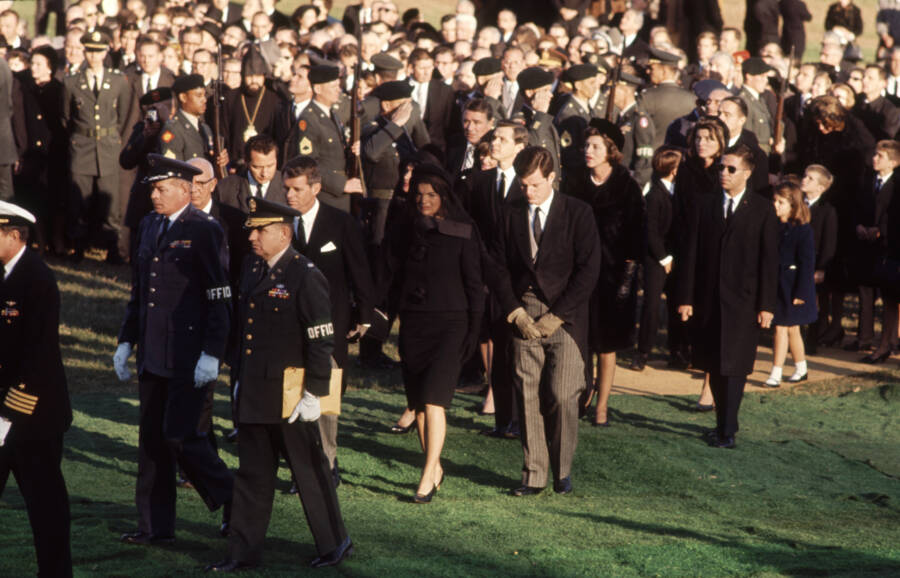
Stan Wayman/The LIFE Picture Collection via Getty ImagesAt President John F. Kennedy’s funeral in November 1963, hundreds of thousands of mourners joined his family in grieving.
But behind the glitz of this American lineage, you’ll find some of the most devastating events ever to befall a family. From assassinations and mental illnesses to bizarre accidents, these are the tragic stories of the Kennedy curse.
The Kennedy Curse Begins With Joseph P. Kennedy, Jr.
The Kennedy curse supposedly began with Joseph Patrick Kennedy, Jr., the handsome eldest son of Joseph P. Kennedy and the grandson of John Francis “Honey Fitz” Fitzgerald.
Born in 1915 just after his grandfather’s second term as Mayor of Boston ended, Joseph Jr. was groomed for high office from the beginning. His grandfather even announced to the local papers, “This child is the future president of the nation.”
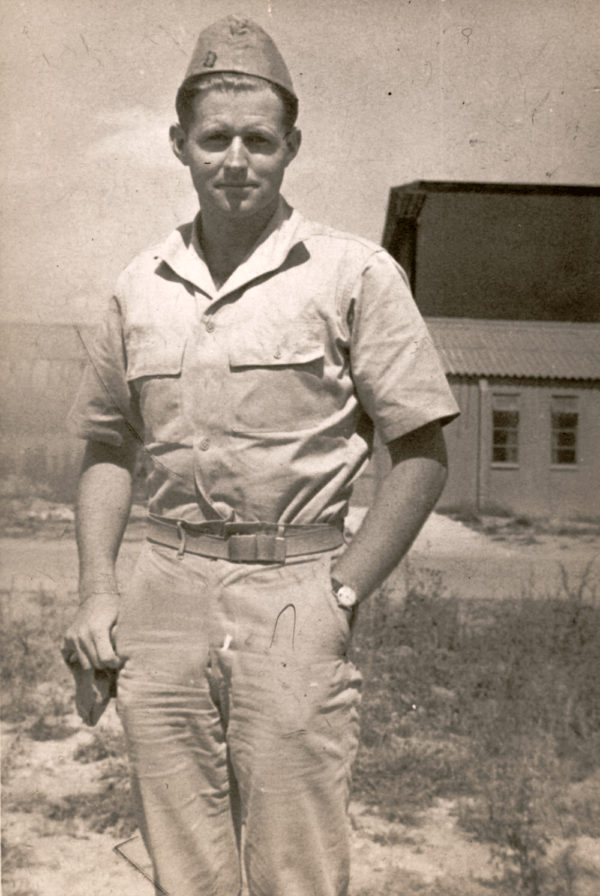
Wikimedia CommonsThe last known photograph of Joseph P. Kennedy, Jr., taken just before his fatal flight.
Stinging from the scorn poured down on ambitious Irish Catholics by New England’s old moneyed class, his family did everything they could to ensure they would someday see young Joseph in the Oval Office.
To that end, Joseph Kennedy, Sr. was so dedicated to the image of his family’s respectability that he’d even had Joseph Jr.’s younger sister, Rosemary, secretly lobotomized rather than allow her violent mood swings to ruin his son’s chances of success.
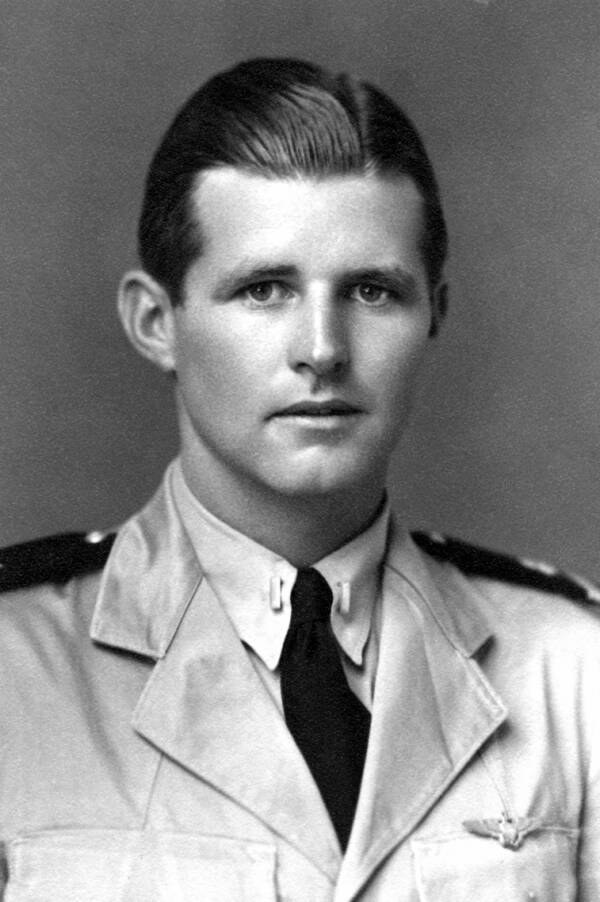
Wikimedia CommonsEnsign Joseph P. Kennedy Jr. in 1942. His father had groomed Joseph for political office from a young age.
Joseph was given a first-rate education, starting at Connecticut’s Choate boarding school and ending at Harvard, where he was involved in over a dozen extracurricular activities — including five sports — and student government.
But before he could finish his studies, Joseph took a commission in 1941 as a pilot in the U.S. Naval Reserve. For two years, he flew patrols over the Caribbean Sea before transferring in 1943 to Bombing Squadron 110, a U.S. unit hunting U-boats under British command.
In England, he was the only Kennedy able (and willing, given their mother Rose’s objection to marrying into the Church of England) to attend the May 1944 wedding of his sister Kathleen “Kick” Kennedy to aristocrat William Cavendish. It seemed that the Kennedys had finally arrived at the social respectability so longed for by their father.
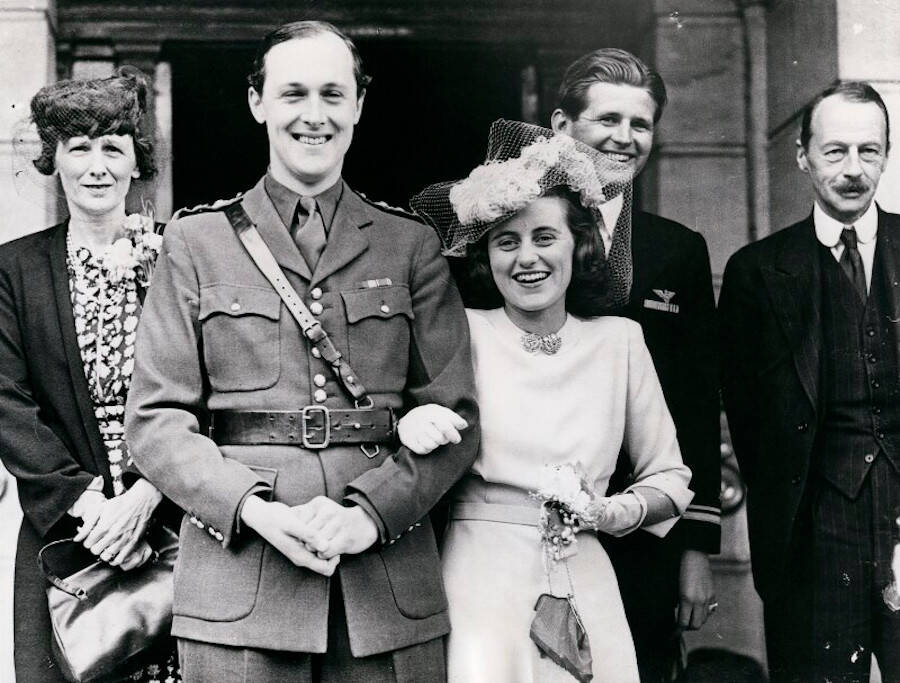
Wikimedia CommonsKathleen “Kick” Kennedy on her wedding day, with brother Joseph behind her.
A seasoned combat pilot after 25 missions, Joseph Jr. was eligible to go home in 1944. But in August of that year, he volunteered to fly a bomb-packed, radio-controlled B-24 bomber over U-boat pens in the North Sea.
He and his co-pilot were to guide their plane to the correct altitude before parachuting out. Instead, the explosives detonated prematurely over the east coast of England, killing the Kennedy heir at age 29.
Joseph Jr. wasn’t the only one of his siblings to be struck by the Kennedy family curse in 1940s Britain. Kathleen’s husband William Cavendish was killed by a German sniper in Belgium just weeks after his brother-in-law, and Kathleen herself was killed in a plane crash in 1948 as she flew to Paris to beg Cavendish’s father for his blessing for a second marriage.
The post How The Kennedy Curse Has Tormented America’s First Family For 80 Years appeared first on All That's Interesting.
In December 1972, the infamous Rothschild Surrealist Ball turned reality on its head. Baroness Marie-Hélène de Rothschild organized a masked dinner party for an intriguing mix of politicians, bankers, artists, and celebrities at the Château de Ferrières, an opulent residence located just outside of Paris.
Were it not for the wealthy Rothschild family's fascinating history, this ball — which featured servants dressed as cats and a dessert shaped like a nude woman — may have remained just another ephemeral social gathering.
But because the Rothschilds pioneered international finance, funded historical war efforts, and still dominate several international industries to this day, conspiracy theories continue to abound about the true nature of the event.
So, what really happened on the night of the Rothschild Surrealist Ball? Were these merely "high society" people mingling and having a bit of fun? Or was the party a nefarious get-together filled with esoteric symbolism, quasi-satanic rituals, and the figurative ushering in of a New World Order?
A Brief History Of The Rothschild Family
The Rothschilds' dynastic wealth and power began with Mayer Amschel Rothschild, who was born in Frankfurt in 1744. His father, who died of smallpox before Mayer Amschel was a teenager, was a money changer and cloth trader whose clientele included German royals.
Mayer Amschel studied finance under Jacob Wolf Oppenheimer in Hanover, and by the time he returned to Frankfurt, he was an expert money trader and seller of rare coins. He started doing business with Crown Prince Wilhelm of Hesse and eventually managed the monarch's money.
As a banker for one of the richest men in Europe, Rothschild suddenly became financially secure and started a family. And with increasing connections to European nobles, Rothschild saw the French Revolution as an investment opportunity.
He facilitated monetary transactions for Hessian mercenaries, loaned finances to numerous governments to fund their war operations, accumulated bonds, and expanded his German banking empire.
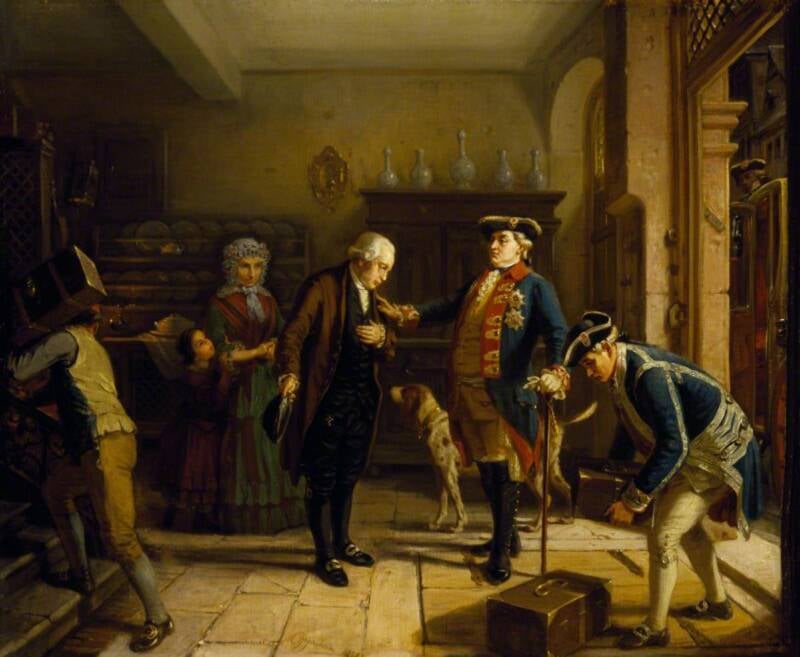
Public DomainA 19th-century painting of the Elector of Hesse entrusting Mayer Amschel Rothschild with his money.
Rothschild sent four of his sons to some of the largest capitals in Europe — Naples, Vienna, Paris, and London — while his eldest son took over the branch in Frankfurt. The other Rothschild brothers each started banks in their respective cities. These institutions funded wars, charities, and infrastructure projects for the next several generations. Indeed, N. M. Rothschild & Sons in London nearly single-handedly financed the British Napoleonic war effort.
Before Mayer Amschel died in 1812, he banned his female descendants from receiving an inheritance, which essentially forced them to intermarry with their Rothschild cousins in order to remain in the same social strata.
The family's success has long driven envious onlookers to concoct conspiracy theories about dark secrets hiding behind their wealth. The Rothschilds are most often accused of using their riches to steer the course of the global economy.
Much of this bad-faith speculating on their dealings has roots in antisemitism. However, some criticisms of the Rothschilds are valid. Though the family makes money from various investments in finance, real estate, mining, and energy industries around the world today, they were (and, according to some conspiracy theories, still are) war profiteers.
Due to their own coat of arms, vast wealth, and global influence, it's easy to see why a masquerade ball held by the Rothschilds in the isolated French countryside would raise some questions.
With decorative baby dolls, masks resembling all-seeing eyes, and only a few photos surviving from the infamous Rothschild Surrealist Ball, that night in December 1972 still raises eyebrows today. And the aristocrats behind the infamous party were no strangers to controversy.
The Rothschild Surrealist Ball Of 1972
Baron Guy Édouard Alphonse Paul de Rothschild's 1957 marriage to Baroness Marie-Hélène de Rothschild made headlines. Guy and Marie-Hélène were third cousins once removed, and the marriage marked the first time that a high-ranking Rothschild married a non-Jewish spouse (Marie-Hélène was Catholic).
The couple was as liberal in their social life as in their politics. This was evidenced by their 1972 ball, held at the lavish Château de Ferrières, which was built for Baron James de Rothschild in the 1850s. With 80 guest suites, sprawling grounds, and an 8,000-volume library, the château was nothing if not impressive.

Zairon/Wikimedia CommonsThe Château de Ferrières was the site of many lavish parties over the years, with one ball in the 1860s attended by Emperor Napoleon III, the nephew of Napoleon Bonaparte.
In 1959, shortly after marrying Guy, Marie-Hélène refurbished the château. Thereafter, it became a hedonistic hub for high society. From artists, designers, and Hollywood royalty to actual European royalty, figures like Yves Saint Laurent, Brigitte Bardot, and Grace Kelly frequently hobnobbed with the world's elite there.
But on Dec. 12, 1972, the Rothschild Surrealist Ball blew all of Marie-Hélène's previous events out of the water.
The invitations — which informed guests to come donned in "black tie, long dresses, and surrealist heads" — were written backward so they had to be read in a mirror. As everyone arrived, floodlights made the château appear as if it were on fire. Meanwhile, the servants who greeted each new arrival were dressed as cats lounging along the main staircase.
Guests were ushered into a maze of cobwebs, with the helpful "cats" leading lost partygoers to their tables. The dinner plates were covered in fur, and the centerpieces featured plastic baby dolls and taxidermied tortoises. Menu items included "lady and sir-loin," green dinner rolls, and goat cheese roasted in "post-coital sadness."
Dessert was a nude woman made entirely of sugar reclining on a bed of roses. Of course, the costumes worn by attendees were just as bizarre. While surrealist painter Salvador Dalí had designed some of the outfits, he didn't wear one himself. As The New York Times reported at the time, Dalí stated, "I don't need a mask. My face is my mask." Marie-Hélène, for her part, wore the head of a giant stag that was crying tears made of real diamonds.
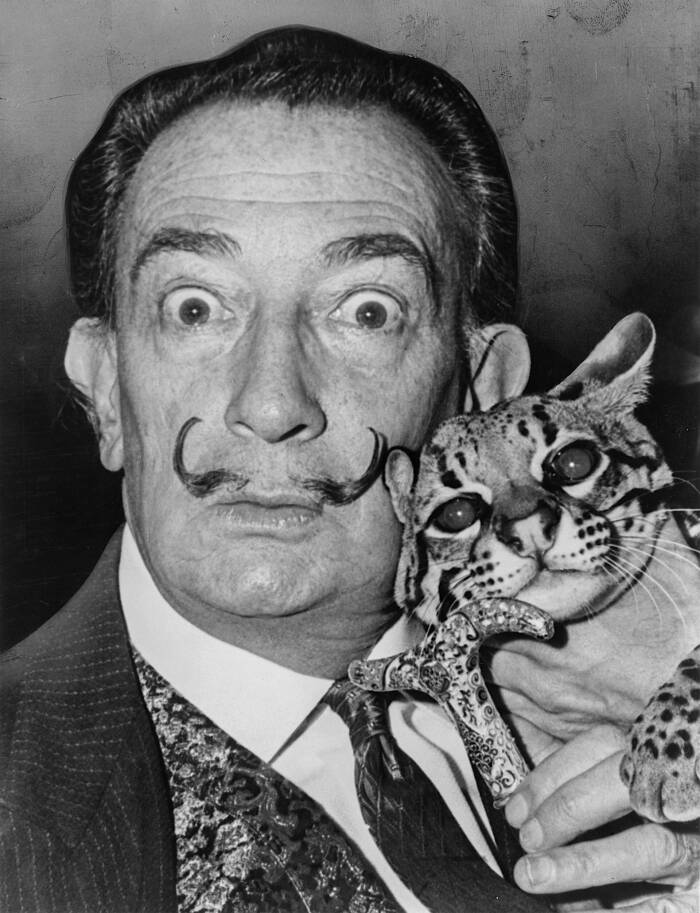
Library of CongressSalvador Dalí, pictured here with his pet ocelot, designed many of the decorative elements for the Rothschild Surrealist Ball.
Actress Audrey Hepburn wore a birdcage on her head. Perfumer Hélène Rochas wore a gramophone. Another guest had her face covered by an apple, in allusion to René Magritte's painting The Son of Man, while someone else had a mask covered in multiple Mona Lisas.
Ultimately, whatever happened within the château's walls that night remains a mystery. The Rothschild Surrealist Ball may well have merely been an eccentric evening for members of high society to let loose. There are, however, several conspiracy theories that suggest the event was more than it appears.
Conspiracy Theories Surrounding The Rothschild Surrealist Ball
While there is little evidence to support any of the more bizarre claims surrounding the Rothschild Surrealist Ball, conspiracy theorists claim it was riddled with satanic messages. They point to several alleged occult symbols scattered throughout the event — starting with the invitations.
According to ancient beliefs about Devil worship, "inversion" — the transposition of letters or sacred Christian symbols — indicates the presence of demonic rituals. The Rothschilds' "inverted" invitation is often pointed to as definitive proof of the evil nature of the ball, but there's no evidence to suggest that any sort of ritual took place.

Warner Bros. EntertainmentSome believe that the Rothschild Surrealist Ball inspired the imagery for Stanley Kubrick's 1999 film Eyes Wide Shut. Several scenes were even shot at Mentmore Towers, a former Rothschild estate.
Other theorists claim that the party was full of Freemason and Illuminati imagery, such as the château's black-and-white checkered floors. And the maze that greeted guests upon their arrival purportedly symbolized life's quest for wholeness and a return to our divine source.
Some people have even pointed to the disturbing dolls that decorated the tables as a nod to human sacrifice, but again, there is no evidence to back these claims.
There's no shortage of conspiracies that suggest the ball was the Rothschilds' way of sending a "secret message" indicating that they intended to "rule the world." And while it's more likely that the motive of this Rothschild Surrealist Ball was simply to be as eccentric as possible, some theorists view the theme itself as a clever alibi.
In the end, it seems as though you had to be there to know the whole truth.
After learning about the Rothschild Surrealist Ball of 1972, read about the glamorous and gruesome history of the masquerade ball. Then, look through these vintage photos of celebrity New Year's Eve parties.
The post 25 Outrageous Photos Of The Surrealist Ball Hosted By The Rothschilds In 1972 appeared first on All That's Interesting.
On September 20, 1961, Betty and Barney Hill were driving through the White Mountains of New Hampshire when they said a bright light came out of the sky. Two hours later, they were back in their driveway, with no memory of what had happened or where they had been.
According to their subsequent reports, the couple had traveled to Zeta Reticuli — a star system 39 light years from Earth. Betty was even inexplicably able to draw an accurate, detailed map of the sky as seen from that star.
This was the first noteworthy alien abduction story in modern history. Their tale captivated a nation that had scarcely heard anything like it before. And in the years that followed, countless other tales of alien and UFO abductions emerged, each containing new details of grotesque otherworldly creatures.
In 1971, there was the Pascagoula incident which allegedly saw two fishermen taken from a riverbank in Mississippi and held captive aboard an alien ship. Then, in 1978, there was the Travis Walton abduction, during which a Texas man vanished for five whole days.
While there has yet to be any proof that these first-hand accounts are real, the nine alien stories below are certainly detailed enough to cause chills.
Barney And Betty Hill’s Alien Abduction Story Started It All
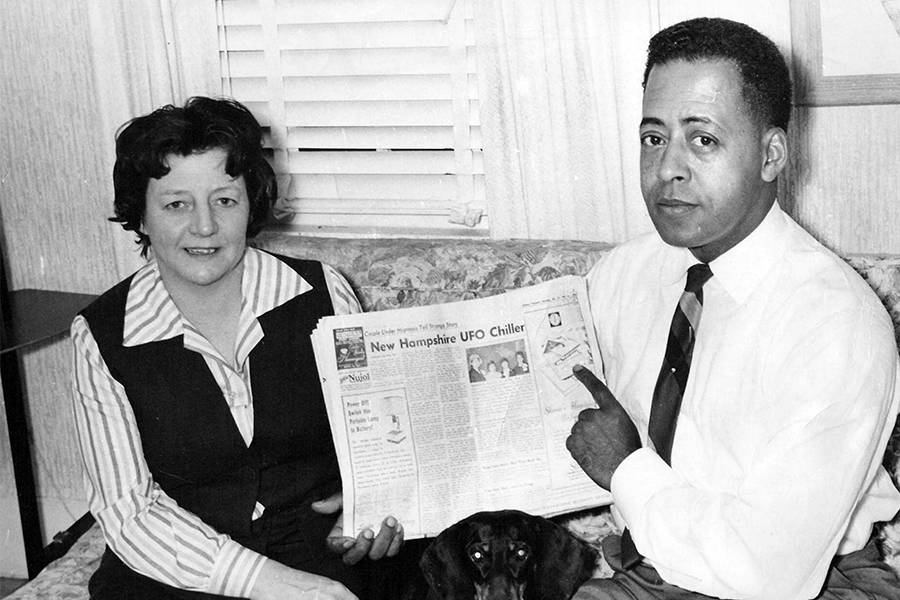
Universal History Archive/UIG via Getty ImagesBarney and Betty Hill were an American couple who claimed to have been abducted by aliens.
Barney and Betty Hill took a spontaneous trip to the White Mountains of New Hampshire in September 1961. As he recounted in John G. Fuller’s The Interrupted Journey from 1966, Barney needed a break from his night shift at the post office, while Betty was mentally exhausted from handling state child-welfare cases.
On the last night of their makeshift honeymoon, the two found themselves in a Vermont diner ready to make the last dash home to Portsmouth, New Hampshire. By leaving at 10 p.m., they planned on arriving home by around 2 a.m.
On the road, Betty noticed a “particularly bright star, perhaps a planet” in the sky. When this celestial object began changing its course in an erratic manner, Betty was convinced it was a UFO. Her husband was not.
“Barney,” she said. “If you think that’s a satellite or a star, you’re being completely ridiculous.”
As the object drew closer, Barney pulled the car to a stop and, gun in hand, got out to investigate. As he approached the object, Barney saw what he would later describe as a “pancake-like disc, glowing with brilliant white light” that was about the size of a jet.
Fleeing back to his car, he and Betty tried to evade the vessel, but were instead overcome with an intense drowsiness and immediately fell unconscious. The couple pulled into their driveway around dawn unable to recall what had happened — two hours of memory seemed to have been wiped from both their minds.
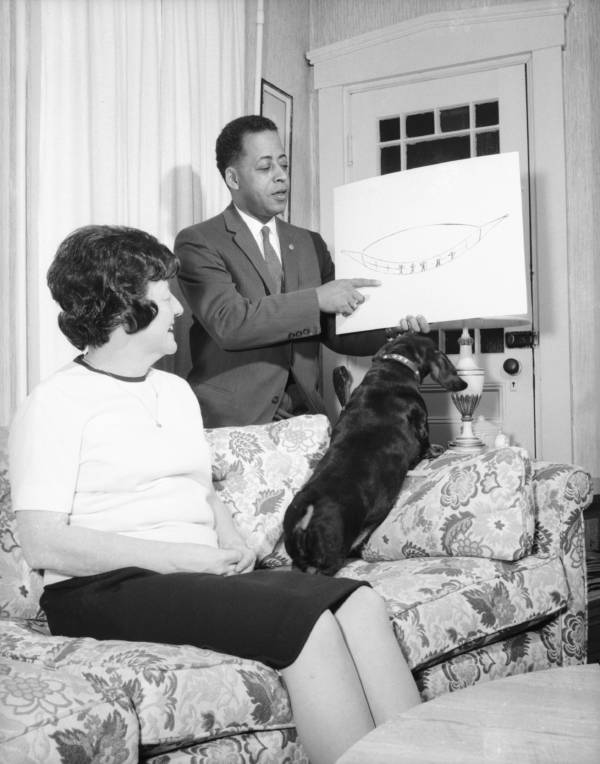
Bettmann/Getty ImagesBarney and Betty Hill describe their UFO abduction story using a diagram Barney drew.
While Betty was convinced they had encountered a UFO and later reported the sighting to the Air Force, her husband was skeptical. It was only when the couple met with psychiatrist Dr. Benjamin Simon for a consultation in December 1963 that Barney changed his mind.
Dr. Simon found both to be suffering from “crippling anxiety.” Betty, in particular, manifested hers “in the form of repetitive, nightmarish dreams.” Dr. Simon then put them under hypnosis — which reportedly yielded highly ominous memories.
Barney Hill recalled “creatures” with slanted eyes taking the couple aboard their UFO to conduct experiments on their naked bodies. Barney claimed that the beings took samples of hair, skin, and nail clippings and then a six-inch-long needle was inserted into Betty’s stomach.
Betty told Dr. Simon that she later asked a being they knew to be “the leader” where they were. It jokingly replied, “If you don’t know where you are, there wouldn’t be any point in telling you where I am.”
During another hypnosis session in 1964, Betty purportedly drew a star map of the sky from memory — as seen from a planet orbiting the star Zeta Reticuli.
Most shocking above all was that this map was drawn with confounding accuracy — and that Zeta Reticuli lies some 40 light years from Earth. Betty’s nearly spot-on recreation of the stars surrounding an actual star system remains one of the most intriguing aspects of all alien stories ever reported.
Ultimately, Barney and Betty Hill’s account led the Air Force to launch Project Blue Book — a shadowy initiative that aimed to investigate domestic UFO sightings — and also presented a template for all the UFO abduction stories that followed in the decades to come.
Famous Alien Stories: The 1969 Berkshires UFO Incident

Bryan Pocius/FlickrAbout 40 people in the Berkshires witnessed a UFO in 1969.
When numerous residents of Berkshire County, Massachusetts individually reported having seen a UFO on Sept. 1, 1969, authorities were at a loss for an explanation. This wasn’t a lone sighting induced by sleep deprivation that could be easily dismissed — it truly appeared as though something uncanny had occurred.
On the evening in question, residents spotted lights above Sheffield in the southern Berkshires. Many of the witnesses said that the lights were fitted to an unidentified, disk-shaped craft that was maneuvering in unprecedented ways. Some witnesses claimed they lost track of time as they gazed with stunned fascination at the object.
Thomas Reed was nine years old at the time. In the car with his mother, brother, and grandmother that night, the family noticed a group of glowing orbs dash out of the roadside trees. Reed claims that something astounding happened when, heading home, his family approached Sheffield Bridge.
“It came to a stop off the right side of the road,” he recalled of the glowing orbs. “Everything got really calm. It was like being in the middle of a hurricane. There was like a barometric change in pressure. It was just like a dead silence. Then there was an eruption of crickets and frogs and it got really loud and that was it.”
Then, the family suddenly found itself back in the car. But they had inexplicably lost two hours of memory. Stranger still, Reed’s mother and grandmother had somehow switched car seats.

bbcamericangirl/FlickrA monument was erected near the covered bridge in Sheffield, where residents said they saw the UFO.
Despite any tangible evidence of the Berkshires UFO incident, Reed has remained steadfast in his account. He said over time the family regained some memory of the incident, including having been inside a hangar-like facility with other people.
“We encountered something,” said Reed. “It was definitely not of this world… This hangar thing we were in was huge. It was larger than a football field. This hallway we had seen was circular with a Y-configuration almost to control the flow of traffic. This one room had a bowed-in wall that was rounded.”
It’s important to remember that Reed was only one of dozens of people who reported witnessing a UFO in the Sheffield area that night. Some were adults who called into the local radio station to report the sighting, others were children who began drawing UFOs in class.
“There must have been 20 or 30 sketches that were drawn by children in our 4th grade class from what they saw,” said Reed. “They hung underneath in the class board in Sheffield Center School. More than one of those hang in the Roswell museum today. People don’t realize the significance of this. And so it wasn’t just us.”
The post The 9 Most Convincing Alien Abductions In Modern History appeared first on All That's Interesting.
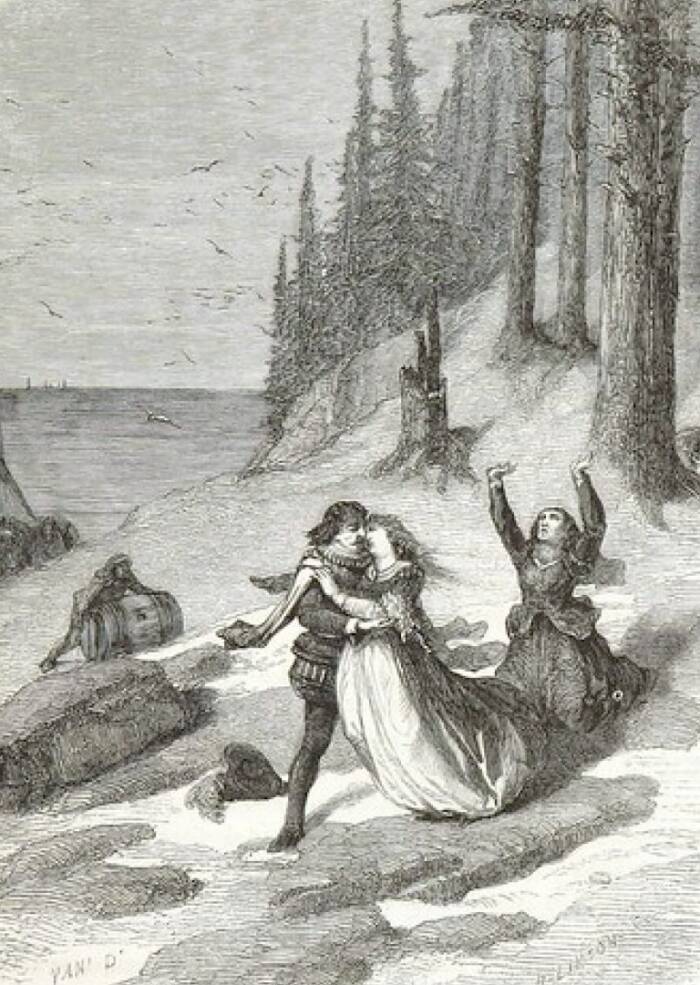
The British LibraryMarguerite de la Roque was abandoned with her lover and her servant on an uninhabited island near Newfoundland.
In 1542, Marguerite de la Rocque left behind the luxurious life she knew in France to travel to the New World. But her voyage didn’t go as planned. During the journey across the Atlantic, Marguerite was abandoned on the desolate Isle of Demons near Newfoundland.
Marguerite had been left to die because she’d taken a lover during the voyage. The scandalous romance shocked the ship’s captain, who was also Marguerite’s relative, Jean-François de La Rocque de Roberval. Jean-François abandoned Marguerite, her lover, and a servant on the island.
This is the incredible true story of Marguerite de la Rocque.
A Doomed Journey To The New World
Born around 1515, Marguerite de la Rocque was a wealthy nobleman who owned land in France alongside her relative, Jean-François de La Rocque de Roberval. While Marguerite’s reasons for sailing to the New World are unclear, the Dictionary of Canadian Biography reports that Jean-Francois hoped that the expedition could help him regain his lost fortune.
With the blessing of King François I, who appointed Jean-Francois the “lieutenant-general in the country of Canada,” and tasked him with “spreading the holy Catholic faith,” Jean-Francois set out in 1542. He set sail with three ships, the Valentine, the Anne, and the Lèchefraye. Joining him on the expedition was Marguerite, then a young and unmarried woman.
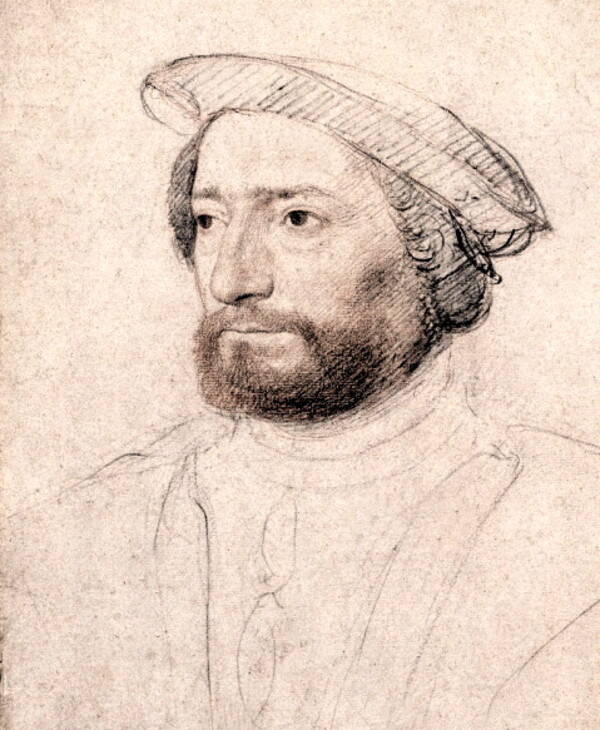
Public DomainJean-François Roberval, the nobleman who abandoned his relative Marguerite de la Rocque on an island.
At some point in the nearly two-month journey, Marguerite began a romantic relationship with one of the men in onboard. The affair would change the course of her life — and his.
Somehow, Jean-Francois found out about Marguerite’s love affair. Furious with Marguerite — and perhaps hoping to take sole ownership of the land they shared — Jean-Francois decided to punish his relative by abandoning her on an island. He left Marguerite, her lover, and a servant named Damienne on the Isle of Demons (an island which does not exist, and may have actually been Quirpon Island or Harrington Harbour).
Alongside her lover and a servant, Marguerite de la Rocque also had a gun, some knives, and a Bible.
Marguerite de la Rocque On The Isle of Demons
What was life like on the Isle of Demons? According to Marguerite, Queen of Navarre, who wrote a version of the story in her short story collection Heptaméron, the “little island in the sea” was “inhabited only by wild beasts.”
“The poor creatures, left alone with fierce beasts, had recourse only to God,” the queen claimed.
In Heptaméron, the queen wrote that Marguerite and her companions were able to build a “small dwelling.” They fended off wild animals with guns and rocks, and were able to subsist for a while by hunting and eating plants. But Marguerite’s lover “drank such unwholesome water that he became greatly swollen,” according to the queen’s account, “and died in a short while.”
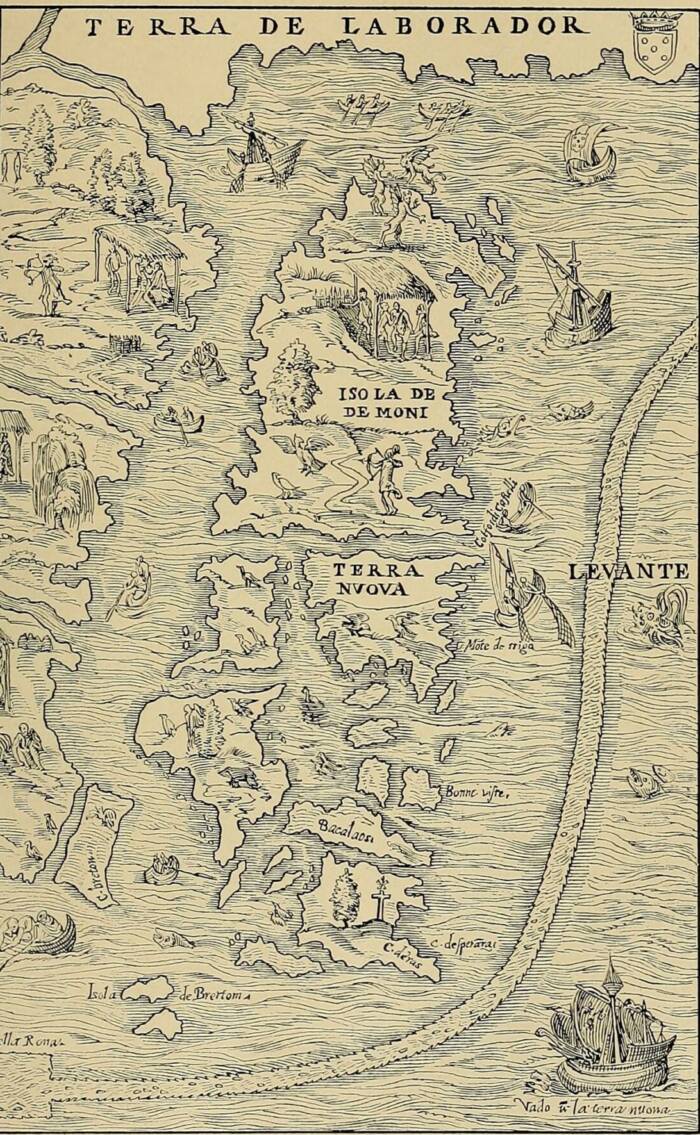
Library of CongressA map which claims to show the Island of Demons. The island does not actually exist, and Marguerite de la Rocque may have actually been marooned on Quirpon Island or Harrington Harbour.
Marguerite, the queen wrote, buried her lover in a shallow grave, and fended off animals attracted by the scent.
“She passed the time in reading, contemplation, [and] prayers,” according to the queen, “having a cheerful and contented spirit in a body emaciated and half dead.”
But life on the Isle of Demons soon got much worse. Marguerite’s servant died, and she soon found out she was pregnant. Though Marguerite had the baby, the infant died soon after it was born. Marguerite de la Rocque was alone, struggling to survive, left to contemplate the cruelty of man.
In Heptaméron, the Queen of Navarre wondered if women should prefer wild animals to men, with one of her narrators in the story noting: “If beasts did not bite me, their company would be more agreeable to me than that of men, who are irascible and unbearable.”
Though Marguerite de la Rocque seemed doomed, rescue was coming.
The Rescue of Marguerite de la Rocque
After living on the island for two years, Marguerite de la Rocque spotted a ship in the distance. She built a fire and signaled to the passing ship, a fishing vessel from France. The fisherman saw the smoke and came ashore, and discovered, to their shock, a Frenchwoman on the island.
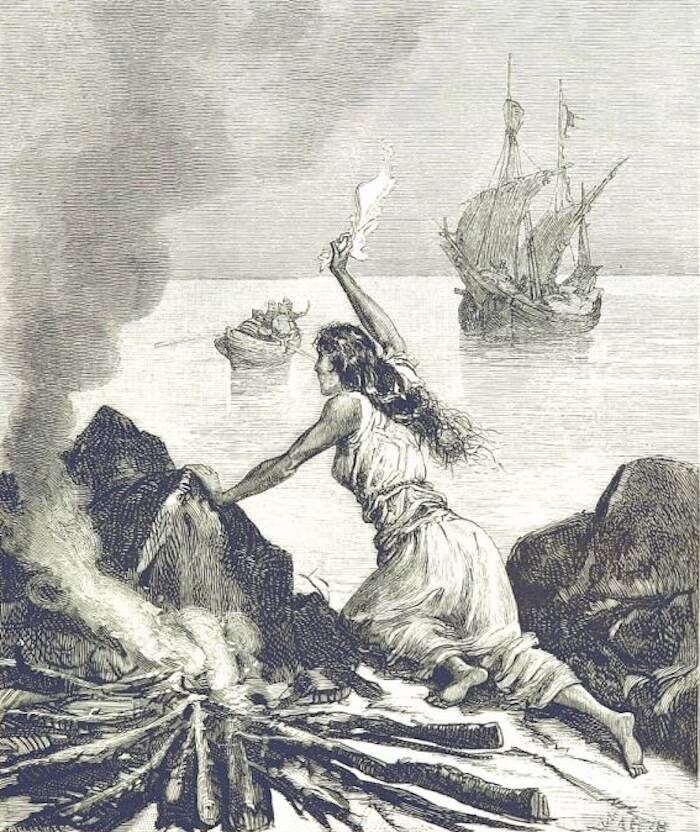
The British LibraryMarguerite de la Rocque was rescued after more than two years of living on the uninhabited island.
Marguerite de la Rocque returned to France after her rescue. She settled in Nontron, and founded a school for girls. According to the queen’s version of Marguerite’s story, ladies happily sent their daughters to Marguerite’s school because she was a shining example of “fidelity and perseverance.”
Indeed, the dramatic tale of Marguerite de la Rocque captivated Europeans. Both the Queen of Navarre and Andre Thevet, an explorer and writer, wrote versions of her life story. (Thevet claimed to have met Marguerite in person). While their versions vary, historians generally agree that Marguerite’s story seems based in fact.
But what about Marguerite’s relative, Jean-François de La Rocque de Roberval, who abandoned her? Although he never answered for leaving Marguerite and two others on a deserted island, his colony was a failure.
“Capt. Roberval was very cruel in dealing with his men, forcing them to work; otherwise they were deprived of food and drink,” recorded Thevet. “If anyone failed in his duty, Roberval had him punished. One day he had six of them hanged and some he ordered to be banished to an island, in leg-irons.”
The “gold” and “precious stones” that Roberval sent back to France also proved worthless. After abandoning his colony and returning to France, Roberval was assassinated during the French Wars of Religion.
His relative, Marguerite de la Rocque, never wrote about her experiences on the Isle of Demons. Yet her story has endured through the ages, while the story of Jean-François de La Rocque de Roberval is all but forgotten.
After reading about Marguerite de la Rocque, the French noblewoman who was abandoned on an island, discover the remarkable survival story of Tami Oldham Ashcraft, the woman who survived 41 days adrift at sea after a hurricane damaged her ship and killed her fiancé. Or, look through these incredible survival stories from people who cheated death.
The post The Incredible True Story Of Marguerite De La Rocque, The French Noblewoman Left To Die On An Isolated Island appeared first on All That's Interesting.
To turn a historical event into entertainment is hard enough, but then filmmakers must also consider how to relay the event’s significance accurately and responsibly.
Filmmakers, then, have to ask themselves whether they ought to portray the weight of real-life events or simply try to tell a good story. They have to decide which details can be left out and which must be shown when shaping history into narrative.
It’s not an easy task, so we will assess how these 11 movies based on true stories did in portraying an accurate piece of history.
Movies Based On True Stories: How Mel Gibson Portrayed William Wallace
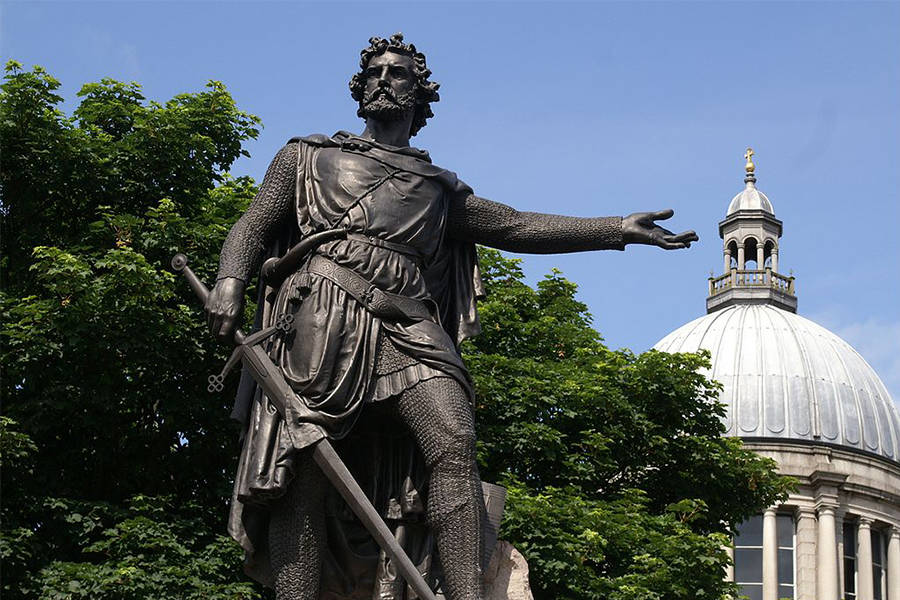
Wikimedia CommonsA statue depicting William Wallace in Scotland.
When Braveheart was first shown in theaters in the spring of 1995, audiences across the United States were stunned by the realistic depictions of real-life Scottish knight William Wallace enmeshed in medieval battle.
It’s a captivating film, but it’s rife with historical discrepancies. It appeared as though Mel Gibson, the director and star of the film, cared more about crafting a character-driven drama than an educational one.
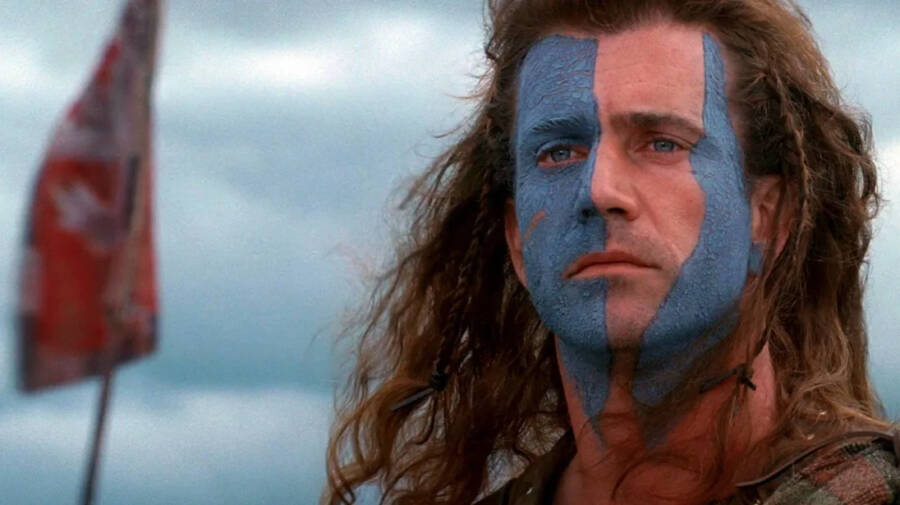
Icon ProductionsMel Gibson did eventually admit that Wallace was more ruthless than portrayed in the film.
Gibson’s Braveheart tells the story of Scottish rebellions against the English across the late 13th and early 14th centuries. Rebellions like these did indeed happen. However, according to Daily History, that’s about where the truth starts and ends in Braveheart.
For instance, the movie gives Wallace an attractive backstory that includes traveling around Europe and learning the ways of the world in his younger years. But little is truly known about the Scotsman’s early life.
The image of a “poor man of the people” that Gibson gave to the Scotsman is empathy-inducing. However, the generally agreed-upon assumption about Wallace’s real background was that he hailed from a noble family and lacked much of the humanity that was depicted in the film.
At least the Oscar-winning director later recognized how historically inaccurate his film was.
“Wallace wasn’t as nice as the character we saw up there, we romanticized him a bit,” Gibson admitted. “Actually, he was a monster. He always smelled of smoke, he was always burning people’s villages down. He was like what the Vikings call a ‘berserker.'”
“We kind of shifted the balance a bit because someone has got to be the good guy against the bad guy; that’s the way that stories are told,” Gibson explained.
Although the film uses the murder of Wallace’s wife by English soldiers as an impetus for his violence, in reality, there are no records besides a poem to prove that the Scotsman had ever been married. Plus, the Scots were already rebelling against England when Wallace joined the fray.
Further, Wallace’s relationship with Isabella of France, Edward II’s wife, was greatly altered. In truth, she was around nine years old at the time the Scotsman was killed and there was no way they could have had a relationship.
The movie returns to partial truth for William Wallace’s execution. It rightly shows his capture and how during his trial he insisted that he had not committed treason because he had never pledged his loyalty to the English crown.
However, the movie fails to mention the many other charges lobbied against him, like raiding and pillaging civilians, which were most likely true.
Ultimately, the film is mired in half-truths and outright falsehoods. But it’s also one of the most cohesively constructed adventure films ever made, with a deeply engaging cast of characters and engrossing arcs. It earned five Academy Awards — including Best Picture.
The Creative Liberties In Gladiator
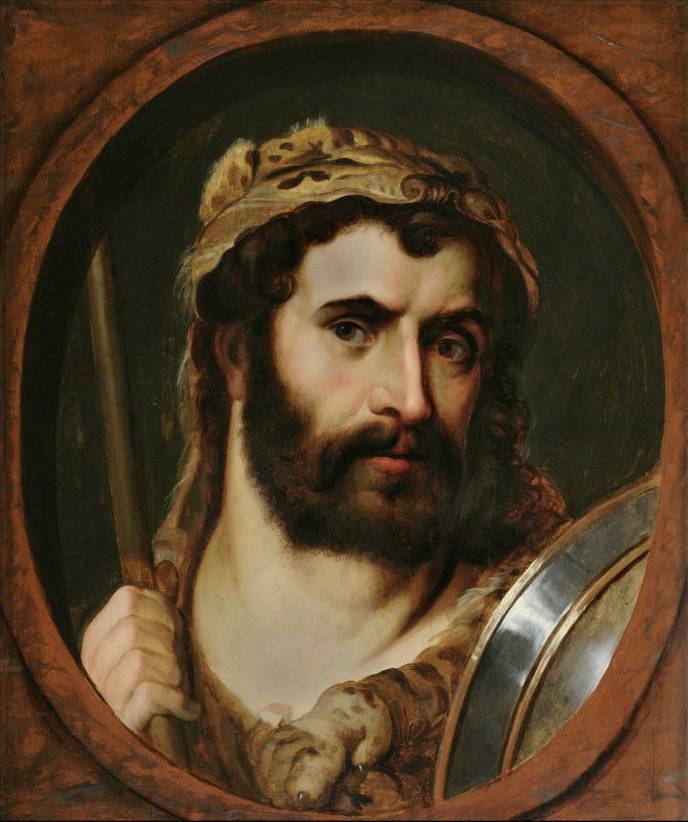
Wikimedia CommonsThe Roman Emperor Commodus, who was portrayed by Joaquin Phoenix in Gladiator.
Ridley Scott’s sword-and-sandals epic was certainly entertaining, but adventure set in ancient Rome was nonetheless historically thin.
The film Gladiator is often compared to Braveheart, even though the movies are set centuries apart in different parts of the globe. According to The Guardian, despite the director’s numerous on-set historians, the script by David Franzoni took tremendous creative liberties.
Marcus Aurelius’ doubt regarding his successor and nefarious son Commodus was true, but his wish of making Rome democratic was pure fantasy.
Commodus was portrayed with pitch-perfect malevolence by Joaquin Phoenix, but even his depiction was more humane than the real-life figure. Indeed, the real Commodus was even more vile, torturous, and barbaric than the movie ever made him out to be.
Commodus herded women, killed rare animals for fun, ate feces, fed his guards poisoned figs, and forced people to beat themselves to death with pinecones. Unfortunately, this kind of cruelty was interpreted as a strength, so Commodus was actually quite popular among his people.
The movie did show correctly that Marcus Aurelius died because of Commodus. Though Commodus himself didn’t kill his father, a friend of his, Cassius Dio, recorded how the emperor’s doctors killed Marcus Aurelius so that Commodus could become emperor.
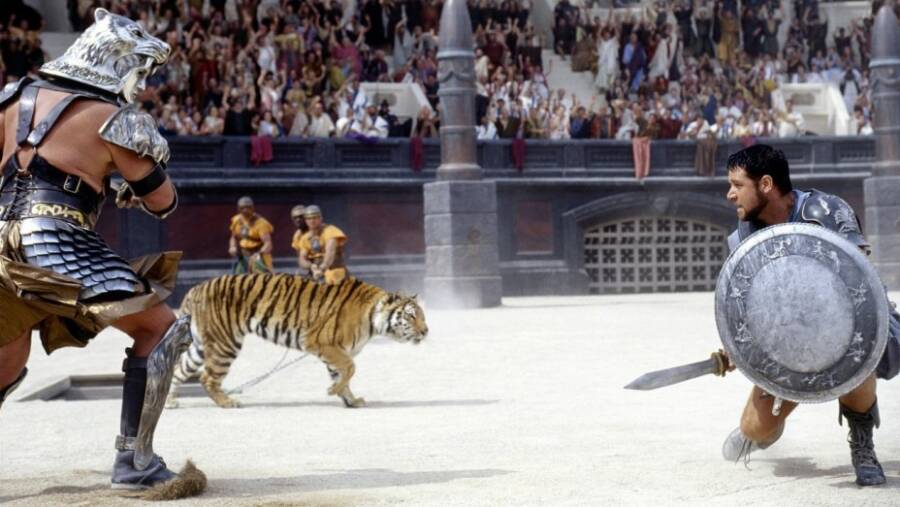
Scott Free ProductionsMaximus (Russell Crowe), confronted by well-armed opposition and ferocious tigers.
In a similar act of narrative leeway to Braveheart, Scott’s film employs plot points that make emotional sense in lieu of historical accuracy.
Mauritanian slave traders didn’t scour rural Hispania for dying men to nurse back to health on the off-chance that they could be sold. This point was pure fiction. The film also conveniently forgets to mention that Commodus fought in hundreds of gladiatorial events — that way it could portray him as more of a coward than he actually was.
But Scott’s masterful direction of the gladiatorial battles and the peripheral landscape of excitement was surely accurate. The fights were indeed gruesome and the audience did enjoy them on a visceral level. As a modern viewer though, it is petrifying to consider that to delight in this kind of violence was once so common.
According to How Stuff Works, the use of catapults in open battlefields like the opening forest battle in Germania was absolute fiction. The whole character of Maximus, himself, was created just for the film as well. But these are debatably minor quibbles when contrasted with other narrative faults of the movie.
Despite the movie squeezing Commodus’ 12-year reign into a seemingly one or two-year period, the depiction of his death is arguably the most egregious deviation from the truth.
In the film, the fictional Maximus valiantly defeats Commodus in battle for all of Rome to see. This plot point may be a neatly tied bow on a well-constructed story, but it’s a far cry from the truth.
In reality, Commodus met his end far less publicly and without much dignity. He was strangled in his bath by a wrestler named Narcissus.
The post The Truth Behind 11 Of Your Favorite Historical Movies appeared first on All That's Interesting.
On May 19, 1884, the Ringling Bros. Circus opened for business, capitalizing on the extreme to earn a profit. And it worked: for years, the most popular component of the circus was the “freak show.” The Ringling Bros. were building on a much older tradition of exhibiting people with deformities and, alongside P.T. Barnum, “freak shows” became highly popular. So who were the sideshow performers who appeared in them?

Wikimedia CommonsThe Ringling Bros. sideshow lineup in 1924.
Some sideshow performers had been kidnapped and were forced to go onstage against their will. Others, with few other options, chose to become sideshow performers, and often found that displaying themselves could be a lucrative career. But many were mistreated by abusive circus staff, and some were merely “manufactured” by greedy circus entertainers.
As Clyde Ingalls, the manager of the Ringling Bros. and Barnum & Bailey sideshow in the 1930s, once remarked, “Freaks are what you make them. Take any peculiar-looking person… play up that peculiarity and add a good spiel and you have a great attraction.”
As modern medicine began to explain the unexplainable — and as some audience members began to question the ethics of “freak shows” — these performances eventually fell out of fashion. But while they thrived, countless famous sideshow performers moved through their ranks.
These are some of their stories.
Annie Jones — ‘The Bearded Lady’
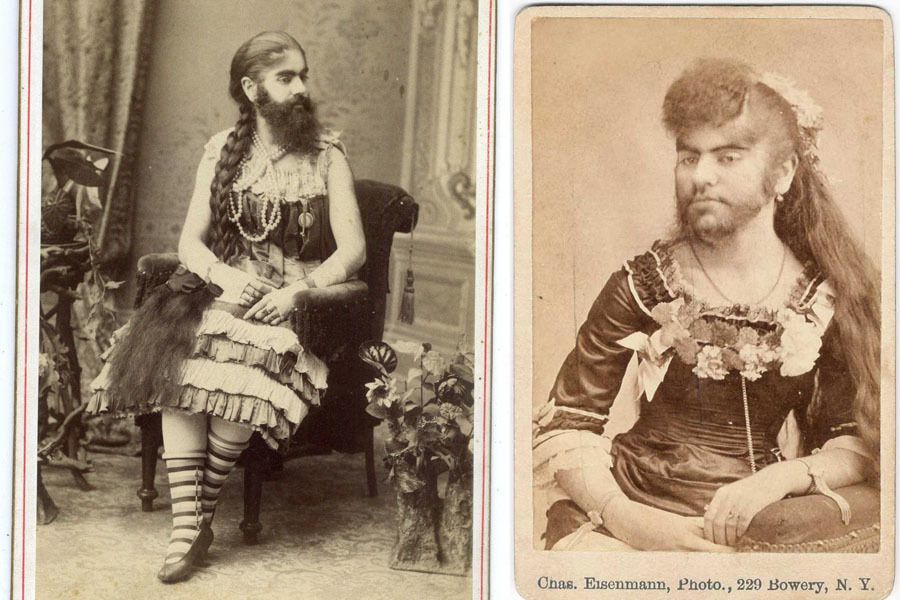
Charles Eisenmann/Wikimedia CommonsAnnie Jones, the world-famous “bearded lady” of the Ringling Bros. and Barnum & Bailey Circus.
One of history’s most recognized sideshow performers, Annie Jones was born in 1865 in Virginia with her chin already covered in hair. It’s still unknown what caused her facial hair, but it was most likely hirsutism, a condition that leads to “coarse hairs in females in a male-like distribution.”
She began her career before the age one — when she was featured at P.T. Barnum’s American Museum. After a successful stint at the museum, Barnum offered Jones’ parents a three-year contract at $150 per week.
Known as the “Bearded Girl,” Annie Jones had a mustache and sideburns by the time she was five years old. She was so popular with audiences that other circus recruiters wanted to feature her in their shows instead — and some were willing to resort to horrific measures to do so.
While under the care of Barnum’s appointed nanny, Jones was kidnapped by a New York phrenologist who attempted to exhibit Jones in his own sideshow. Luckily, Jones was soon found in upstate New York. But then, the kidnapper made a wild claim that the girl was actually his child.
When the matter went to court, Jones quickly ran into the arms of her real parents. The judge called the case closed, and Jones’ mother remained close to her daughter for the rest of her career as a performer.
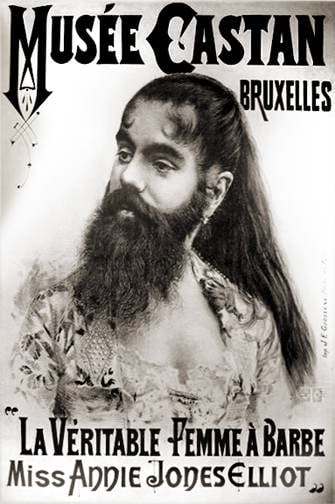
Wikimedia CommonsA French poster advertising “The Bearded Woman” Annie Jones.
As an adult, Jones performed as the “Bearded Lady” or the “Bearded Woman.” And she also began to pursue her own interests, becoming just as well known for her musical skills as her bearded face.
In her final years, she began to campaign against the use of the word “freak” to describe sideshow performers. But she was ultimately unsuccessful, and by the end of her life she had “known no other life than that of a freak.”
Outside the circus, Jones was married twice — the second time widowed — before becoming ill during a visit to her mother’s home in Brooklyn. There, she passed away from tuberculosis in 1902 at the age of 37.
The post 9 Unbelievable Stories Of Sideshow Performers Made Famous In 19th- And 20-Century ‘Freak Shows’ appeared first on All That's Interesting.
Several members of Charles Manson’s band of social outcasts are still in prison. The famed Sharon Tate murders are now half a century old, but that violent end to the 1960s resonates today.
After the pregnant actress was found butchered in her Hollywood Hills home, it was also discovered that some of her killers were barely adults. But that’s the power of belief. With the right amount of fabricated empathy and manipulation, cult leaders are able to strip a person of their autonomy, command them to do whatever they want, and maintain their loyalty at all costs.
Cult members have injected their own children with cyanide, engaged in gunfights against police, and released sarin gas on the public — all in the wide-eyed servitude of a single man.
Indeed, the power of cult leaders is a terrifying reality. Here are nine of the most unnerving examples of them from the 20th century.
David Koresh, The Cult Leader Behind The Waco Disaster
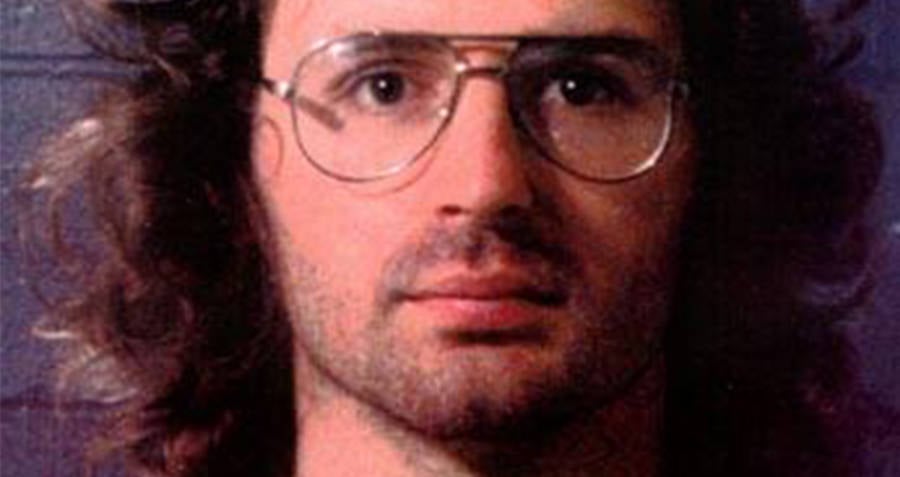
Wikimedia CommonsDavid Koresh, fear-mongering leader of the Branch Davidians of Mount Carmel.
As the prophet of the Branch Davidians, David Koresh preached that he could bring his followers to Heaven. Instead, he led them on a 51-day standoff with the FBI that ended in bloodshed.
Born Vernon Wayne Howell on August 17, 1959, David Koresh never knew his father. He was left with his 14-year-old mother and largely raised by his maternal grandmother who religiously included him in her regular trips to church.
The Seventh Day Adventist environment would become a formative scene for the future cult leader, one which would teach him a lot about the power of belief.
In his teen years, Koresh was placed in special education classes for his debilitating dyslexia. Socially awkward and unpopular, he dropped out of high school before reaching his senior year.
Then in his 20s, Koresh raped and impregnated a 15-year-old girl. Naturally, this was only the beginning of a history of sexual aggression.
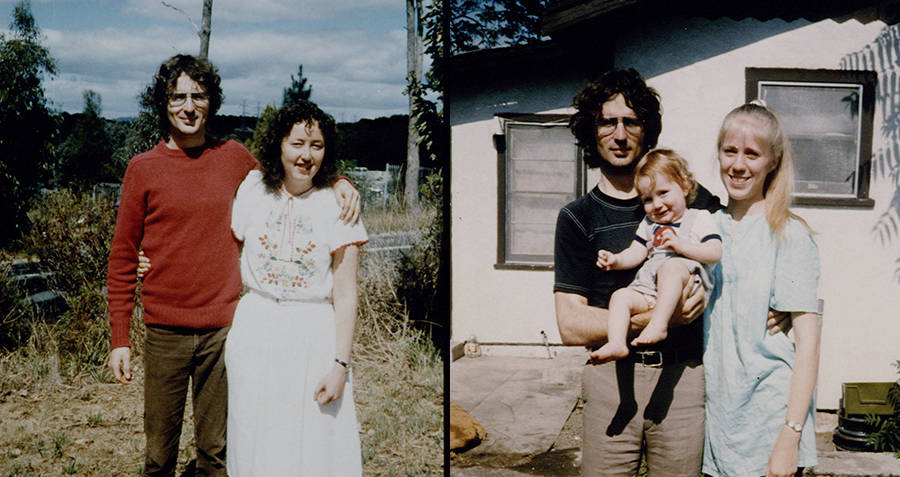
Getty ImagesDavid Koresh with members of the Branch Davidians, including one of his wives and children on the right.
Koresh’s evangelical church banned him after he relentlessly pursued the pastor’s teenage daughter. Koresh defended himself on the claim that God had ordained the two to be wed.
Koresh would make similar such pronouncements after moving to Waco, Texas in the early 1980s and joining the Branch Davidians. The church’s compound, known as Mount Carmel, was founded by Ben Roden. He was replaced by his wife Lois when he died.
Though 65 years old at the time, it’s believed that Lois entered into a sexual relationship with Koresh. This allowed him to rapidly climb the cult’s ranks and soon, he was permitted to teach his own lessons.
This naturally earned him the ire of Lois’ son, George, who’d been the rightful heir to Mount Carmel and its congregation before Koresh had even arrived. Koresh’s claim that God wanted him to procreate with Lois didn’t help matters.
He was exiled in 1985 and moved to Palestine, Texas with 25 other Branch Davidian church members to form his own group.
Koresh’s exile from the Branch Davidians furthered his religious delusions but also drew a sizable amount of worshippers from all over the world. A successful visit to Israel left him confident that he was the reincarnation of the prophet Cyrus. He also believed that Mount Carmel was the earthly site of the Davidic Kingdom and that he must reclaim it in the name of God.
He subsequently legally changed his name from Vernon Howell to David Koresh, which was an allusion to King David and the biblical name of Cyrus the Great.
By this point, Lois had died and left Mount Carmel in her son’s hands. He’d rebranded it as “Rodenville” and was running it tyrannically enough that the Davidians were losing faith in it. Scared of Koresh’s return and appeal, George challenged the former member to a duel of loyalty:
Whoever could raise a man from the dead would become the rightful leader of the Branch Davidians.
Koresh used the opportunity to tell police what Roden was up to but he required evidence to convince them. When Koresh and seven of his followers trespassed to gather said evidence, a resultant gunfight left Roden injured and Koresh and his men under arrest.
Koresh told police that he merely meant to gather evidence of Roden’s illegal activities and he was consequently acquitted. But Roden himself was charged with murder when he killed one of his supporters with an ax in 1989. This allowed Koresh to raise enough money to buy the Waco property and take it over himself.
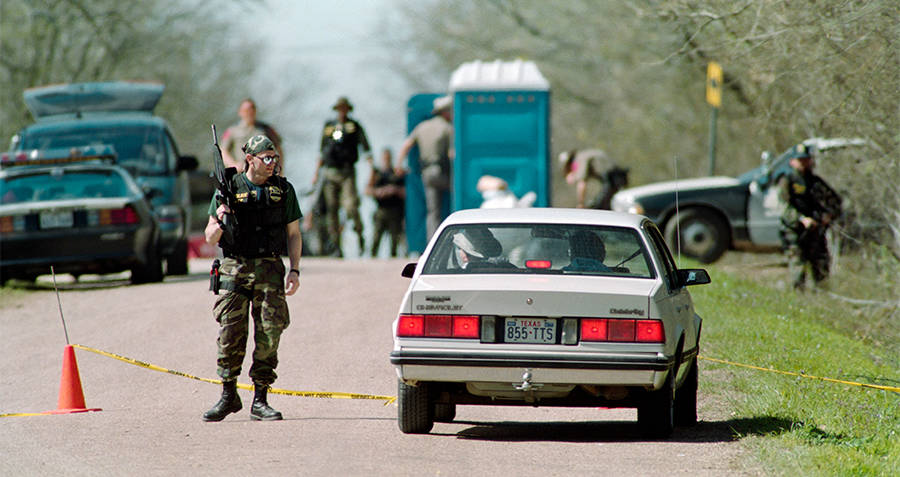
Bob Pearson/AFP/Getty ImagesATF agents guard all roads leading to and from the Waco compound.
But the church under Koresh’s rule fared no better. The compound was investigated extensively for statutory rape and both physical and sexual abuse. Also rampant were reports of “spiritual marriages” between underage women and much older men, and Koresh himself admitted that he’d fathered children with several women and girls in his church.
Ultimately, Child Protective Services probes failed to find concrete evidence of these activities. Meanwhile, Koresh preached to his followers that the End Times were near and that forming an “Army of God” was imperative. The church began to amass an arsenal.
By February 1993, agents of the Bureau of Alcohol, Tobacco, and Firearms (ATF) attempted to arrest and serve Koresh with a warrant for the possession of illegal firearms. Infamously, a four-hour gunfight erupted that led to the deaths of four ATF agents and six of Koresh’s followers.
The resultant standoff lasted a stunning 51 days.
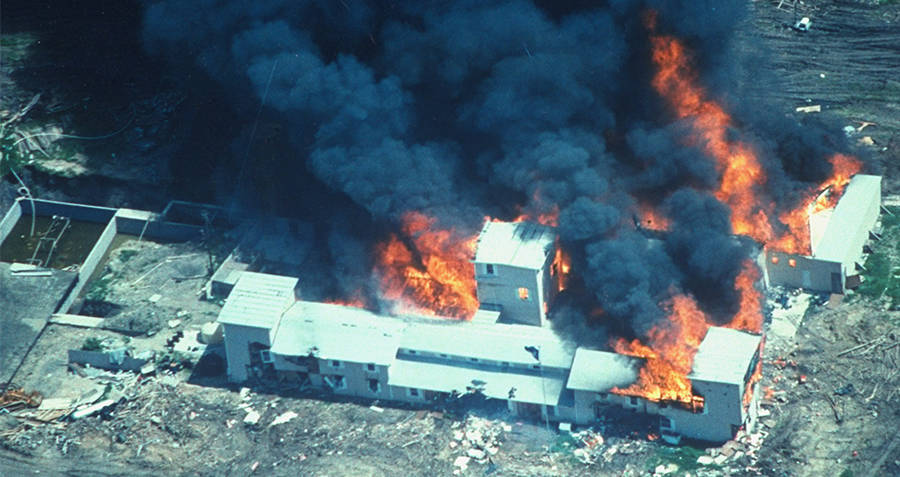
Wikimedia CommonsMount Carmel on fire during the Waco siege.
While some of the Branch Davidian church members managed to escape the compound with their lives, over 80 men, women, and children remained inside. ATF and FBI negotiators worked tirelessly to come to a compromise, but things tragically escalated.
When tear gas was lobbed onto the premises the Branch Davidians retorted with gunfire. Now, all was lost. The compound eventually caught fire, presumably from propane tanks within it or from grenades authorities had used. The ensuing inferno left 76 people dead.
Many followers died when the compound’s gymnasium collapsed. Others were shot. Koresh was found shot in the head, but whether or not he did it on his own remains unknown.
Nearly two-dozen Branch Davidians who were killed were no older than 17.
Jim Jones And The Chilling Story Of The Jonestown Massacre
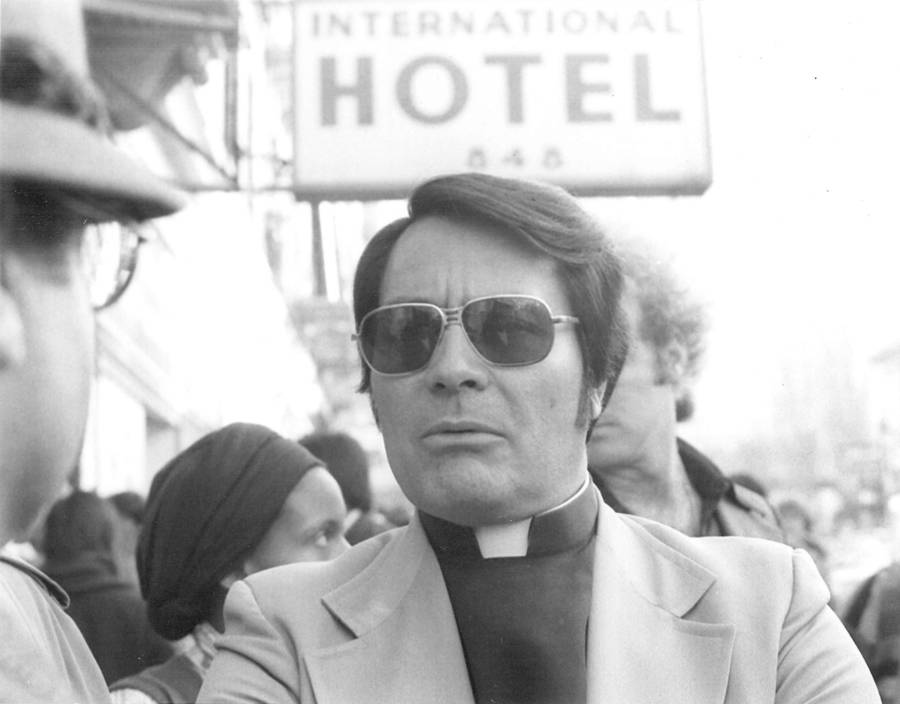
Nancy Wong / Wikimedia CommonsJim Jones at an anti-eviction rally Sunday, January 16, 1977, in San Francisco.
“Don’t drink the kool-aid” has become universally-known advice, though the instance from which it hails didn’t actually use that brand. That instance was the self-destruction of Jonestown on Nov. 18, 1978, when over 900 cult members of the Peoples Temple died in a mass murder-suicide via cyanide-spiked punch.
Jim Jones, the cult’s unscrupulous leader, was born in rural Indiana on May 31, 1931. He founded the Peoples Temple locally in the 1950s before its growth led the cult to resettle in California’s Redwood Valley in Mendocino County in the 1960s, and later San Francisco in the 1970s.
Jones, a self-ordained Christian minister, had experience preaching in small churches in Indianapolis. The Peoples Temple focused on social outcasts who were left behind by the status quo.
The racially integrated church offered free food, drug rehabilitation, legal services, and more to the othered or disenfranchised. These kinds of people were particularly popular in California in the 1960s where idealistic youths dejected by contemporary politics sought a brighter future.
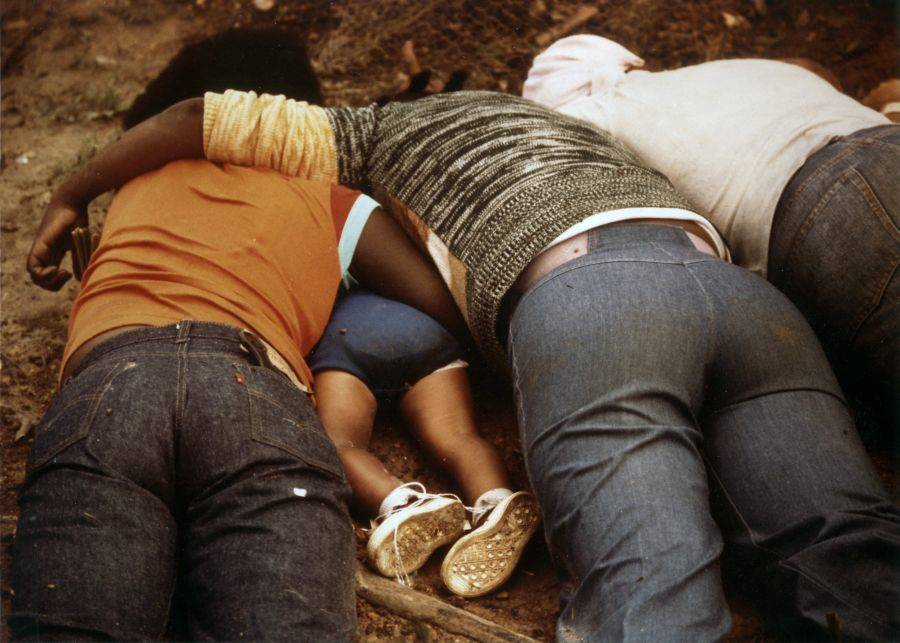
Frank Johnston/The Washington Post/Getty ImagesIn the aftermath of the Jonestown Massacre, families were found together, holding each other.
Jones almost always wore sunglasses and did whatever he could to grow his cult. He was not only media-savvy but also schmoozed with local politicians and established useful quid-pro-quo relationships. Jones employed some unseemly methods, too. He forced followers to give up their belongings and asked many of them to get their relatives to send money. There were also claims of abuse.
By the cult’s 1977 move to Guyana, South America, the Peoples Temple had amassed around 20,000 members.
The move would prove fatal for nearly everyone who came.
The compound in Guyana was marketed as a utopian community. Removed from the nefarious structures and corruptions of U.S. politics, Jones claimed, the Temple’s members would be free to actualize themselves in tune with God and nature.
Around 1,000 followers began constructing their compounds using locally-sourced wood and supplies. Perhaps most ominously, Jones confiscated everyone’s passports upon arrival.
There were chores and routines for everyone to follow on a daily basis with classes for children and nightly social events.
But negative press and increased surveillance into the cult’s activities on behalf of authorities left Jones paranoid and volatile. Though he’d curried favor with local officials, money and supplies into the commune slowed and followers began to reconsider their loyalty.
Jones was addicted to drugs during this time too, ran nightly mock-suicide drills, and censored any incoming or outgoing mail that didn’t suit his interests.
https://www.youtube.com/watch?v=A5KllZIh2Vo
Unfortunately, Jones was also in command of armed guards. He retained a willingness to do whatever it took to evade punishment for his crimes — including facilitating the deaths of nearly 1,000 people.
When U.S. Representative Leo Ryan traveled to Jonestown on Nov. 18, 1978, to investigate the claims of abuse on the commune, all hell broke loose. The politician and four of his companions were rapidly murdered on the airstrip as they landed on Guyana.
Presumably aware that this was likely the end of the road for him, Jones ordered the now infamous mass murder-suicide. He told his followers that soldiers were on their way to torture them and that to die of their own volition would be a “revolutionary act.”
Children were the first to go. Parents injected them with cyanide before drinking cyanide-laced fruit juice themselves. Jones was found dead in a chair with a bullet wound to the head.
Only a few dozen members in Guyana escaped death that day — by the pure luck of being elsewhere to gather supplies. The final death toll at Jonestown was 909.
The post Child Brides And Mass Suicides: The Monsters Behind 9 Of History’s Most Notorious Cults appeared first on All That's Interesting.

NASA/JSCRonald McNair made his first space voyage in 1984, becoming the second Black American in space.
On Jan. 28, 1986, millions of Americans turned on their TVs to watch the launch of the Space Shuttle Challenger. But shortly after the shuttle lifted off, what should have been a jubilant moment turned to horror when the Challenger exploded. All seven astronauts aboard were killed, including 35-year-old mission specialist and physicist Ronald McNair.
McNair, the second Black astronaut to go to space, was also a father of two, a black belt in karate, and saxophone player — in fact, he’d been hoping to record the first piece of original music in space during the mission. But perhaps the most impressive thing about McNair was how he fought racism in his youth to become a well-respected physicist and astronaut.
This is the remarkable story of Ronald McNair, the Black physicist who sadly perished during the Challenger disaster.
From The Jim Crow South To Physics At MIT
Born on Oct. 21, 1950, Ronald McNair grew up in the Jim Crow South. He spent his childhood in the segregated town of Lake City, South Carolina, where his mother taught high school and his father was an auto body technician. The family was poor, without electricity or running water, and McNair made extra money picking cotton.
“I gained qualities in that cotton field,” he later said. “I got tough. I learned to endure. I refuse to quit.”
McNair was also curious and intelligent from a young age. According to reporting from The New York Times in 1986, McNair was able to read words by the age of three. When he was a little older, he decided he wanted to learn more about science, and walked a mile to the local public library.
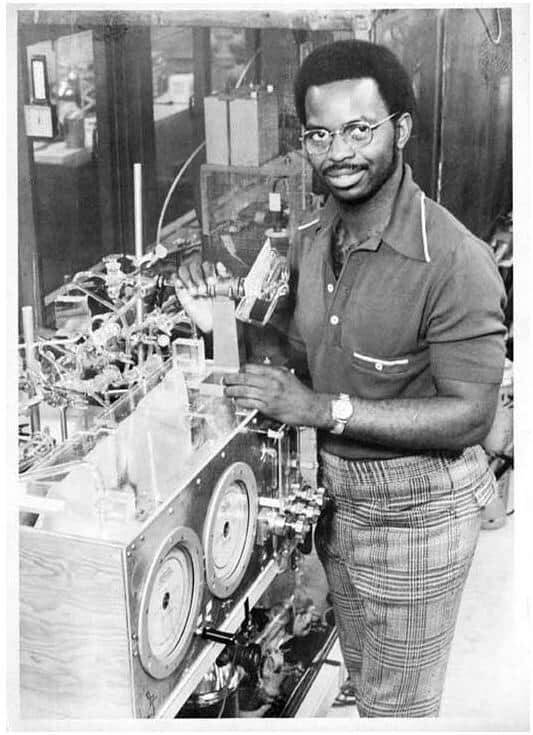
MIT Black HistoryRonald McNair as a grad student at MIT in the 1970s.
But the white librarian told McNair that he wasn’t allowed in the library and ordered him to leave. When he refused, the librarian called the police, who told the librarian, “Why don’t you just give the kid the books?”
As a teenager, McNair also began watching Star Trek. His brother Carl explained in an interview that McNair was inspired by the show’s multiracial cast, which made it seem possible for a Black man to become an astronaut.
“Star Trek showed the future where there were black folk and white folk working together,” Carl McNair recalled to Storyful in 2013. “That motivated Ronald to become an astronaut.”
After Ronald McNair graduated as the valedictorian of his high school class, he set a goal for himself to get a Ph.D. in 10 years. He soon earned a physics degree at North Carolina Agricultural and Technical State University, and went on to earn a Ph.D. in physics from MIT at the age of 26.
McNair became a research scientist at California’s Hughes Research Laboratories. And in 1978, McNair applied to NASA as an astronaut candidate.
Ronald McNair, The Second Black Astronaut In Space
NASA received over 8,000 applicants for its astronaut program, and chose just 35 people. McNair was one of them.
The 1978 class at NASA broke records. In addition to Ronald McNair, the group included Sally Ride, who would become the first American woman in space, and Guion “Guy” Bluford, the first Black astronaut.

NASANASA’s 1978 class included Ronald McNair, Guion Bluford, and Fred Gregory.
Once he joined NASA, McNair spent a year in the training program. His first space flight launched on Feb. 3, 1984, making McNair the second Black astronaut to go to space. He was in charge of deploying communications satellites and flight testing the Manned Maneuvering Unit.
While in orbit, McNair also memorably played his saxophone.

NASADuring his first space mission, Ronald McNair played the saxophone. He also brought his instrument on the Challenger.
An experienced astronaut, Ronald McNair had spent 191 hours in space when he was selected for the Challenger mission in 1986.
How Ronald McNair Died During The Challenger Disaster
In addition to Ronald McNair, the crew of the Challenger also included Ellison Onizuka, the first Japanese-American in space, and Judith Resnick, the second American woman in space. Astronauts Gregory Jarvis and Michael Smith were also part of the crew led by mission commander Francis Scobee, and a teacher named Christa McAuliffe had also joined the mission as part of President Ronald Reagan’s “Teacher in Space Project.”

Getty ImagesRonald McNair was one of seven people chosen for the Challenger mission.
The Challenger was set to take-off on Jan. 28, 1986, but Ronald McNair had a bad feeling about the launch, and shared his doubts with his brother Carl.
“[Ronald] said, ‘The weather is not looking good and things are icing up,'” Carl recalled, according to the Keene Sentinel. “‘I don’t think we are going to launch.'”
However, the Challenger launch went forward despite the near-freezing temperatures. And, 73 seconds after take-off, the shuttle exploded.

Corbis/VCG/Getty ImagesThe seven-person crew of the Challenger walking to the launchpad.
“As it got higher and higher, the solid rocket booster started to veer off, and I didn’t know how I knew. But I knew they were gone,” Carl said. “I stood there with tears streaming down my eyes, saying ‘Oh my God, oh my God’ — what so many people were saying in unison around the world.”
All seven members of the crew died.
A later investigation pointed to a faulty O-ring, damaged from the cold temperatures. NASA had been warned about the potential for disaster by multiple engineers but had sadly ignored the warnings.
The Remarkable Legacy Of The World’s Second Black Astronaut
Ronald McNair was 35 years old when he died. He left behind a wife, Cheryl, and two children, Reginald and Joy.
After McNair’s death, Congress created the Ronald E. McNair Post-Baccalaureate Achievement Program to support low-income, first generation, and underrepresented students attending doctoral programs.
McNair’s family also founded the DREME Foundation to bring STEM education to schools.

National ArchivesRonald McNair’s family created a foundation to bring STEM programs to schools.
As for the library that once refused to let nine-year-old McNair check out books? It’s now home to the Ronald E. McNair Life History Center.
After reading about the impressive life of Ronald McNair, the Black astronaut and physicist who sadly died during the Challenger disaster, discover the story behind the Soyuz 11 disaster, the failed Soviet response to the Moon Landing. Or, look through these stunning images of outer space that were taken by the Hubble Space Telescope.
The post The Story Of Ronald McNair, The Pioneering Black Astronaut Who Died In The Challenger Disaster appeared first on All That's Interesting.
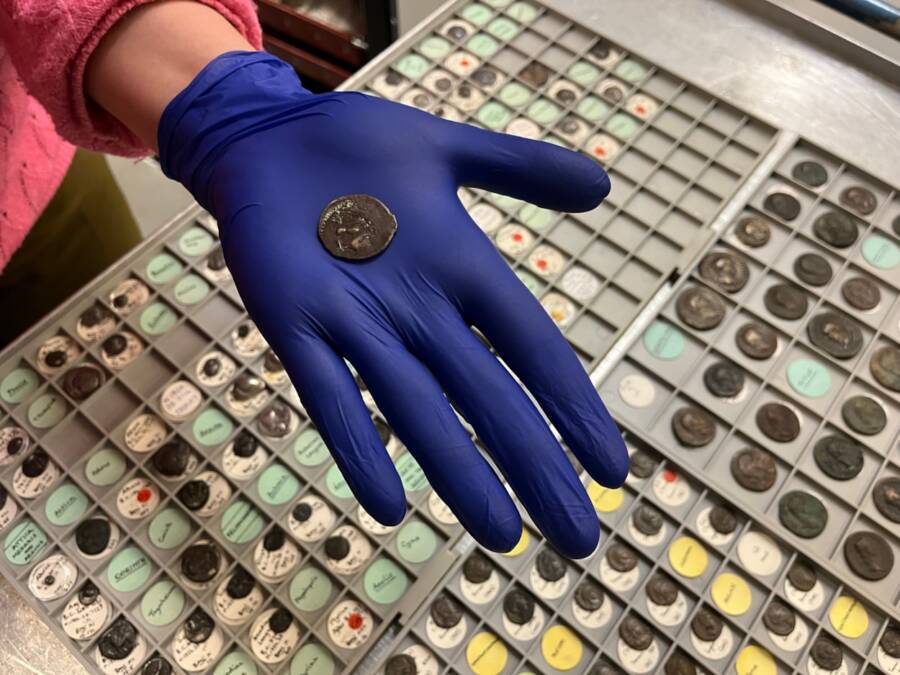
Leeds City CouncilThe Phoenician coin that someone used as bus fare in 1950s Leeds.
In the 1950s, a passenger in Leeds, England, boarded a bus and paid for their fare with a coin, as usual — or so it seemed. This particular coin later proved, in fact, to be most unusual. When the fares were eventually counted up, this strange, rather old-looking coin was set off to the side by the chief cashier, who gave it to his grandson as an odd little collectible.
Now, more than 70 years later, researchers have taken a closer look at the coin — and realized that it was minted 2,000 years ago.
More specifically, the coin was created by the ancient Phoenicians and originates from a Carthaginian settlement in Spain. While many questions about the coin remain, including how it ended up as bus fare in 1950s England, the discovery remains as exciting as it is unexpected.
The Discovery Of A 2,000-Year-Old Phoenician Coin Among Bus Fare In England
According to a statement from the Leeds City Council, the Phoenician coin was picked out of the fare pile sometime in the 1950s by James Edwards, the chief cashier with Leeds City Transport. His job was to count the total bus fare at the end of the day and pick out any non-British coins. He would often come across coins that were ineligible, fake, or foreign, some of which he then gifted to his young grandson, Peter Edwards.
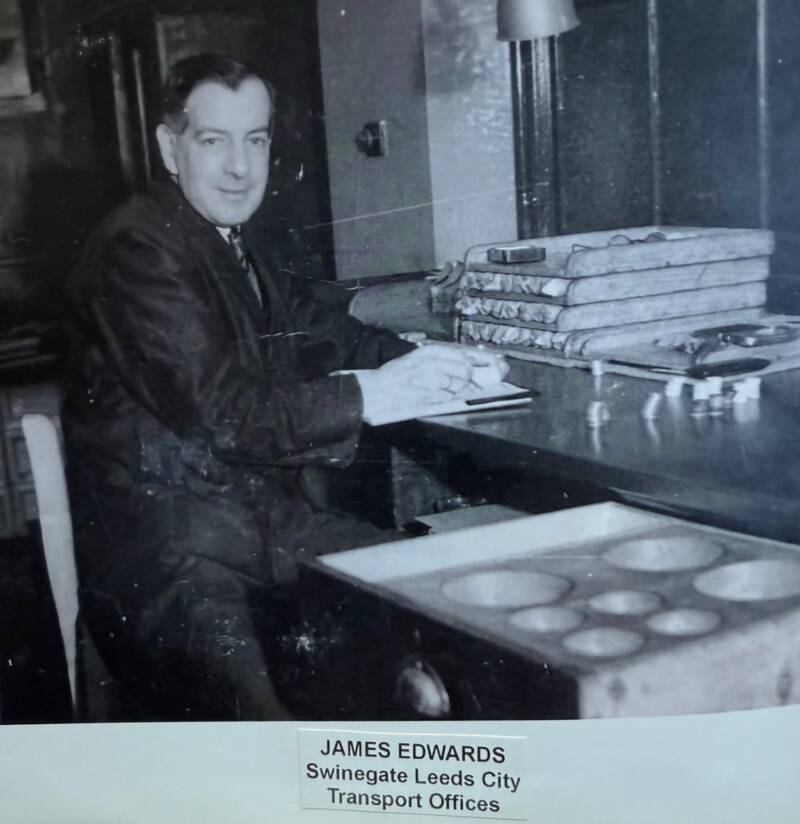
Leeds City CouncilJames Edwards, the chief cashier with Leeds City Transport, who picked the coin out of a pile and gifted it to his grandson, Peter.
“My grandfather would come across coins which were not British and put them to one side, and when I went to his house, he would hand me a few,” Peter Edwards recalled. “It was not long after [World War II], so I imagine soldiers returned with coins from countries they had been sent to. Neither of us were coin collectors but we were fascinated by their origin and imagery – to me they were treasure.”
Out of all the coins that Peter had been given by his grandfather, one stood out. Decades after he first received it, Peter decided to do some research — and discovered that it was a 2,000-year-old Phoenician coin.
The Astounding History Behind This Ancient Phoenician Coin
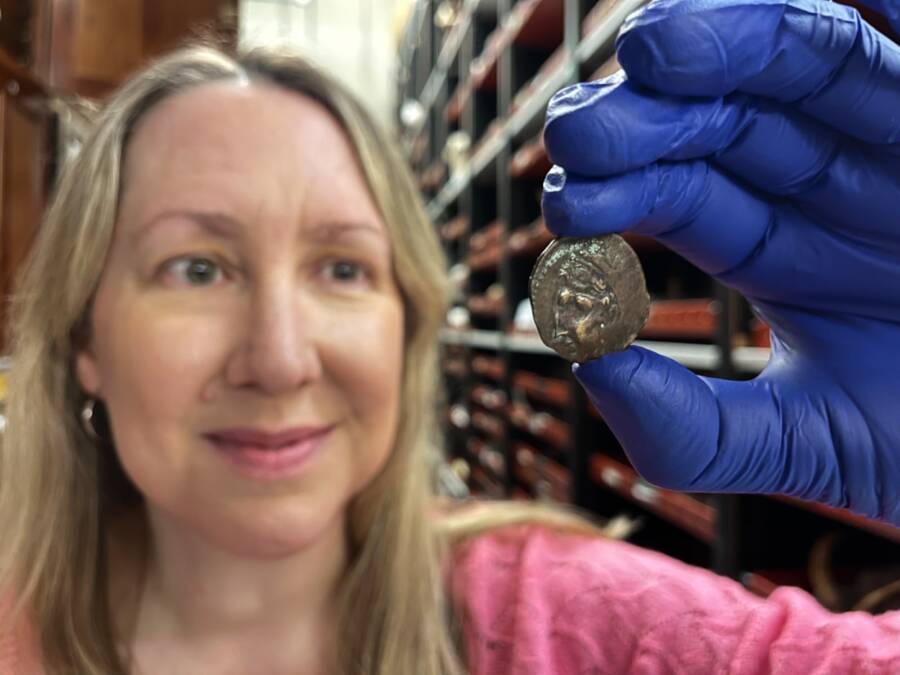
Leeds City CouncilKat Baxter, Leeds Museums and Galleries’ curator of archaeology and numismatics, holding up the Phoenician coin.
The Phoenician coin caught Peter Edwards’ eye for a reason. On one side, it features an impressive figure that we now know is the powerful Phoenician god Melqart, depicted as the Greek hero Hercules, wearing his famed lion skin headdress. On the other side, it depicts a pair of bluefin tuna.
After Edwards uncovered some information about the coin’s age and provenance, he donated the coin to the Leeds Museums and Galleries. Researchers have since determined that it was minted in the the Spanish city of Cadiz, then part of Carthage, a Phoenician city-state, in the first century B.C.E. According to the museum, some Phoenician coins at the time used Greek imagery, in order to appear more appealing to traders.
“It’s incredible to imagine how this tiny piece of history created by an ancient civilization thousands of years ago has somehow made its way to Leeds and into our collection,” said Leeds City Councillor Salma Arif. “Museums like ours are not just about preserving objects, they’re also about telling stories like this one and inspiring visitors to think about the history that’s all around us, sometimes in the most unlikely of places.”
Indeed, it’s a mystery how the Phoenician coin made its way from ancient Carthage, into the pocket of a 20th-century English citizen who, perhaps unknowingly, deposited it as bus fare. But whatever the case may be, Peter Edwards is happy that the coin has now ended up in the hands of the museum, where it can be preserved and displayed for generations to come.
“The coin always fascinated me because it was hard to decipher where it came from,” Peter Edwards said. “My grandfather would be proud to know, as I am, that the coin is coming back to Leeds.”
He added: “However, how it got there will always be a mystery.”
After reading about the 2,000-year-old Phoenician coin that was surprisingly discovered among old bus fare in England, discover the story of Tyrian purple, the luxurious dye coveted by wealthy elites in antiquity. Then, learn about Queen Dido, the legendary founder of the empire of Carthage.
The post This Mysterious Coin Was Used To Pay For A Bus In Leeds. Now It’s Been Identified As A 2,000-Year-Old Phoenician Coin appeared first on All That's Interesting.
On Halloween, 2006, 18-year-old Nikki Catsouras crashed her father’s Porsche 911 Carrera, driving at more than 100 miles per hour. While trying to switch lanes, she clipped another car, lost control, then careened over the highway’s median across the traffic lanes and into a concrete toll booth.
When police arrived minutes later, they found Catsouras’ body still strapped to the driver’s seat. Her head, however, was no longer attached to it. The wreckage and scene were so brutal that the coroner wouldn’t let Catsouras’ parents identify her body, but unfortunately, the couple weren’t spared from seeing the gruesome scene.

Nicole “Nikki” Catsouras underwent radiation therapy as a young girl, which may have caused issues with her judgment later in life.
Photographs of Nikki Catsouras’ death had somehow found their way onto the internet, and they spread quickly. MySpace pages seemingly made as a tribute to Catsouras instead posted the photos of her horrifying accident. Catsouras’ parents received countless emails containing the photographs. There was no escaping their trauma.
This is the story of Nikki Catsouras’ death and the controversy surrounding the leaked photos of her fatal accident.
Who Was Nikki Catsouras?
Nicole “Nikki” Catsouras was born on March 4, 1988 in Orange County, California. At 18, she was a college freshman living at home with her parents. She was shy and creative, studying photography and working with children in special education, Patch reports.
According to Newsweek, however, the Catsouras family’s life wasn’t as perfect as it may have appeared on the outside.
When Nikki was eight years old, doctors discovered a tumor in her brain that they initially didn’t think she would survive. Although the tumor ended up being benign, the intensive radiation treatment Nikki underwent had lasting effects on the young girl. Doctors warned her parents, Christos and Lesli, that side effects might one day surface, possibly impacting Nikki’s impulse control and judgment.

FacebookThe Catsouras family on the day of Nikki’s high school graduation.
In the summer of 2005, Nikki began using cocaine and wound up in the hospital in a state of psychosis induced by the drug. Her parents attributed this lapse in judgment to her radiation therapy. But this didn’t put a stop to her cocaine use.
The Deadly Accident That Saw Nikki Catsouras Become Known As “Porsche Girl”
Nikki Catsouras used cocaine again on Oct. 30, 2006, the night before her deadly accident.
Christos and Lesli considered checking their daughter into the hospital, but instead agreed to take her to a psychiatrist the following day, one who specialized in brain disorders. They all went to sleep, and the next day, on Halloween, they ate lunch together.
Christos left for work shortly after. As he said goodbye to his family, Nikki smiled at him from the couch, flashing him a peace sign. Everything was seemingly in order.

FacebookNikki Catsouras with her parents, Christos and Lesli.
However, about ten minutes later, Lesli saw her husband’s prized Porsche 911 Carrera pull out of the driveway and speed off. Nikki was behind the wheel. It was uncharacteristic of the teenager to do something so reckless. In fact, Nikki had never even been allowed to drive the Porsche before.
Lesli called her husband to inform him of what their daughter had done. He immediately turned his car around and phoned 911. A dispatcher put him on hold, and Christos watched as two police cars flew by him on the road. The dispatcher came back on the line and informed Christos that there had been an accident.
Police later told Christos and Lesli that their daughter had been speeding along the highway at more than 100 miles per hour when she tried to switch lanes and clipped another car. The collision sent her spiraling out of control over the median, across the traffic lanes, and into an unmanned toll booth. The car was almost entirely crumpled in on itself. An autopsy revealed that Nikki still had cocaine in her system.
But the Catsouras’ nightmare was only beginning.
Photos Of Nikki Catsouras’ Accident Leak Online
As is protocol, the California Highway Patrol took photographs of the accident. The carnage was so gruesome that Lesli and Christos were not allowed to identify their daughter’s body — her head had been detached from her body.
Unfortunately, it didn’t matter. The Catsourases quickly saw the accident in full detail when photos of their dead daughter began appearing all over the internet.

FacebookThe crumpled Porsche Nikki Catsouras crashed on the highway. This is the only photo that doesn’t feature significant amounts of gore.
According to ABC News, the couple soon began to receive anonymous emails and texts containing photographs of Nikki’s accident. They spread around the internet, appearing on everything from MySpace to porn sites and forums dedicated to pictures of dead people. Comment sections were filled with cruel statements like “that spoiled rich girl deserved it” and “what a waste of a Porsche.”
Lesli had to stop checking her email, and the couple forbade their three other daughters from using the internet. Nikki’s 16-year-old sister Danielle had to be taken out of school because she received threats of being shown the photographs.
“There were threats that people were gonna put the pictures on my locker, in my locker,” Danielle said. “I remember her in such a great way, I don’t wanna see it and have that image stuck in my head.”
But how had the photos made it online in the first place?
According to the Catsouras’ attorney Keith Bremer, “One of the officers emails some of the photographs to a dispatcher, and then the dispatcher emails them outside the Police Department. And then from there, you know, it created a life of its own and created momentum and it just, it just exploded.”
The Catsouras Family’s Legal Battle Against The California Highway Patrol
The Catsourases tried as much as they could to get the photos taken down from sites where they were posted. They issued countless cease-and-desists, reached out to site owners directly, and tried advanced coding techniques to make the photos more difficult to find via Google. None of it worked.
This was the internet. And once the photos went up, they were never coming down.

FacebookNikki Catsouras’ father always called her “Angel.”
The California Highway Patrol eventually sent a letter of apology to the family, identifying the two dispatchers who had leaked the photos in the first place: Thomas O’Donnell and Aaron Reich. Reich’s attorney argued that the dispatcher had sent the photos to relatives and friends as a “cautionary tale” to warn them of the dangers of reckless driving, though this information did little to alleviate the Catsouras family.
The family ultimately sued the California Highway Patrol for negligence, privacy invasion, and infliction of emotional harm. As the Los Angeles Times reported, the California Highway Patrol wound up settling with the family, paying them roughly $2.37 million in damages and issuing the following statement:
“No amount of money can compensate for the pain the Catsouras family has suffered. We have reached a resolution with the family to save substantial costs of continued litigation and a jury trial. It is our hope that with this legal issue resolved, the Catsouras family can receive some closure.”
In the end, the Catsourases knew they would never be able to fully remove the photos from the internet, but expressed hope that sharing their story could help other families who find themselves involved in similarly dark situations.
“I feel like no one really realized she was a person, and they in a sick way got really entertained by this photograph,” Danielle said. “And it’s just sad that someone can feel the need to put it out and keep it going on and harming others by putting it up.”
After reading about Nikki Catsouras’ tragic death and the controversy that followed, learn about Alexis Neiers and her role in the Hollywood “Bling Ring.” Or, read about the tragic death of Len Bias and how it helped fuel the War on Drugs.
The post The Tragic Story Of Nikki Catsouras’ Death And The Leaked Photos Of Her Grisly Car Crash appeared first on All That's Interesting.
Chippendales is best known for its muscular male dancers, exuberant crowds of women, and dynamic shows. But the Chippendales murders proved that the lighthearted franchise had a dark side.
In the 1980s and 1990s, Chippendales’ founder Steve Banerjee plotted multiple deaths. He orchestrated the murder of his business partner, set out to kill his rivals, and firebombed his competition.
Though Banerjee was eventually caught, his suicide before his sentencing brought a shocking end to the story of the Chippendales murders.
How Steve Banerjee Started Chippendales

Bettmann/Getty ImagesA male dancer at the Chippendales club in Los Angeles in 1979.
In 1975, an Indian immigrant named Somen “Steve” Banerjee bought a struggling Los Angeles bar called Destiny II. He renamed it Chippendales and sought to jumpstart its reputation in the City of Angels.
Though Banerjee was soft-spoken, he wanted Chippendales to be loud and fun. He took the advice of promoter Paul Snider (who later shot and killed Playboy model Dorothy Stratten in 1980 before turning the gun on himself) and started a “Male Exotic Dance Night for Ladies Only” in 1979.
At first, “all the guys were worried about their image,” Banerjee recalled. But the show delighted female customers, who soon lined up to get in.
“It was the first time ever where something was completely geared to the ladies,” explained Candace Mayeron, the former associate producer for Chippendales. “We built an environment for women to let it all hang out.”

Franchise founder Steve Banerjee was behind the Chippendales murders.
But as Chippendales expanded, Banerjee became dangerously obsessed with protecting its success — even if it meant resorting to violence. In 1979, he quietly sent someone to burn down Moody’s Disco, a rival nightclub. And in 1984, he tried to do the same at the Red Onion restaurant and bar.
Meanwhile, Banerjee had started working with New York-based producer and choreographer Nick De Noia to expand Chippendales’ business. But Banerjee and De Noia butted heads. According to Read Scot, a Chippendales dancer, they “used to go toe to toe and just scream and curse at each other.”
Banerjee envied De Noia’s creativity and charisma. He also resented that people had started referring to De Noia — and not Banerjee — as “Mr. Chippendales.” And though he and De Noia had made a deal on a napkin that gave De Noia 50 percent of the profits from Chippendales’ tours, Banerjee began to suspect that De Noia was shortchanging him.
In 1987, Steve Banerjee decided he’d “take care” of Nick De Noia — for good. That year, the Chippendales murders began in earnest.
Inside The Chippendales Murders
Candace MayeronCandace Mayeron with Nick De Noia, a victim of the Chippendales murders.
On April 7, 1987, a gunman walked into Nick De Noia’s 15th-floor New York office and shot him in the left cheek. De Noia died — and many at Chippendales suspected they knew who was behind the hit.
“I’m going to kill that motherf***** Steve Banerjee,” one of the dancers told Mayeron. As for Mayeron, she also thought that Banerjee was guilty. She wrote, “There wasn’t a scintilla of doubt in my mind that it was Steve either.”
Indeed, Steve Banerjee had orchestrated De Noia’s murder. The FBI eventually pieced together that Banerjee had hired a man named Ray Colon to kill De Noia. Colon, in turn, enlisted the services of Gilberto Rivera Lopez. Ultimately, Lopez had been the one to shoot Banerjee’s rival.
The story of the Chippendales murders might have ended there. But despite rumors, nothing linked Banerjee to the scene. He remained free — and even bought back the Chippendales touring rights from De Noia’s family.
Marie DeNoia Aronsohn/TwitterNick De Noia helped develop Chippendales’ iconic choreography before his murder.
But Banerjee continued to ruthlessly protect the franchise that he had built. In 1991, he hired Colon again. This time, Banerjee wanted him to go to England and kill a number of former Chippendales employees, including Scot, who’d left Chippendales for a rival troupe called Adonis.
Just like with the murder of De Noia, Colon enlisted a hitman to get the job done. But the hitman — known only as “Strawberry” — got cold feet and decided to reach out to the FBI. He explained to the agents that Colon had given him cyanide, a list of names, and instructions to go to England.
“Any agent, whether you’re straight out of the academy or whether you’re a 25-year agent, this is the kind of case you want to get involved in,” recalled FBI special agent Scott Garriola, who investigated the Chippendales murders.
Garriola explained, “Not only did we have this conspiracy to kill people over in London, but we have a murder which actually occurred in New York in 1987. We have two arsons we have to investigate, and this conspiracy extended from the mid-70s all the way up until… 1991.”
The FBI searched Colon’s house and found enough cyanide to kill 230 people. And Colon, after stewing in jail for seven months, finally agreed to help authorities solve the Chippendales murders.
All roads, he said, led to Steve Banerjee.
How The Chippendales Murders Ended
Years after the Chippendales murders, an A&E documentary called Secrets of the Chippendales Murders examined the case in depth in 2022. That same year, a fictionalized account called Immigrant also aired on Hulu.
Over the next several months, the FBI tried to use Ray Colon to get Steve Banerjee to confess on tape. But Banerjee proved difficult to pin down.
When the two men met on June 23, 1992, in an IHOP bathroom, Banerjee refused to say anything out loud. When Colon asked him questions, Banerjee only wrote his answers down on Post-it notes. He then tore the notes up and threw them in the toilet, flushing them down the drain.
Banerjee even demanded that Colon strip down to prove that he didn’t have a wiretap. Colon did, but he managed to conceal it in the flap of his underwear. Still, authorities got nowhere in their investigation.
“We don’t capture anything on a recording device,” Garriola explained. “There’s a lot of rustling and you could hear whisper-talking, you could hear scratching of a pencil. You just can’t hear anything of value.”
Undeterred, the FBI decided to try again. They had Colon convince Banerjee that he was a fugitive on the run. Banerjee apparently bought the story — and agreed to meet with him in Zurich, Switzerland. This time, with agents listening through a wall, Banerjee was more forthcoming.
“We hear Banerjee confess to his complicity in hiring Ray Colon for the murder of De Noia. They talk about the attempted murders of Read Scot and other dancers,” Garriola said. “We were able to get the evidence that we needed.”
In September 1993, the FBI arrested Banerjee. The Chippendales founder was then charged with hiring a hitman to kill the former dancers, with De Noia’s murder, and with violating the federal Racketeer Influenced and Corrupt Organizations Act (RICO) through murder, murder for hire, solicitation to commit murder, and arson. He faced 26 years in prison.
But on the day before Banerjee’s sentencing, October 23, 1994, the Chippendales murder case took one final, shocking twist.
“There was no way I was going to miss Steve’s sentencing,” recalled Mayeron. “I was on the courthouse steps with our MC and two of our dancers, when someone came out and said there would be no hearing, because Steve had killed himself in jail the night before. I felt cheated, big time.”
Steve Banerjee had hanged himself in his prison cell, having allegedly said that he’d “leave the country or kill himself” rather than go to prison.
“Mr. Banerjee tied a piece of bedsheet around his neck, placed it on a wall-mounted jacket hanger, and pulled down on it while he kneeled, causing the flow of air to be cut off; that caused his death,” explained Reonard McFadden, the executive to the warden at the detention center.
His suicide marked a stunning conclusion to the Chippendales murder saga. It also highlighted a shocking truth: that Chippendales, a franchise based on fun, sex, and dancing, had its roots in arson, betrayal, and murder.
After reading about the Chippendales murders, learn about Paul Snider, the nightclub promoter who killed Playboy model Dorothy Stratten. Then, take a look at the shocking and satanic Corpsewood Manor murders.
The post Inside The Chippendales Murders And The Horrific Crimes Of Steve Banerjee appeared first on All That's Interesting.
Charles Manson may be considered an inhuman monster, but America’s most infamous cult leader was once a seemingly normal, married man.
Before The Beatles inspired his “Helter Skelter” race-war mantra and before the horrific Sharon Tate murders came to fruition, Charles Manson was just someone’s husband. Charles Manson’s wife probably could not have foreseen that their marital bliss would give way to violent chaos.
“She said that the Charles Manson that she married was not the monster that broke into the headlines 15 years later,” a friend of Charles Manson’s wife said. So who was this woman, 15-year-old Rosalie Jean Willis, who was willing to make an honest man of a young Charles Manson?
Rosalie Jean Willis Becomes Charles Manson’s Wife

TwitterRosalie Jean Willis was a 15-year-old hospital waitress when she met the future cult leader.
It’s often said that the freewheeling hippie era of the 1960s came to a sordid, violent end when the Manson Family butchered five innocent people on Cielo Drive one August night in 1969. The momentum of optimism and positive energy that saw an entire generation rise up against the old guard was carved up and silenced that night in the Hollywood hills.
But before this tragic shift gave way to the 1970s, the 1950s saw even people like Charles Manson live seemingly traditional lives. In 1955, the notorious would-be satanist stood at the altar and became an honest man.
In 1955, when white picket fences comprised the country’s spiritual aesthetic, Charles Manson married Rosalie Jean Willis.
Willis came from a family which settled in Benwood, West Virginia. Born on January 28, 1937, her parents split when she was still young. Willis was one of three girls and a brother and worked as a waitress in a hospital. Sometime in the early 1950s, her father – a coal miner – befriended a young man who had moved to Charleston, West Virginia with his mother Kathleen Maddox.
His name was Charles Manson, who was then 20 years old. The two were married within the year on Jan. 17, 1955.
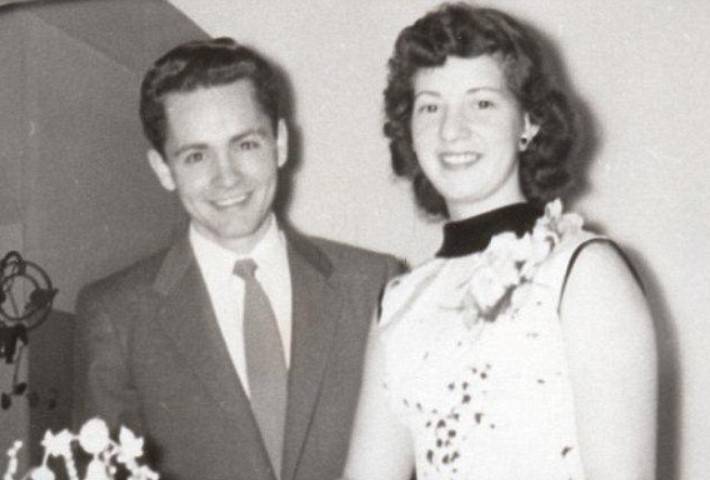
After their marriage in 1955, Rosalie Jean Willis gave birth to Charles Jr. while Manson was in prison.
When Rosalie Jean Willis was three months pregnant, the newly-married couple moved to Los Angeles where Manson supported his small family by stealing cars and working odd jobs across town. “It was a good life, and I enjoyed the role of going off to work every morning and coming home to my wife,” Manson once said, “She was a super girl who didn’t make any demands, but we were both just a couple of kids.”
Willis reportedly knew her young husband had a criminal past, but believed that could change him. Unfortunately, that proved impossible. Manson was soon arrested for having taken a stolen vehicle across state lines, which is considered a felony — one that landed him in Terminal Island prison in San Pedro, California after failing to appear in court.
Willis had only been married for a year and was now handling her pregnancy alone.
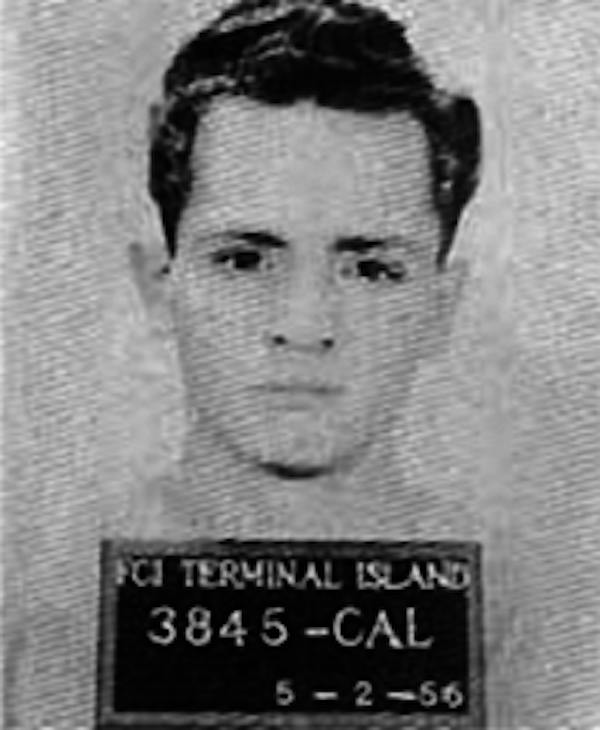
Wikimedia CommonsCharles Manson’s booking photo at Terminal Island. 1956.
Charles Manson Jr. was born in 1956. Thankfully, Rosalie Jean Willis’ mother-in-law graciously supported the single mom while her husband was incarcerated.
Together, the three frequently visited him in prison, but this difficult, unexpected situation wasn’t tenable for Willis in the long run. In March 1957, Maddox revealed to her son that Charles Manson’s wife had moved in with another man. The visits to prison ended here and resulted in a seemingly inevitable divorce the following year.
As for Charles Manson Jr., the boy was only 13 when the Tate murders shocked the nation. He would spend the rest of his short-lived life trying to distance himself from his father’s shadow but tragically failed to overcome that trauma. He shot himself in the head when he was 37 years old.
Tragedy Follows Charles Manson’s Wife
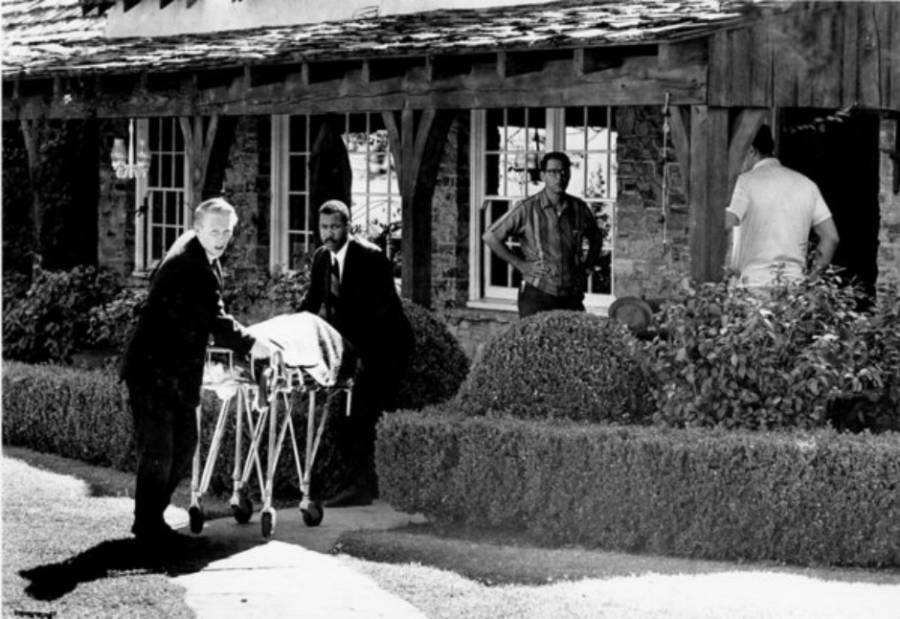
A body of one of the five Manson family victims is wheeled out of 10050 Cielo Drive.
The man Willis had been living with — Jack White — soon became the single mother’s second husband. They had two more sons together: Jesse J. White was born in 1958, while his brother Jed was born the following year. Charles Manson Jr. eventually changed his name to Jay White after his new father.
In contrast to her brief marriage to Manson, this second union with White spanned quite a few years for Rosalie Jean Willis. Ultimately, however, this promising marriage ended in divorce in 1965. Willis eventually gave marriage another chance when she married Warren Howard “Jack” Handley.
For a few good years, Willis managed to live a normal, perfectly happy life. The tides tragically turned, however — as though she were doomed. All three of her children died while she was alive and none of them died from natural causes.
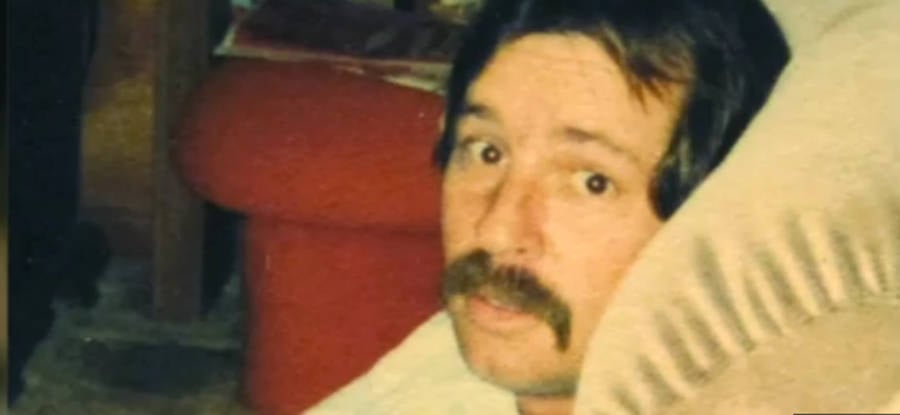
Charles Manson Jr. changed his name to unchain himself from the Manson name.
11-year-old Jed’s death in January 1971 was a complete accident. He was playing with a friend in the home of a Louis Morgan when his 11-year-old friend shot him in the gut.
Jesse followed. When he was 28 years old, a friend discovered him dead in a car. The two had been drinking at a Houston, Texas bar all night, and left on seemingly innocuous terms. Unfortunately, Jesse had a drug habit which ended in an overdose that night.
Meanwhile, Willis suffered somewhat from the gossip that necessarily accompanied being the ex-beau of Charles Manson. Her son who had his name was quick to inform others as to who his father was. Word allegedly spread and Willis was often treated as an outcast by her coworkers. Simultaneously, however, Charles Manson Jr. had difficulty grappling with who his father was.
Charles Jr. — Willis’ and Manson’s first-born son — died six years later. The 37-year-old had been plagued by the truth that his flesh and blood was that of Charles Manson, the psychopathic thorn in America’s side.
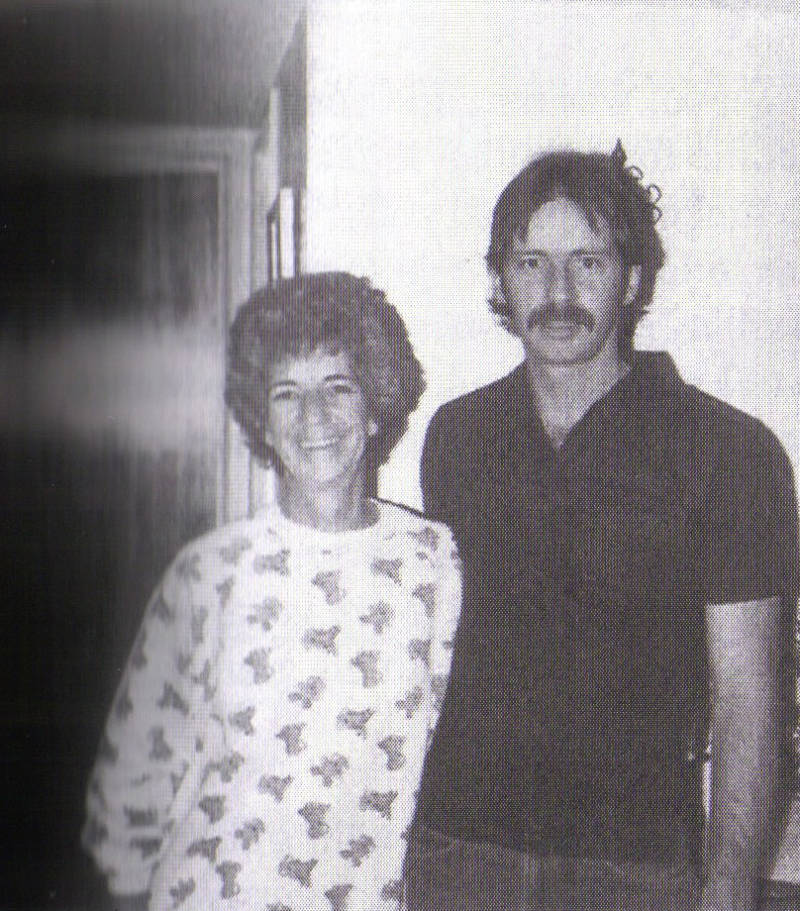
Rosalie Jean Willis with her son, Charles Manson Jr., who had changed his name to Jay White. Date unknown.
In 1993, he took his own life on the side of a highway in Burlington, Colorado near the Kansas state line. While alive, he actively distanced himself from his son because he feared becoming a damaging figure to him as Manson had been to him when he was young.
In the end, he shot himself in the head. Rosalie Jean Willis outlived all three of her children.
The Legacy Of Rosalie Jean Willis
On a brighter note, Charles Jr.’s son, Jason Freeman, successfully managed to overcome his familial demons and pave his own way. Willis’ grandson has since become a kickboxing cage fighter who “came out” as a descendant of the cult leader in 2012 in order to destigmatize the Manson name.
While his own family ordered him never to mention Charles Manson during his childhood, Freeman was desperate to break the “family curse” and express how he wanted nothing more than for his late father to have been able to reconsider suicide before pulling the trigger.
Handley died in 1998. Rosalie Jean Willis lived for another 11 years before passing on herself. Much about the people in Manson’s life — even those at one point closest to him, such as Willis — remains unknown.
A work colleague of hers in the 1970s, however, revealed that she was extremely personable and had a tremendous sense of humor. Fortunately, her grandson Jason Freeman can carry on her legacy and live a good life for all the Manson kids who were too troubled to continue on themselves.
After learning about Charles Manson’s first wife, Rosalie Jean Willis, look into the life of another one of his children, Valentine Michael Manson, born to Mary Brunner. Then, check out Charles Manson quotes that are weirdly thought-provoking.
The post Meet Rosalie Jean Willis, The Woman With Whom Charles Manson Tried To Lead A Normal Life appeared first on All That's Interesting.

Marion County Sheriff’s OfficeAmber Wright was ultimately found guilty of first-degree murder in her ex-boyfriend’s death.
In April 2011, it seemed like 15-year-old Amber Wright wanted to reconnect with her ex-boyfriend Seath Jackson. She texted Jackson, who was also 15, that she wanted to “work things out.” But Jackson’s text messages showed that he was uneasy.
He knew that she had been dating an older teenager named Michael Bargo, and that Jackson and Bargo had been arguing intensely in recent days. In fact, Bargo had even threatened to shoot Jackson at certain points.
So, Jackson texted Wright, “Amber if you have me jumped I will never give you the time of day.” Wright then responded, “I could never do that to you. I just want me and you back.”
Despite Jackson’s reservations, he agreed to meet up with Wright at a home in Summerfield, Florida, on April 17, 2011. When he arrived, he was murdered by Bargo and a group of his friends, who were waiting to ambush him.
Though Amber Wright did not physically attack Seath Jackson herself, prosecutors later argued that she had set the trap for him to be fatally beaten, tortured, and shot, with his body later burned in a backyard fire pit. Without Amber Wright’s invitation that night, investigators said, Seath Jackson would have never met such a terrible fate.
How The Teenage Romance Between Amber Wright And Seath Jackson Turned Toxic

Personal PhotoSeath Jackson was just 15 years old when he was brutally murdered.
Amber Wright and Seath Jackson were both 14 years old when they started dating. For the first few months of their relationship, the Florida teens seemed to be “inseparable.” At one point, Jackson confessed on Facebook that he loved Wright.
But offline, the relationship was unstable. Just weeks after Jackson declared his love, the two had broken up. Jackson suspected Wright of cheating on her with an older teen named Michael Bargo, who was already 18 at the time.
Amber Wright and Jackson traded public insults on Facebook, as they repeatedly attempted to make each other jealous following their split. At first glance, it seemed like ordinary teenage drama — but something darker was brewing behind the scenes.

Personal PhotoAmber Wright, pictured with Michael Bargo.
Bargo wrongly believed that Jackson had abused Wright during the pair’s earlier relationship, intensifying his already strong hatred of him. At one point, Jackson’s mother overheard Bargo telling Jackson, “I have a bullet with your name on it.”
By early April, things were escalating quickly. Bargo and his 16-year-old friend Kyle Hooper (who was also Wright’s half-brother) challenged Jackson and one of Jackson’s friends to a fight. But when Jackson and his friend approached, they heard a gunshot and fled. Bargo claimed that he had fired the gun “to scare them off a little bit.”
At this point, Bargo, Hooper, and Wright had all been spending a lot of time at their mutual friend Charlie Ely’s home in Summerfield, Florida. And by April 17, 2011, the group had put together a brutal plan to kill Jackson, an idea allegedly sparked by Bargo.
Their friend, 20-year-old Justin Soto, agreed to join in on the plot. Shockingly, James Havens, the 37-year-old ex-boyfriend of Wright’s mother was also aware of the plot.
Amber Wright would later claim that she thought Bargo was just joking. But the plan quickly went into motion. Wright then proceeded to lure Jackson to Ely’s home, claiming that she merely wanted to reconcile with him, and tragically, her trick worked.
The Fatal Ambush Of Seath Jackson Orchestrated By Amber Wright
When Seath Jackson arrived at Charlie Ely’s home on April 17, 2011, Michael Bargo and his co-conspirators were waiting to attack. First, Hooper lunged at Jackson, hitting him with a wooden object as Amber Wright and Ely left for a different room.
Then, Bargo began firing his gun, injuring Jackson but not killing him immediately. Wounded but still alive, Jackson managed to make it outside the home. He came close to escaping, but then, Soto returned to tackle him to the ground.
Bargo then shot him again.
But the attack did not stop there. Jackson was dragged back into the home and placed in a bathtub. The bathtub was used to partly contain Jackson’s blood as they continued to assault him. While cursing at him, they inflicted horrific torture upon him, including busting both of his kneecaps.

Police PhotoPolice interrogating Amber Wright.
Despite the brutality, Jackson was still showing signs of life, so Bargo shot him in the face twice to ensure his death, according to court documents.
Shockingly, the violence did not end with Jackson’s death. The group then fully broke his knees so they would be able to hog-tie his body and stuff his remains inside of a sleeping bag. They then put his body into a backyard fire pit, where they burned him.
Neighbors who lived nearby reported seeing unusually high flames that night.
After Jackson’s body was burned, his killers placed his remains inside of paint cans and discarded the cans in a quarry off State Road 40. At one point, Bargo realized that Jackson’s skull still had all the teeth inside, so he took a pair of pliers and pulled the teeth out one by one, in an attempt to further cover their tracks.
The group also attempted to cover all the other traces of the murder by using an extensive amount of bleach in the home. Wright and Ely initially took this task up on their own, but Hooper and Soto also participated in the cleaning.
Investigators would later say the group believed they had erased all of the evidence from their gruesome crime. They had not.
The Confession That Cracked The Case — And The Sentences That Followed
When Seath Jackson failed to come home, his parents quickly reported him missing. News coverage of his disappearance spread quickly, and as Kyle Hooper watched the reports, he broke down and ended up confessing his role in the crime to his mother.
Hooper’s mother immediately contacted authorities, and from there, the rest of the group was quickly rounded up and taken into custody. During police interrogations, Amber Wright, Hooper, and Ely all seemed to direct most of the blame onto Bargo, claiming they were all surprised that Bargo wanted him dead. They also claimed that the victim had shown up uninvited and that everything had spiraled out of control unexpectedly.
However, after investigators left them all in a holding cell together, they soon began discussing the murder in shocking detail, and Hooper even implied that Jackson had deserved to die at one point, saying he wasn’t “innocent.”
Unsurprisingly, they were all unaware that they were being recorded by police, and this recording became key evidence in the case.
Around the same time, Amber Wright gave her motive for her involvement, repeating earlier claims that she had been a victim of Jackson’s abuse: “He hit me. He almost gave me an STD. He cheated on me. He turned my friends against me.”

Marion County JailThe six people who were arrested in connection with the crime. Clockwise from top left: Justin Soto, Kyle Hooper, Charlie Kay Ely, James Havens, Michael Bargo, and Amber Wright.
Though Bargo had initially fled town, staying in Starke, Florida, he made no other attempts to lie low. In fact, people who saw him while he was on the run said that he described in horrific detail what he’d done to Jackson, seemingly showing no remorse. He was soon arrested, as police uncovered gruesome pieces of evidence, including burnt human remains in the fire pit that the group had failed to remove.
Amber Wright’s case drew the most attention. Prosecutors argued that she was the essential link, the person Jackson trusted, and the one who lured him into the trap. Wright maintained her claim that she never believed Bargo would actually carry out the killing.
“She’s manipulative, she’s diabolical,” one detective said of Wright. “She is the most dangerous 15 year old I’ve ever encountered.”
Amber Wright was ultimately found guilty of first-degree murder and sentenced to life in prison for her actions. Most of the other defendants in the case were also sentenced to life in prison, except for Havens, who pleaded guilty to accessory after the fact. Ely spent about nine years in prison before she was released in 2020. And Bargo was sentenced to death for his key role as the instigator of the murder, making him the youngest inmate on Florida’s death row.
Sonia Jackson, Seath Jackson’s mother, addressed Wright directly in court: “Amber, we hope that guilt eats you inside and out knowing that you caused all this. Seath would have never been at that house without your manipulation.”
The Fate Of Amber Wright Following The Trial
Though Amber Wright underwent a retrial in 2016 due to issues with how she was given her Miranda rights, she was found guilty of first-degree murder yet again and given the same sentence she received in 2012.
More than a decade later, Amber Wright’s role remains the most debated element of the case.
To prosecutors, she was the catalyst, the person whose text messages set everything in motion. Without her involvement, Jackson would have never entered that home. Her defense offered a different picture: a young teen caught in a volatile social circle, influenced by an older and increasingly violent boyfriend.
Either way, the enduring tragedy in the case is that Jackson never made it to his 16th birthday, and he left this world in a horrifically violent way. As Circuit Judge Anthony Tatti put it: “I have not seen or heard anything more despicable than what lead to Seath Jackson’s death.”
After learning about Amber Wright, read about the tragic murder of Hae Min Lee. Then, learn about the killing of Tristyn Bailey.
The post The Story Of Amber Wright And How She Led Her Ex-Boyfriend Seath Jackson To His Brutal Death appeared first on All That's Interesting.

Jordi Amorós/AGER ArchaeologyStone slabs that once made up the surface of the public forum in the ancient Roman city of Barcino were found beneath the streets of Barcelona.
Renovation work on a hotel in Barcelona has revealed stunning traces of the city’s ancient past. More than eight feet beneath the streets, archaeologists uncovered pavement slabs from the forum that was once the center of life in the Roman colony of Barcino.
These stone slabs are the first clear evidence of the forum’s surface ever found — and the discovery is completely remapping the ancient city.
Uncovering The Ancient Roman Forum Beneath Barcelona
In 2023, expansion work began on the Gran Hotel Barcino in Barcelona’s Gothic Quarter. While digging a pit for a new elevator, workers struck a stone slab, according to a statement by the Barcelona Archaeology Service.

Anna Làzaro/Barcelona Archaeology ServiceThe thickness of the stone slabs ranged from seven inches to more than a foot.
The discovery “completely changed the nature of the project,” and what started as a minor excavation of an area smaller than a parking space transformed into a massive dig covering more than 800 square feet.
Over the next two years, archaeologists uncovered what was once the surface of the public forum in the Roman colony of Barcino, the predecessor of modern Barcelona. This forum was located at the center of the city, and all of the major political, administrative, and religious buildings were located within it. Prior to this discovery, the only surviving ruins from the forum were four columns from the Temple of Augustus.
The slabs varied in size, with some stretching nearly five feet in length, and were made of stone quarried from the nearby hill of Montjuïc. It’s unclear whether they formed the floor of public buildings or the exterior plaza, as they’re the first example of this type of pavement ever found in the city.

J Irigoyen/Wikimedia CommonsPrior to the discovery of the pavement slabs, the ruins of the Temple of Augustus were the only remnants of Barcino’s forum.
In addition to the slabs, archaeologists discovered two wells connected by a siphon. They may have been part of a decorative fountain, as fragments of marble imported from the far-flung reaches of the Roman Empire — Greece, Anatolia, Egypt, and the Italian town of Carrara — were uncovered nearby.
While the surface of the forum is an exciting discovery in itself, even more revealing is its layout, which is changing what historians know about the map of ancient Barcino.
The History Of The Roman Colony Of Barcino
The Roman colony of Barcino on Spain’s Mediterranean coast was founded by Emperor Augustus between 15 and 10 B.C.E. Like any other city or military camp in the empire, it was built around two main streets: the cardo, which ran from north to south, and the decumanus, which ran from east to west.

Jordi Amorós/AGER ArchaeologyOne of the two wells discovered during the excavation of the forum.
The forum was located at the intersection of these two thoroughfares, but until now, experts believed that it lay parallel to the cardo. However, the pavement slabs revealed beneath the hotel run parallel to the decumanus instead.
Now, archaeologists say the forum was actually turned 90 degrees from its previously determined orientation. The Temple of Augustus may have also been rotated, totally remapping this area of Barcino.
What’s more, the excavations revealed how Barcino — and later Barcelona — changed over time. At the beginning of the fifth century C.E., around the time the Visigoths arrived in the region, some of the slabs were removed and seemingly reused in other construction projects. They were replaced by ceramic material.

Anna Làzaro/Barcelona Archaeology ServiceThe ruins of the forum were incorporated into the new design of the Gran Hotel Barcino.
Over the next 200 years, additional walls appeared, suggesting the forum became a more domestic space. Then, in the 14th or 15th century, a Gothic residence was constructed on the site along with a grain silo.
These extraordinary discoveries have been preserved and incorporated into the basement of the Gran Hotel Barcino, where guests will be able to get a close-up look at the city’s rich history. As the Barcelona Archaeology Service noted, this find represents “the value of preventive archaeology as an essential tool for preserving a heritage that is the only source of knowledge of the ancient city, before it is irretrievably lost.”
After reading about the remains of the Roman forum found beneath the streets of Barcelona, look through 33 photos of the Sagrada Familia, Barcelona’s world-famous church. Then, see some of the most astounding Roman ruins outside of Italy.
The post 2,000-Year-Old Ruins Of A Roman Forum Were Uncovered During Hotel Renovations In Downtown Barcelona appeared first on All That's Interesting.

U.S. Navy/Naval History and Heritage CommandThe USS Nevada off the Atlantic coast of the United States on September 17, 1944.
The wreck of the U.S. Navy warship Nevada has been discovered in the Pacific Ocean after nearly 72 years underwater. According to Fox News, the World War II battleship was found 65 nautical miles southwest of Pearl Harbor at a dizzying depth of 15,400 feet.
In a joint venture by private archaeological firm SEARCH and marine robotics company Ocean Infinity, autonomous underwater drones were deployed from the Ocean Infinity’s Pacific Constructor vessel in an effort to capture footage of the wreckage and positively identify it.
According to IFL Science, experts have known roughly where the ship sank, but this is the first time that anyone has actually seen it.
The rediscovery of this ship is made all the more remarkable considering its storied past. The Nevada survived the attack on Pearl Harbor, battles in the Pacific Theater, and atomic bomb testing in the Marshall Islands.

Ocean Infinity/SEARCHAn engraving on the bulkhead above the hatch leading to a shell handling compartment confirmed that this was, indeed, the Nevada.
The Naval History and Heritage Command noted that the Nevada was the only battleship to respond to the Dec. 7, 1941, attack on Pearl Harbor and was consequently extensively damaged by aerial bombs and one torpedo, but it managed to get beached and repaired.
Two years later, the ship took part in the May 1943 Attu landings before being relocated to assist troops crossing the Atlantic. Then, the Nevada took part in the June 1944 invasion of Normandy and in Operation Dragoon in southern France that same year.
Indeed, World War II made thorough use of the battleship, taking it to the skirmishes across the Pacific, including to the invasions of Iwo Jima and Okinawa in 1945, before being seriously damaged by a kamikaze pilot on March 27 and artillery on April 5 of that year.
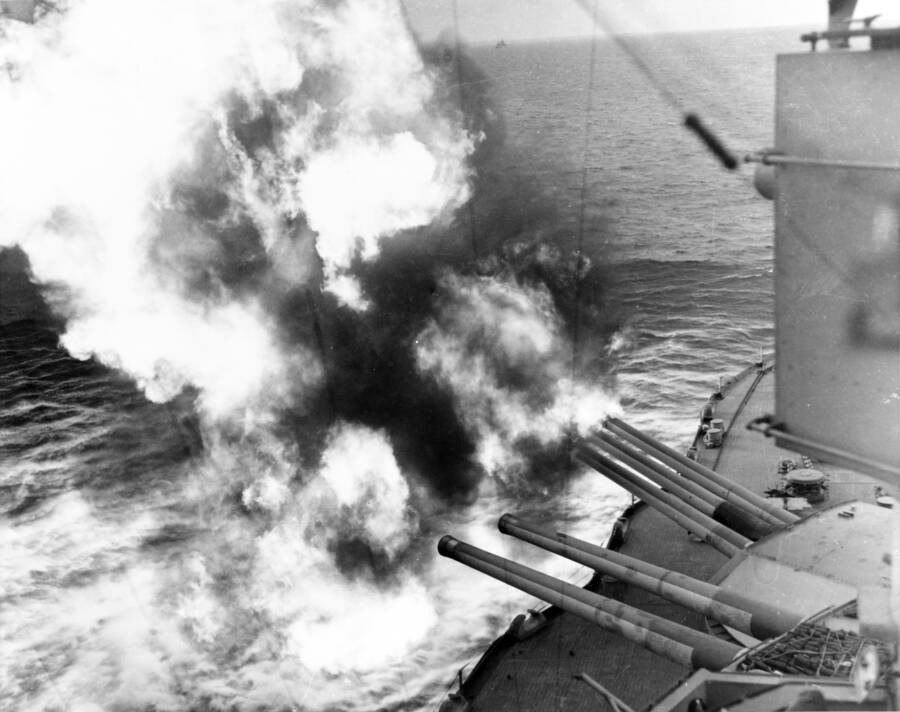
Wikimedia CommonsThe Nevada fires during the landings on Utah Beach during the Allied invasions as a part of D-Day.
When the war finally ended, the Navy used the seasoned vessel as a target ship for the infamous atomic bomb tests in the Bikini Atoll on the Marshall Islands in July 1946. The Nevada was not only damaged but was left too radioactive to be put back into use.
The Nevada was officially decommissioned in August 1946 and purposefully sunk by U.S. torpedos in 1948. It wouldn’t be seen for over seven decades — when a team of resourceful experts relocated it.
Ocean Infinity’s Pacific Constructor has been engaged at sea in numerous commercial tasks in the region even before the COVID-19 pandemic put everything on hold. She had surveyed over 100 square miles to find the sunken ship.

Ocean Infinity/SEARCHThe Nevada‘s 40mm gun has remained in position for 72 years and sits mounted next to a partly fallen Mark 51 “gun director” which crew members used to direct gunfire.
“Nevada is an iconic ship that speaks to American resilience and stubbornness,” said Dr. James Delgado, SEARCH’s senior vice president and lead archaeologist on the project. “Rising from its watery grave after being sunk at Pearl Harbor, it survived torpedoes, bombs, shells, and two atomic blasts.”
Delgado added that rediscovering the ship “reminds us not only of past events but of those who took up the challenge of defending the United States in two global wars. This is why we do ocean exploration — to seek out those powerful connections to the past.”

Ocean Infinity/SEARCHThe mast of the Nevada once stood over 100 feet.
For those of us at home, gazing at the geared steam turbines and triple gun turrets collecting marine growth, this discovery is a treat. It transports us back to a time in history where entirely different threats loomed — and were eventually overcome.
After exploring the wreck of the USS Nevada, explore the horrors of the Pacific Theater of World War II. Then, learn about the Nazi’s prized battleship, the Tirpitz, and how it was taken down by tiny submarines.
The post Researchers Find The USS Nevada, The Battleship That Survived Pearl Harbor, D-Day, And An Atomic Bomb appeared first on All That's Interesting.
When headlines announce the death of a beloved artist, athlete, government figure, or community leader, countless people are understandably overcome with shock and grief. But things can become even darker still if and when it’s revealed that that person died by their own hand.
All of the many famous suicides from story have a unique personal story behind them, though many of them also share striking, sad similarities. A great many celebrity suicides involve mental health issues in some form, while countless others involve addiction.
In all, the stories behind the famous suicides of everyone from Marilyn Monroe to Robin Williams show that even the rich, famous, and seemingly happy are not immune to the darkest of thoughts and the fatal consequences that those thoughts sometimes carry.
Famous Suicides: Robin Williams

Wikimedia CommonsRobin Williams, pictured in 1996.
His is not just one of the most famous suicides, but also one of the most shocking.
The death of Robin Williams stunned the world in 2014. Especially because he was known for his infectiously funny and good-natured personality, the loss of Williams left a lasting impact around the world.
Born on July 21, 1951, in Chicago, Williams eventually launched a career as an improviser and stand-up comedian. He transitioned to television in the 1970s with his show Mork & Mindy, which made him a household name.
Later in his career, Williams played iconic roles in films like Mrs. Doubtfire, Good Will Hunting, and Dead Poets Society. Unfortunately, throughout his life, Williams also battled drug and alcohol addiction as well as severe depression.

ABC Photo Archives/ABC via Getty ImagesRaquel Welch with Robin Williams on the set of Mork & Mindy on November 18, 1979.
On August 11, 2014, after a particularly rough period of time both personally and professionally, Williams was found dead in his California home. In a statement released by his publicist on the day of his death, she revealed that Williams had “been battling severe depression of late.”
His wife also said that on top of dealing with depression, the comedian had recently been diagnosed with Parkinson’s disease.
A press release issued the day after his death revealed how Robin Williams died: “asphyxia due to hanging.” There was also a pocket knife discovered at the scene and several cuts were made on his left wrist.
For days after his death, a stream of fans of all ages came by the comedian’s home to lay flowers and pay tribute to the man who had given them so much joy.

Eva Rinaldi/Wikimedia CommonsRobin Williams at the premiere of his movie Happy Feet Two on December 4, 2011.
His daughter, Zelda, spoke about the kind but troubled man the world adored, saying:
“He was always warm, even in his darkest moments. While I’ll never, ever understand how he could be loved so deeply and not find it in his heart to stay, there’s minor comfort in knowing our grief and loss, in some small way, is shared with millions.”
The post Discover The Tragic True Stories Of History’s Most Infamous Suicides, From Sylvia Plath To Kurt Cobain appeared first on All That's Interesting.
A Google search for “animals with Down syndrome” yields pages upon pages of articles, videos, and images purporting to depict “inspiring” or “paws-itively adorable” creatures with this genetic disorder that results in various physical and mental disabilities.
A few of the specific “animals with Down syndrome” that frequently appear on the internet have even attracted their own quasi-followings online. Chief among them may be Kenny the tiger, a rare white cat rescued from an unethical breeder in 2002 by Arkansas’ Turpentine Creek Wildlife Reserve, where he lived until his death in 2008.
White tigers are extremely rare to begin with and Kenny was particularly unique because, in addition to his beautiful white coat, he suffered from genetic facial deformities including an abnormally short snout and wide face.

This giraffe numbers among the scores of animals with Down syndrome — or so the internet would have you believe.
Then, online publishers and social media users took a look at Kenny’s face and made a rather large jump to the conclusion that he had Down syndrome.
In fact, it takes some careful scrolling through Google results before you see pages that are publishing the truth: the notion of animals with Down syndrome is almost completely fallacious.
The Truth About “Animals With Down Syndrome”

Kenny the tiger, a supposed animal with Down syndrome.
In truth, Kenny’s deformities are the result of generations of inbreeding rather than the kind of chromosomal mutation that accounts for Down syndrome in humans.
Because white tigers like Kenny are so rare in nature yet so desired for their unique fur, most that are alive today are the result of aggressive breeding programs that make heavy use of inbreeding between white tigers in order to try and keep the white fur trait alive.
The American Zoological Association actually banned these kinds of breeding practices in 2011, stating that:
“Breeding practices that increase the physical expression of single rare alleles (i.e., rare genetic traits)… has been clearly linked with various abnormal, debilitating, and, at times, lethal, external and internal conditions and characteristics.”
Despite the sad truth about Kenny having long since been known, many still mistakenly believe he had Down syndrome. One online video about Kenny and his supposed Down syndrome (a video that mocks the condition, no less) has more than 1.2 million views:
And Kenny is far from the only feline to be falsely advertised as having Down syndrome.
Otto the kitten became an internet sensation in his home country of Turkey. When the tiny cat passed away at only a little more than two months old in 2014, online publishers reported that his early death was related to the effects of Down syndrome.

hurriyetdailynews.comOtto the kitten
There’s just one problem: Cats of any kind, like virtually all animals, are unable to develop Down syndrome.
The Explanations For These Animals
Each human cell contains 23 pairs of chromosomes and Down syndrome appears in people affected by a genetic mutation that gives them three copies of chromosome 21.
The genetic makeup of non-human animals is too different from that of humans to conclude that the duplication of the same chromosome would have identical effects to the ones observed in humans. Furthermore, many animals don’t even have chromosome 21; cats, for example, have only 19 pairs of chromosomes.
The “animals with Down syndrome” plastered all over the internet actually have various conditions that may merely produce certain characteristics similar to those produced by Down syndrome in humans. Kenny the tiger’s wide-set eyes and short snout were caused by inbreeding, Otto the kitten’s abnormal facial features were never definitively explained but may have been caused by a genetic mutation or a hormone deficiency, and so on.

wimp.comA lion with facial abnormalities that is widely, and mistakenly, said to number among animals with Down syndrome.
Quasi-Down Syndrome In Apes
While the notion of animals with Down syndrome is a myth, apes are the one animal that seems to sometimes exhibit a genetic defect at least comparable to Down syndrome. Apes have 24 pairs of chromosomes as opposed to humans’ 23 and some apes have been diagnosed with having an extra copy of chromosome 22, which is similar to chromosome 21 in humans.

mundo.comA chimp with facial deformities due to a genetic defect.
According to a study from 2017, one chimpanzee with an extra chromosome 22 experienced growth defects, heart problems, and some of the other symptoms “common in human Down syndrome.”
Nevertheless, the researchers only went so far as to state that this chimp’s condition was “analogous” to Down syndrome, not that it was Down syndrome. Furthermore, this case was only the second recorded instance of this particular chromosomal defect in a chimpanzee and researchers are still unsure of much about this disorder.
Either way, whether chimp or kitten or tiger, the “animals with Down syndrome” you might find on the internet are not what online publishers claim them to be.
After this look at the mistaken belief in animals with Down syndrome, have a look at Earth’s strangest creatures and its ugliest animals.
The post Can Animals Have Down Syndrome? Inside The Truth Behind This Viral Internet Story appeared first on All That's Interesting.
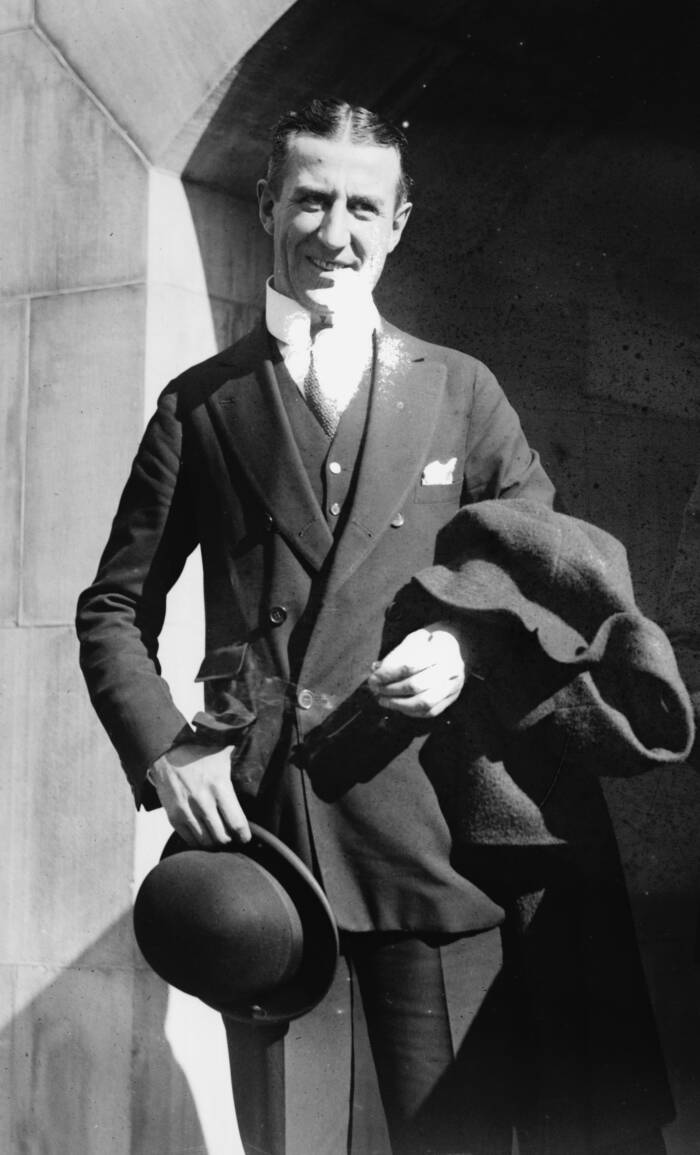
Library of CongressNicky Arnstein looked like the perfect gentleman from the outside – but his cons landed him in jail multiple times.
One of the most memorable characters from the 1964 Broadway musical — and the 1968 movie — Funny Girl is Nick Arnstein, the husband of Fanny Brice. In real life, he went by Nicky Arnstein, as well as several other aliases. So what was his true story?
Arnstein was a gambler who married three times, went to prison twice, palled around with the loan shark who fixed the 1919 World Series, and helped inspire comedian W.C. Fields. He was also one of the great loves of Fanny Brice, and an important character in the famous depictions of her life.
But real life was different from fiction. This is the true story of Nicky Arnstein, the con man who became Fanny Brice’s husband.
How Nicky Arnstein Became A Conman
Nicky Arnstein wasn’t named Nicky — or even Nicholas. He was born Julius Wilford Arndstein on July 1, 1879 in Berlin, and later migrated to the United States with his family as a young boy. His nickname “Nicky” came from the nickel-plated spokes on his bike and “Nickelplate” turned into Nicky.
As a boy in the 1890s, Arnstein participated in bike races — but found that “throwing” races was more to his liking. According to Fanny Brice: The Original Funny Girl by Herbert G. Goldman, Arnstein found throwing races “romantic,” and it led him into the world of gamblers and conmen.
Between 1909 and 1912, Arnstein was arrested multiple times in London, Paris, and Monte Carlo on swindling charges — and in one case, Arnstein narrowly avoided jail time after swindling a mark out of $15,000. Arnstein had gotten lucky. And his lucky streak seemed to extend when he crossed paths with the actress Fanny Brice while passing through Philadelphia in 1912.
Wikimedia CommonsIn the 1910s, Fanny Brice performed in The Ziegfeld Follies, which helped make her famous.
Brice, who’d gotten her big break performing with the Ziegfeld Follies, was in the city performing in a play. The couple quickly fell in love, but Arnstein lied to Brice from the beginning. He never mentioned he was already married, for example, and he claimed to be a “businessman,” a “promoter of inventions.”
“Everything Nicky ever did was like a gentleman,” Brice recalled in a 1950 interview. “He was a very well-educated man, had a great manner, and was very cultured. At parties, he would be surrounded by people ten minutes after he entered a room. He was a good speaker.” She added: “Of course, half of the things he would be telling them were lies.”
The ‘Heavenly’ Early Days Of Fanny Brice and Nicky Arnstein’s Relationship
Fanny Brice’s mother didn’t like Nicky Arnstein from the beginning. But Brice was smitten. She later stated that she was “in heaven” during the early days of the relationship, even though she learned from private detectives that her new beau was, in fact, still married to another woman.
Library of CongressFanny Brice stood by her husband during his many legal trials.
But it didn’t take Arnstein long to take advantage of Brice’s success. Soon after moving into the apartment Brice shared with her mother, Arnstein charged $10,000 in new furnishings to Brice’s name. When the pair moved to London, Arnstein convinced Brice to hire a butler and cook, and to buy him two racehorses. And back in New York, Arnstein cajoled Brice into moving to a swanky apartment across from the Plaza Hotel.
Arnstein did ultimately tell Brice about his marriage, but Brice brushed it off — she didn’t want to lose Arnstein and was determined to make the relationship work. Then, in 1918, Arnstein’s first wife sued Brice for “alienation of affection,” but divorced Arnstein that year, leaving him free to marry Brice.
Nicky Arnstein and Fanny Brice then finally got married, and ultimately had two children together. But storm clouds had already begun to gather.
Nick Arnstein In Sing Sing And Leavenworth
William BriceFanny Brice and Nick Arnstein’s children, Frances and William.
Nicky Arnstein described himself as a businessman to Fanny Brice. He always claimed to be on the brink of success, if only his next scheme worked. “[Nick] never worried about anything,” Brice recalled in 1950. “In 1920 he would say, ‘In 1921 I’m going to have a million dollars.’ In 1921 he would say, ‘In 1922 I’m going to have a million dollars…”
Although Arnstein kept the details vague, Brice didn’t ask many questions – even when Arnstein’s criminal activities caught up with him.
In 1915, before they married, Arnstein was sent to Sing Sing on wiretapping charges. Brice pawned her jewelry to try to help fund his appeals, visited him every week for two years, and secured Arnstein a pardon.
Then, in 1920, authorities charged the ex-con with a conspiracy to sell $5 million in stolen bonds (more than $80,000,000 today), declaring that Arnstein was the “master mind” of the plot. Brice retorted, “Nicky Arnstein couldn’t mastermind an electric light bulb into a socket.”
New York Times ArchivesA New York Times article calling Nicky Arnstein the “head of the plan” behind a 1920s bonds theft plot.
Arnstein went on the lam and became the FBI’s most wanted criminal. But he ultimately agreed to turn himself in in exchange for a reduced sentence, and, in 1924, was sentenced to three years in Leavenworth.
During this time, Brice also gave birth to their two children: Frances, who was born in 1919, and William, who was born in 1921. But Arnstein was not very interested in his children, even after he returned from prison in 1927.
The End Of Nick Arnstein And Fanny Brice’s Marriage
The relationship between Fanny Brice and Nicky Arnstein had been marked by intense fights and separations. Once, Brice shattered a glass and shoved it in Arnstein’s face. Yet, though Brice had stood by Arnstein through two prison sentences, she filed for divorce shortly after he returned home.
Bibliothèque nationale de France A 1927 photograph of Arnstein and Brice captures the couple just before their divorce.
What was the final straw? Brice accused Arnstein of infidelity. In fact, Arnstein had been unfaithful throughout their relationship. But by the late 1920s, Brice’s patience had worn out.
Arnstein did not deny that he’d cheated. But according to the Daily Telegraph he sardonically defended himself by claiming that he “found [Brice] so much more beautiful, he was uncomfortable in her presence” so he “began seeking the society of other… plainer women.”
Through her lawyer, Brice pushed for a divorce. Arnstein refused on the grounds that women were “a dime a dozen” so he could ignore Brice’s demands. Yet legal trouble continued to follow Arnstein. He faced a wiretapping charge in Ohio and new charges over his 1920 bond thefts. Arnstein eventually gave Brice a divorce and moved to California.
Just two years later, Nicky Arnstein married again. But he would always be remembered for his connection to Fanny Brice, thanks to several famous depictions of her career.
The Fictional ‘Nick Arnstein’ Of ‘Funny Girl’
Nicky Arnstein’s name would become famous in the 1964 musical and 1968 movie Funny Girl. But before Funny Girl, there was Rose of Washington Square, a thinly-veiled 1939 film about Fanny Brice. It included a character based on Arnstein and, in response, Arnstein sued the studio.
Columbia PicturesOmar Sharif, as Nicky Arnstein, and Barbra Streisand, as Fanny Brice, in Funny Girl.
The movie “shows me as something I never was,” Arnstein stated, complaining that the character in the movie was a coward, conman, and swindler who cheated on his wife.
“I have tried industriously to live down my mistakes,” Arnstein proclaimed, insisting to the press that he wasn’t after money. His lawsuit asked for $400,000, and Arnstein was awarded a smaller, but sizeable, settlement.
Nicky Arnstein lived long enough to see Funny Girl open on Broadway. (Fanny Brice died more than a decade before, in 1951.) But he didn’t sue this time. Why? For one, the Funny Girl version of Arnstein married fewer wives, committed fewer crimes, and served fewer prison sentences. Indeed, it was produced by Ray Stark, who had married Arnstein’s daughter Frances. Stark smoothed out many of the family skeletons while producing the play.
So, in the end, gambler and conman Nicky Arnstein lucked out. The best-known version of his life erases his darkest moments.
After reading about Nicky Arnstein, the conman husband of Fanny Brice, look through these stunning photos of New York City in the 1950s. Or, learn about some of the most shocking scandals from Old Hollywood.
The post The True Story Of Nicky Arnstein That ‘Funny Girl’ Didn’t Tell appeared first on All That's Interesting.

Bijay Chaurasia/Wikimedia CommonsMount Everest’s Death Zone begins at an elevation of about 26,200 feet.
Every year, as many as 1,000 climbers attempt to reach the peak of the world’s highest mountain. But to get there, they have to survive Mount Everest’s “Death Zone.”
Everest’s summit towers 29,032 feet above sea level, and everything above an elevation of 26,200 feet — or 8,000 meters — is considered the Death Zone. Oxygen levels are low, temperatures are frigid, and the dangers are countless.
More than 300 people have died while climbing Everest, many of them in the Death Zone. Some perished from hypothermia, others from hypoxia, and still more from avalanches, blizzards, falls, and other accidents and natural disasters.
Many of these bodies still remain on the mountain as a chilling reminder to other climbers about how dangerous Mount Everest’s Death Zone really is.
Inside The ‘Death Zone’ Of Mount Everest
Climbers who wish to scale the world’s highest mountain have a tough route ahead of them. The hike to Base Camp alone takes over a week, and then climbers must spend several more weeks acclimatizing to the high altitude. They continually ascend to higher camps and then return to Base Camp, passing through dangerous spots like the avalanche-prone Khumbu Icefall and the steep and icy Lhotse Face.
Then, they make their summit push. After reaching Camp IV at the South Col, the ridge between the peaks of Everest and Lhotse — the fourth-highest mountain on Earth — they venture into the Death Zone. This lethal section of Mount Everest begins at an elevation of 26,200 feet, just above the South Col.

Tirthakanji/Wikimedia CommonsCamp IV sits on the South Col, just before the Death Zone begins.
The human body can only survive at such high altitudes for about 24 hours before it begins to break down — and that’s with supplemental oxygen. Climbers must leave Camp IV, reach Everest’s peak, and return within that time period or face devastating consequences.
“It’s a living Hell,” climber Dave Carter told PBS in 1998. “The only way to describe it is an utter exhaustion. You really don’t care if you die or if you just sit down and don’t go any further.”
“It’s just hard work,” agreed mountaineer David Breashears. “Everything about being at altitude is hard. We go up with the best technology available to us, the best training. And you can still end up frozen to death at 27,500 feet. That’s what makes Everest Everest.”
So, what exactly is it about Mount Everest’s Death Zone that’s so lethal?
The Effects Of High Altitude On The Human Body
The air in the Death Zone of Mount Everest has just one-third the amount of oxygen as the air at sea level. When the human body doesn’t get enough oxygen, conditions like high-altitude pulmonary edema can develop. Fluid accumulates in the lungs and blood vessels become constricted, leading to shortness of breath and extreme fatigue.

Kanchhi Dolma Hyolmo/Wikimedia CommonsNepali guide Kanchhi Dolma Hyolmo atop the summit of Mount Everest in 2012.
A similar illness, high-altitude cerebral edema, impacts the brain and causes a decline in mental function, drowsiness, and ultimately loss of consciousness. Climbers suffering from cerebral edema may become confused and make poor decisions — which can quickly lead to dangerous situations on Everest.
“Judgement becomes impaired, a person becomes confused,” mountaineer Peter Hackett explained to PBS. “They don’t even know where they are as it gets worse. People hallucinate.”
Low oxygen levels are just one of the threats in Mount Everest’s Death Zone. Temperatures stay well below freezing, so frostbite can develop rapidly. Indeed, many of the mountain’s past victims froze to death.
Then, there are the natural disasters.
Tragedies In Mount Everest’s Death Zone
On May 10, 1996, three groups attempted to summit Mount Everest. Because nobody else had reached the peak yet that year, their ascent was delayed as their Sherpas installed ropes and ladders. What’s more, several climbers had little experience, which also slowed their progression up the mountain.
As a result, many of the expedition members didn’t reach the summit until well after noon. When a blizzard blew in that evening during their descent, they were still within the Death Zone.
Visibility was quickly reduced to nearly zero. The fixed ropes were covered in snow, leaving the groups with no way to safely continue down the mountain. During this extended amount of time in Mount Everest’s Death Zone, some climbers ran out of oxygen, while others succumbed to exposure.
By the following day, eight people were dead, including Tsewang Paljor, who froze to death after summiting with other members of the Indo-Tibetan Border Police. His corpse may be the infamous “Green Boots,” a body used as a macabre landmark for other climbers at an elevation of 27,890 feet.

Maxwelljo40/Wikimedia CommonsThe corpse known as “Green Boots” is likely the body of Tsewang Paljor, who perished in the 1996 Mount Everest disaster.
The 1996 Mount Everest disaster also nearly claimed the life of Beck Weathers, who was left for dead but shocked the survivors from his group when he stumbled back into camp.
Two years later, Francys Arsentiev also perished in the Death Zone of Mount Everest just after becoming the first American woman to summit the world’s highest mountain without using supplemental oxygen. While this accomplishment put her name in the record books, it also slowed her descent. Arsentiev was too exhausted to make it back to camp and had to spend the night in the Death Zone.
She died the next morning, and her husband also lost his life while searching for help. Arsentiev’s corpse became known as “Sleeping Beauty.”
As the number of climbers who attempt to summit Mount Everest each year increases, so do the dangers. In May 2024, dozens of people were lined up on the final ridge before the peak when disaster struck.
With a sudden rumble, some of the snow beneath their feet slid down the steep mountainside. “It felt like an earthquake,” Nepali guide Vinayak Jaya Malla told Outside magazine. “There was a huge noise and everybody jumped back away from the cornice. I cried out because the mountain under us was shaking, but nobody could hear me. Everyone was terrified.”
Several climbers started falling — and only some of them were clipped into a safety rope. Two men plunged down the Kangshung Face, a nearly vertical wall of rock and ice.

MagentaGreen/Debasish Biswas Kolkata/Wikimedia CommonsClimbers ascend the final ridge before the peak of Mount Everest. 2010.
American climber Mark Baumgartner recalled, “I was like holy sh—t — those people aren’t stopping. Two people were sliding to their deaths. And it was silent.”
There was nothing anyone could do. As Malla noted, “In the Death Zone, search and rescue isn’t always possible. Besides, there wasn’t any point as they were definitely dead.”
Their bodies still haven’t been recovered. And even if they were found, moving the corpses of fallen climbers is nearly impossible. Helicopters cannot reach the Death Zone, and other mountaineers risk losing their own lives while trying to retrieve the dead.
As such, Mount Everest’s Death Zone isn’t just an obstacle on the way to the top of the world’s highest mountain — it’s the final resting place of hundreds of hopeful climbers.
After learning what makes Mount Everest’s Death Zone so dangerous, go inside the story of Hannelore Schmatz, the first woman to ever die on Everest. Then, read about George Everest, the namesake of the famous mountain who never even laid eyes on the landmark.
The post Why The Death Zone Of Mount Everest Has Claimed The Lives Of Hundreds Of Climbers appeared first on All That's Interesting.

Soprintendenza Archeologia Belle Arti e Paesaggio di Salerno e Avellino/FacebookIt’s unknown why children would be buried with a kind of bronze warrior belt usually reserved for adult men.
Ongoing archaeological work in Pontecagnano Faiano, located in Italy’s Salerno province, has turned up countless archaeological treasures over the past six decades. But archaeologists’ most recent discovery at the site is especially astounding: a collection of 34 Samnite burials that reveal illuminating information about the funerary practices of this bygone ancient people.
The graves contained men, women, and children, as well as a wealth of grave goods. But the most curious attribute of this burial site is the graves of the children, some of which were laid to rest with large bronze belts. In the past, such an item has only been documented in the burials of adult warriors, leaving this new find somewhat shrouded in mystery.
The Samnite Children Buried With Bronze Belts At The Necropolis In Salerno
According to a statement from the Superintendency of Archaeology, Fine Arts and Landscape of Salerno and Avellino, the 34 Samnite graves were discovered during a much larger archaeological project in the region that dates back to the 1960s. The area was occupied continuously from the 9th century B.C.E. until the Roman period, and has thus turned up countless archaeological treasures over the past several decades.
Most recently, archaeologists uncovered a set of 34 burials from the Samnite people, a culture that emerged in roughly the sixth century B.C.E. and lasted until they were conquered by the Romans in the first century B.C.E. The graves in Pontecagnano Faiano appear to date from the third or fourth century B.C.E., and include a mix of men, women, and children.
But of all the Samnite burials at the site, the most intriguing are those of the children, some of whom were buried with large, bronze belts.
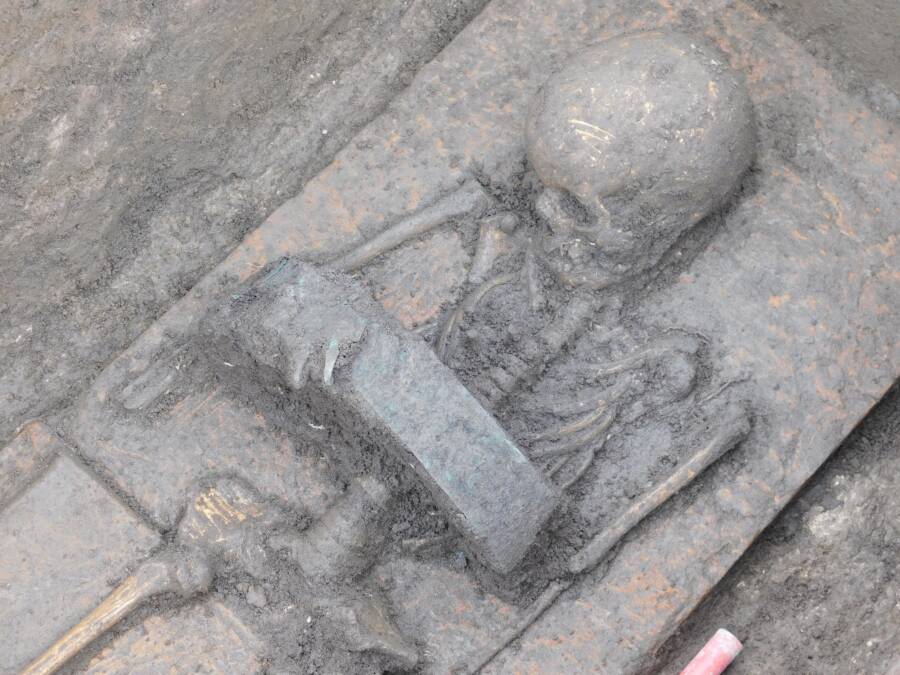
Soprintendenza Archeologia Belle Arti e Paesaggio di Salerno e Avellino/FacebookOne of the Samnite children that was buried with a large bronze belt, an unusual grave good for a child.
Of the 34 burials at the site, 15 are children between the ages of two and 10 years old. In two of these graves, the children’s bodies are adorned with a large bronze belt that is clearly too large for their small frame.
Such a grave good is usually found buried with warriors, which raises questions about why the Samnite people of Pontecagnano Faiano buried children with such belts. They may be indicative of the child’s family status, or perhaps suggest the children’s’ hereditary social rank. The belts could also signify something else entirely, and could perhaps be a token meant to protect the children after death.
Though the significance of the belts in the children’s graves is not known, the overall burial ground itself is rich with information about Samnite funerary practices, thanks to both the other grave goods that were unearthed as well as the design of the gravesites.
Other Striking Finds At The Samnite Burial Ground In Pontecagnano Faiano
While the bronze belts in the children’s graves were by far the most intriguing find at the Samnite burial ground, archaeologists made a number of other discoveries as well.

Soprintendenza Archeologia Belle Arti e Paesaggio di Salerno e Avellino/FacebookThe newly documented graves, seen from above, are part of a much larger archaeological project that started in the 1960s.
In the burials of the Samnite men, archaeologists uncovered grave goods like spearheads and javelin points. Meanwhile, in the graves of women, items like rings or fibulae were far more common. Archaeologists also uncovered pottery spread across the graves, including paterae (shallow drinking vessels), skyphos (short cups with two handles), and other small cups.
Archaeologists furthermore documented the arrangement of the graves, which appear to be laid out in familial clusters. Most of the graves consist of a pit in the ground, covered by a sloped roof made of tiles. One grave, however, was constructed with travertine, while another was made from tufa.
In all, the site itself tells an intriguing story about the Samnite people, a group of Italic peoples who spoke the lost language of Oscan and lived in central-southern Italy between the third and fifth centuries B.C.E. They clashed with Rome during the Samnite Wars (343-290 B.C.) and were ultimately absorbed by the nascent Roman Empire in the last century B.C.E.
After reading about the 34 Samnite burials discovered in Salerno, Italy, discover the stories of some of the most fearsome gladiators to ever fight in ancient Rome. Then, go inside the harrowing story of the 79 C.E. eruption of Mount Vesuvius, and how it destroyed the nearby town of Pompeii.
The post Archaeologists In Italy Just Found An Ancient Necropolis Containing Children Mysteriously Buried With Massive Bronze Belts appeared first on All That's Interesting.
Ankhesenamun was born Princess Ankhesenpaaten sometime around 1350 B.C., the third of six daughters born to King Akhenaten and Queen Nefertiti. For over three thousand years, much of her life has been a mystery, a fascinating patchwork of bizarre facts and strange omissions.
Though her story is remarkable in its own right, it’s Ankhesenamun’s half-brother who catapulted her to historical prominence: King Tutankhamun, or King Tut, is the most famous Egyptian pharaoh on the planet because of his intact, treasure-laden tomb found in 1922.
Wikimedia CommonsAnkhesenamun, King Tut’s wife, shown on the right giving flowers to her husband.
And Ankhesenamun was his wife. Yes, you read that right: Ankhesenamun was both King Tut’s half-sister and his wife.
It was a different world. Egypt was experiencing dramatic religious upheaval, and a dynasty hung in the balance. Incestuous marriages among the ruling class was common.
In fact, Ankhesenamun’s marriage to Tutankhamun might not have been her first inter-family marriage — or even her last.
The Religious Upheaval That Made A Dynasty Disappear

Wikimedia CommonsStatues of Akhenaten and his queen, Nefertiti, at the Neues Museum in Berlin.
Incest made sense to the ruling families of Ancient Egypt. Their power came with its own mythos; many believed — or at least publicly claimed — they were descended from gods.
Inter-family marriages, then, were about keeping a sacred bloodline pure. They also concentrated power in the royal family’s hands, effectively delegitimizing other contenders for the throne.
With no understanding of genetics, they were incapable of grasping the dangers of incest — and they paid the price. Though his parentage is uncertain, many point to Tutankhamun as a victim of inbreeding, citing evidence of a clubfoot and other serious congenital health issues in his remains. Some have argued his parents were likely full siblings.
It was a fate Ankhesenamun was destined to share.
Historians have discovered compelling evidence that the mysterious royal lady might, as a third daughter of the pharaoh, have served as a bride for her father, Akhenaten, after Queen Nefertiti died — but before she was married to her brother Tutankhamun.

Wikimedia Commons A depiction of Akhenaten and his family.
She wasn’t alone; historians believe that Akhenaten may have tried to conceive children with Ankhesenamun’s older sisters. The stories on the walls of family tombs suggest those pregnancies ended in miscarriage and death.
Akhenaten — and his dynasty in general — were in a particularly vulnerable position, which is perhaps one reason he felt securing a wide field of heirs was important.
Their difficulties were entirely of his making. Akhenaten was in the process of overhauling centuries of Egyptian religious tradition in a stunning and unprecedented move toward monotheism.

Flickr / Richard MortelAkhenaten, Nefertiti, and their daughters are displayed under the rising image of Aten, the sun disc.
Though history tells us what he did, few records remain to help us understand why Akhenaten turned his back on the old gods and embraced Aten, the sun-disc, as the supreme being for Egyptians to worship.
It was a decision that had the potential to undermine the entire Egyptian power structure, and it was particularly dangerous because it dismantled the authority of the priests, who were a powerful faction in their own right. Without their support, the royal family found itself increasingly friendless.
Ankhesenamun Marries Tutankhamun And The Old Gods Are Restored

Wikimedia Commons Ankhesenamun on the right, King Tut on the left, this time in shiny gold and full color.
The move away from Amun-Ra and the rest of the Egyptian pantheon, gradual at first, had a dramatic effect on the Egyptian state.
With the priests disenfranchised, control passed to the army and the central government; bureaucracy reigned and bred corruption.
And then, just as suddenly as it had begun, the greatest religious revolution in centuries came to an end: Akhenaten died and Tutankhamun came to power.
Precariously placed and with little time to consolidate power, a young Tutankhamun wed his teenage sister, Ankhesenamun, and together they quickly retreated from their father’s radical religion.
Pressured, perhaps, by the priests who were a vital pillar of royal power, they changed their own names. Tutankhaten, meaning “the living image of Aten,” changed the suffix in his name to “Amun,” swapping his father’s sun-disc for the traditional sun god of the Egyptian pantheon.
Ankhesenamun, formerly Ankhesenpaaten, followed suit.
Just like that, the great transformation Akhenaten had begun — raising Aten, building new temples with the bones of the old, striking out Amun-Ra’s name and prohibiting worship of the old pantheon — was over.
But peace still proved elusive.
The Brief And Unstable Reign Of Tutankhamun and Ankhesenamun, Egypt’s Royal Teenagers

Wikimedia CommonsA depiction of King Tut with a cane on the walls of his tomb.
It was a frightening time; both the king and queen were very young and in charge of running the entire country. Tut and his bride initially relied on powerful advisors to govern the ancient nation — a policy that may have eventually proved their undoing.
Tut’s time as king wasn’t the happiest. His mummy suggests he was frail and plagued by illness — a hypothesis corroborated by the discovery of hundreds of ornate canes in his famous tomb.
Heirs might have stabilized Tut’s reign, and evidence supports the idea that he and Ankhesenamun tried without success to have children. The mummies of two female fetuses, five to eight months in age, were found in King Tut’s tomb.
Genetic testing — possible because of the royal embalmers’ skill — confirms the unborn daughters belong to Tut and a nearby mummy, most likely Ankhesenamun.
It also reveals that the older of Tut’s unborn daughters, if brought to term, would have suffered from Sprengel’s deformity, spina bifida, and scoliosis. Once again, the royal family of Egypt suffered at the hands of genetic disorders they couldn’t understand.
Tut’s reign, though famous, was brief. He died young, at 19, in what historians for many years imagined to be a dramatic accident.
Inspired by the pictures of a healthy young man riding a chariot across the sides of Tut’s casket and around his tomb, some historians hypothesized a chariot race gone wrong, which would have explained the fracture in his leg and damage to his pelvis. Infection, they imagined, set in and led to death by blood poisoning.
Wikimedia CommonsA depiction of King Tut riding on a war chariot.
Others, noticing bone fragments in the royal mummy’s skull, postulated a blow to the head — perhaps murder by a scheming advisor or relative.
Further analysis, however, rendered this unlikely; Tut’s skull was intact, and the bone had actually chipped off a vertebrae in his neck — damaged that probably occurred some 3,000 years after his death when Howard Carter’s 1922 team pried off his gold death mask.
The latest thinking on Tut’s death blames an infection that resulted from a fracture in his left thigh — not the result of a chariot accident, since the king, with a number of physical impairments, probably could not have raced. His immune system, weakened from several bouts of malaria, couldn’t fight the infection.
Regardless of how it happened, the result was the same: Ankhesenamun was left to fend for herself.
What Happened To Ankhesenamun After Tut Died?
Wikimedia Commons Howard Carter opening King Tut’s sarcophagus in 1922.
King Tut’s wife may have next married Ay, a powerful advisor who was close to both her and Tut — perhaps because he was also her grandfather. But the historical record is unclear.
There is good reason to believe that life after Tut’s death was difficult and frightening for Ankhesenamun.
She may have been the author of an undated letter to Suppiluliumas I, the king of the Hittites. In the letter, an unidentified royal woman makes a desperate plea for the Hittite leader to send her a new husband; her old husband is dead, she says, and she has no children.
The letter’s author needed someone to be king of Egypt, and it didn’t matter if that someone came from Egypt’s chief military rival as long as he stepped in to save her kingdom.
Suppiluliumas I agreed to send Zannanza, a Hittite prince. But Egyptian forces, perhaps loyal to Ay, killed Zannanza at the border of Egypt. Rescue never came.
Wikimedia CommonsA statue of Ankhesenamun and King Tut at Luxor.
Ankhesenamun disappears from the historical record sometime between 1325 and 1321 B.C. — an absence that to historians signals her death. Because no one knows what happened to her, scholars have sometimes referred to King Tut’s wife as Egypt’s Lost Princess.
But it isn’t only time that has fragmented her story. Ankhesenamun’s role in one of Ancient Egypt’s most contentious periods was lost deliberately, excised from the annals of history by the new dynasty that rose to power just decades later.
Backed by the priests, the new rulers branded the sun-disc worshiper Akhenaten a heretic and scrubbed him and his immediate descendants from the list of pharaohs, sealing their tombs and consigning their stories to 3,000 years of silence.
After learning about Ankhesenamun, King Tut’s wife and sister, check out these shocking cases of famous incest throughout history. Then, read about Charles II of Spain, who was so ugly he scared off two wives.
The post Inside The Tragic Life Of Ankhesenamun, The Wife Of Tutankhamun appeared first on All That's Interesting.
Ted Bundy remains one of American history’s most infamous serial killers. His expertly masked sociopathy helped him murder more than 30 women across seven states in the 1970s, but also to earn the affections of a young divorcee named Carole Ann Boone.
Not only did Boone become Ted Bundy’s wife while he was on trial, but she even gave birth to their daughter Rose while he was on death row.
Netflix, Conversations With a Killer: The Ted Bundy TapesCarole Ann Boone, Ted Bundy’s wife, at his trial in 1980.
Carole Ann Boone and Ted Bundy conceived their child while he was locked up and acting as his own defense attorney for the murder of 12-year-old Kimberly Leach. The lovers carried on their relationship until finally divorcing three years before his death by electric chair on January 24, 1989.
This is the story of Carole Ann Boone, Ted Bundy’s wife and the mother of his child.
Carole Ann Boone Meets Ted Bundy
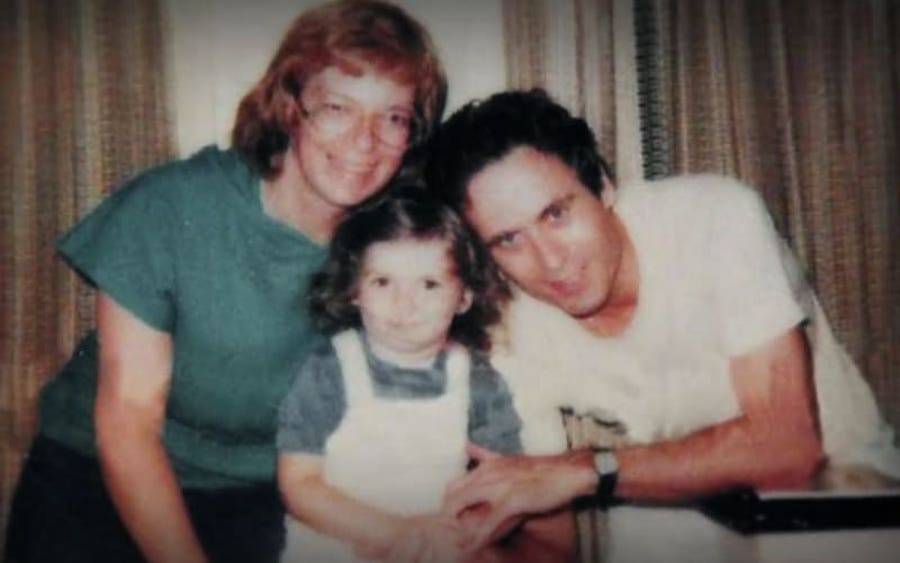
NetflixCarole Ann Boone, Rose Bundy, and Ted Bundy.
Carole Ann Boone’s entanglement with the serial killer began in 1974 — long before she became Ted Bundy’s wife — as a harmless office relationship in the Department of Emergency Services in Olympia, Washington.
According to Stephen G. Michaud and Hugh Aynesworth’s The Only Living Witness: The True Story of Serial Killer Ted Bundy, Boone was a “lusty-tempered free spirit” who was going through her second divorce when she met Ted. Though both were still in relationships when they met, Bundy expressed a desire to date her — which Boone refused at first in favor of a platonic friendship she began to cherish dearly.
“I guess I was closer to him than other people at the agency,” said Boone. “I liked Ted immediately. We hit it off well.” She didn’t know that Bundy was kidnapping, raping, and murdering young women.
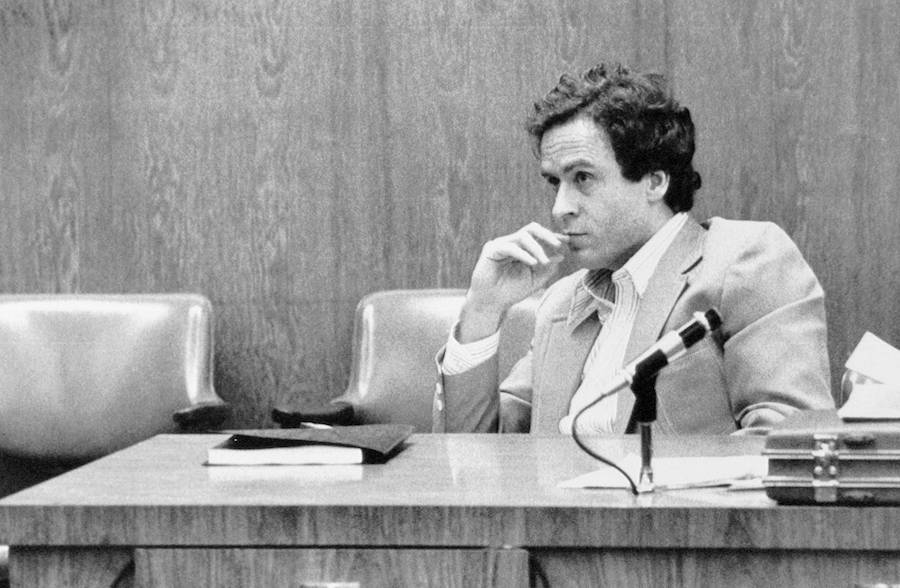
Bettmann/Getty ImagesTed Bundy on the third day of jury selection at the Orlando trial for the murder of 12-year-old Kimberly Leach, 1980.
While it would appear strange for someone to take so quickly and affectionately to a mass-murdering criminal like Ted Bundy, it’s important to keep his sociopathic charm in mind. Bundy kept the women in his life — those he didn’t kill — at a distance, as to not blur the lines between his nightly bloodlust and his friendly daytime persona during work hours.
As with Elizabeth Kendall, Ted Bundy’s prior girlfriend of seven years for which he served as a de facto father figure to her daughter, his qualities as a potential partner seemed to stem from a mysterious allure. Women felt that there was something substantive to him that was unspoken. But that this mystique was rooted in killing and mental distress, of course, wasn’t obvious at the time.
“He struck me as a rather shy person with a lot more going on under the surface than what was on the surface,” Boone explained. “He certainly was more dignified and restrained than the more certifiable types around the office. He would participate in the silliness parkway. But remember, he was a Republican.”
Bundy was vehemently opposed to the hippie and anti-Vietnam movements of the time and appeared socially conservative in contrast to many of his peers. Perhaps this, an image of respectability and stoic manliness, was a fair portion of what drew Carole Ann Boone into his life.
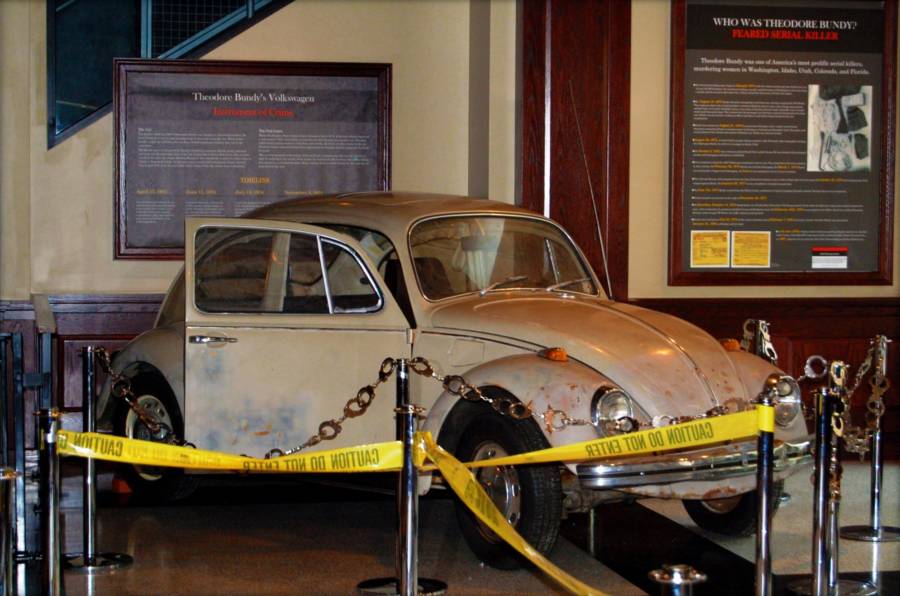
Wikimedia CommonsTed Bundy’s infamous Volkswagen Beetle at the National Museum of Crime & Punishment in Washington, D.C.
In 1975, Ted Bundy was arrested in Utah when police found pantyhose, a ski mask, handcuffs, an ice pick, and a crowbar in his iconographic Volkswagen Beetle. He was ultimately convicted of the kidnap and assault of a 12-year-old girl.
Nonetheless, Carole Ann Boone and Ted Bundy’s relationship slowly grew stronger. The two exchanged letters and Boone visited the state for seven days to see him. Carole Ann Boone wasn’t yet Ted Bundy’s wife, but they were getting closer and closer as time went by.
Two years later, Bundy was extradited to Colorado to finish his 15-year sentence. With the help of money smuggled in by Boone, Bundy concocted an impressive prison escape. He then fled to Florida where he committed the two most significant acts on his criminal record — the murder of Chi Omega sorority girls Margaret Bowman and Lisa Levy, and the kidnapping and murder of 12-year-old Kimberly Leach. Ever loyal to her friend Ted, Boone moved to Florida to attend the trial.
A Relationship Blooms Between Boone And Bundy

Bettmann/Getty ImagesNita Neary goes over a diagram of the Chi Omega sorority house in the Ted Bundy murder trial, 1979.
Carole Ann Boone seemed unwavering in her loyalty to Ted Bundy. “Let me put it this way, I don’t think that Ted belongs in jail,” said Boone in a news clip employed in the Netflix documentary. “The things in Florida don’t concern me any more than the things out west do.”
When asked if she believed the murder charges were “trumped up,” she smiled and gave the reporter an either misinformed or purposefully disagreeable response.
“I don’t think they have reason to charge Ted Bundy with murder in either Leon County or Columbia County,” said Boone. Her convictions in that sense were so strong that she decided to move to Gainesville, about 40 miles from the prison, and began to visit Ted on a weekly basis. She’d bring her son, Jayme, along.
Serial Killer ShopCarole Ann Boone and Ted Bundy with their daughter, Rose Bundy.
It was during Bundy’s trial that he expressed the relationship between the two had become a “more serious, romantic thing” in recent years. “They were crazy together. Carole loved him. She told him that she wanted a child and somehow they had sex in the prison,” wrote Michaud and Aynesworth in The Only Living Witness: The True Story of Serial Killer Ted Bundy.
The evidence, of course, was in Boone’s documented visits, which were often conjugal in nature. Though this wasn’t technically permitted, Boone explained that one of the guards was “real nice” and often turned a blind eye to their activities.
“After the first day they just, they didn’t care,” Carole Ann Boone is heard saying in the Netflix series. “They walked in on us a couple times.”
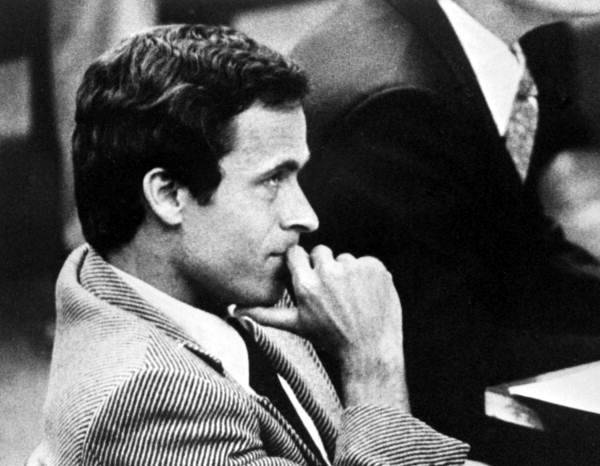
Wikimedia CommonsTed Bundy in court, 1979.
Ann Rule, a former Seattle police officer who had met Bundy as a coworker at Seattle’s suicide hotline crisis center and wrote a definitive book on the killer, details how the bribing of guards in order to secure private time with visitors was not uncommon at the prison. It’s even believed that Boone would sneak in drugs by tucking them up her skirt. Michaud and Aynesworth explained that even less secretive methods of having sex in prison were largely successful and ignored by guards.
“Touching was permitted, and from time to time, intercourse was possible behind a water cooler, in the restroom, or sometimes at the table,” they wrote.
How Carole Ann Boone Became Ted Bundy’s Wife
Ultimately, Ted Bundy, the clever ex-law student that he was, figured a way to marry Carole Ann Boone while incarcerated. He found that an old Florida law stated that as long as a judge is present during a declaration of marriage in court, the intended transaction is legally valid.
According to Rule’s book The Stranger Beside Me, Bundy bungled the effort on his first try and had to rephrase his intentions differently the second time around.
Boone, meanwhile, made sure to contact a notary public to witness this second attempt and stamp their marriage license beforehand. Acting as his own defense attorney, Bundy called Boone to take the witness stand on Feb. 9, 1980. When asked to describe him, Boone classified him as “kind, warm and patient.”
“I’ve never seen anything in Ted that indicates any destructiveness towards any other people,” she said. “He’s a large part of my life. He is vital to me.”
Bundy then asked Carole Ann Boone, on the stand in the midst of his murder trial, to marry him. She agreed though the transaction wasn’t legitimate until Bundy added, “I do hereby marry you” and the pair had officially formed a union of marriage.
At this point, Bundy had already been sentenced to death for the sorority murders and was about to rack up another death sentence for the murder of Kimberly Leach. This trial did result in Bundy’s third death sentence and he would spend the next nine years on death row.
Only a few years before his inevitable execution in 1989 would Ted Bundy’s wife reconsider her marriage.
Carole Ann Boone Gives Birth To Ted Bundy’s Daughter, Rose Bundy
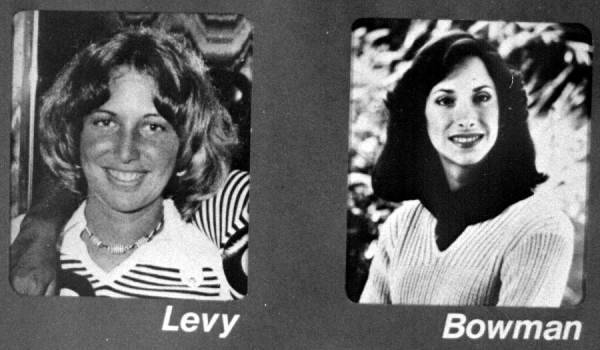
Wikimedia CommonsChi Omega sorority girls Lisa Levy and Margaret Bowman.
For the first few years of his time on death row, Carole Ann Boone and Ted Bundy remained close. It is believed that Carole Ann smuggled in drugs for him and their physical intimacy continued. Two years into his stint, the couple’s daughter, Rose Bundy, was born.
It is believed that Rose is the only biological child of Ted Bundy.

TwitterCarole Ann Boone and Ted Bundy with their daughter in the 1980s.
Four years later — three years before Ted Bundy’s execution by electric chair in 1989 — Boone divorced the infamous killer and allegedly did not see him again before he died.
What Happened To Ted Bundy’s Wife After His Execution?
Little is known about Carole Ann Boone’s life thereafter; she’s mostly remembered today simply as Ted Bundy’s wife. She moved out of Florida with her two children, Jayme and Rose, but has maintained as low visibility to the media and public as possible.
Of course, that hasn’t prevented the efforts of curious internet detectives and their need to know what the infamous Ted Bundy’s wife is up to, and where she lives. Message boards are filled to the brim with theories and naturally, some are less convincing than others. One posits that Boone changed her name to Abigail Griffin and moved to Oklahoma. Others believe she married yet again and led a quiet, happy life.
Few details were grounded in fact until reports surfaced that Carole Ann Boone had been living quietly in Seattle before dying in a retirement home there at age 70 in January 2018.
Though little is known for certain about what happened to Carole Ann Boone after she ceased to be Ted Bundy’s wife, one thing is for certain: they had one of the most grimly fascinating marriages in modern history, a dark union that will likely remain puzzling forever.
After reading about Ted Bundy’s wife Carole Ann Boone, read up on Ted Bundy’s infamous car. Then, learn more about the victims that Ted Bundy killed.
The post Meet Carole Ann Boone, The Woman Who Fell In Love With Ted Bundy And Had His Child While He Was On Death Row appeared first on All That's Interesting.

State Library of VictoriaNearly identical to its sister ship the Titanic, the Britannic was a hospital ship during World War I – and sank during the conflict.
Roughly four years after the Titanic sank to the bottom of the Atlantic Ocean in April 1912, its sister ship, the Britannic, met a tragic end as well. Today, the Britannic wreck sits 400 feet beneath the Aegean Sea.
But the story of the Britannic wreck was different than that of the Titanic. Built as a luxury ocean liner, but transformed into a hospital ship during World War I, the Britannic became a casualty of that conflict.
This is the story of the Britannic, from its construction, to its war service, to how it sank on a November morning back in 1916.
How A Luxury Ocean Liner Became A Hospital Ship

Public DomainThe Britannic near the end of its construction at Harland & Wolff shipyard in Belfast. Circa 1914.
The story of the Britannic began at Harland & Wolff shipyard in Belfast, where the White Star Line set out to make a trio of large, luxurious ocean liners: the Britannic, the Olympic, and the Titanic. Construction of the Britannic began in 1911, after the other two ships, and the sinking of the Titanic in 1912 resulted in some major changes to its design.
To make the ship safer, the White Star Line made a number of updates to the Britannic. The Titanic’s sister ship would have a double hull around its engine rooms. Its bulkheads would rise 40 feet above the waterline. And it would carry enough lifeboats to save every passenger.
But by the time the Britannic was ready to sail, World War I had begun.

Wikimedia CommonsThe Britannic had enough lifeboats to hold every passenger – a modification made after the Titanic disaster.
Because of the war, the Britannic would not be a luxury ocean liner. Instead, it joined the war effort at the world’s largest hospital ship.
Hospital beds crowded the promenade decks. The first-class dining room housed an intensive care ward, while the grand reception room became a surgical room. As the ship’s surgeon declared, according to PBS, the Britannic was “the most wonderful hospital ship that ever sailed the seas.”
More than 3,300 patients could travel on the Britannic. But most of its hospital beds were empty when the Britannic sank on Nov. 21, 1916.
The Sinking Of The Britannic In 1916
On November 19, the Britannic set sail for the final time from Naples, Italy, en route for Mudros, Greece, where it would pick up patients. There were roughly 1,000 people onboard, including the crew, doctors, and nurses, who busied themselves readying the ship for an influx of wounded soldiers.

Public DomainThe Britannic as a hospital ship, circa January 1916.
But on the morning of November 21, just after 8 a.m., the Britannic ran into a German naval mine near the Greek island of Kea.
Nurse Sheila Macbeth was aboard the Britannic when it sank. That morning, Macbeth had overslept, and had just started in on her breakfast. But she only managed to eat a few spoonfuls of porridge before, as she later recalled, “Bang! and a shiver right down the length of the ship.”
Another passenger, Reverend John Fleming, also felt the collision shortly after the hospital ship hit the mine. “[T]here was a great crash,” he remembered, “as if a score of plate-glass windows had been smashed together; the great ship shuddered for a moment from end to end.”
The mine had exploded on the starboard side of the ship, causing six of its watertight compartments to flood. Even with this flooding, the Britannic had been designed to withstand damage, and should have been able to stay afloat. However, even more water entered the ship through its starboard portholes and, when Captain Charles Bartlett ordered the ship to accelerate in hopes of reaching the island of Kea, this caused even more water to flood the vessel. It quickly became clear: the Britannic would sink.

Wikimedia CommonsThe sinking of the Britannic made headlines around the world. Initially, the media reported that a torpedo struck the ship.
The Britannic had sent a distress signal but, unbeknownst to its crew, the ship’s antenna wires had been damaged. Thus, the ship could send messages but could not receive them. Without knowing if help was on the way, Bartlett ordered an evacuation of the ship 23 minutes after the collision.
Unfortunately, two lifeboats were launched before this order — and 30 people died when they were sucked into the ship’s still-moving propellers.
From that point on, the Britannic sinking happened very quickly. At 9:07 a.m., 55 minutes after colliding with the mine, the Britannic slipped beneath the waves. Violet Jessop, a nurse who had happened to also survive the Titanic sinking roughly four years earlier, recalled:
“She dipped her head a little, then a little lower and still lower. All the deck machinery fell into the sea like a child’s toys. Then she took a fearful plunge, her stern rearing hundreds of feet into the air until with a final roar, she disappeared into the depths, the noise of her going resounding through the water with undreamt-of violence…”

Royal NavyHundreds of survivors escaped on lifeboats and were picked up by other ships.
Jessop was not the only Titanic survivor aboard the Britannic: crewmen John Priest and Archie Jewell had also been on the Britannic’s doomed sister ship. Unlike on the Titanic, however, most of the passengers of the Britannic survived. That said, things could have been much worse if the ship had already picked up its thousands of patients.
But the ship itself would not to be seen again until its shipwreck was discovered in 1975.
Discovering The Britannic Wreck After More Than 50 Years

Greek Ministry of CultureA diver making their way through the Britannic wreck.
Though the rough of location of the Britannic wreck was never lost to history, the wreck wasn’t officially documented until 1975, when it was found by oceanographer Jacques Cousteau. Twenty years later, Robert Ballard, who helped discover the Titanic wreck, also conducted a visit to the site.
These voyages determined that the Britannic remained largely in one piece. In fact, the Britannic is the largest intact passenger ship on the ocean floor.
However, it’s not easy to get to access. Though the Britannic wreck is at the relatively shallow depth of 400 feet (the Titanic, by comparison, is more than 12,000 feet deep) it remains a challenging dive site. Thus, only a couple hundred people have ever been able to explore its final resting place.
That said, a recent voyage to the Britannic wreck in 2025 returned some fascinating insights about the doomed ship. Divers recovered a number of artifacts, including the ship’s observation bell, its navigation lamp, ceramic tiles from a Turkish bath, and a pair of binoculars.

Greek Ministry Of CultureA pair of binoculars which were recovered from the Britannic wreck in 2025.
The ship’s story is thus still being told. The Britannic wreck, though challenging to reach, is incredibly well-preserved. Four hundred feet beneath the sea, it tells a story of war, destruction — and luck.
After reading about the wreck of the Titanic’s sister ship, go inside the history of the infamous iceberg that sank the Titanic back in 1912. Or, look through this collection of Titanic artifacts — and discover their heartbreaking backstories.
The post Inside The Wreck Of The <em>Britannic</em>, The <em>Titanic’s</em> Sister Ship That Sank In 1916 appeared first on All That's Interesting.
Public DomainA depiction of Jack and Jill from around 1900.
When it comes to the many children’s rhymes that have been written throughout history, the poem about Jack and Jill, the hill, and their fall is perhaps the most famous. But what exactly is the meaning of the “Jack and Jill” nursery rhyme? Does it even have one?
Ever since the verse first appeared in print in the 18th century, many scholars have speculated about its origins. Some believe that it could be an allegorical story, while others think that it could have roots in true events.
A few interpretations of the rhyme are light-hearted, but many are far darker — like the theory that it’s a metaphor for the execution of Louis XVI and Marie Antoinette.
So, what does the “Jack and Jill” nursery rhyme really mean? This is what people have speculated about the poem over the centuries.
The Emergence Of The Famous ‘Jack And Jill’ Nursery Rhyme
The nursery rhyme “Jack and Jill” first appeared in print around 1765 in Mother Goose’s Melody by John Newbery.
In this early edition, the rhyme appears as:
“Jack and Gill went up the hill,
To fetch a pail of water;
Jack fell down and broke his crown,
And Gill came tumbling after.”
Notably, the “Jill” character in this early version of the “Jack and Jill” nursery rhyme is spelled as “Gill.” Since Gill is a boy’s name, it seems that both the character’s gender and the spelling of their name changed over time. That said, the pairing of “Jack” and “Jill” predated even Mother Goose’s Melody.
Public DomainThe “Jack and Jill” nursery rhyme as it appeared Mother Goose’s Melody.
Indeed, the two names were long used to indicate a generic man (Jack) and a generic woman (Jill). In Shakespeare’s A Midsummer Night’s Dream, for example, which was written at the end of the 16th century, the character Puck proclaims: “Jack shall have Jill; / Nought shall go ill; / The man shall have his mare again, and all shall be well.” Meanwhile, in Shakespeare’s Love’s Labour’s Lost, from the same era, another character laments: “Our wooing doth not end like an old play; / Jack hath not Jill.”
But what exactly is the meaning of the “Jack and Jill” nursery rhyme? While there’s not a single agreed-upon interpretation of the poem, many ideas have been floated since it emerged in the 18th century.
Theories About The Famous Rhyme’s Meaning
For such a short and simple story — though it has been expanded over the years — there are many possible meanings behind the “Jack and Jill” nursery rhyme. The first is that Jack and Jill were perhaps based on real people.
This is the belief in Kilmersdon, Somerset, a village in western England just south of Wales that claims to be the site of the poem’s origin story. The Kilmersdon interpretation of the rhyme states that Jack and Jill were a young couple who were expecting a baby out of wedlock. However, Jack perished in a rockfall, and Jill died either in childbirth or from heartbreak, depending on the version of the tale. What’s more, a common family name in Kilmersdon is “Gilson,” which some believe is a nod to the “Gill” character in the original rhyme.
Hugh Llewelyn/Wikimedia CommonsA plaque in Kilmersdon, the English village that claims to be the true location of the hill in the “Jack and Jill” nursery rhyme.
Other theories about the meaning of the “Jack and Jill” nursery rhyme agree that the poem is rooted in history. Some scholars believe that Jack and Jill are references to Richard Empson and Edmund Dudley, ministers of King Henry VII who were executed when his son, King Henry VIII, ascended to the throne in 1509.
Another interpretation suggests that the rhyme is a metaphor for the executions of France’s King Louis XVI and Marie Antoinette. In this version, Jack’s broken “crown” represents Louis’ death at the guillotine — and the queen’s head “came tumbling after.” However, this doesn’t make sense, as the royals were put to death in 1793, nearly three decades after the nursery rhyme was first published.
Meanwhile, some theorists say that the poem was actually a sly nod to a 17th-century alcohol tax in England, when “Jack” was the name for an eighth of a pint of liquor, and a “Gill” signified a quarter of a pint.
It’s also possible that the “Jack and Jill” nursery rhyme is even older and originated in a totally different culture. A 13th-century collection of Norse legends known as Gylfaginning indeed contains a story about two young siblings who are abducted by the Moon while drawing water from a well. This bears a strong resemblance to the “Jack and Jill” poem, which describes the dark fates of two children “fetch[ing] a pail of water.” The siblings’ names are even fairly similar: Hjuki and Bil.
Or, perhaps, “Jack and Jill” is rooted in allegory. Chris Roberts, who speculated on the meanings behind popular nursery rhymes in his 2003 book Heavy Words Lightly Thrown, suggested that the story is about sex. Specifically, Roberts implies that Jack and Jill climbed the hill to lose their virginities, after which Jack swiftly fled the scene. While this is a much darker interpretation of the children’s rhyme, it does seem to connect somewhat to the Kilmersdon story.
Public DomainIllustrator Arthur Rackham’s interpretation of “Jack and Jill.” 1913.
Then again, maybe the “Jack and Jill” nursery rhyme is simply about children being mischievous. One expanded version of the poem that was printed in a 19th-century book called National Nursery Rhymes reads:
“Jack and Jill went up the hill,
To fetch a pail of water;
Jack fell down and broke his crown,
And Jill came tumbling after.Up Jack got, and home did trot,
As fast as he could caper;
Went to bed to mend his head,
With vinegar and brown paper.Jill came in, and she did grin,
To see his paper plaster;
Mother, vex’d, did whip her next,
For causing Jack’s disaster.”
In the end, however, the meaning of “Jack and Jill” remains open to interpretation.
What Is The ‘Jack And Jill’ Nursery Rhyme About?
“Jack and Jill” is far from the only nursery rhyme with several different possible meanings. “Ring Around the Rosie,” for example, has long been linked with the Black Death by modern readers, though it likely has no connection to the bubonic plague at all.
Public DomainThe “Jack and Jill” rhyme set to music. 1920.
Similarly, “London Bridge Is Falling Down” seems innocent enough, but some scholars believe it’s a reference to the practice of immurement, the medieval punishment of locking someone in a room until they die. And, like the “Jack and Jill” nursery rhyme, “Humpty Dumpty” has many possible meanings, ranging from rude slang to the reign of King Richard III.
Ultimately, “Jack and Jill” could be about history, local lore, mythology, or, really, nothing at all. Perhaps it’s a simple story of two children who fell down while fetching water. Perhaps it’s an allegory about virginity. Or maybe it’s a ditty that emerged from current events in 18th-century England.
However, if the nursery rhyme was written with a specific explanation in mind, it’s seemingly been lost to time.
After reading about the meaning behind the “Jack and Jill” nursery rhyme, discover the true story behind “Mary Had a Little Lamb.” Or, see why some people think that the “Muffin Man” is about an English serial killer.
The post Inside The Contested Origins Of The ‘Jack And Jill’ Nursery Rhyme appeared first on All That's Interesting.
Aeon32/Wikimedia CommonsThe mausoleum in Kazakhstan that purportedly holds the remains of Genghis Khan’s eldest son, Jochi.
In the early 2000s, scientists discovered a unique Y chromosome lineage that they believed could be traced back to Genghis Khan. If this proved true, it would mean that roughly 0.5 percent of the modern world’s male population — roughly one in 200 men — is descended from the famous Mongol conqueror.
Now, a team of researchers has analyzed the DNA of four individuals from a mausoleum in Kazakhstan that’s said to belong to Genghis Khan’s eldest son, Jochi. What they found suggests that the famous conqueror may not have such an extensive lineage after all.
The Descendants Of Genghis Khan
Genghis Khan founded the Mongol Empire in 1206 after defeating a series of other chieftains on the Mongol steppe. His territory soon became the largest contiguous land empire in world history, stretching from eastern Europe to the Sea of Japan and from southern Siberia to the northern reaches of the Indian subcontinent.
But Genghis wasn’t just the father of the Mongol Empire — he also had dozens or even hundreds of children with his many wives and concubines. Jochi, his eldest son, fathered at least 16 kids of his own, so it’s clear that Genghis Khan had many descendants — but how many?

Public DomainGenghis Khan, the founder of the Mongol Empire who was once said to have more than 16 million living descendants.
In 2003, a study identified a Y chromosome lineage called C3* that originated in Mongolia about 1,000 years ago. This haplogroup is still widely found in males living in Central Asia, representing roughly eight percent of the male population in the region and 0.5 percent worldwide.
Because the Y chromosome is passed from father to son, people with this C3* cluster share common ancestry — and the scientists from the 2003 study posited that Genghis Khan was that ancestor.
The problem is that nobody knows where Genghis was buried. There are no samples of his DNA, so it’s impossible to test the genes of a modern human against those of the Mongol leader. However, his son Jochi is said to be entombed at a mausoleum in Kazakhstan, so researchers from the University of Wisconsin-Madison and the National Institute of Genetics in Mishima, Japan, recently teamed up to see what they could learn from these burials.
Analyzing The Remains Of “Jochi Khan”
Since no DNA from Genghis Khan exists, it’s impossible to tell whether any of the bodies entombed at the mausoleum in Kazakhstan are actually Jochi Khan.
“Nobody knows exactly what [Genghis Khan’s] Y DNA would look like,” biological anthropologist Ayken Askapuli told Live Science. “Not only from him, but his sons, his grandsons, immediate relatives — none of them are known. So this is an attempt to answer that question.”
Public DomainGenghis Khan advising his sons from his deathbed, from The Travels of Marco Polo.
Even if the tomb isn’t Jochi’s, it did seemingly belong to elites of the Golden Horde, the western part of the Mongol Empire. So, in a study published in the Proceedings of the National Academy of Sciences, Askapuli and his colleagues analyzed the remains of three men and one woman from the tomb. They determined that they all had the C3* lineage — but there was a catch.
“The Y chromosome haplotype they have belongs to the C3* cluster that was previously hypothesized to be Genghis Khan’s,” said Askapuli, “but this one is very rare in modern populations.”
The C3* cluster is a large genetic family with multiple branches, so the fact that these Golden Horde elites don’t share their DNA with most modern Asians suggests that not as many people are descended from Genghis Khan as previously believed.
“They belong to a specific sub-branch of that C3* cluster haplogroup,” Askapuli explained to the University of Wisconsin-Madison Badger Herald, “which implies that at the time of Genghis Khan and the Mongol Empire, this lineage already diversified.”
The only way to tell which C3* branch descended from Genghis Khan is to test the ruler’s DNA, but since that’s not possible without his remains, scientists can only hypothesize about the true extent of his lineage. Still, this latest study seemingly disproves that the C3* Y chromosome lineage that’s so common around the world today all descends solely from the prolific founder of the Mongol Empire.
After reading this new study about how many descendants Genghis Khan has, go inside the death of the famous Mongol leader. Then, learn how the Mongol Empire fell.
The post New Analysis Just Disproved The Claim That 1 In 200 Men Alive Today Are Descendants Of Genghis Khan appeared first on All That's Interesting.
For more than 30 years, Bumpy Johnson was famed for being one of New York City’s most revered — and feared — crime bosses. His wife called him the “Harlem Godfather,” and for good reason.
Known for ruling Harlem with an iron fist, he dealt with anyone who dared challenge him in a brutal fashion. One rival named Ulysses Rollins caught the business end of Johnson’s switchblade 36 times in a single streetfight.
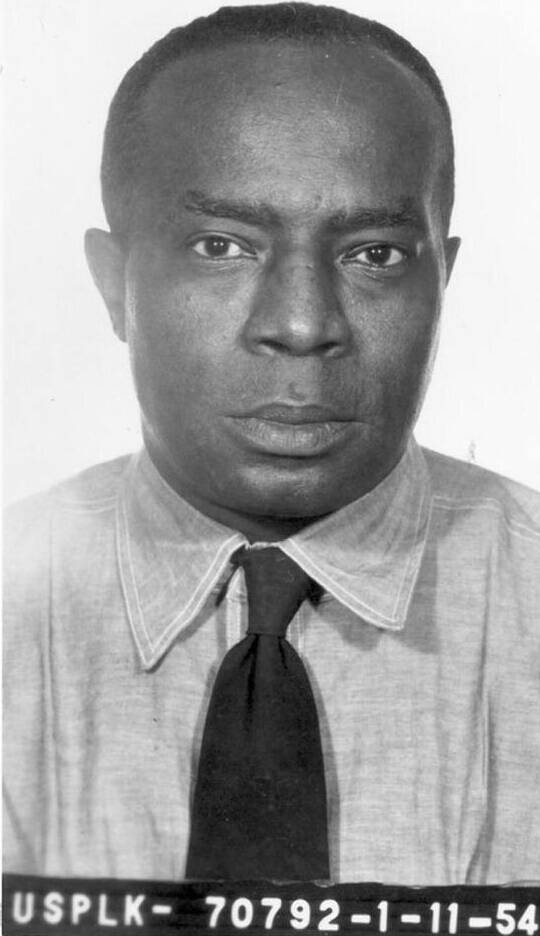
Records of the Bureau of Prisons/Wikimedia CommonsA mugshot of Bumpy Johnson, aka the Godfather of Harlem, at a federal penitentiary in Kansas. 1954.
During another confrontation, Johnson saw Rollins in a dinner club and pounced on him with a blade. By the time Johnson was done with him, Rollins’ eyeball was left dangling from its socket. Johnson then proclaimed that he suddenly had a craving for spaghetti and meatballs.
However, Johnson was known for being a gentleman who was always willing to help out the less fortunate members of his community. He also garnered a reputation as a fashionable man about town who rubbed elbows with celebrities like Billie Holiday and Sugar Ray Robinson.
Whether it was celebrities — and even historical luminaries like Malcolm X — or everyday Harlemites, Bumpy Johnson was beloved, perhaps even more than he was feared. Upon his return to New York City in 1963 after serving time in Alcatraz, Johnson was met with an impromptu parade. The whole neighborhood wanted to welcome the Harlem Godfather back home.
The Early Life Of Bumpy Johnson
North Charleston/FlickrBumpy Johnson spent his early years in Charleston, South Carolina. Circa 1910.
Ellsworth Raymond Johnson was born in Charleston, South Carolina on October 31, 1905. Due to a slight deformation of his skull, he was given the nickname “Bumpy” at a young age — and it stuck.
When Johnson was 10 years old, his brother William was accused of killing a white man in Charleston. Fearing a reprisal, Johnson’s parents moved most of their seven children to Harlem, a haven for the Black community in the early 20th century. Once there, Johnson moved in with his sister.
Because of his bumpy head, thick Southern accent, and short stature, Johnson was picked on by local children. But this may be how his skills for a life of crime first developed: Instead of taking the hits and taunts, Johnson made a name for himself as a fighter who was not to be messed with.
He soon dropped out of high school, making money by pool hustling, selling newspapers, and sweeping the storefronts of restaurants with his gang of friends. This is how he met William “Bub” Hewlett, a gangster who took a liking to Johnson when he refused to back off of Bub’s storefront territory.
Bub, who saw Johnson’s potential and appreciated his boldness, invited him into the business of offering physical protection to the high-profile numbers bankers in Harlem. And before long, Johnson became one of the most sought-after bodyguards in the neighborhood.
How The Future Crime Boss Entered The Gang Wars Of Harlem
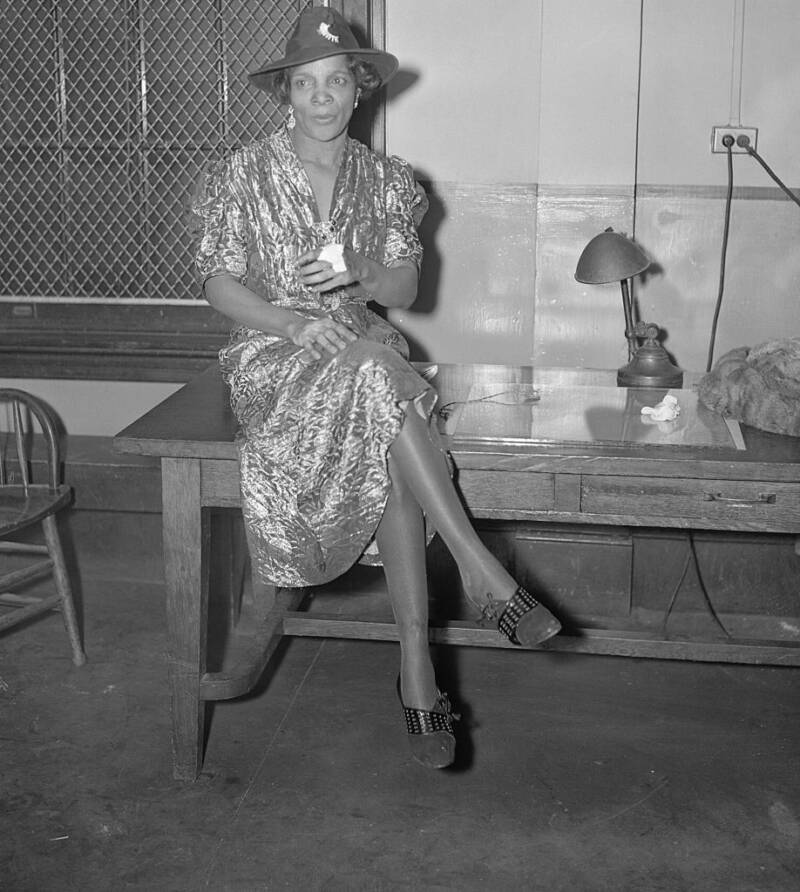
Wikimedia CommonsStephanie St. Clair, the “Numbers Queen of Harlem” who was once Bumpy Johnson’s partner in crime.
Bumpy Johnson’s criminal career soon flourished as he graduated to armed robbery, extortion, and pimping. But he wasn’t able to avoid punishment and was in and out of reform schools and prisons for much of his 20s.
After serving two and a half years on a grand larceny charge, Bumpy Johnson got out of prison in 1932 with no money or occupation. But once he was back on the streets of Harlem, he met Stephanie St. Clair.
At the time, St. Clair was the head of several criminal organizations across Harlem. She was the leader of a local gang, the 40 Thieves, and was also a key investor in the numbers rackets in the neighborhood.
St. Clair was certain that Bumpy Johnson would be her perfect partner in crime. She was impressed by his intelligence and the two quickly became fast friends despite their 20-year age difference (though some biographers peg her as being only 10 years his senior).
Wikimedia CommonsDutch Schultz, a German-Jewish mobster who battled St. Clair and Johnson.
He was her personal bodyguard, as well as her numbers runner and bookmaker. While she evaded the Mafia and waged war against German-Jewish mobster Dutch Schultz and his men, the 26-year-old Johnson committed a series of crimes — including murder — at her request.
As Johnson’s wife, Mayme, who married him in 1948, wrote in her biography of the crime boss, “Bumpy and his crew of nine waged a guerrilla war of sorts, and picking off Dutch Schultz’s men was easy since there were few other white men walking around Harlem during the day.”
By the end of the war, 40 people had been kidnapped or killed for their involvement. But these crimes did not end because of Johnson and his men. Instead, Schultz was ultimately killed by orders from Lucky Luciano, the infamous head of the Italian Mafia in New York.
This resulted in Johnson and Luciano making a deal: The Harlem bookmakers could retain their independence from the Italian mob as long as they agreed to pass along a cut of their profits.
Remo Nassi/Wikimedia CommonsCharles “Lucky” Luciano, the Italian crime boss in New York City.
As Mayme Johnson wrote:
“It wasn’t a perfect solution, and not everyone was happy, but at the same time the people of Harlem realized Bumpy had ended the war with no further losses, and had negotiated a peace with honor… And they realized that for the first time a black man had stood up to the white mob instead of just bowing down and going along to get along.”
After this meeting, Johnson and Luciano met regularly to play chess, sometimes at Luciano’s favorite spot in front of the YMCA on 135th Street. But St. Clair went her own way, steering clear of criminal activity after serving time for the shooting of her con-man husband. However, she is said to have maintained the protection of Johnson until his death.
With St. Clair out of the game, Bumpy Johnson was now the one and only true Godfather of Harlem.
Bumpy Johnson’s Reign As The Harlem Godfather
Public DomainThe Harlem Godfather at Alcatraz. Just a few years after Bumpy Johnson was released from this prison, he died of a heart attack.
With Bumpy Johnson as the Godfather of Harlem, anything that happened in the crime world of the neighborhood had to get his seal of approval first.
As Mayme Johnson described, “If you wanted to do anything in Harlem, anything at all, you’d better stop and see Bumpy because he ran the place. Want to open a number spot on the Avenue? Go see Bumpy. Thinking about converting your brownstone into a speakeasy? Check with Bumpy first.”
And if anyone didn’t come to see Bumpy first, they paid the price. Perhaps few paid that price as dearly as his rival Ulysses Rollins. As one chilling excerpt from Johnson’s biography reads:
“Bumpy spotted Rollins. He pulled out a knife and jumped on Rollins, and the two men rolled around on the floor for a few moments before Bumpy stood up and straightened his tie. Rollins remained on the floor, his face and body badly gashed, and one of his eyeballs hanging from the socket by ligaments. Bumpy calmly stepped over the man, picked up a menu and said he suddenly had a taste for spaghetti and meatballs.”
However, Johnson also had a soft side. Some even compared him to Robin Hood because of the way he used his money and power to help the impoverished communities in his neighborhood. He delivered gifts and meals to his neighbors in Harlem and even supplied turkey dinners on Thanksgiving and hosted a Christmas party every year.
As his wife noted, he was known to lecture younger generations about studying academics instead of crime — although he “always maintained a sense of humor about his brushes with the law.”
Johnson was also a fashionable man of the Harlem Renaissance. Known for his love of poetry, he got some of his poems published in Harlem magazines. And he had affairs with New York celebrities, such as the editor of Vanity Fair, Helen Lawrenson, and the singer and actress Lena Horne.
“He wasn’t a typical gangster,” said Frank Lucas, a notorious drug trafficker in Harlem in the 1960s and ’70s. “He worked in the streets but he wasn’t of the streets. He was refined and classy, more like a businessman with a legitimate career than most people in the underworld. I could tell by looking at him that he was a lot different from the people I saw in the streets.”
The Harlem Godfather’s Turbulent Final Years
Wikimedia CommonsAlcatraz Prison, where Bumpy Johnson served a sentence for drugs charges in the 1950s and ’60s.
But no matter how smoothly he ran his crime business, Johnson still spent his fair share of time in prison. In 1951, he received his longest sentence: a 15-year term for selling heroin that eventually saw him sent to Alcatraz.
Interestingly enough, the Harlem Godfather was eight years into his prison sentence in Alcatraz when on June 11, 1962, Frank Morris and Clarence and John Anglin made the only successful escape from the institution.
Some suspect that Johnson had something to do with the infamous escape. And unconfirmed reports allege that he used his mob connections to help the escapees secure a boat to San Francisco.
His wife theorized that he himself didn’t escape alongside them because of his desire to be a free man, rather than a fugitive.
And free he was — for a few years, at least.
Bumpy Johnson returned to Harlem following his release in 1963. And while he may have still had the love and respect of the neighborhood, it was no longer the same place that it was when he left it.
By that point, the neighborhood had largely fallen into disrepair as drugs had flooded the area (mostly thanks to the Mafia bosses with whom Johnson had once cooperated in years past).
In hopes of rehabilitating the neighborhood and advocating for its Black citizens, politicians and civil rights leaders drew attention to Harlem’s struggles. One leader was Bumpy Johnson’s old friend Malcolm X.
Wikimedia CommonsMalcolm X and Bumpy Johnson were once good friends.
Bumpy Johnson and Malcolm X had been friends since the 1940s — when the latter was still a street hustler. Now a powerful community leader, Malcolm X asked Bumpy Johnson to provide protection for him as his enemies in the Nation of Islam, with whom he’d just split, stalked him.
But Malcolm X soon decided that he shouldn’t be associating with a known criminal like Bumpy Johnson and had him ask his guards to stand down. Just weeks later, Malcolm X was assassinated by his enemies in Harlem.
Little did the Harlem Godfather know that his time was also running short — and he would soon be gone as well. However, when Bumpy Johnson died, his demise would prove to be far less brutal than Malcolm X’s death.
Five years after being released from the infamous prison, Bumpy Johnson died of a heart attack during the early hours of July 7, 1968. He lay in the arms of one of his closest friends, Junie Byrd, as he breathed his last. Some were shocked by the suddenness of how Bumpy Johnson died, while others were simply surprised that it had not been a violent demise.
As for Mayme, she reflected on the way Bumpy Johnson died as such: “Bumpy’s life may have been a violent and turbulent one, but his death was one that any Harlem sporting man would pray for — eating fried chicken at Wells Restaurant in the wee hours of the morning surrounded by childhood friends. It just can’t get better than that.”
Thousands of people attended Johnson’s funeral, including dozens of uniformed police officers who were stationed on the surrounding rooftops, shotguns in hand. “They must have thought that Bumpy was going to get up from the casket and start raising Hell,” Mayme wrote.
The Enduring Legacy Of Bumpy Johnson
EpixActor Forest Whitaker, who portrays Bumpy Johnson in Epix’s Godfather of Harlem.
In the years after Bumpy Johnson died, he remained an iconic figure in Harlem history. But despite his massive influence and power, the “Godfather of Harlem” has largely stayed out of the national public consciousness in ways that other infamous gangsters have not. So why is that?
Some believe that Johnson has been brushed off because he was a powerful Black man ruling an entire neighborhood of New York City during the mid-20th century. However, in recent decades, Johnson’s story has started to reach more people thanks to film and television.
Laurence Fishburne played a Johnson-inspired character in The Cotton Club, directed by Francis Ford Coppola. He also portrayed Bumpy Johnson himself in Hoodlum, “a goofy, historically suspect biopic in which the male lead delivered an even more inert performance,” according to writer Joe Queenan.
Most famous, perhaps, is the crime boss’ portrayal in American Gangster — a film that Mayme Johnson has refused to see.
According to her, Denzel Washington’s depiction of Frank Lucas was more fiction than fact. Lucas was not Johnson’s driver for more than a decade, and he was not present when Bumpy Johnson died. Lucas and Johnson actually had a falling out before he was sent to Alcatraz. As Mayme wrote, “That’s why we need more Black people writing books to tell the real history.”
More recently in 2019, Chris Brancato and Paul Eckstein created a series for Epix called Godfather of Harlem, which tells the story of the crime boss (played by Forest Whitaker) after he returned to Harlem from Alcatraz and lived out his final years in the neighborhood he once ruled.
Though Johnson’s story may have been cast aside by some in the years after his death, it’s clear that he will never be completely forgotten.
Now that you know more about the Harlem Godfather Bumpy Johnson, check out these images of the Harlem Renaissance. Then learn about Salvatore Maranzano, the man who created the American Mafia.
The post ‘He Wasn’t A Typical Gangster’: Inside The Wild Life Of Harlem Godfather Bumpy Johnson appeared first on All That's Interesting.
In 1956, a World War II veteran-turned-airplane pilot named Thomas Fitzpatrick did what seems totally unthinkable: He flew a single-engine plane through the urban canyons of New York City and landed it perfectly on an uptown Manhattan street — all because of a drunken bet.
The New York Daily NewsThomas Fitzpatrick made the front page of newspapers after he landed a plane in the middle of New York City.
Then, two years later, he did it again.
Thomas Fitzpatrick’s Early Life
Very little is known about Thomas Fitzpatrick, but from what is known it seems he lived a very colorful life even before landing airplanes on New York City streets.

Frank M. Ingalls/The New York Historical Society/Getty ImagesA view of Washington Heights, where Thomas Fitzpatrick grew up, in the early 1910s.
Thomas Fitzpatrick was born in New York City in 1930, likely in the upper Manhattan neighborhood of Washington Heights. He served in the U.S. Marine Corps in the Pacific Theater of World War II, though where exactly in the Pacific isn’t known.
After he was honorably discharged from the Marines, instead of leaving the military life behind, Fitzpatrick joined the U.S. Army, where he served in the Korean War. Wounded during the fighting, he received a Purple Heart and finished out the war with the Army, eventually returning to civilian life after his term of service. However, he was known to be a restless soul.
“Tommy had a crazy side,” said Fred Hartling, an old neighbor of Fitzpatrick’s who talked about the young pilot’s early antics in the New York Times. Hartling’s brother, Pat, was good friends with Fitzpatrick, and Hartling said the two were part of “a wild bunch” of friends.

Vintage Bergen County/FacebookAfter retiring from the Army, Thomas Fitzpatrick enrolled in flying school at the Teterboro School of Aeronautics.
At some point, Thomas Fitzpatrick became interested in being a pilot and he enrolled in flying school at the Teterboro School of Aeronautics in New Jersey. By the time he was 26, Fitzpatrick was working as an airplane mechanic.
Thomas Fitzpatrick’s First Manhattan Landing

The New York TimesThomas Fitzpatrick landed a single-engine Cessna 140 on St. Nicholas Ave near 191st Street.
On September 30, 1956, after having a few drinks at a local tavern in Washington Heights, Thomas Fitzpatrick drove to his flying school, “borrowed” one of their single-engine planes, and flew it back to the St. Nicholas Avenue bar where he had been drinking earlier that evening.
Reportedly, Fitzpatrick tried to first land the plane in a nearby park but found it was too dark to see, so he opted for the street instead. He made a drunken precision landing at around 3 a.m. on St. Nicholas Avenue near 191st Street.
When residents awoke, they were amazed to find a small plane parked in the middle of the city streets. According to resident Jim Clarke, who spoke of seeing the plane near his home, Fitzpatrick had planned to land on the field at George Washington High School — not on the street — but it was too dark to do it.
“The story goes, he had made a bet with someone in the bar that he could be back in the Heights from New Jersey in 15 minutes,” Clarke said. The successful impromptu landing made the front pages of local news outlets like the New York Daily News and the Democrat and Chronicle.
Another resident, Sam Garcia, was just a kid when he saw Thomas Fitzpatrick’s plane in the middle of New York City. The sight of an airplane in the middle of the street was so unexpected that he didn’t believe it was real.

Google MapsThe intersection where Fitzpatrick made his first city landing, as it is today.
“I thought maybe they had trucked it in, as a practical joke, because there was no way a man had landed in that narrow street,” Garcia recalled.
Despite the danger Thomas Fitzpatrick could have caused with his aerial stunt, it was hard to deny he had performed a near-impossible landing, flying through a narrow public street boxed in by high buildings, cars, and lamp posts. The New York Times sang his praises, calling it “a feat of aeronautics.”
In fact, even the police were impressed, despite their suspicions against the pilot’s claims that he landed the plane in the street due to engine trouble (Fitzpatrick later admitted in an interview that he had done it as part of a bar bet). Sgt. Harold Behrens of the police aviation bureau said the odds against sticking a landing like that were 100,000-to-1.
Two Years Later, He Pull It Off Again
Democrat and ChronicleWhen Thomas Fitzpatrick landed in New York City the second time, he tried to deny he was the culprit until several witnesses identified him as the pilot.
But that was not the last of the daredevil pilot. On Oct. 5, 1958 — just two years after his first aerial stunt — Thomas Fitzpatrick landed another aircraft on a Manhattan street, this time a red-and-cream single-engine Cessna 120 on Amsterdam Ave near 187th Street.
Just like the first time, Fitzpatrick flew the plane smoothly onto the streets of the city, as if it were an aircraft tarmac.
He had performed his second aerial stunt after an unknown man from Connecticut didn’t believe Fitzpatrick’s story about his first Manhattan landing, though the alcohol he’d been consuming certainly played a role.
“It’s the lousy drink,” he told the New York Daily News at the time. Unfortunately for Fitzpatrick, he performed this landing without a valid flying permit and admitted to investigators that he hadn’t renewed his pilot’s license after it was suspended following his first stunt.
“I never wanted to fly again,” he said, but fly he did, if only to prove his new drinking buddy wrong. He said they drove together to Teterboro, where Fitzpatrick picked up the single-engine plane that was sitting on the tarmac.
This time, however, several witnesses saw his daredevil landing up-close. John Johnson, a local carpenter, was riding his motorcycle in the streets just before he had to pump on the brakes to avoid colliding with Fitzpatrick’s plane.
Democrat and ChronicleThe inspiration for both aerial stunts began in bars in the Washington Heights neighborhood.
Another eyewitness was bus driver Harvey Roffe, who was sitting in his parked bus when Fitzpatrick flew right over. He instinctively dove to the floor, afraid that the plane was going to tear open the top of his bus.
“What the hell could you say if they ever pulled you in on a safety hearing for having an accident with an airplane?” Roffe told a reporter afterward.
Unlike the first time, though, Thomas Fitzpatrick fled the scene once he had landed. He later turned himself in at the Wadsworth Ave police station, shamelessly telling officers he “just happened to be in the neighborhood” and heard that police wished to speak with him.
Both Stunts Land Fitzpatrick In Hot Water

Wikimedia CommonsThe Cessna 120 and 140 models were the first aircrafts produced right after World War II.
Thomas Fitzpatrick’s impressively precise landings went down in history as some of the wildest drunken stunts to ever happen in New York City, but that doesn’t mean there weren’t consequences. As impressed as the police investigators were with his skill — Fitzpatrick himself acknowledged that he was “one hell of a pilot” — others were less enthusiastic about the repeat offense.
After his first Manhattan landing in 1956, Fitzpatrick was charged with grand larceny and for violating the city’s administrative codes, which prohibited planes from landing on city streets. The owner of the plane declined to press charges on the larceny, so the first charge was dropped and he was only fined $100.
He didn’t get as lucky the second time around, though. It likely didn’t help that he tried to deny that he was the pilot who landed the plane on the street, only confessing after several witnesses identified him as the plane’s pilot. At his arraignment hearing in 1958, the magistrate said that Fitzpatrick had “come down like a marauder from the skies.”

Google MapsSomewhere between Amsterdam Ave and 187th Street, where he landed the second time.
After his second landing, Thomas Fitzpatrick was charged with grand larceny, dangerous and reckless operation of a plane, making an unauthorized landing in city limits, and violation of Civil Aeronautics Administration regulations for flying without a valid license. Judge John A. Mullen sentenced him to six months in jail for bringing the stolen plane into the city.
“Had you been properly jolted [the first time],” Mullen remarked during Fitzpatrick’s sentencing, “it’s possible this would not have occurred a second time.”
Criminality aside and despite the damage that Thomas Fitzpatrick’s stunts could have caused, his superb flying capabilities were still what everyone wanted to talk about.
“It was a wonder – you had to be a great flier to put that thing down so close to everything,” said Hartling. Mostly forgotten amid the long and extensive history of New York City, Fitzpatrick’s stunts have yet to be matched, and given the extent of aviation security around the city after the September 11th terrorist attacks, they likely never will be.
As for Thomas Fitzpatrick himself, he worked as a steamfitter for 51 years, settling down with his wife, Helen, and their three sons in Washington Township, New Jersey. He died on September 14, 2009, at the age of 79.
Now that you’ve caught up on the story of Thomas Fitzpatrick’s two drunken landings on the streets of New York City, witness the horrifying death of tightrope walker Karl Wallenda, then, meet Richard Bong, America’s best fighter pilot of World War II who downed 40 planes before dying in a simple training mission.
The post Thomas Fitzpatrick: The Amateur Pilot Who Drunkenly Landed A Plane On An New York Street — Twice appeared first on All That's Interesting.

KISS/FacebookDoc McGhee, pictured with KISS, a band he still manages today.
Doc McGhee is a name forever linked with rock’s biggest acts — including Bon Jovi, Mötley Crüe, and KISS — but his work as a rock music manager isn’t all he’s remembered for.
In the 1980s, McGhee faced a scandal for his involvement in a marijuana-smuggling operation. Specifically, he tried to help smuggle 40,000 pounds of marijuana into the United States via a shrimp boat in 1982. Despite this, McGhee emerged from the scandal relatively unscathed and ready to work.
Get back to work he did, and before long, McGhee had made a name for himself for a whole new reason. He helped organize the Moscow Music Peace Festival in 1989, which was the first time the Soviet Union had allowed hard rock bands to perform in its capital city. Some later speculated that this festival hastened the end of the Cold War.
How Doc McGhee Became A Rock Music Manager
Born Harold Millard “Doc” McGhee in 1950 in Chicago, Illinois, the future music manager grew up with music in his blood. His first taste of the live music business came through his grandmother, whose restaurant bar regularly hosted big bands. He also enjoyed watching The Ed Sullivan Show.
He later remembered: “Whenever they would have a musical talent on one of the shows, I would make sure I watched it, because at an early age of like, 12 or 13, I was playing guitar, so I gravitated toward music from there. And then when the Beatles came out, I was just hooked.”

Mark Weiss/Rock Scene/YouTubeDoc McGhee, pictured with Jon Bon Jovi.
Growing up on Chicago’s South Side, Doc McGhee became increasingly determined to be involved in music in some way. After a stint in the U.S. Army in West Berlin and a brief, unglamorous period doing odd jobs in Florida, McGhee caught a break: a chance introduction to a Hollywood executive who was working on a film about Marilyn Monroe.
The meeting led to McGhee’s first steps in managing acts professionally. While he first began hanging out at recording studios because he wanted to be a successful guitar player himself, fate had other plans, and he soon moved to the business side of the industry instead.
He first managed Canadian rock guitarist Pat Travers from 1978 until 1981, and before long, he had moved on to Mötley Crüe. As McGhee recalled, “When people would ask an artist if they could speak to their management, they would get directed to me, and I guess that’s how I got the title.”
He soon helped Mötley Crüe become superstars, as well as Bon Jovi, using his lifelong interest in music, his thorough research into the music industry, and his valuable time speaking with everyone he could at recording studios to give his bands guidance. He also took one record company mogul’s advice on surrounding himself with smart people in the hopes of running into “geniuses” along the way.
McGhee also became a mentor of sorts, pushing artists beyond their limits. But then, an unexpected scandal threatened his career — and his freedom.
An Infamous Drug-Smuggling Operation
In 1982, Doc McGhee reportedly found himself helping to smuggle 40,000 pounds of marijuana into the United States by using a shrimp boat. By the late 1980s, he was in deep trouble for his involvement in the operation.
According to VICE, federal prosecutors were claiming that McGhee was a go-between for an international drug ring. McGhee, for his part, insisted he wasn’t really a drug smuggler, and said he had merely introduced a smuggler to an acquaintance who had a contact for getting marijuana from Colombia.
In 1988, McGhee pleaded guilty to helping smuggle the marijuana, still maintaining that he wasn’t an active smuggler. Initially, it seemed like he might be facing time behind bars, and possibly the end of his career.
But McGhee, of course, had friends in high places. Bon Jovi wrote a passionate, six-page letter to the judge, pleading for leniency: “You see your honor, Doc did in fact commit a crime and I realize the severity of his case. But a man with his knowledge and commitment to the music industry can do so much good as a public servant.”

Rob Verhorst/Redferns/Getty ImagesBon Jovi backstage at the Monsters Of Rock festival in Mannheim, West Germany in 1986.
Ultimately, Doc McGhee was sentenced to serve 180 days in a community treatment center and pay a $15,000 fine. He was also ordered to set up an anti-drug foundation and create an “anti-drug documentary film with rock stars, an anti-drug recording, and anti-drug brochures.”
As part of his repentance, he arranged for Bon Jovi to speak with high schoolers about avoiding illegal substances. At one point, Jovi blamed parents for causing their kids to turn to drugs: “You come home after three or four martinis. You call it a businessman’s lunch. And you give your kids a bunch of s***.”
He also encouraged the kids to resist peer pressure: “You’ve got to be your own person. By being your own person you can stand up to anything.”
Though some were impressed by McGhee’s ability to turn his scandal into a public service campaign, critics argued it was more of a PR strategy than anything else. Either way, McGhee wasn’t done yet — and his next move made music history in a unique and surprising way.
Inside The Moscow Music Peace Festival
Famously, Doc McGhee played a key role in organizing the Moscow Music Peace Festival in 1989. Working alongside Russian musician Stas Namin, McGhee arranged for acts like Mötley Crüe, Skid Row, Bon Jovi, and Ozzy Osbourne to perform at Central Lenin Stadium.
It was the first time that the Soviet Union had permitted hard rock acts to perform in Moscow, attracting international attention as the event promoted combatting drug abuse and the possibility of world peace and harmony.

Creative Commons/BjornsphotoMötley Crüe, pictured in 2012 at the Sweden Rock Festival.
The event drew over 100,000 attendees, and it was also watched by about a billion people in 59 other countries, influencing audiences far beyond the Iron Curtain. Dubbed by some as the “Russian Woodstock,” the Moscow Music Peace Festival gave rock music fans in the Soviet Union the chance to see some of their favorite acts live, and it gave those in Western countries a rare look into what life in Russia was really like.
Some believed it promoted so much understanding between people from different backgrounds and walks of life that it may have even hastened the end of the Cold War. For McGhee, it was the chance to leverage his music industry influence for good, turning scandal into redemption.
Today, Doc McGhee remains one of rock’s most influential managers, still managing the band KISS and shaping both the sound and culture of modern rock. Though it may have seemed that his scandal could have cut his influence short, his perseverance ensured that he would continue to leave an unforgettable mark on music history.
After learning about Doc McGhee, discover 25 wild tales of rock star excess gone way too far. Then, take a look at 55 crazy photos from history’s most iconic music festivals.
The post The Wild Life Of Doc McGhee, The Rock Music Manager Who Once Tried To Smuggle 40,000 Pounds Of Marijuana Into The U.S. appeared first on All That's Interesting.
In recent years, the term “serial killer” has become a point of morbid fascination. From Netflix series to podcasts, the cultural obsession with these criminals — and how their dark minds work — has reached an all-time high. But while names like Jeffrey Dahmer and Ted Bundy have risen to the forefront of pop culture, their victim count doesn’t come close to that of the world’s deadliest serial killer.
Throughout history, some criminals have turned murder into a grim profession, accumulating victim counts that challenge our understanding of the human capacity for evil. From the mountains of South America to the quiet neighborhoods of England, these predators operated with a chilling efficiency that left communities shattered and investigators grappling with more grisly evidence than they could fathom.
While all such serial killers are disturbing, a select few stand apart not for their methods or motives — but for the sheer scale of their carnage.
So, who is the deadliest serial killer? The answer isn’t as simple as it seems.
Is Luis Garavito The Deadliest Serial Killer In History?
Public DomainLuis Garavito, the killer of nearly 200 children.
Luis Garavito, known as “La Bestia” (“The Beast”), is commonly accepted as the world’s deadliest serial killer, with an official victim count of 193. However, while no one else has carried out as many confirmed murders, other killers have confessed to taking the lives of more than 200 victims, so the official record remains in question.
Throughout the 1990s, Garavito preyed exclusively on vulnerable children throughout Colombia and Ecuador, mostly targeting boys between the ages of eight and 16 from impoverished backgrounds. His method was deceptively simple yet brutally effective: He would approach his victims disguised as a priest and offer them food or money.
Once he gained their trust, he would lead them to secluded areas where he would torture, rape, and murder them. He was ultimately arrested in 1999 after trying to assault a 12-year-old boy.
By official count, Garavito murdered 189 victims in Colombia and four in Ecuador, making him perhaps the deadliest serial killer in history, but some people believe the true number may exceed 200. The investigation into his crimes was one of the largest in Colombian history.
Garavito was initially sentenced to 1,853 years behind bars. But in a shocking turn of events, that sentence was reduced to 22 years due to the serial killer’s cooperation with authorities in locating his victims’ remains, a decision that sparked outrage across Colombia and beyond. He made a public plea for release in 2021, but his request was denied. He then died of a heart attack on Oct. 12, 2023 — the same year he was eligible for parole.
Pedro López, The ‘Monster Of The Andes’
Hoberman Publishing / Alamy Stock PhotoSerial killer Pedro López claimed to have killed 350 victims.
Pedro López, known as the “Monster of the Andes,” traversed the borders of Colombia, Ecuador, and Peru, leaving a trail of death that may never be fully quantified. He was convicted of 110 murders, but he claimed responsibility for more than 300. López primarily targeted young girls, though he also likely murdered numerous women and boys.
Like many killers, López had experienced significant trauma as a child. He was sexually assaulted as a young boy and later gang-raped in prison, experiences that seemingly fueled his pathological hatred and violent tendencies.
His crime spree began in 1978, when he was released from a stint in prison for auto theft, and lasted until his arrest in Ecuador in 1980. While López was convicted of murder, the maximum sentence in Ecuador at the time was just 16 years.
He was released two years early for good behavior and extradited to Colombia in 1994. There, he was committed to a prison’s psychiatric ward for just four more years. He was freed in 1998 and promptly vanished — and his whereabouts remain unknown to this day.
‘Dr. Death’ Harold Shipman, Britain’s Deadliest Serial Killer

Bettmann/Getty ImagesHarold Shipman was a well-respected doctor who murdered his patients.
Harold Shipman fits into a uniquely disturbing category of serial killer: the trusted medical professional who turned healing into homicide.
As a respected British physician practicing in Hyde, Greater Manchester, Shipman used his position of authority to murder at least 218 of his patients between 1972 and 1998, though the true count may be higher than 250. But unlike most serial killers, Shipman didn’t fit any recognizable profile. He was a family man with a wife and four children who was well-regarded by colleagues and patients alike.
The method used by Britain’s deadliest serial killer was chillingly clinical: He would administer lethal injections of diamorphine (heroin), typically to elderly women, and then alter their medical records to suggest natural deaths.
His downfall came when he attempted to forge the will of one of his victims, Kathleen Grundy, to inherit her estate — a suspicious act that finally triggered an investigation. The subsequent inquiry revealed the shocking scale of his crimes, leading to sweeping reforms in Britain’s healthcare system.
Dame Janet Smith, the head of an inquiry into Shipman’s crimes, told the BBC in 2004, “I cannot guarantee that, if all my recommendations are implemented, it will be impossible for a doctor who is determined to kill a patient to do so without detection. But I believe that, if my recommendations are introduced, the deterrent effect will be considerable, and the chances of a doctor such as Shipman escaping detection will be very much reduced.”
Harold Shipman died by suicide in his prison cell in 2004, taking with him any explanation of why he turned the Hippocratic oath on its head and transformed himself from healer to harbinger of death.
Javed Iqbal, The Acid Bath Killer Of Lahore

YouTubeJaved Iqbal during his 1999 arrest.
The crimes of Javed Iqbal in Lahore, Pakistan, over a five-month span in 1999 mark one of the most horrifying chapters in the history of the world’s deadliest serial killers.
Iqbal murdered roughly 100 boys between the ages of six and 16 — most of whom lived on the streets — by luring his young victims with promises of money and food. After sexually assaulting them, he killed them and dissolved their remains in vats of hydrochloric acid.
These crimes began in June 1999 and went unsolved until that December. As reported by The New York Times at the time, he walked into a newspaper office and calmly stated, “I am Javed Iqbal, killer of 100 boys. Please tell someone in the reporting section that I have come to surrender.”
Iqbal’s case was made even more disturbing by his complete lack of remorse and his theatrical approach to his crimes. He claimed that his actions were intended to seek revenge against police officers who had accused him of sodomy when he’d sought their help after he was beaten by a young boy — potentially one of his targets. Iqbal’s trial was swift, and he was sentenced to death by public hanging.
Before his sentence could be carried out, though, Iqbal died by suicide in his prison cell in 2001, bringing an end to the life of one of the most prolific serial killers.
Daniel Camargo Barbosa, ‘The Sadist Of El Charquito’
Public DomainDaniel Camargo Barbosa in a mugshot from 1958.
This final entry on the list of men who may be history’s deadliest serial killer is perhaps the most chilling. Daniel Camargo Barbosa terrorized Colombia and Ecuador throughout the 1970s and ’80s, mostly targeting young, virgin girls.
He was first arrested for sexual assault in 1964 and spent several years in prison. After he was released in the early 1970s, he started killing his victims so they couldn’t turn him in. Camargo Barbosa was arrested once more in 1977, convicted of murder, and sent to the “Colombian Alcatraz,” but he managed to escape to Ecuador in 1984.
Within weeks, he was killing again. Over a two-year period, he murdered at least 54 girls. The local police thought a gang was behind the crimes because they couldn’t fathom that one man could be so twisted.
Camargo Barbosa was arrested for the final time in 1986, when police officers found him carrying the bloody clothing of a victim he’d killed moments earlier and a copy of Crime and Punishment. He was once again convicted of murder, but he was sentenced to just 16 years behind bars, the maximum in Ecuador.
He was murdered in prison in 1994 by another inmate who claimed to be related to one of the girls Camargo Barbosa had killed. By official count, Camargo Barbosa murdered 72 people, but the true number may be as high as nearly 200.
Indeed, because there are such vast differences in the numbers of confessed or suspected victims of these ruthless murderers versus their confirmed victims, we may never know which of the men is the world’s deadliest serial killer — or if that disturbing title belongs to someone else who has yet to be caught.
After learning about some of the world’s deadliest serial killers, read 21 serial killer quotes that will chill you to the bone. Then, go inside the story of Elizabeth Bathory, the Hungarian “Blood Countess” who may be history’s deadliest female serial killer.
The post The Disturbing Crimes Of Five Serial Killers Who May Have Murdered More Victims Than Anyone Else In History appeared first on All That's Interesting.
Ingo StrauchOne of the eight inscriptions left by an Indian man named Cikai Korran in Egypt’s Valley of the Kings.
Today, tourists who scratch their names into centuries-old structures like the Colosseum are thoroughly reprimanded, even prosecuted. But 2,000 years ago, plenty of people literally left their mark at the historic places they visited. And a new study of the royal tombs in Egypt’s Valley of the Kings has found a number of inscriptions left there by Indian tourists some 2,000 years ago.
The inscriptions were discovered in various pharaoh’s tombs and written in several Indian languages including Old Tamil and Sanskrit. But perhaps most striking is the fact that many of these etchings appear to have been made by the same man.
The Discovery Of 2,000-Year-Old Graffiti Left By Tourists In Egypt’s Valley Of The Kings
The findings about these ancient inscriptions were presented at a conference in Chennai, India by a group of researchers who published a paper in a collection called “Tamil Epigraphy: A four-day international conference 11-14 February 2026, Proceedings Volume 1” (Government of Tamil Nadu, 2026).
During their presentation, they described 30 inscriptions that they’d studied inside six Egyptian tombs in the Valley of the Kings. The inscriptions were written in three Indian languages, and, though past Egyptologists had noticed the inscriptions before, they had been unable to translate them. Researchers identified the graffiti languages as Indian in origin, and determined that many of the inscriptions came from a single Indian tourist named Cikai Korran.
Korran, writing in the language of Old Tamil, left eight inscriptions reading “Cikai Korran came here and saw” in five different tombs. Korran had a tendency to leave his inscriptions high off the ground, including in the tomb of Ramesses IX (1126 to 1108 B.C.E), where he wrote his message roughly 16 to 20 feet above the tomb entrance. Researchers remain baffled as to how he got up so high. They’re also not sure how he got into the tombs of pharaohs Tausert and Setnakhte, where Korran’s inscription is the only graffiti left inside, suggesting that these chambers had been sealed off in Korran’s day.

Timothee SassolasOne of the eight inscriptions left by Cikai Korran in the Indian language of Old Tamil.
But while Korran was prolific, he was certainly not the only Indian tourist to leave his mark in the Valley of the Kings 2,000 years ago.
Other Indian Graffiti Found Inside Ancient Egyptian Tombs
In addition to Korran’s inscriptions, researchers also identified dozens of others, including one left in Sanskrit by a man named Indranandin. He described himself as a “messenger of King Kshaharata,” a nod to India’s Kshaharata dynasty of the first century C.E.
Public DomainAn 18th-century depiction of Egypt’s Valley of the Kings, where Egyptian pharaohs and other powerful nobles were buried for centuries.
It’s possible that Indranandin — and the other Indians who left graffiti behind in the Valley of the Kings — traveled through Egypt as tourists on their way to Rome, which controlled Egypt at the time. But while these travelers’ exact destination is unknown, the inscriptions they left behind both confirm the presence of Indians in Egypt and hint at their interest in Egyptian culture and history.
Indeed, the Valley of the Kings has long drawn the world’s interest. Composed of more than 60 tombs and chambers, the Valley of the Kings is the burial place of pharaohs and other powerful Egyptian nobles from the 18th, 19th, and 20th dynasties (spanning 1539 B.C.E. to 1075 B.C.E). One of the most famous tombs in the Valley of the Kings is that of Tutankhamun, or King Tut, which was first documented in 1922 by archaeologist Howard Carter.
As such, the site is a rich resource of Egyptian history and culture, packed with information about Egyptian mythology and funerary practices. But as these Indian inscriptions from 2,000 years ago prove, the Valley of the Kings can also tell a story about the kinds of people who have visited the site over the past several thousand years. Alongside Roman and Egyptian tourists who may have visited the Valley of the Kings, Tamil and Western Indian people also made the trek to the Valley of the Kings, located near the modern-day city of Luxor.
And just as tourists so often do today, the visitors in antiquity likewise left their mark — and etched their name into history.
After reading about the 2,000-year-old graffiti left by Indian tourists in Egypt, go inside Egyptomania, the worldwide fascination with all things Egyptian. Then, go inside the question of who really built the Egyptian pyramids.
The post Archaeologists In Egypt Have Discovered Graffiti Scrawled By Indian Tourists On Several Pharaoh’s Tombs Some 2,000 Years Ago appeared first on All That's Interesting.
Public DomainLepa Radić stands tall as a German official places a noose around her neck just before her execution on Feb. 8, 1943.
Lepa Radić was just 15 years old when the Axis powers invaded her home country of Yugoslavia in 1941. Her family was involved in the subsequent resistance movement, and young Lepa soon joined them, becoming a member of the League of Communist Youth of Yugoslavia.
Even her imprisonment in November 1941 couldn’t stop the brave teenager. Lepa escaped from captivity and joined the Yugoslav Partisans. She spent the next year organizing the country’s youth, speaking about her cause, and even fighting in Partisan battles.
Then, in February 1943, Lepa Radić was captured and handed over to the Nazis. Despite their brutal torture, she refused to give up any information on her comrades.
Even while standing on the gallows, Lepa wouldn’t give in. She was publicly hanged at age 17, but she’s remembered today as one of history’s most courageous teenagers.
Becoming A Teenage Partisan
Lepa Radić was born in Gašnica, Yugoslavia — today part of Bosnia and Herzegovina — on Dec. 19, 1925. She had a fairly typical childhood, but she was influenced by her family’s strong political beliefs from an early age.
With World War II on the horizon, Lepa’s uncle started gathering weapons in preparation for Yugoslavia’s uprising against the Nazis. Lepa helped him hide the guns.
Public DomainLepa Radić in her early teens.
The Radić family members weren’t the only ones who planned to resist. On March 27, 1941, a coup in Belgrade overthrew the pro-Axis government. In response, Adolf Hitler launched his assault against Yugoslavia on April 6 to secure the Balkans for Operation Barbarossa, his planned invasion of the Soviet Union.
Within 12 days, Yugoslavian forces had surrendered to the Nazis. Axis countries annexed Yugoslavia, but their victory wasn’t entirely decisive.
While the Germans maintained tight control over the country’s roads and cities, their soldiers weren’t as present in the remote, mountainous regions of war-torn Yugoslavia. In those hills, Serbian resistance forces began to emerge from the rubble. They were divided into two main groups: the Chetniks and the Partisans.
The Chetniks were led by Colonel Draža Mihailović, who served under the Yugoslav government-in-exile. They were united in name only and composed of various sub-groups whose interests didn’t always align. Some were fervently anti-German, while others cooperated with the invaders at times. But what virtually all Chetniks did manage to agree on was their nationalist desire to ensure the survival of the Serbian population and their loyalty to the Yugoslav monarchy.
Public DomainItalian soldiers entering Yugoslavia in April 1941.
The Partisans were diametrically opposed to the Chetniks, as their group was fiercely communist. Their leader was Josip Broz “Tito,” the head of the underground Communist Party of Yugoslavia. Under Tito, the Partisans’ overarching goal was to establish an independent socialist Yugoslavian state after overthrowing the Axis powers.
It was into this dense, tangled conflict that young Lepa Radić threw herself when she joined the Partisans in December 1941.
The Heroism Of Lepa Radić
At 15, Lepa had become a member of the League of Communist Youth of Yugoslavia. Later that year, she was arrested alongside the rest of her family by the Ustaše, a group of pro-German Croatian fascists. However, she escaped from prison a month later with the help of undercover Partisans.
She then officially joined the Partisan cause as part of the 7th Company of the 2nd Krajiški Detachment. For over a year, Lepa recruited other youths for the cause and helped organize the harvesting of grain ahead of the arrival of enemy troops so that it wouldn’t be destroyed.
Public DomainLepa Radić is led to the gallows ahead of her execution.
Then, in February 1943, Lepa joined the Battle of Neretva. In late January, the Axis powers had launched an offensive against the Yugoslav Partisans. In return, Tito sent his rebel forces to defend and reclaim territory, leading to numerous clashes and heavy losses on both sides.
During this weeks-long operation, Lepa Radić helped evacuate women and children from the front lines and transported wounded soldiers and civilians to shelters. At one point, she reportedly shot at enemy troops to hold them off and allow more people to escape, firing her weapon until she ran out of ammunition.
Lepa was captured and taken into Nazi custody. She was then transported to the city of Bosanska Krupa, where she would spend her final days.
Lepa Radić’s Execution And Courageous Final Moments
The Germans kept Lepa in isolation and viciously tortured her in an attempt to extract intelligence about the Yugoslav Partisans and the group’s leaders. She bravely refused to divulge any information about her comrades, no matter how brutally her captors treated her.
Public DomainLepa Radić’s body hanging as bystanders look on.
A few days later, on Feb. 8, 1943, Nazi officials led Lepa Radić to a hastily constructed gallows in full view of the public. As they placed a noose around her neck, they told her once more that she could save her own life if she talked. Once again, she declined.
As Dušanka Kovačević noted in Women of Yugoslavia in the National Liberation War, Lepa told her executioners, “I am not a traitor of my people. Those whom you are asking about will reveal themselves when they have succeeded in wiping out all you evildoers, to the last man.”
With that, the teenage girl reportedly shouted to the gathered crowd, “Long live the Communist Party and Partisans! Fight, people, for your freedom! Do not surrender to the evildoers! I will be killed, but there are those who will avenge me.”
Petar Milošević/Wikimedia CommonsA memorial to Lepa Radić in her hometown of Gašnica.
Lepa Radić was just 17 years old when she was executed by the Nazis. Eight years later, she was awarded the Order of the People’s Hero, Yugoslavia’s second-highest military award, for her courage in the face of death.
Indeed, Lepa’s bravery was so extraordinary that when SS Colonel August Schmidhuber received a report about her hanging, it read, “The female bandit… showed unprecedented defiance.”
After reading about the daring life and death of Lepa Radić, learn about Hans and Sophie Scholl, the siblings who founded the White Rose movement and were killed for resisting the Nazis. Then, discover the story of Czesława Kwoka, the young girl who died at Auschwitz but whose memory lives on thanks to haunting portraits taken of her before she was killed.
The post The Brave Life And Death Of Lepa Radić, The Yugoslav Partisan Who Was Executed By Nazis At Just 17 appeared first on All That's Interesting.
Therese FrareDavid Kirby, near death, lies in bed with his family by his side. May 5, 1990.
In November 1990, a gaunt, dying man appeared in the pages of LIFE magazine. His name was David Kirby.
Kirby had been a fierce AIDS activist in the 1980s — and then he was diagnosed with HIV. He was in the final stages of the disease in the spring of 1990 when journalism student Therese Frare began photographing his battle with AIDS.
That May, Frare captured a photo of Kirby on his deathbed surrounded by his loved ones. He died shortly after it was taken, and his family’s grief was palpable through the haunting black-and-white snapshot.
And when LIFE published the photo in November, the image — and the tragic tale behind it — revealed the true devastation of the AIDS epidemic. This is the story of David Kirby, the man in the “picture that changed the face of AIDS.”
The Short But Impactful Life Of AIDS Activist David Kirby
David Kirby was born in 1957 and raised in a small town in Ohio. As a gay teenager in the 1970s, he found life in the Midwest difficult.
Kirby’s family reacted negatively after he revealed his orientation to them. With his personal relationships strained and no obvious way forward for him in Ohio, Kirby set off for the West Coast at 18 and settled into life in the gay scene of Los Angeles. He fit in well there, and he soon became an activist for the queer community, attending rallies and protests to support gay rights.
Unfortunately for David Kirby, and for millions of others, Los Angeles’ gay scene was an epicenter of the burgeoning HIV/AIDS epidemic. The first scientific description of what we now call AIDS was published as a series of case studies of Los Angeles residents who were treated at the UCLA Medical Center.
Therese FrareDavid Kirby’s mother holds a picture of him from about 10 years before his death, when he was a healthy young man.
Kirby arrived in town just as the disease was taking off — but before anybody knew what was happening. It’s unclear when exactly Kirby was infected, but by the early 1980s, clusters of unusual cancers and respiratory illnesses were cropping up among gay men in every major city in America.
By the late 1980s, Kirby had been diagnosed with HIV. Without effective treatments or even a clear idea of how the virus was killing its victims, the disease was a death sentence — and a swift one, at that. Most patients passed away within a few years of the onset of symptoms.
Kirby decided that he wanted to die at home, and he reached out to his family to ask if he could come back to Ohio. His loved ones greeted him with open arms — but not everyone did.
Unraveling The AIDS Myth
Upon his return to the Midwest, David Kirby underwent treatment at a local hospital. However, healthcare workers in his small town were terrified of him. Medics burned everything in the ambulance that transported him to the hospital, and staff members who brought food menus around to admitted patients wouldn’t let Kirby touch the paper, instead reading him his choices from the doorway.

Therese FrareDavid Kirby in hospice care shortly before his death.
“It was humiliating and degrading,” Kirby’s mother, Kay Kirby, told The Seattle Times in 1992, “like he was a leper and nobody wanted to be near him. We just tried to let him know we were here for him.”
AIDS was widely misunderstood at the time. People thought they could contract the disease simply by touching a patient, and the general lack of knowledge sparked panic in the general public. For instance, around the time of Kirby’s diagnosis, an Indiana middle school student named Ryan White was expelled from school after a blood transfusion left him HIV-positive.
Perhaps as a result of this stigma, funding was shamefully deficient in the early stages of the epidemic, and activists worked both to dispel the myths and fears surrounding HIV/AIDS and to encourage more support for research. They also tried to fight absurd “public health” measures, such as barring children from school and, in at least one case (presented in all seriousness in a 1986 New York Times editorial by William F. Buckley), tattooing a warning onto the buttocks of known AIDS patients.

Therese FrareDavid Kirby on his deathbed surrounded by his caregiver Peta, father Bill, and sister Susan.
In this atmosphere of fear and borderline superstition, Kirby and other AIDS activists gave lectures, wrote articles, and appeared on television to reach as many people as they could in their attempts to demystify the illness and encourage empathy for the people suffering from it.
But it was a deathbed photo of David Kirby that did more for the cause he was so passionate about than any of his actions during his lifetime.
‘The Picture That Changed The Face Of AIDS’
By 1989, Kirby’s condition had worsened to the point that his family could no longer care for him at home. He checked into the Pater Noster House, a hospice facility for AIDS patients in Columbus, Ohio.
One of the caregivers there was an HIV-positive volunteer named Peta. The two became close friends, with Peta often visiting Kirby even when not on duty. Then, in the spring of 1990, journalism student Therese Frare started shadowing Peta. With the permission of Kirby and his family, Frare began documenting Kirby’s rapid decline.
Therese FrarePeta caring for David Kirby at Pater Noster House.
From the beginning, Kirby gave his enthusiastic consent to the photos. As an activist, he believed that an accurate photographic record of his death would humanize the AIDS crisis and help people who’d never seen the disease to empathize with patients. His only condition was that Frare not personally profit from the photos.
Over the weeks that she visited the hospice facility, Frare shot several rolls of film that captured David’s end-of-life health struggles, his family’s grief, and the tender care he received from Peta.
On May 5, 1990, Peta and Frare were with other patients when they received word that 32-year-old Kirby was dying. His family had gathered by his side, and they invited Frare in to document David Kirby’s final moments.
Frare took up a discreet spot in the corner of the room and began snapping photos. One of her final shots captured an emaciated Kirby staring off into space as his father cradled his head, crying in anguish, and his sister and niece held each other nearby.
Frare submitted the photo to LIFE, and it was published in the magazine’s November 1990 issue. The image gained international fame, particularly after it was featured in an advertising campaign for the clothing company United Colors of Benetton in 1992.
Therese Frare/BenettonThe United Colors of Benetton ad featuring David Kirby’s deathbed photo.
Many AIDS activists criticized Kirby’s family for allowing the ad, but Kay Kirby told The Seattle Times, “It’s what David would have wanted. You can see the family anguish, and people need to know this is reality.”
Barb Cordle, another volunteer at Pater Noster House, agreed. “David wanted to put a face on AIDS,” she said. “The picture has done more to soften people’s hearts on the AIDS issue than any other I have ever seen. You can’t look at that picture and hate a person with AIDS. You just can’t.”
After reading about David Kirby and the “picture that changed the face of AIDS,” discover the true story of the woman behind Dorothea Lange’s famed “Migrant Mother” photograph. Then, learn how photojournalism cost Kevin Carter his life.
The post The Heartbreaking Story Of David Kirby And His Deathbed Photo That Transformed How The World Viewed AIDS Patients appeared first on All That's Interesting.
In the spring of 1991, the lead singer of Pearl Jam, Eddie Vedder, was reading his morning newspaper when he came across a shocking headline about a teenage suicide. A 15-year-old boy named Jeremy Wade Delle had inexplicably shot himself in front of his classmates and teacher at Richardson High School in Richardson, Texas.
Vedder was struck by the story and immediately felt the need to honor the boy in some way. And thus, the song “Jeremy” was born, inspired by the short life and tragic death of Jeremy Delle.

Jeremy Wade Delle’s school photo.
But according to friends and family members who knew Jeremy, the song does not follow his actual life very closely, and some have expressed concern that the song eclipses the true story of Jeremy Delle.
The Events That Inspired Pearl Jam’s “Jeremy”
On January 8, 1991, 15-year-old Jeremy Wade Delle arrived late to his second period English class at Richardson High School. His teacher told him to go down to the office and get an attendance slip. But instead, Jeremy returned with a Smith & Wesson .357 revolver.
Just before he fatally shot himself in front of his classmates, he turned to his teacher. “Miss, I got what I really went for,” he said.
Brian Jackson, a fellow Richardson High School student, had been out in the hall near his locker when he heard a loud bang. He said it sounded “like someone had slammed a book on a desk.”
“I thought they were doing a play or something,” he recalled. “But then, I heard a scream and a blonde girl came running out of the classroom and she was crying.”
When he peeked in the door, Brian saw Jeremy bleeding on the floor and immediately realized what had happened.
“The teacher was standing against the wall crying and shaking,” Brian said. “Some people were standing around her holding her as if to keep her from falling.”
Another student, Howard Perre Felman, who was in a different classroom when he heard the shot, recalled laughing about the noise with fellow students, thinking, like Brian, that it was some kind of play or joke.
“But then we heard a girl running down the hall screaming,” Howard said. “It was a scream from the heart.”
Who Was Jeremy Wade Delle?
While the way that Jeremy Wade Delle died by suicide was public and well-known, the reason why was less so.
Later, Jeremy’s classmates would remember him as “shy” and “sad,” though they all expressed their shock at his sudden death, saying that he didn’t seem like the kind of person who would shoot himself. As far as his classmates were concerned, there was nothing unusual or out of the ordinary in the way of Jeremy Delle.
One of his classmates, however, noted that the way he acted in the days leading up to his suicide were a bit different.
Lisa Moore, who knew Jeremy from the in-school suspension program, used to pass notes with Jeremy throughout the day. According to Lisa, he always signed his notes a certain way. But just before he died, she said that he deviated from the norm.
“He and I would pass notes back and forth and he would talk about life and stuff,” she said. “He signed all of his notes, ‘Write back.’ But on Monday [January 7] he wrote, ‘Later days.’ I didn’t know what to make of it. But I never thought this would happen.”
According to Richardson Police Sgt. Ray Pennington, Jeremy Wade Delle must have put some thought into his actions, as the revolver was likely stashed in his locker for a while and he had left a suicide note. The content of the note — or notes, according to some sources who claimed he’d written individual notes to friends — was not widely released.

YouTubeThe band Pearl Jam, pictured in 1990.
Pennington also said in a statement that after Jeremy’s father had been called down to the school to discuss Jeremy’s attendance problems before his death, the boy and his father had enrolled in counseling.
But Pearl Jam’s song describes a different child entirely, one who wasn’t paid any attention to at home and one whose parents all but ignored several cries for help. Close friends and family members of Jeremy’s claim that depiction couldn’t have been further from the truth.
Jeremy’s classmate Brittany King spoke out against the song when it was released, saying that it didn’t paint an accurate picture. “I was angry at them for writing that song,” she said. “I thought, ‘You don’t know, you weren’t there.’ That story’s not accurate.”
The Controversial Legacy Of “Jeremy”
While the song “Jeremy” pushed Pearl Jam and Ten to the top of the charts, the family of the real Jeremy Wade Delle was dealing with their horrifying reality.
Jeremy’s parents, Joseph Delle and Wanda Crane, had been divorced, and the boy was living with his father at the time of his death. Neither of his parents had been contacted about the song ahead of time, and it seemed that both of them had their issues with it — mostly that it whittled their son down to nothing but his heartbreaking death.
Joseph Delle issued a statement on the subject, referring to the fact that “fans” of Jeremy’s were leaving notes on his grave, as the band seemingly capitalized on his father’s grief:
“Always, always they are lured in by the song and speak to their adoration of Eddie Vedder. My anguish is just as deep with each call, note, or email… People who never met him or knew him chose to write a song, produced a video, and wrote many articles about that day. People who never [had] a personal relationship with him condensed his life to one day. There was so much more to Jeremy’s life than that fateful day.”
RedditA newspaper article that was published about Jeremy Wade Delle’s suicide.
Eddie Vedder claimed that he considered reaching out to Jeremy’s family prior to writing the song, but he “felt like [he] was intruding” if he did that. He also admitted that he deduced that Jeremy had been ignored by his parents without ever actually speaking with them.
Jeremy’s mother, Wanda, has been more vocal in recent years on the subject of her son’s death and the ongoing grief she deals with.
“That day that he died did not define his life,” Wanda Crane said in an interview in 2018. “He was a son, a brother, a nephew, a cousin, a friend. He was talented.”
She described him as a talented artist: “He won best of shows, and this was all before he was 12 years old.”
She added that as she watches the news and hears stories of the numerous school shootings in recent times, she feels a kinship with the students’ families.
“I think of the mothers, I think of the sisters, I think what it’ll be said or what opinions will be thought about the student,” she said. “It’s the mothers and the sisters that I want to wrap my arms around and tell them that someday it’ll be better.”
After this look at the real Jeremy Delle, read about Brenda Spencer, the school shooter who inspired the song “I Don’t Like Mondays.” Then, read about Aokigahara, Japan’s terrifying suicide forest.
The post Inside The Tragic Suicide Of Jeremy Wade Delle — And How His Death Became The Subject Of A Pearl Jam Song appeared first on All That's Interesting.
Dina Regine/Wikimedia CommonsMick Taylor performing with the Rolling Stones in the early 1970s.
In 1969, the Rolling Stones were unraveling. Brian Jones, a founding member of the band, had been let go, and he was later tragically found dead in his pool at age 27. Meanwhile, the Stones had a massive free concert coming up in London’s Hyde Park, with hundreds of thousands of fans expected to attend. They knew they needed a new guitarist.
Who they found was a 20-year-old named Mick Taylor.
Taylor didn’t walk into the Stones with the expectation of joining the band. He thought he was there to help them with session work. Instead, he soon found himself onstage, playing beside Mick Jagger and Keith Richards as the band transformed their concert into a memorial of sorts for Jones.
Over the next five years, Taylor helped shape what many fans consider one of the Stones’ greatest eras. Then, he suddenly left the band.
From Local Gigs To Legendary Blues
Mick Taylor was born on Jan. 17, 1949 to a working-class family in Welwyn Garden City, England and grew up in Hatfield. From an early age, he was interested in music. He first picked up a guitar at just nine years old, and by his early teens, his talent was already drawing attention in local bands.
Influenced by blues musicians, Taylor developed a playing style well beyond his young years. His reputation grew, but nothing about his early success hinted at just how abruptly his life was about to change.
That moment arrived at a John Mayall & The Bluesbreakers concert. Eric Clapton, who was scheduled to perform that night, never showed up. Seeing an opportunity, a teenage Taylor approached the band and asked to fill in.
The musicians took a chance on him. Once Taylor stepped onstage, it was clear he belonged. Taylor recalled, “I wasn’t thinking that this was a great opportunity… I just really wanted to get up on stage and play the guitar.”

Creative Commons/Larry RogersMick Taylor, pictured onstage with the Rolling Stones at Winterland in San Francisco in 1972.
It wasn’t just a one-time opportunity either. When John Mayall & The Bluesbreakers found themselves in need of a guitarist again, they reached out to Taylor, remembering how well he played before.
This paved the way for Taylor’s immersion into the rock ‘n’ roll lifestyle, staying with John Mayall & The Bluesbreakers until 1969, even though the band was known for its constantly changing lineup.
Even with this impressive success, it was clear to Taylor that this band was only a small step in the direction of where he wanted to be.
Mick Taylor’s Introduction To The Rolling Stones
By 1969, the Rolling Stones were searching for a new guitarist. Brian Jones, a founding member of the band, had grown increasingly unreliable amidst his substance abuse and erratic behavior, and he was officially kicked out. While some fans assumed that the Stones might turn to a well-known star to replace Jones, the band was looking for something different.
Recommended through a mutual connection, Taylor auditioned and was hired. According to Guitar World, just two days before Taylor’s live debut with the band, Jones was found dead at the bottom of his swimming pool at the age of just 27. The circumstances were mysterious, as the cause of death was initially listed as drowning, then changed to “death by misadventure.” Meanwhile, some suspected that he had actually been murdered.
Despite the tragedy of Jones’ untimely demise, the show went on. Taylor stepped onstage with the Rolling Stones for the first time at a free concert in London’s Hyde Park on July 5, 1969. What should have been a fresh start for him instead became a public farewell to the man he had replaced. At just 20 years old, Taylor found himself carrying the weight of the band’s past.
ingen uppgift/Wikimedia CommonsMick Taylor was hired to replace Brian Jones, the Rolling Stones’ original guitarist.
Offstage, Taylor soon became fully immersed in the wild lifestyle that defined the Rolling Stones. He also experienced the chaos that came along with it, like a concert that was meant to be a West Coast version of Woodstock — but instead turned tragically violent.
On Dec. 6, 1969, the Stones performed at the Altamont Speedway Free Concert, and fatefully, they had chosen the Hells Angels as their security for the night. A young Black man named Meredith Hunter was fatally stabbed by a Hells Angel during the set. As everyone watched in horror, the band played on, aware of the altercation but apparently unaware of the death.
The Stones said they continued playing out of fear there would be a massive riot if they stopped, a decision that proved controversial. While some blamed the Stones for the chaos that led to the tragedy, others accepted their explanation and waited to see what they’d do next in the music world.
The Rolling Stones’ Historic Era With Mick Taylor — And His Sudden Exit From The Band
With his impressive skill on the slide guitar and his gift for enhancing songs, Mick Taylor played a key role in some of the Stones’ most acclaimed albums, including Let It Bleed, Sticky Fingers, and Exile on Main Street.
His talents also paired well with the other band members. As bandmate Keith Richards recalled, “We did the most brilliant stuff together, some of the most brilliant stuff the Stones ever did. Everything was there in his playing — the melodic touch, a beautiful sustain, and a way of reading a song.”
Taylor’s bandmate Mick Jagger also acknowledged that Taylor made a “big contribution” to the band, and said he had a “very fluent, melodic approach.”
Behind the scenes, however, tensions were beginning to grow.
Taylor had joined the Rolling Stones expecting more regular touring and steady work than he had before. Instead, he entered a band that functioned more like a lifestyle, with stretches of inactivity and constant indulgence.
Meanwhile, he became frustrated over his lack of songwriting credits, especially since he felt he had made major contributions to songs like “Sway” and “Moonlight Mile.” He also had creative frustrations with Richards.
Significantly, he also began to question his involvement in the rock ‘n’ roll lifestyle, as he had developed serious issues with drug addiction.
All this culminated in Taylor telling Jagger at a party in December 1974 that he was leaving the Rolling Stones. After saying this, Taylor abruptly walked out. The decision reportedly came as a huge shock to the band, especially since they were just about to return to the studio. Taylor later remembered that Jagger “tried to persuade me to stay, but I told him I was fed up and how my drug problems were beginning to worry me.”
Jagger also suggested that Taylor could try taking a six-month break, rather than making a permanent exit. But Taylor refused.
The band replaced Taylor with Ronnie Wood, whose style fit their image and energy. Yet many fans and even the Stones themselves have acknowledged that something was lost when Taylor walked away.
Life After The Rolling Stones
Mick Taylor was only in his mid-20s when he left the Rolling Stones, an age when many musicians are still fighting to be noticed. He continued to play guitar, collaborating with other artists and releasing solo albums, but he never reached the same commercial success that he had with the Stones.
Meanwhile, Taylor’s personal life struggled. His relationship with his wife Rose fell apart, and the two divorced. By 1990, he was still battling addiction, and he even enrolled at a methadone clinic in Los Angeles.
“I joined the line of junkies,” he said. “I was a virtual down and out… I decided to go back to England to find a cure, however painful.”

Joshua Knowlton Berry/Wikimedia CommonsMick Taylor performing at the Iridium NYC in 2012, continuing his guitar legacy long after his time with the Stones.
Eventually, Taylor became sober, continuing to play the guitar and sometimes re-emerging in interviews to reflect on his time with the Stones.
“By 1974, I felt I’d gone as far as I could with the band,” he remembered. “I didn’t think they’d stay together. The records were doing well, but the band was falling apart — it was in chaos.” But even though the band ultimately persevered, Taylor stands by his decision to exit when he did.
“People are always asking me whether I regret leaving the Rolling Stones,” he said. “I make no bones about it — had I remained with the band, I would probably be dead. I was having difficulties with drug addiction and couldn’t have lasted. But I’m clean now and have been for years.”
However, Taylor has rejoined the Rolling Stones onstage for the band’s 50th anniversary shows and other tour dates. Keith Richards welcomed his return: “We have the added beauty of keeping Mick Taylor with us as well this time.”
Though Taylor’s time with the Stones was short, he helped shape some of the band’s best music and left carrying both the glory and the scars with him.
After learning about Mick Taylor, read about Anita Pallenberg, the muse of the Rolling Stones. Then, check out some photos of history’s greatest musicians just before they made it big.
The post Inside The Wild Life Of Mick Taylor And His Legendary Time With The Rolling Stones appeared first on All That's Interesting.
On a frigid night during one of the coldest winters in London’s history, a young poet named Sylvia Plath lay down in front of the oven and turned on the gas. Since then, Sylvia Plath’s death — and her morbid novel and collections of poems — have captivated generations of readers.
A gifted writer from a young age, Plath started writing and publishing poems before she even reached her teens. She attended Smith College, won a guest editorship at Mademoiselle magazine, and was awarded a Fulbright Grant to study at Cambridge in London. But beneath Plath’s sterling literary credentials, she struggled with severe mental health issues.

Bettmann/Getty ImagesSylvia Plath was just 30 years old when she died by suicide in London.
Indeed, Plath’s inner struggles seemed intertwined with her prolific prose. While rising through the literary ranks, Plath also suffered from severe depression that resulted in psychiatric care and suicide attempts.
By the time Sylvia Plath died in 1963, both her mental health and her literary career had reached a nadir. Plath’s husband, Ted Hughes, had left her for another woman — leaving Plath to care for their two children — and Plath had received a number of rejections for her novel, The Bell Jar.
This is the tragic story of Sylvia Plath’s death, and how the young and talented poet died by suicide at the age of 30.
The Rise Of A Literary Star
Born on Oct. 27, 1932, in Boston, Massachusetts, Sylvia Plath showed literary promise at a young age. Plath published her first poem, “Poem,” in the Boston Herald when she was just nine years old. More poetry publications followed, and an IQ test Plath took at the age of 12 determined that she was a “certified genius” with a score of 160.
But Plath’s early life was marred by tragedy, too. When she was eight years old, her father Otto died from diabetes. Plath had a complicated relationship with her strict father which she later explored in her poem “Daddy,” writing: “I have always been scared of you, / With your Luftwaffe, your gobbledygook.”
Smith College/Mortimer Rare Book RoomSylvia Plath and her parents, Aurelia and Otto.
And as Plath grew up, her literary gifts and inner darkness seemed to play dueling roles. While attending Smith College, Plath won a prestigious “guest editorship” at Mademoiselle magazine. She moved to New York City for the summer of 1953, but described her experience working and living in the city as “pain, parties, work” according to The Guardian.
Indeed, Plath’s inner struggles had begun to intensify. The New York Times reports that Plath had a mental breakdown following a rejection from a Harvard writing program, which the Poetry Foundation writes led the poet to attempt suicide at the age of 20 in August 1953. She then received electroshock therapy as treatment.
“It is as if my life were magically run by two electric currents: joyous positive and despairing negative—whichever is running at the moment dominates my life, floods it,” Plate later wrote, according to the Poetry Foundation.
Yet despite her struggles, Plath continued to excel. She won a Fulbright scholarship and moved to London to study at Cambridge University. And, there, Plath met her future husband, Ted Hughes, at a party in February 1956.
During their intense initial encounter, Plath bit Hughes’ cheek, drawing blood. Hughes later wrote of “the swelling ring-moat of tooth marks/That was to brand my face for the next month/The me beneath it for good.”
Sotheby’sSylvia Plath and her husband, Ted Hughes, had an intense and tumultuous relationship.
“It is as if he is the perfect male counterpart to my own self,” Plath wrote. To her mother, she added that Hughes was: “the only man I’ve met yet here who’d be strong enough to be equal with — such is life,” according to the Washington Post.
But though they married after just four months and had two children together, Frieda and Nicholas, Plath and Hughes’s relationship swiftly soured.
Inside Sylvia Plath’s Death In London
Smith CollegeSylvia Plath showed literary promise from a young age but also struggled with depressive episodes.
By the time Sylvia Plath died in February 1963, her marriage to Ted Hughes had crumbled. He had left Plath for his mistress, Assia Wevill, leaving her to care for their two young children during one of the coldest winters in London since 1740.
But Hughes’ betrayal was just one of many of Plath’s problems. Not only was she dealing with relentless flu, but multiple American publishers had sent rejections for Plath’s novel, The Bell Jar, which was a fictionalized account of her time in New York and subsequent mental breakdown.
“To be quite honest with you, we didn’t feel that you had managed to use your materials successfully in a novelistic way,” an editor from Alfred A. Knopf wrote, according to The New York Times.
Another wrote: “With [the protagonist’s] breakdown, however, the story for us ceases to be a novel and becomes more a case history.”
Plath’s friends could tell something was off. As Plath’s friend and fellow writer Jillian Becker wrote for BBC, Plath was “feeling low.” Visiting Jillian and her husband, Gerry, on the weekend before she died, Plath expressed her bitterness, jealousy, and anger about her husband’s affair.
When Gerry drove Plath and her children home on Sunday night, she started to cry. Gerry Becker pulled over and tried to comfort her, even insisting that she and the children return to their home, but Plath refused.
“No, this is nonsense, take no notice,” Plath said, per Becker’s book Giving Up: The Last Days of Sylvia Plath. “I have to get home.”
The next morning, Feb. 11, 1963, Plath got up at around seven a.m. and tended to her children. She left them milk, bread, and butter so that they’d have something to eat when they woke up, put extra blankets in their room, and carefully taped the edges of their door.
Then, Plath went into the kitchen, turned on the gas, and lay down on the floor. Carbon monoxide filled the room. Before long, Sylvia Plath had died. She was only 30 years old.
Her family, ashamed of her suicide, reported that she’d died of “virus pneumonia.”
Sylvia Plath’s Enduring Legacy
Ted Hughes later wrote of hearing the news of Plath’s death: “Then a voice like a selected weapon/ Or a measured injection,/ Coolly delivered its four words/ Deep into my ear: ‘Your wife is dead.'”

Indiana University BloomingtonSylvia Plath died at the age of 30 in 1963 but her literary legacy has endured.
But though Sylvia Plath died on that frosty February morning in London, her literary legacy had just begun to bloom.
While the Bell Jar had been published in the United Kingdom under a pseudonym shortly before her death, it would not be published in the United States until 1971. And during the darkest days of her depression, Plath had produced a number of poems that would make up her posthumous collection, Ariel, which published in 1965.
Plath was also awarded a posthumous Pulitzer Prize in 1982. Today, she is considered one of the greatest female American poets of the 20th century.
Her legacy has not been without controversy, however. After Sylvia Plath’s death, her husband assumed control of her estate. According to History Extra, he later admitted to destroying parts of her journal. And Plath’s history of depression was apparently inherited by her son Nicholas, who died by suicide at the age of 47 in 2009.
Today, Sylvia Plath is remembered in two ways. Certainly, she’s remembered for her prolific creative output, which resulted in such works as The Bell Jar and Ariel. But Sylvia Plath’s death informs her legacy as well. Her despair, suicide, and bitter poems from that era are part of her larger legacy. The writer A. Alvarez wrote that Plath made poetry and death “inseparable.”
As the poet herself wrote in her poem “Lady Lazarus”:
“Dying/ Is an art, like everything else/ I do it exceptionally well/ I do it so it feels like hell.”
After reading about Sylvia Plath’s death, go inside the shocking suicide of Virginia Woolf. Or, read about the tragic suicide of Kurt Cobain, the Nirvana frontman who died at the age of 27.
The post The Haunting Story Of How Sylvia Plath Died And The Tragic Events That Led Up To It appeared first on All That's Interesting.
One of the few known photos of Sharon Marie Huddle, the wife of Golden State Killer Joseph James DeAngelo from 1973 to 2019.
In 1973, a young California woman named Sharon Marie Huddle married a man named Joseph James DeAngelo. They would remain married for the next 46 years — during which time he committed a vicious series of rapes and murders that now make him one of the worst serial killers in American history.
During the 1970s and ’80s, DeAngelo raped at least 51 women and murdered at least 13 people across California, ultimately earning him the nickname the “Golden State Killer.” All the while, the Golden State Killer’s wife Sharon Marie Huddle lived with him and helped raise their three children.
Reportedly, the couple grew distant as early as the 1970s and remained somewhat estranged even before separating in 1991. Nevertheless, Sharon Marie Huddle didn’t divorce Joseph James DeAngelo until 2019, one year after he was finally captured. To this day, questions remain about how much Huddle may have known about DeAngelo’s crimes.
“My thoughts and prayers are for the victims and their families,” Huddle said after his capture. “The press has relentlessly pursued interviews of me. I will not be giving any interviews for the foreseeable future. I ask the press to please respect my privacy and that of my children.”
This statement is virtually everything that Sharon Marie Huddle has publicly said about her ex-husband, who received a combined 12 life sentences in August 2020. Years afterward, much remains unknown about her life alongside one of history’s most chilling predators.
This is the harrowing story of Sharon Marie Huddle, the wife of the Golden State Killer.
Sharon Marie Huddle’s Early Life — Before The Murders Of The Golden State Killer Began

Public DomainThroughout Sharon Marie Huddle’s 45-year marriage to Joseph DeAngelo, she had no idea he was living a double life as the Golden State Killer.
Not much is known about Sharon Marie Huddle, other than her being born in 1953 and practicing family law as an adult. A quick internet search yields critical reviews of her law firm and complaints about her allegedly cruel interpersonal behaviors. Objectively, one is left with only the facts.
As a student at California State Sacramento, Huddle laid the academic foundation of her career in family law. It was here that the 20-year-old aspiring attorney met her future husband, a dashing Vietnam veteran and former Navy officer studying criminal justice named Joseph James DeAngelo.

HBOBetween Sharon Huddle’s marriage to Golden State Killer Joseph DeAngelo in 1973 and their separation in 1991, he raped and murdered dozens of women.
Sharon Huddle and Joseph DeAngelo tied the knot in 1973, the same year he joined the Exeter police force. The Sacramento Bee profiled him as a promising new police hire, and cheerfully announced his fall wedding at Auburn First Congregational Church.
It only took a year for unsolved burglaries in Visalia, a town 11 miles from Exeter, to start terrorizing the people who lived in the area. And the marriage between Joseph James DeAngelo and Sharon Marie Huddle had only just begun.
The Disturbing Crimes Of Joseph James DeAngelo Begin
Santa Barbara County Sheriff’s OfficeSharon Marie Huddle married Joseph DeAngelo in 1973, the year he joined the Exeter Police Department.
Dubbed the Visalia Ransacker, the criminal robbed about 100 homes in Northern California from 1974 to 1975. The following year, a meticulous criminal nicknamed the East Area Rapist used similar methods to break into suburban homes to rape 50 women across a three-year period.
As his crimes escalated to murder in Southern California, so did the confusion amongst authorities. The serial killer was dubbed the Original Night Stalker as well as the Golden State Killer as he targeted couples, tied them up with ligatures, and often raped the women before shooting or bludgeoning his victims.
Since the burglaries, rapes, and murders were spread out geographically, authorities attributed the varying crime sprees to different people. But it was one person all along — and Sharon Huddle was living with him.
Inside Sharon Huddle’s Life As The Wife Of The Golden State Killer
Wikimedia CommonsA sketch of the Original Night Stalker released by the FBI.
DeAngelo was, by all accounts, a trustworthy and reliable man. He’d been awarded numerous medals for his 22-month service in Vietnam, where he purportedly lost a finger. He was educated and respected authority, as evidenced by his job as a cop.
Sharon Marie Huddle didn’t know it, but investigators and true-crime author Michelle McNamara always reckoned the killer was a police officer.

Public DomainSize-nine shoe prints were commonly found at the Golden State Killer crime scenes.
“It was a lot more than a hunch,” said Wendell Phillips, a former Sacramento sheriff’s deputy involved in the case. “There was no doubt he was either military or law enforcement or both.”
By the time the couple’s first daughter was born in September 1981, the East Area Rapist had already committed 50 rapes — and the Original Night Stalker was steadily racking up his body count. He’d terrorize Southern California until 1986.
Sharon Huddle’s husband began working for the Save Mart grocery chain in 1989, and held the job for 27 years. The FBI publicly announced its renewed efforts of tracking the Golden State Killer in 2016.
“He was a mechanic,” said a Save Mart company spokeswoman. “None of his actions in the workplace would have led us to suspect any connection to crimes being attributed to him.”
Johanna VosslerVisalia Police Captain Terry Ommen reviewing evidence in the Snelling murder case in 1996.
Sharon Marie Huddle and her husband reportedly slept in separate bedrooms by the 1970s and separated in 1991, though they remained technically married for years. Huddle had apparently purchased a second home in Roseville, but the pair appeared to share parenting duties amicably.
Today, one of their three daughters is an emergency room physician, while another daughter is a graduate student at University of California in Davis. The third daughter and Sharon Huddle’s granddaughter were both living with DeAngelo when he was arrested.
What Happened To Sharon Marie Huddle After Joseph James DeAngelo’s Arrest
Joseph James DeAngelo reportedly told officers raiding his home on April 18, 2018 that he had a roast in his oven before he was taken into custody. Prior to the arrest, investigators had used DNA from his car door handle and discarded tissues to match him to the crimes using an online genealogy database.
Sacramento County Sheriff’s OfficeSharon M. Huddle divorced her husband one year after his 2018 arrest.
McNamara’s true-crime book I’ll Be Gone In the Dark, which has since been made into an HBO documentary, posited accurately that DNA would help crack the case. Sharon Marie Huddle, meanwhile, either remained unconvinced of her husband’s guilt or made a curious decision not to divorce him until a year after his arrest.
“The DA’s office can subpoena her,” said attorney Mark Reichel, explaining that dissolving the marriage union rids Huddle of previous legal rights. “She loses her right to say no. She can’t talk about communications but she can talk about observations. ‘He wasn’t home this night. This night he came home with these clothes.'”
“She can really be a domestic diary of daily activities of this person.”
DeAngelo’s sister described him as “the kindest, gentlest man with his children,” and said she was shocked and in disbelief, hopeful investigators were wrong about him. His neighbors, meanwhile, had long thought of the man as “cantankerous,” with some even dubbing him “Freak” for his outbursts.
Sharon Marie Huddle, however, long remained silent even after DeAngelo was arrested. She only truly broke her silence after DeAngelo pleaded guilty in June 2020.
The Golden State Killer’s Ex-Wife Breaks Her Silence
For the subsequent sentencing hearings in August, Sharon Marie Huddle submitted a written statement:
“I will never be the same person. I now live everyday with the knowledge of how he attacked and severely damaged hundreds of innocent people’s lives and murdered 13 innocent people who were loved and have now been missed for 40 years or more.”
But not once during the statement did she refer to DeAngelo by name. Surely, even after decades, Sharon Marie Huddle can’t bring herself to fully confront the terrifying things her husband did.
After learning about Sharon Marie Huddle, the woman who was married to the Golden State Killer, read about Paul Holes, the man who helped catch this elusive murderer. Then, learn about 11 prolific serial killers most people have never heard of.
The post The Story Of Sharon Huddle, The Lawyer Who Was Married To The Golden State Killer appeared first on All That's Interesting.
Wikimedia CommonsAleksandr Akimov, the night shift supervisor who died from radiation sickness after the Chernobyl disaster.
On April 26, 1986, a reactor exploded at the Chernobyl Nuclear Power Plant, sparking the worst nuclear disaster in world history. While thousands of deaths from cancer have been attributed to the catastrophe, around 30 plant employees and emergency responders died from radiation exposure in the immediate aftermath, including Aleksandr Akimov, a supervisor at the facility.
Akimov oversaw the night shift for Reactor Unit 4, and in the early morning hours of April 26, he and his fellow engineers were carrying out a safety test when something went wrong. The reactor stalled, and Akimov ordered an emergency shutdown. Tragically, a design flaw caused a power surge, which led to the infamous explosion.
In the hours that followed the mishap, Akimov tried desperately to mitigate the fallout, all while telling officials in Moscow that everything was fine. By dawn, however, it was clear that the situation was much worse than Akimov had initially believed — and that the radiation was already taking a toll on him.
Aleksandr Akimov died from acute radiation syndrome two weeks later. His death was reportedly the only thing that kept him from being prosecuted for the Chernobyl disaster, but a subsequent investigation determined that the reactor’s design was the main cause of the malfunction. And today, Akimov is remembered as a hero.
Aleksandr Akimov’s Role In The Chernobyl Disaster
Aleksandr Akimov was born on May 6, 1953, in the Siberian city of Novosibirsk. He went on to study at the Moscow Power Engineering Institute, graduating in 1976, and he started his career at Chernobyl Nuclear Power Plant three years later.
By 1984, he’d been promoted to shift supervisor of Reactor Unit 4. On April 25, 1986, he clocked in to oversee the night shift. A safety test was planned, and the engineers on duty were preparing to carry it out just after midnight. Anatoly Dyatlov, the plant’s deputy chief engineer, was in charge, with Akimov and reactor control engineer Leonid Toptunov present as well.
The test began at 1:23 a.m. on April 26, but while it was in progress, the reactor unexpectedly stalled. Akimov ordered Toptunov to press the emergency shutdown button, but when he did, the power surged, accelerating the nuclear reaction.

SHONE/GAMMA/Gamma-Rapho via Getty ImagesAn aerial view of Reactor Unit 4 after the explosion.
According to a 1991 report in The New York Times, Akimov’s control panel dials suddenly started glowing red. Then, there were two massive explosions.
Aleksandr Akimov sent two employees to manually lower the control rods that had stalled. When they returned, the skin on their faces had reportedly turned brown, and they told Akimov that the control rods — and much of the reactor — were gone.
However, Akimov didn’t believe them. He informed his superiors that there had been an incident, but the reactor was still intact. Viktor Bryukhanov, the director of the plant, was notified of the situation, but he in turn explained to investigators that “the radiation situation is within normal limits.”
It’s unclear why Akimov didn’t initially believe the severity of the blast — but he would soon come to realize how wrong he was.
The Immediate Aftermath Of The Explosion At Chernobyl
The first order of business was extinguishing the fires caused by the explosion before they spread to the other reactors. The responding firefighters were exposed to high levels of radiation, and many of them died in the following days and weeks, such as Vasily Ignatenko.

IAEA Imagebank/Wikimedia CommonsThe aftermath of the reactor explosion at Chernobyl.
Back in the control room, Akimov was slowly realizing the extent of the disaster. He knew how important it was to minimize fallout, so he and his crew started pumping water onto the exposed core to cool it. Akimov and Toptunov also spent hours manually opening water valves to increase the volume of liquid flowing to the reactor, though this proved to be futile.
By this point, several employees were already at the plant’s medical unit. Replacements were sent for Aleksandr Akimov and Leonid Toptunov, but they reportedly refused to leave their post.
In 1989, Soviet nuclear specialist Grigoriy Medvedev released Chernobyl Notebook, a documentary report that included firsthand testimony from the incident.
Alfa Fedorovna Martynova, the wife of the head of the nuclear power industry of the Communist Party of the Soviet Union’s Central Committee, recalled that “Akimov and Toptunov had already run up several times to the reactor to see the effect of the flow of water from the second emergency feedwater pump. But the fire continued to howl and howl. Akimov and Toptunov were already reddish brown from the nuclear sunburn, already nausea had upset their insides.”
“One can only bow his head in the face of their bravery and fearlessness,” Martynova continued. “After all, they condemned themselves to a certain death.”
Wikimedia CommonsLeonid Toptunov died from radiation sickness four days after Aleksandr Akimov.
By dawn, the men had no strength left. Akimov was eventually relieved by Viktor Grigoryevich Smagin. Per Chernobyl Notebook, Smagin noted that “Akimov and Toptunov, who had become puffy and had turned a deep reddish brown, spoke with difficulty. They were experiencing terrible sufferings and at the same time a feeling of bewilderment and guilt. ‘I don’t understand anything,’ Akimov was hardly able to move his swollen tongue, ‘we did everything correctly… Why?'”
Aleksandr Akimov was rushed to the hospital, first to a small facility in Pripyat and later to a larger medical center in Moscow. Within 24 hours, it was clear that he was suffering from severe radiation sickness.
The Painful Death Of Aleksandr Akimov
When Akimov’s wife visited him in the hospital the day after the disaster, she was shocked by his appearance but felt comforted that he seemed well enough to laugh with her and ask about their two young sons. As recorded in Chernobyl Notebook, she later recalled:
“I went up to the window of his ward… His face was reddish brown. When he saw me, he began to laugh, he was overexcited, he reassured me, asked me about the boys through the glass. It seemed to me that at that point he was somehow particularly glad that he had the sons. He said that I should not let them go into the street. He was even cheerful, and I felt a bit reassured.”
This reassurance wouldn’t last long, however. Akimov had been exposed to an estimated 15 to 20 Gy of radiation. A dose of just four Gy is enough to be lethal. Aleksandr Akimov didn’t have a chance.
Doctors contemplated both a bone marrow transplant and a fetal liver cell transplant, but Akimov’s condition was hopeless. He died on May 10, 1986, at age 33.
Find a GraveAleksandr Akimov’s gravestone in Moscow.
Soviet officials attempted to put much of the blame for the Chernobyl disaster on Akimov. Up until the moment of his death, prosecutors intended to charge him for his role in the incident. They claimed that Akimov and the other operators didn’t follow procedures and made poor decisions during the test that led to the reactor’s explosion.
The Chernobyl disaster has been analyzed extensively in the decades since it occurred. Countless theories have emerged about who to blame and why. However, Akimov insisted until the very end, “I did everything correctly. I do not understand why it happened that way.”
After reading about the life and death of Aleksandr Akimov, learn about these heroes who sacrificed themselves to save others. Then, see what Chernobyl looks like today.
The post The Chilling Story Of Aleksandr Akimov, The Soviet Engineer Who Was On Duty During The Chernobyl Disaster appeared first on All That's Interesting.
In 1992, 19-year-old Fabienne Witherspoon was walking to a friend’s apartment in Charleston, West Virginia when she came across a disheveled man under an overpass holding a sign that read “I will work for food.” The man showed her a picture of his wife and kids, and, feeling sorry for him, Witherspoon invited him home with her so she could give him some food.
But once they got inside, the man grabbed a knife, locked them in, and attempted to rape her. Witherspoon’s survival instincts kicked in. She hit him over the head, grabbed the knife, and stabbed him repeatedly before he finally managed to smash a piano stool over her head, knocking her out.
The next thing she knew, she was waking up in the hospital, having just received surgery for a severe head wound and hand laceration. Her attacker was in the ICU and under police custody. Witherspoon had nicked his liver and kidneys and sliced his testicle.
Wikimedia CommonsTommy Lynn Sells, the “Coast to Coast Killer,” is responsible for as many as over 70 murders across the country.
“I just wanted to get away, and I didn’t realize I had stabbed him,” Witherspoon told “20/20.” “It was very, very, very hard to know that I had the capability of hurting someone like that… I always felt if something like that ever happened to me… I would just — I would faint and die. I would not fight. But I found out that I was somebody different.”
What she didn’t know at the time was that she had just survived an attack by a serial killer.

Kanawha County Prosecutor’s OfficeNineteen-year-old Fabienne Witherspoon is one of only two known survivors of serial killer Tommy Lynn Sells.
Tommy Lynn Sells was already an experienced killer by the time Witherspoon met him. And after he served five years in prison for “malicious wounding” following her attack, he would go on to kill many more.
The Early Life Of Tommy Lynn Sells
Tommy Lynn Sells undoubtedly had a rough upbringing. He was born in Oakland, California on June 28, 1964, one of seven kids to a single mom. He and his twin sister Tammy Lee contracted spinal meningitis at just 18 months old. Tammy died, but Tommy survived.
According to the Office of the Clark County Prosecuting Attorney, at age seven, Sells was drinking alcohol from his grandfather’s stash. By eight, he had a relationship with an adult man who Sells said molested him at the encouragement of his mother. And by 10, he was smoking marijuana.
Three years later, when Sells was 13, he crawled naked into his sleeping grandmother’s bed, leading his horrified family to allegedly leave him for good at their Missouri home without saying goodbye. Sells was left to fend for himself.
Enraged over this abandonment, Sells soon embarked on a cross-country crime spree that would span more than 20 years.
“The first time I did a shot of dope, it was the best feeling I ever had in my life. The first time I killed somebody, it was such a rush,” Sells would later tell ABC News. “It was just like that, a shot of dope every time I did it, it was that rush again. And I started chasing that high.”
The Many Murders Of Tommy Lynn Sells
For more than two decades, Tommy Lynn Sells travelled across the country, taking odd jobs, indulging in various substances, and committing heinous crimes along the way. He took to calling himself the “Coast to Coast Killer.”
In the end, Sells was only convicted of two murders. But he confessed to dozens more, and police believe he committed a total of 22. Sells claimed he was responsible for over 70.

ZUMA Press Inc / Alamy Stock PhotoTommy Lynn Sells was convicted of only two murders out of the over 70 he claims he committed.
According to the Associated Press, retired Texas Ranger John Allen said, “We did confirm 22… I know there’s more. I know there’s a lot more. Obviously, we won’t ever know.”
Here are a few of the murders police confidently link to Sells:
The Cordts
In July 1985, Tommy Lynn Sells was working at a carnival in Missouri, where he met Ena Cordt and her 4-year-old son Rory.
According to Sells, Ena invited him back to her house, where they had sex. Sells claims when he woke up, Ena was attempting to steal from his backpack. He then beat her to death with her son’s baseball bat and killed Rory, too, as he would be a potential witness.
The bodies of Ena and Rory Cordt were found three days later, after Sells had left town.
Suzanne Korcz
In May 1987, Suzanne Korcz disappeared after leaving a bar in Rockport, New York, alone. Her body was found near Niagara Falls eight years later. Sells confessed to the murder in 2004, according to research by Radford University.
Stefanie Kelly Stroh
In October 1987, 21-year-old Stefanie Kelly Stroh was last seen hitchhiking through Nevada. Sells said he picked her up and offered her a ride to Reno. According to Sells, he strangled her and dumped her body in a hot spring. Her body was never found.
Joel Kirkpatrick
In October 1997 in Lawrenceville, Illinois, 10-year-old Joel Kirkpatrick was stabbed to death in his bedroom while he was asleep. His mother, Julie Rea-Harper, said she ran to her son’s bedroom and found a man wearing a ski mask. She fought him off, and the man fled, leaving a steak knife from the kitchen on the floor outside Joel’s bedroom.
But authorities didn’t buy Rea-Harper’s story at first. There were no signs of the struggle she described, or of forced entry into the house. They named her as the primary suspect, and in 2000, she was charged with first-degree murder.
Prosecutors argued that Joel was the center of a bitter custody battle between Rea-Harper and her ex-husband. While the case against her was almost entirely circumstantial, she was convicted of the murder and sentenced to 65 years in prison.

University of Illinois SpringfieldJoel Kirkpatrick with his mother, Julie Rea-Harper, who was originally convicted of his murder before being exonerated by Sells’ confession.
By the time Rea-Harper was convicted, Tommy Lynn Sells was already on death row for another murder. Diane Fanning, a true-crime writer working on a book about Sells, wrote to him in prison. To her surprise, he wrote back with details about the crime he couldn’t have known unless he’d been there.
Fanning brought the letter to a Texas Ranger who had worked on the Sells case, and in 2003, authorities interviewed Sells about Joel Kirkpatrick. He confessed to the murder, corroborating details of Rea-Harper’s story.
Rea-Harper’s conviction was overturned after she’d spent two years in prison. Prosecutors attempted to retry the case against her, but her defense showed Sells’ taped confession in court, and she was found not guilty.
Sells was never formally charged with Joel Kirkpatrick murder.
The Dardeen Family
In November 1987, Tommy Lynn Sells was invited into the Ina, Illinois home of the Dardeen family after befriending the father, Russell Keith Dardeen. There, he committed perhaps his most heinous murder.
After killing Russell, he raped Russell’s wife Ruby Elaine and beat their three-year-old son Peter to death with a bat.
Tragically, Ruby Elaine was seven months pregnant at the time of the murders. Sells bludgeoned her so brutally that she gave birth during the attack. After she was dead, Sells turned to the newborn baby girl and beat her to death, too.
Mary Beatrice Perez
On April 18, 1999, 9-year-old Mary Beatrice Perez was kidnapped from the annual Fiesta festival in San Antonio, Texas. A week later, police found her body in a creek. She had been raped and strangled to death with her T-shirt.
Tommy Lynn Sells pleaded guilty to Perez’s murder in 2003 and was given an additional life sentence on top of his previous death sentence.
Kaylene ‘Katy’ Harris, The Murder That Sent Tommy Lynn Sells To Death Row

Courtesy of the Surles Family, via CBS NewsTen-year-old Krystal Surles recovers at a hospital in San Antonio after having her throat slashed by Tommy Lynn Sells.
On Dec. 31, 1999, in Del Rio, Texas, Tommy Lynn Sells brutally murdered 13-year-old Kaylene “Katy” Harris in her trailer home. He broke in, sexually assaulted her, sliced her throat, and stabbed her 16 times.
Sells had befriended the Harris family after meeting them at a local church, and had visited their trailer home several times; he had known Katy’s father would be conveniently out of town that night.
What he hadn’t realized was that Katy’s friend, 10-year-old Krystal Surles, would be at the Harris home for a sleepover that night, sleeping in the top bunk above Katy. When Sells realized she was there, he turned on her and sliced her throat, too — but Krystal survived.
“He reached over and cut my throat,” Krystal said, according to Crime Library. “I just lay there and pretended I was dead. If he knew I was alive, he would come back and kill me for sure.”
Sells left, thinking both girls were dead. Krystal got up and walked a quarter of a mile with a severed trachea to a neighbor’s house to get help. She was flown to a San Antonio hospital and rushed into surgery.
While Krystal Surles’ injuries were severe, she recovered well and soon helped police create a sketch of Sells to be distributed to family and friends. Sells was identified and quickly arrested.
“It took just 10 minutes for Sells to uproot our family,” Terry Harris, Katy’s father, told The Kansas City Star, as reported by Crime Library. “He stole our daughter’s accomplishments, every birthday, every holiday… It eats me up that I tried to help Tommy. I talked with him. He was a guy down on his luck that I tried to help. He repaid me by killing my daughter.”
Texas RangersKrystal Surles helped a forensic artist create the sketch that would identify Sells as her attacker.
Tommy Lynn Sells’ Conviction And Death Sentence
In 2000, a jury convicted Tommy Lynn Sells of the murder of Katy Harris and sentenced him to execution in Texas. His reign of terror was finally at an end.
Soon after, he pleaded guilty to the 1999 murder of Mary Beatrice Perez, receiving an additional life sentence. He also confessed to dozens of other crimes, though many of the murders he confessed to were never officially linked to Sells or even confirmed to have happened.
Sells was executed by lethal injection at the Texas State Penitentiary in Huntsville on April 3, 2014. Krystal Surles attended his execution, along with members of the Harris and Perez families.
While Sells declined to make a final statement, his feelings about his crimes were made in clear in an interview with ABC News in 2010.
“I am hatred. When you look at me, you look at hate,” he said. “I don’t know what love is. Two words I don’t like to use is ‘love’ and ‘sorry,’ because I’m about hate.”
After reading about Tommy Lynn Sells’ reign of terror, read about the true stories behind some of history’s worst serial killers. Or, read some of the most chilling quotes from serial killers.
The post The Disturbing Story Of Tommy Lynn Sells, The Sexual Psychopath Who May Have Killed 70 People appeared first on All That's Interesting.
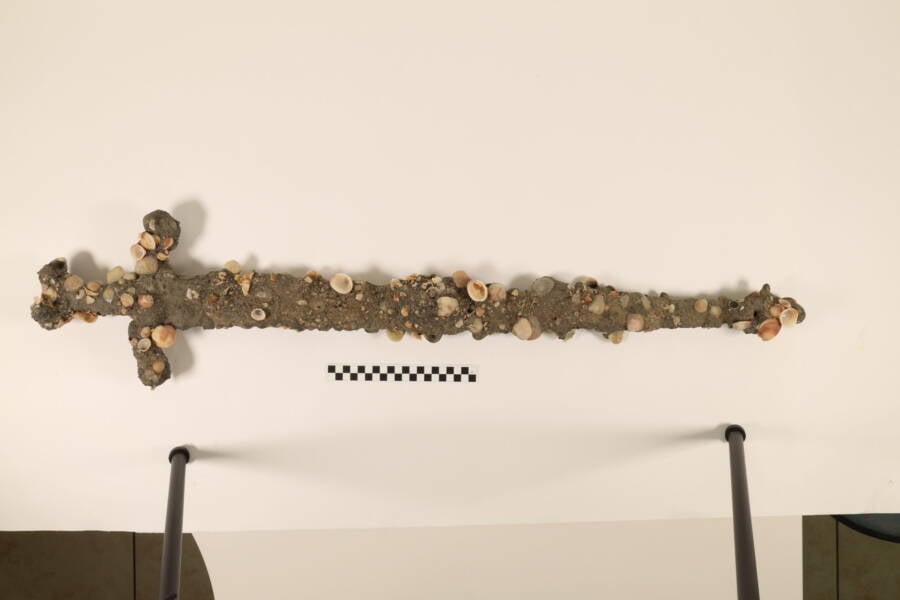
Yoav Bornstein/University of HaifaThe sword was designed to be held with one hand, despite being made of iron and measuring more than three feet long.
In 2021, Shlomi Katzin made the discovery of a lifetime when he found a sword from the Crusades while scuba diving in Israel. But now, Katzin has uncovered another sword from the Crusades while swimming right nearby.
This sword — like the last one, made of iron and measuring in at just over three feet — is encrusted with shells and sand but is otherwise in fairly good condition. Researchers were able to examine this incredible relic via CT scan and determined that it was forged in Europe in the 12th century, a time when European knights poured into the Middle East in the hopes of “retaking” Jerusalem.
The Chance Discovery Of A 12th-Century Crusader’s Sword At Dor Beach
According to a statement from the University of Haifa, archaeology student Shlomi Katzin was not looking to make any discoveries when he went to Dor Beach, and instead sought only to swim. However, he had indeed found a Crusader’s sword while scuba diving not far away in 2021. But while Katzin was swimming, he noticed scuba divers with metal detectors, who he suspected were antiquities thieves.
While chasing the thieves away, Katzin happened to notice the hilt of an historic sword peeking out of the seabed. He immediately notified university officials, who alerted the Israel Antiquities Authority, which quickly approved the sword’s removal from the sea.
The sword, just over three feet long and estimated to be from the 12th century, was safely recovered and brought to the University of Haifa for further study. Researchers examined it with a CT scan, which helped them to determine that the sword was meant to be held in one hand, that it was forged in Europe, and that only a small sliver of its original iron had survived.
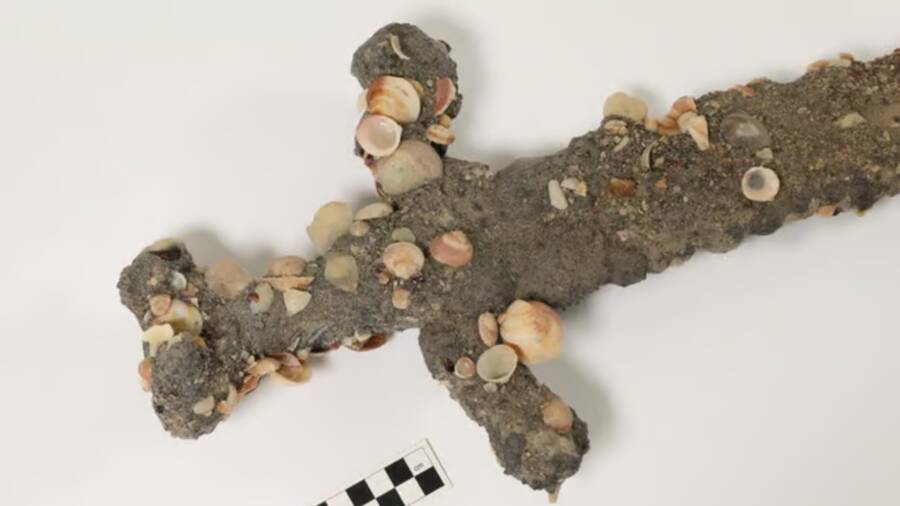
Yoav Bornstein/University of HaifaThe hilt of the Crusader’s sword, which researchers dated to the 12th century.
Given its age and provenance, researchers are certain that it once belonged to a European Crusader, who would have deeply valued such an impressive weapon.
“Since their invention, swords have been among the most important tools in the history of mankind,” said Sarah Lantos of the Department of Maritime Civilizations at the School of Archaeology and Maritime Civilizations at the University of Haifa. “In the Middle Ages, the sword became a symbol of The knights and knighthoods, as well as a symbol of the Christian faith. It was also one of the most common weapons used by the Crusader knights, and their lives depended on them. Swords were precious objects, and therefore were carefully cared for and preserved.”
Swords like this one thus provide incredible insight into what life was like during the Crusades that unfolded between the 11th and 13th centuries.
A Brief History Of The Crusades
The Crusades began in 1095, when Pope Urban II called on Christians to seize control of the holy city of Jerusalem, which had been taken by Muslim forces in the 7th century. The pope stated that anyone who participated would have their sins forgiven, assuring their passage to heaven.
Over the next two centuries, tens of thousands of European warriors poured into the Middle East. Though the European Christian forces enjoyed early victories, and initially took Jerusalem, Muslim forces ultimately triumphed by the time the Crusades ended at the end of the 13th century.
Despite the length of the Crusades, however, and the number of warriors who fought in them, the recovery of artifacts like swords remains incredibly rare. It’s thus astounding that Katzin found one sword, let alone two.
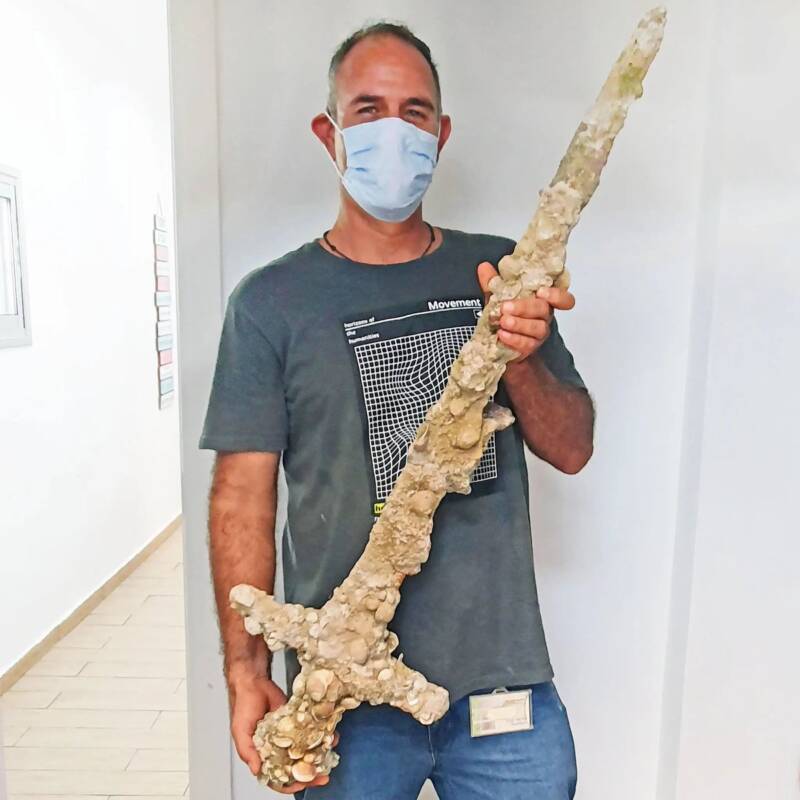
Nir Disteleld/Israel Antiquities AuthorityShlomi Katzin with the first Crusader sword that he found while scuba diving in Israel in 2021.
“This is an extremely rare find that sheds light on the Crusader presence on the coasts of the country,” said Debbie Tsveikal, from the Department of Maritime Civilizations at the School of Archaeology and Maritime Cultures at the University of Haifa. “Only a handful of similar swords from the Crusader period are known in the Land of Israel, and this discovery contributes greatly to our understanding of the use of maritime anchorages and the lives of warriors during this period.”
After reading about the 12th-century Crusader’s sword that was found off the coast of Israel, go inside the shadowy history of the Knights Templar, the Catholic military order formed during the Crusades. Then, go inside the curious history of the search for the Holy Grail.
The post An Archaeology Student Swimming In The Mediterranean Just Happened Upon A Crusader’s Sword From The 12th Century appeared first on All That's Interesting.
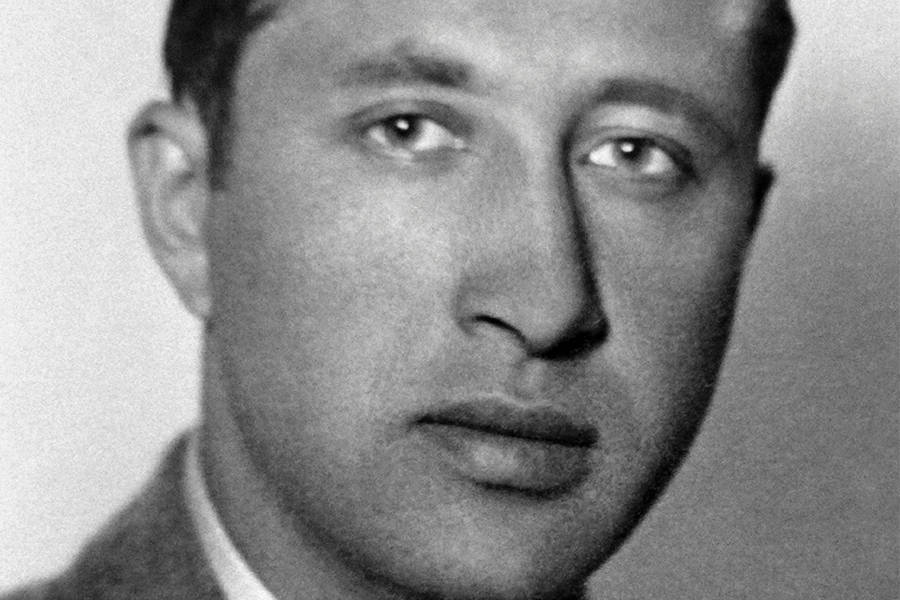
Stringer/Getty ImagesSecret Agent Duško Popov, who also went by the codenames “Ivan” and “Tricycle.”
“The name is Bond, James Bond.”
Those words are some of the most widely recognizable in the history of film and literature. It’s how the martini-swilling, playboy secret agent created by British author Ian Fleming introduces himself to friends and foes alike. But one has to wonder if the phrase would have the same ring to it if Fleming had chosen to retain the name of the man who perhaps inspired the character more than any other: Serbian double agent Duško Popov.
“The name is Popov, Duško Popov” may not exactly roll off the tongue. But even if he lacked a memorable catchphrase, World War II super-spy Duško Popov led a life that even James Bond might envy.
Duško Popov’s Early Life Before Becoming A Wartime Spy
Duško Popov was born in what is now Serbia in 1912 to an extremely wealthy family. His early years were spent on yachting trips along the Adriatic, attended along the way by his family’s servants. As he grew older, he was educated at some of the most prestigious schools in Europe, learning Italian, French, and German.
Popov briefly spent some time in England after his father enrolled him in a prestigious preparatory school in Surrey. His English school career was cut short after he got into some trouble with a teacher for smoking a cigarette. Popov was caned. Deciding that he didn’t want to suffer the punishment again after he missed a detention, he grabbed the cane out of the teacher’s hands and snapped it in half.
Back on the continent, Duško Popov finished high school and went to the University of Belgrade to study law. With his law degree in hand, Popov decided to move to Germany to pursue a doctorate and improve his German. There, he met Johann Jebsen. Like Popov, Jebsen came from a wealthy family and had sophisticated tastes.
The pair immediately became fast friends. As Popov described their relationship, “[We were both] addicted to sports cars and sporting women, and had enough money to keep them both running.”
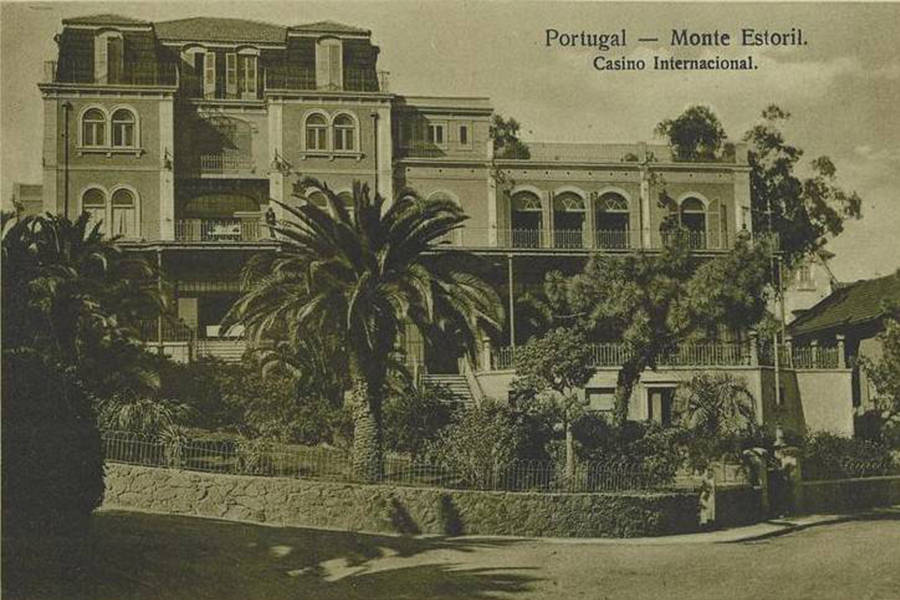
Wikimedia CommonsA casino in Estoril, like the ones Popov frequented.
Duško Popov had a way with women. While maybe not conventionally handsome, he had striking, heavy-lidded green eyes that some women apparently found irresistible. Cruising from club to club in a sports car, Popov and Jebsen quickly developed reputations as ladies’ men.
But Popov and Jebsen shared something more serious in common, they both hated the Nazis who had recently seized control of the country.
Popov was particularly vocal about his dissent, engaging in debates with Nazi students at the University of Freiburg. This earned him the attention of the state’s secret police. And in 1937, when he planned to leave the country to celebrate his graduation with a trip to Paris, Popov was arrested by the Gestapo.
Jebsen immediately called Duško Popov’s father to tell him what had happened. Popov eventually spent eight days in Freiburg Prison before his father managed to get him released with the help of the Yugoslavian government. Popov was put on a train to Switzerland, where he found Jebsen waiting for him. Grateful for his help, Popov told Jebsen that if he could ever do anything to repay him, he would.
Jebsen called in that favor in 1940, when he asked Popov to meet him at a Belgrade hotel. There, Jebsen informed him that he’d joined the German military intelligence service in spite of his hatred for the Nazis. It was the only way to avoid fighting on the front lines. Now, he wanted Popov’s help as an intelligence agent.
While his friend might have thrown his lot in with the Nazis, Popov was less eager to work for the people who imprisoned him. Instead, he went to the British. The British told Popov to accept Jebsen’s offer, and report back everything the Germans told him.
Duško Popov’s Dramatic Career As A Double Agent — And His Pivotal Run-In With Ian Fleming
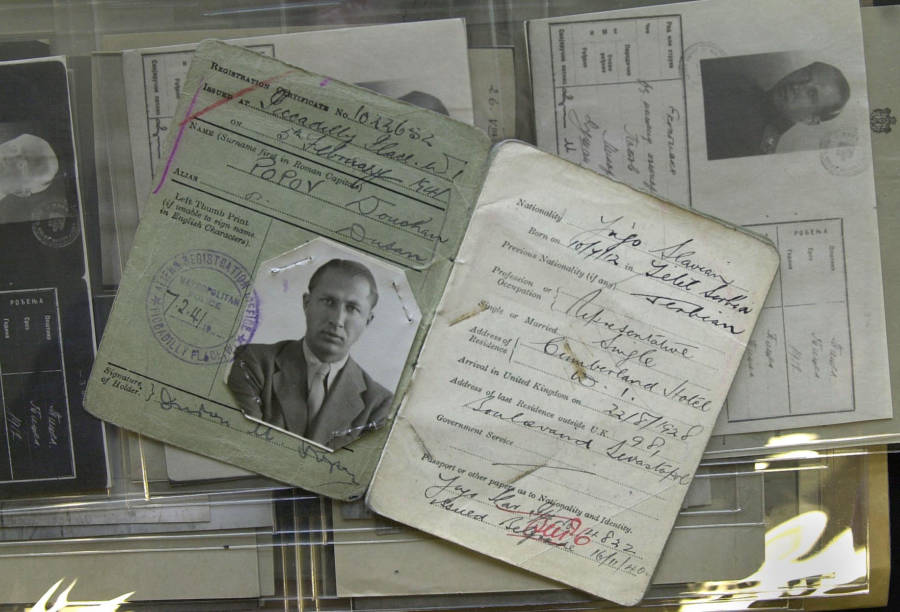
Tim Ockenden – PA Images/PA Images via Getty ImagesA Certificate of Registration for Duško Popov, also know as double agent “Tricycle.”
Duško Popov was now working as a double agent. Over the next year, he took German requests for intelligence and fed them back prepared British disinformation. The Germans, thinking that they had a valuable asset in Popov, kept him supplied with cash to fund his playboy lifestyle. In every city he went to, he maintained a string of relationships with local women and even fellow spies.
Popov quickly hatched a plan to take advantage of the fact that the Germans trusted him with their money. Codenamed Operation Midas (named after the mythical King Midas), the plan called for Popov to fleece the Germans for money to invest in building a spy ring in London, only to deliver it directly to MI6.
The first phase of the plan went off without a hitch. The Germans, hearing about Popov’s idea to put spies in England, handed over $50,000. Now, he just needed to make the handoff to the British.
One night in 1941, Duško Popov walked into a casino in Portugal with the entire sum. Along for the ride was Ian Fleming, an intelligence officer sent along to make sure that Popov didn’t do anything stupid with the money. You know, like bet it on a single hand of baccarat.
But while in the casino, Popov heard a Lithuanian businessman loudly declaring that anyone who wanted to play baccarat at his table could bet any amount of money, and he would match it. The man’s attitude rubbed Popov the wrong way. And according to Popov, he also just wanted to “shake Fleming up.”
Popov sat down at the man’s table and placed all $50,000 on the felt. The casino went quiet. Fleming’s face turned green at the thought that he was about to watch Popov blow the entire operation.
The flustered businessman asked the dealer if the casino would back him in case he lost the money. After being told that they certainly couldn’t do that, he withdrew.
Duško Popov cheerfully pulled the money off the table, complaining that the casino shouldn’t allow such irresponsible gamblers at their tables. It was, after all, “an annoyance to the serious players.”
A similar scene would later play out in Fleming’s first Bond novel, Casino Royale. In the novel, Bond bankrupts a Russian agent at a high-stakes baccarat game. Many have suggested that Popov was the inspiration for the scene.
Although Fleming, possibly due to laws protecting classified operations or possibly because Popov was simply embellishing his account, later offered a different version of the story in which he was personally playing a game at the casino against some Germans.
How The Real-Life James Bond Was Involved With Both Pearl Harbor And D-Day
RALPH GATTI/AFP/Getty ImagesDusko Popov later in life.
After the incident at the casino, Duško Popov’s next assignment from the Germans was to set up a spy ring in the United States.
According to Popov in a post-war interview, the Germans were especially interested in information about the Pearl Harbor Naval Base. He claimed to have passed along this information to the FBI, but Director J. Edgar Hoover killed the report due to a personal distaste for Popov.
A few months after Popov made it to the US, Japan attacked Pearl Harbor.
Most historians agree that the Nazi leadership had no idea that Japan was planning the attack. But Popov’s story raises an intriguing possibility that there was someone in German intelligence who knew about the plan. But nothing has ever been proven conclusively about who that someone might be.
Whatever the case, the attack on Pearl Harbor meant that the US was now in the war. And the plan to eventually defeat the Nazis, Operation Overlord, required the work of every double agent the British had.
Duško Popov was put to work convincing the Nazis that the landings at Normandy would actually be happening at Dieppe or Calais. He and other double agents did such a good job passing along false intelligence to the Nazis that, even after the landings began, the Nazis held back reserve divisions that might have tipped the balance against the Allies. They were sure that the landings at Normandy were simply a feint for the real invasion.
With the end of the war in 1945, Duško Popov moved to France. In the 1970’s, he released a memoir about his life as a spy. But otherwise, he lived a life outside the public eye.
Duško Popov died in 1981 due to the long-term effects of his heavy drinking and smoking. It’s interesting to think that if James Bond were a real person, his own lifestyle might produce the same result. Perhaps Popov simply lived and died just like his fictional counterpart.
After this look at Duško Popov, read about Porfirio Rubirosa, another international man of intrigue. Then, learn about Britain’s Special Operations Executive and their clandestine missions during World War II.
The post The Astonishing Story Of Dusko Popov, The World War II Intelligence Agent Who Helped Inspire 007 appeared first on All That's Interesting.
From exposing the seedy underbelly of the restaurant industry to dining with President Obama in Vietnam, it’s no wonder why Anthony Bourdain was called the “original rock star” of the culinary world. Unlike other celebrity chefs, his appeal stretched far beyond the delicious food he cooked and ate. This made Anthony Bourdain’s death all the more tragic.

Paulo Fridman/Corbis/Getty ImagesWhen Anthony Bourdain died in 2018, he left a gaping hole in the culinary world.
On June 8, 2018, Anthony Bourdain was found dead of an apparent suicide at Le Chambard Hotel in Kaysersberg-Vignoble, France.
His body was discovered by fellow chef and close friend Éric Ripert, who had been filming an episode of Bourdain’s travel show Parts Unknown with him. Ripert became concerned when Bourdain missed dinner the night before and breakfast that morning.
Sadly, by the time Ripert found Bourdain in his hotel room, it was too late — America’s most beloved travel guide was already gone. Anthony Bourdain’s cause of death was later revealed to be suicide by hanging, using a belt from his hotel bathrobe to end his life. He was 61 years old.
Despite his massive success, Bourdain had a troubled past. During his early years of working in restaurants, he developed an addiction to heroin and other problems that he later said should have killed him when he was in his 20s. While Bourdain eventually recovered from his heroin addiction, he continued to struggle with his mental health throughout his life.
While it’s impossible to tell what was going through Bourdain’s mind during his final moments, there’s little doubt that his personal struggles played a role in his demise. While many were shocked by the suddenness of his death, others were not that surprised. But today, most who knew him simply miss their friend. And there’s a lot about him to miss.
The Incredible Life Of Anthony Bourdain
Flickr/Paula PiccardA young Anthony Bourdain.
Anthony Michael Bourdain was born on June 25, 1956, in New York City, but spent most of his youth in Leonia, New Jersey. As a teenager, Bourdain enjoyed going to the movies with friends and gathering at restaurant tables to discuss what they had seen for dessert.
Bourdain was inspired to enter the culinary world after he tried an oyster on a family vacation in France. Freshly caught by a fisherman, the tasty catch led Bourdain to work in seafood restaurants while attending Vassar College. He dropped out after two years, but he never abandoned the kitchen.
He attended the Culinary Institute of America, graduating in 1978. While most of his early jobs in restaurants involved tasks like dishwashing, he steadily moved up in the ranks of the kitchen. By 1998, Bourdain had become the executive chef at Brasserie Les Halles in New York City. Around this time, he was also chronicling his experiences in the “culinary underbelly.”
The future celebrity chef wrote candidly about his heroin addiction as well as his use of LSD, psilocybin, and cocaine. But he wasn’t the only one who struggled with these vices while working in restaurants in the 1980s. As he later explained, “In America, the professional kitchen is the last refuge of the misfit. It’s a place for people with bad pasts to find a new family.”

Wikimedia CommonsAnthony Bourdain was given a Peabody Award in 2013 for “expanding our palates and horizons in equal measure.”
In 1999, Bourdain’s writing made him famous. He published an eye-catching article in The New Yorker titled “Don’t Eat Before Reading This,” exposing some unsavory secrets of the culinary world. The article was such a hit that he expanded on it in 2000 with the book Kitchen Confidential.
Not only did his book become a bestseller, but he soon saw even more success with A Cook’s Tour. That book was turned into a TV series — which led to Bourdain’s world-famous No Reservations show in 2005.
Though Bourdain had found success in the literary world, he truly arrived when he went on TV. From No Reservations to the Peabody Award-winning series Parts Unknown, he explored culinary cultures all over the world as a humble tour guide to hidden pockets of life and food.
He had become the toast of the town as his honest depiction of people, culture, and cuisines found a global legion of fans. And as a recovering addict, Bourdain inspired countless people with his remarkably honest story of recovery. But things were far from perfect in his world.
Inside Anthony Bourdain’s Death

Jason LaVeris/FilmMagicAnthony Bourdain and his last girlfriend, Asia Argento, in 2017.
Just a couple of years before his suicide, Bourdain publicly visited a psychotherapist in Buenos Aires, Argentina on an episode of Parts Unknown. While this episode, like others, focused on unique dishes and fascinating people, it also showed a darker side to Bourdain’s relationship with food.
While talking to the psychotherapist, he confessed that something as small as eating a bad hamburger at the airport could send him into “a spiral of depression that can last for days.” He also expressed a desire to be “happier.”
It seemed like he was happier than ever when he first met Italian actress Asia Argento in 2017 while filming an episode of Parts Unknown in Rome. Though Bourdain’s first marriage had ended in divorce and his second in separation, he was clearly overjoyed to begin a new romance with Argento.
Still, he continued to struggle with his mental health. He often brought up death, wondering out loud how he would die and how he would kill himself if he decided to end his own life. In one of his last interviews, he said that he was going to “die in the saddle” — a sentiment that later proved chilling.
Despite his enviable career as a travel documentarian, he was haunted by a darkness that he couldn’t seem to shake. This coupled with his rigorous schedule made him feel exhausted whenever the cameras were off.

Wikimedia CommonsLe Chambard Hotel in Kaysersberg-Vignoble, France, the site of Anthony Bourdain’s death.
Five days before Bourdain’s death, paparazzi photos were released of Argento dancing with another man, French reporter Hugo Clément. While it was later reported that Bourdain and Argento were in an open relationship, some people speculated on how the photos had made Bourdain feel. But it’s impossible to say exactly what was going through his mind.
At 9:10 a.m. on June 8, 2018, Anthony Bourdain was found dead at Le Chambard Hotel in Kaysersberg-Vignoble, France. Tragically, Anthony Bourdain’s cause of death was soon revealed to be an apparent suicide. His friend Éric Ripert, with whom he had been filming Parts Unknown, was the one to discover the body hanging in the hotel room.
“Anthony was a dear friend,” Ripert later said. “He was an exceptional human being, so inspiring and generous. One of the great storytellers of our time who connected with so many. I wish him peace. My love and prayers are with his family, friends, and loved ones.”
For the prosecutor of Colmar, the city closest to the hotel, Anthony Bourdain’s cause of death was clear from the very beginning. “We have no reason to suspect foul play,” said Christian de Rocquigny. That said, it wasn’t immediately clear whether drugs played a role in the suicide.
But a couple of weeks later, the toxicology report showed no trace of any narcotics and only a trace of a non-narcotic medication. Experts noted that Anthony Bourdain’s suicide appeared to be an “impulsive act.”
The Aftermath Of A Legendary Chef’s Demise
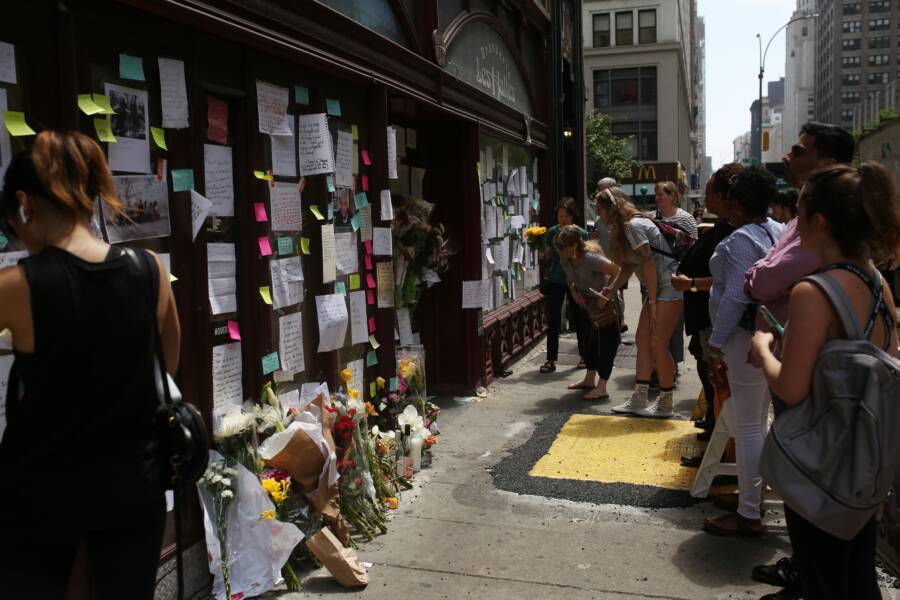
Mohammed Elshamy/Anadolu Agency/Getty ImagesMourning fans at Brasserie Les Halles in New York City on June 9, 2018.
Shortly after Anthony Bourdain’s death, fans gathered at Brasserie Les Halles to leave tributes. Colleagues at CNN and even President Obama tweeted their condolences. And Bourdain’s loved ones expressed their disbelief, with his mother saying he was “absolutely the last person in the world I would have ever dreamed would do something like this.”
Some devastated fans wondered why Bourdain killed himself — especially since he had recently claimed that he “had things to live for.” A few even floated ominous theories that Bourdain’s outspoken views had somehow led to his death. For example, Bourdain publicly supported Argento when she revealed that she had been raped by Harvey Weinstein, a former film producer who was later imprisoned for other sex crimes.
Bourdain, never one to bite his tongue, was a vocal ally of the #MeToo movement, using his public platform to speak out against not only Weinstein but other famous people who had been accused of sex crimes. While many women were grateful to Bourdain for speaking up on their behalf, his activism undoubtedly made some powerful individuals angry.
Still, authorities insisted that there were no signs of foul play at the scene of his death. And there has never been any confirmed evidence that Anthony Bourdain’s cause of death was anything else other than a tragic suicide.

Neilson Barnard/Getty Images/Food Network/SoBe Wine & Food FestivalAnthony Bourdain and Éric Ripert in 2014.
As time went on, Bourdain’s family, friends, and colleagues began to honor his memory in a variety of ways. About a year after he died, Éric Ripert and some other famous chefs designated June 25th as “Bourdain Day” to pay tribute to their late friend — on what would’ve been his 63rd birthday.
More recently, the documentary film Roadrunner explored Bourdain’s life through home videos, snippets from TV shows, and interviews with those who knew him best. The movie — released in theaters on July 16, 2021 — also includes some never-before-seen footage of Bourdain.
While the film touches on Bourdain’s gravitation toward “darkness,” it also shows the impact that he had on other people during his travels throughout the world and his all-too-short journey through life.
As Bourdain once said, “Travel isn’t always pretty. It isn’t always comfortable. Sometimes it hurts, it even breaks your heart. But that’s okay. The journey changes you; it should change you. It leaves marks on your memory, on your consciousness, on your heart, and on your body. You take something with you. Hopefully, you leave something good behind.”
After learning about the untimely death of Anthony Bourdain, read about the tragic demise of Amy Winehouse. Then, take a look at some of the strangest deaths of famous people throughout history.
The post How Did Anthony Bourdain Die? Inside The Beloved Chef’s Troubled Final Days appeared first on All That's Interesting.

John CarnemollaSix teens wanted an adventure – and they ended up shipwrecked on a deserted island for 15 months.
In 1965, a group of bored teenage boys snuck out of their boarding school in Tonga, hoping to sail all the way to Fiji or even New Zealand. Instead, a storm blew them hundreds of miles south to a deserted island. The boys seemed doomed. But, incredibly, the so-called Tongan castaways would survive on the remote island for next 15 months before their rescue.
Though their story has been called the “real Lord of the Flies,” the boys’ experience was nothing like the famous novel. Unlike the fictional characters of the book, the six boys worked together and watched out for each other.
This is the incredible survival story of the Tongan castaways: Luke Veikoso, “Stephen” Tevita Fatai Latu, Sione Fataua, “David” Tevita Siolaʻa, Kolo Fekitoa, and “Mano” Sione Filipe Totau.
The Six Tongan Castaways Get Lost At Sea
In June 1965, six teenage boys between the ages of 13 and 18 stole a boat and set sail. Sione, Stephen, Kolo, David, Luke, and Mano were tired of their boarding school in Nuku’alofa, Tonga’s capital. They wanted adventure.
“I grew up in the little island of Ha’afeva,” Mano, one of the older boys who took on a leadership role on the island, recalled to Vice in 2021. “When I started to learn geography and history I looked at Fiji, New Zealand, and Australia, and they were all far, far bigger… I wanted to see the wide world.”
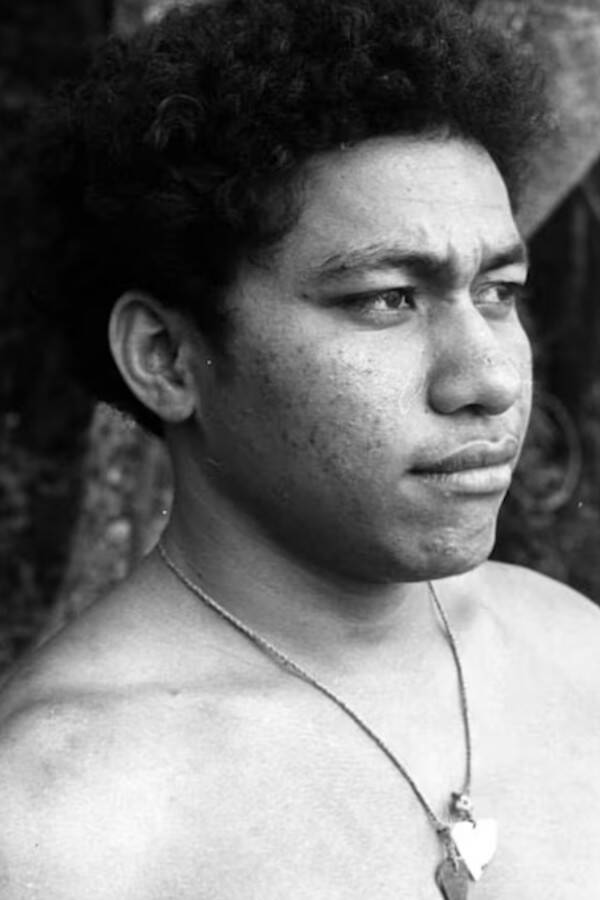
Sione Filipe Totau“Mano” Sione Filipe Totau as a young man.
With bananas, coconuts, and a small gas burner, the boys sailed off into the night. Conditions were calm and clear. But after the boys fell asleep, a storm suddenly blew in.
“We didn’t have the sense to pull down the sail,” Mano recalled, “so it got torn off in the wind.”
Suddenly the teens were adrift in the South Pacific with no rudder and no sails. They didn’t have a map or compass, so it was impossible for them to know exactly where they were. For more than a week, they drifted.
On the eighth day, the Tongan castaways spotted land, an uninhabited volcanic island called ʻAta. It would be their home for the next 15 months.
The Harmony Of Life On The Island Of ‘Ata
After the Tongan castaways made their way to shore, they cried, said a prayer, and then fell asleep. The next morning, they set out to explore their new surroundings by climbing to the top of ‘Ata’s volcanic crater.
“I stepped on a piece of wood, which was soaked wet,” Mano remembered. “I picked it up and broke it apart, bit by bit, and squeezed it in my hand then licked it with my mouth. It was the first drink I’d had in eight days.”

Wikimedia Commons‘Ata Island, where the Tongan castaways were stranded for 15 months, as seen from above.
The boys knew that they were in a dangerous situation, and they made a pact on their first day to take care of each other just like they had back on Tonga. According to reporting from the The Guardian in 2020, they started and ended each day with a song and a prayer, agreed to divide up chores and responsibilities, and, if anyone had a problem, to discuss it.
Then, slowly, the Tongan castaways began to create a life for themselves.
The castaways built a house covered in woven coconut fronds. They made beds out of banana leaves. Within the island’s volcanic crater, they found the remnants of the island’s former inhabitants, indigenous people who had been kidnapped as slaves and who had left behind wild taro, bananas, and feral chickens. The boys survived on fruits, fish, coconuts, birds, and seabird eggs, and finally gained enough of their strength back to build a fire.
“It took us three months to make a fire,” Mano said, “and it was the first hot meal that we had.”

John CarnemollaThe Tongan castaways reenacting what life was like on ‘Ata.
Though their story bears some resemblance to the Lord of the Flies, the Tongan castaways did not descend into the quarreling and violence of the book’s characters. Instead, they recreated their social bonds from back home. Everyone contributed to growing and preparing food. Everyone helped keep the fire alive. And the boys found productive ways to resolve disputes.
“We all come from close and poor families where, whatever you get, you share,” Sione told PEOPLE in 2020. “If anybody had something they didn’t like, they talked about it and we say ‘sorry’ and then pray and everything’s okay. If someone got really mad — like, if I planned something and they didn’t do it — you disappear for a few hours, look at the ocean and clear it out of your mind.”
But homesickness haunted the Tongan castaways, who had little hope of being rescued. “I never really loved the island,” Mano recalled. “I always wanted to go back home to see my family.”
Then, a year later, a miracle happened.
The Rescue Of The Tongan Castaways
In September 1966, Australian Peter Warner was sailing in his fishing boat when he and his crew passed by ‘Ata. Taking a closer look at the island through his binoculars, Warner saw patches of burned earth, which was odd, for an uninhabited island. Then, he saw something even more surprising: a boy.
The boy spotted the boat, and then, suddenly, several of them appeared in the water. One made it quickly to Warner’s vessel and, scrambling onboard, he shouted a surprising story: “My name is Stephen! There are six of us and we reckon we’ve been here 15 months.”
The Tongan castaways told Warner how they’d been stranded on the island, and Warner radioed Nuku’alofa to confirm their story. The shocked radio operator replied, “You found them! These boys have been given up for dead. Funerals have been held. If it’s them, this is a miracle!”
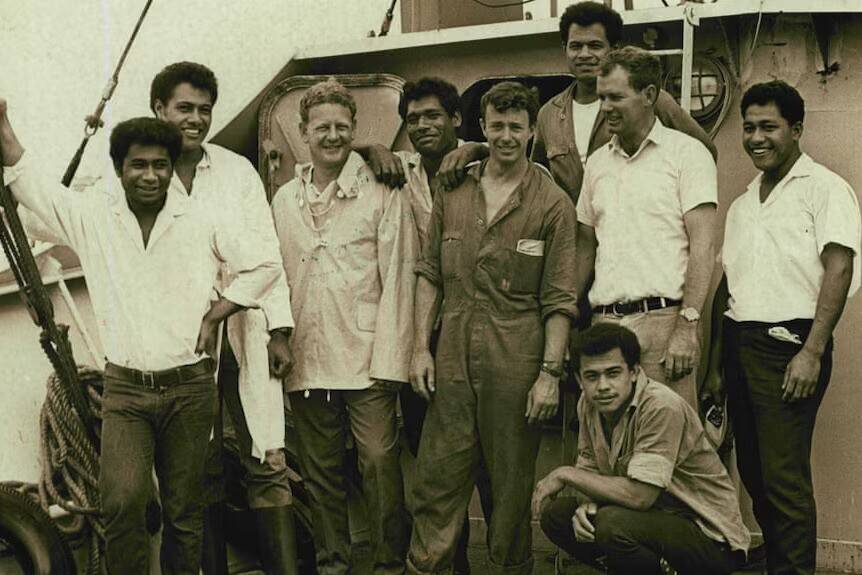
Sione Filipe TotauPeter Warner and the Tongan castaways. After their rescue, he hired them to work on his lobster boat.
Homecoming wasn’t an entirely smooth process for the Tongan castaways, however. When they reached the capital, the boys were arrested because the owner of the boat they’d stolen 15 months earlier wanted to press charges. But Warner had a plan. He called up the manager of a TV station in Australia and offered to sell the rights to the boys’ story. Warner then used the money to repay the boat owner and get the boys released from jail, and the Tongan castaways subsequently filmed a reenactment of their time on the island.
Warner, with the gratitude of the Tongan people, also then negotiated lobster fishing rights in Tongan waters — and hired the boys as his crew.
The Tongan castaways thus returned to normal life, and their story was more or less forgotten for several decades, although Warner wrote about it in his 2016 memoirs, Ocean of Light: 30 Years in Tonga and the Pacific. Then the Dutch historian Rutger Bregman expanded on the story in his 2020 book, Humankind, and the surviving Tongan castaways sold the film rights to their story to the studio New Regency that same year.
And ultimately, though the Tongan castaway’s experience on ‘Ata was a grueling experience, it was also incredibly valuable.
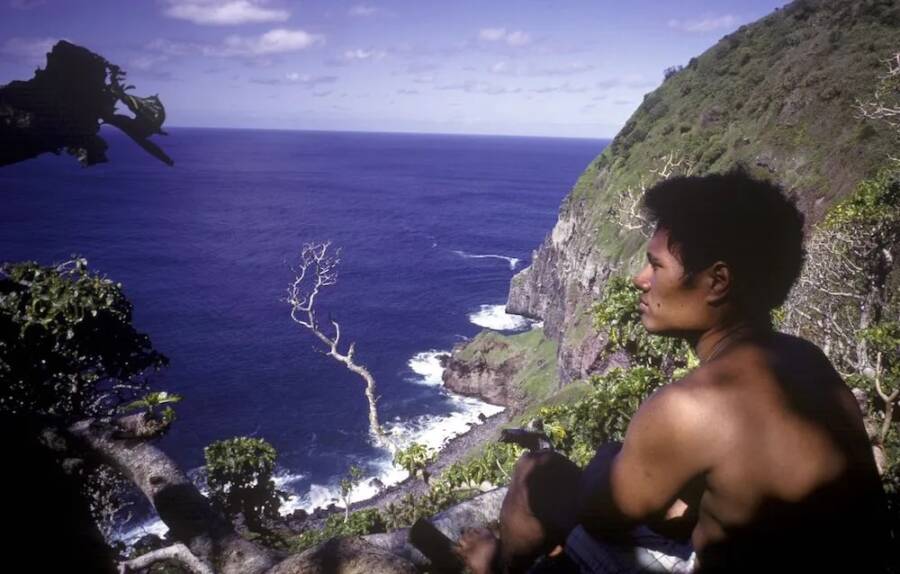
John Carnemolla‘Ata was an uninhabited island, but it had the remnants of an abandoned settlement that helped the castaways survive.
“When I think back to our time on the island, I realize we really learned a lot,” Mano remarked of the experience. “And when I compare it to what I gained at school, I think I learned more on the island… I learned how to trust myself. I realize now that it doesn’t matter who you are; it doesn’t matter what color you are, what race, or anything like that. Because if you’re in a real problem, you will eventually see what you need to do to survive.”
After reading about the Tongan castaways, discover the story of Mauro Morandi, the “Italian Robinson Crusoe” who lived alone on an uninhabited island for 32 years. Or, learn about Juana Maria, the woman who spent 18 years living alone on the Channel Islands near California after her tribe left.
The post The Incredible Story Of The Tongan Castaways, The Teenage Boys Who Survived For 15 Months On An Uninhabited Island appeared first on All That's Interesting.

Charity LeeParis Lee Bennett and his younger sister Ella.
“My son is a monster, and because he is a monster, I have lost my daughter,” Charity Lee wrote in her private journal. Less than a month earlier, on Feb. 4, 2007, her 13-year-old son Paris Lee Bennett had done the unthinkable: He had brutally murdered his 4-year-old sister Ella in the family’s Abilene, Texas home.
That wasn’t all, though. In the hours before the fatal stabbing, Paris had been viewing graphic porn, searching for “S&M,” “bondage,” “sadism,” and “snuff films.” He would later reveal, to his mother’s horror, that he had been sexually abusing his sister before killing her — it was, in part, why he had committed the murder. If she was dead, she couldn’t tell anyone about it.
This was well beyond any parent’s worst nightmare. Why would anyone think that their own child could harbor such darkness?
Paris Bennett did harbor darkness, though. And it didn’t take long before his mother, and the world, came to know the full extent of the evil that dwelled within him. The truth was shocking and horrifying.
Inside Charity Lee’s Troubled Life
Charity Lee hadn’t had an easy journey. Growing up in Atlanta, Georgia, she had become addicted to heroin by the time she was 17 years old. Still, she was a bright student who graduated from high school with honors, later attending the University of Tennessee to study human ecology.
During college, life grew even more complicated. She became sober, but found it difficult to deal with life without anything to “take the edge off,” as she put it in a 2017 interview, published in Good Housekeeping. She debated killing herself via overdose. Then, she discovered that she was pregnant.
“I finally had something to live for, something to look forward to, and I learned how to be happy,” she recalled.

Charity LeeCharity Lee, pictured with Paris Bennett shortly after he was born.
In October 1993, she gave birth to her son Paris Lee Bennett, but it quickly became clear that her son would grow up without his father. As it turned out, Paris’ father was diagnosed with paranoid schizophrenia, and so Lee made the decision to cut off contact. After all, she had seen firsthand how turbulent relationships and marriages could disrupt lives.
As Lee told the New York Post in 2020, back when she was just six years old, her own mother was charged with killing her father. Although her mother was later acquitted of the crime, the experience had certainly left a mark.
Lee was determined to provide a better life for her child. She was sober, working odd jobs to pay for school, and getting by with some financial support from her family. At the end of it all, she graduated from college and eventually met the man who would become Ella’s father.
But addiction can be hard to kick, and for a period of six months, after Lee, Paris, and Ella had relocated to Texas, Lee ended up relapsing on cocaine. Paris, 11 years old at the time, knew about this — by all accounts, he was a notably smart child. In fact, he was later found to have a “genius” IQ of 141.
And aside from one incident in 2005, in which he broke a stick Ella had been playing with and then ran off after grabbing a knife, he didn’t seem to have a violent or dangerous personality. Lee wrote she “never, at any point, had any indication that he could kill.” She and Paris argued from time to time, but it didn’t seem to be anything other than typical mother-son tensions.
Then, in 2007, Charity Lee’s life fell apart.
Paris Bennett’s Horrific Murder Of Ella Bennett

Charity Lee/The Family I Had/Investigation DiscoveryParis and Ella Bennett playing together.
Charity Lee left for work around 4:30 p.m. on Feb. 4, 2007, leaving Paris and Ella Bennett in the care of a babysitter. She and Paris had an argument over how he’d spent his allowance at the mall. She had kissed Ella goodbye.
2007, Charity Lee had determined, was supposed to be the year she turned her life around. A week prior, she had written a journal entry, which she shared in her memoir How Now, Butterfly?:
“My vow is to make 2007 better than 2006… I feel as though I finally remember who I am and what I can do. I am Charity. I know who I am. I know I am good. I know I am strong.”
When police arrived at her job at Buffalo Wild Wings to speak with her, she had no clue about the horror that transpired in her Abilene, Texas home.
“That night, the babysitter left our home without my consent,” she recalled. Paris had somehow convinced the sitter it was time to leave. “In her absence, Paris beat and attempted to strangle Ella. He ultimately stabbed her 17 times with a knife. She died, but not quickly, as I’d later find out.”

Charity LeeParis and Ella Bennett.
It wasn’t the only thing she would later learn. Paris had not stabbed Ella in a frenzied or manic state of rage. He had been slow, methodical.
“He sexually abused her that night, and he admitted the more violent he became, the more excited he became, ending in death for her and climax for him,” Lee wrote in a 2010 journal entry. At the crime scene, semen was found on both Ella and the bed where Paris had killed her.
After the murder, Paris had called 911 on himself, reporting that he “accidentally killed somebody,” which is how police discovered the gruesome murder scene. Of course, it was clear that it was no accident.
Charity Lee had thousands of questions running through her mind, but one stood out above the others: Why had Paris done this? The answer was even more sinister than anyone could have thought.
A Psychopath Who Wanted To Hurt His Mother

Charity Lee/FacebookCharity Lee with Ella.
Paris Bennett initially claimed that he killed Ella because of a hallucination that made her look like a demon, but he later admitted to investigators that he had planned his sister’s murder. He was sentenced to 40 years in prison, the maximum for a juvenile murder conviction in Texas.
Ella was the victim of Paris Bennett’s sexual abuse and his murderous plot, but it wasn’t just about hurting her — it had also been about hurting his mother. And he had considered killing her too.
“He said the first reason he didn’t go ahead with it was because it was a lot harder to kill someone than he thought,” Lee said. “The second reason was the realization if he’d killed me, I only would have suffered for five, 10, 15 minutes. But, if he left me alive [without Ella], I would suffer for the rest of my life.”
When Lee went to visit her son in prison, she saw firsthand how violent he could be. He attacked her at one point, slamming a table into her and pinning her to a wall so forcefully she couldn’t breathe.
“I know he’s dangerous,” Lee told the San Antonio Current. “I know he’s different.” Doctors told Lee that Paris was a diagnosed psychopath.

Inside Edition/YouTubeParis Bennett as an adult.
Still, she visited him behind bars — even after Paris tried filing for emancipation and after she read a letter he wrote to a counselor, in which he described killing Ella in detail and elaborated on his resentment toward his mother for her drug use. He also wrote that he wanted to see someone die.
When Lee, crying, asked why he didn’t just kill her instead, his response was startlingly detached: “Goddamn it, Mom, just get over it already. It’s been almost two years already. People die all the time.”
As the years have gone on, however, even Paris himself has had trouble explaining exactly why he ended up the way he did.
“Part of me loved my sister and would have turned the world upside down for her,” Paris told Piers Morgan in a 2019 interview. But, he said, there was a part of him that was “wounded, twisted, dark.”
Paris claimed that if he were released from prison early, he would have no desire to hurt anyone else. His mother said that she would be afraid. She has another child now too, a son named Phoenix. For a brief period of time, she allowed Phoenix to speak on the phone with Paris, but by 2021, she and Phoenix had both stopped communicating with Paris entirely.
As Lee explained in a Facebook post:
“I completely walked away from my eldest child and have not looked back. It is one thing to be a child who makes horrible decisions. It is another thing altogether to be a 27-year-old man and keep making decisions that put your family at risk. The final straw was learning he was ‘involved’ with a woman who lived 2 hours away from us and was out on bond for planning a mass shooting… I finally accepted it is okay to love him as my son, but really dislike the man he has become.”
Paris Bennett is currently held in the Ferguson Unit in Madison County, Texas, and he’s expected to be released in 2047, but he’ll be eligible for parole in 2027.
After reading the shocking, dark story of Paris Bennett, read the equally disturbing story of Eric Smith, the bullied 13-year-old who violently killed a 4-year-old boy. Then, read the tragic story of Maddie Clifton, the 8-year-old girl murdered by her 14-year-old neighbor.
The post The Horrifying Story Of Paris Bennett, The 13-Year-Old Who Fatally Stabbed His 4-Year-Old Sister appeared first on All That's Interesting.

Constanța Museum of National History and Archaeology/FacebookAn archaeologist documents one of the 34 graves uncovered near the Constanța Municipal Hospital site in Romania.
A hospital in Constanța, Romania, was recently slated to undergo major upgrades, but because of its location on the perimeter of an ancient necropolis, archaeologists were called in to excavate the construction site — and they made a remarkable discovery.
Beneath the soil, workers uncovered 34 graves from the Roman era, some of which were located in catacombs and held multiple bodies. The burials also included artifacts like jewelry, glassware, and even part of an exceptionally rare parade shield. These extraordinary finds are revealing more than ever before about life in Tomis, the ancient city upon which Constanța was built.
Construction Work Reveals A Roman-Era Necropolis In Romania
According to a statement from the Constanța Museum of National History and Archaeology, archaeologists uncovered these tombs while excavating the area surrounding Constanța Municipal Hospital, which is currently undergoing upgrades. Because the hospital is known to stand near a Roman necropolis, experts carried out a series of digs ahead of the relocation of the building’s utilities.
In all, the excavations revealed 34 burials dating back to at least the third century C.E., some 200 years before the fall of Rome. Archaeologists also unearthed an intact set of tile stairs leading down into catacombs, along with a trove of well-preserved grave goods.

Constanța Museum of National History and Archaeology/FacebookThe tile stairs leading to the Roman catacombs in Tomis.
These artifacts included jewelry, coins, glassware, and even amphorae from North Africa, revealing evidence of trade between the furthest reaches of the Roman Empire. These finds alone would have been incredible enough, but two other discoveries stood out above the rest.
The first was a stone slab inscribed in Greek. It was seemingly a fragment from a sarcophagus or grave marker that was reused when building the necropolis, and it detailed an “association” to a deity whose name has since broken off of the slab.
The second especially notable artifact was an umbo, the raised, round piece of metal at the center of a shield. The umbo uncovered at Constanța was seemingly part of a ceremonial parade shield, which the museum called “extremely rare.”

Constanța Museum of National History and Archaeology/FacebookThe umbo, the center of an ancient parade shield, uncovered among the ruins of Tomis.
This necropolis and the treasures found within it were all part of the ancient city of Tomis, an initially Greek settlement with a long — and poetic — history.
The History Of Ancient Tomis, Site Of Ovid’s Exile
Constanța, located on the Romanian coast of the Black Sea, is the oldest continuously inhabited city in Romania. Greek colonists first settled there around 600 B.C.E., dubbing the site Tomis.
Over the next six centuries, Tomis continued to grow as it underwent major changes, transforming from an oligarchy to a democracy. Then, in 29 B.C.E., the city was captured by the Romans, and it became part of their ever-expanding empire.
In 8 C.E., the poet Ovid, who is best known for his Metamorphoses, was exiled to Tomis by Emperor Augustus. The reasons for the banishment are unclear, but scholars have speculated that the ruler disliked Ovid’s scandalous Ars Amatoria, which mocked Augustus’ moral reforms. Others believe that the poet discovered that the emperor had committed incest with his daughter or granddaughter.
Public DomainOvid Among the Scythians by Eugène Delacroix, a 19th-century painting depicting Ovid’s exile in Tomis.
Regardless of the cause, Ovid arrived in Tomis in his early 50s. He hated the city, and he documented his woes in a series of poems published as the Tristia. In one entry titled “The Rigours of Tomis,” he laments, “I am living in the midst of the barbarian world… The snow lies continuously, and once fallen, neither sun nor rains may melt it.”
Later in the poem, Ovid describes Tomis’ “naked fields, leafless, treeless — a place, alas! No fortunate man should visit. This then, though the great world is so broad, is the land discovered for my punishment!”
Ovid died in Tomis in 17 or 18 C.E., and his statue still stands in Constanța to this day.
Over the subsequent centuries, Tomis changed hands numerous times, falling under the rule of the Second Bulgarian Empire and the Ottoman Empire before the Romanian War of Independence in the late 19th century. And as the ancient buildings crumbled, new structures were erected, covering the history beneath them.

Constanța Museum of National History and Archaeology/FacebookA slab uncovered during excavations is inscribed in Greek and dates to the third century C.E.
Indeed, much of Tomis has yet to be excavated, as the modern city of Constanța covers it. As such, this archaeological discovery at the Constanța Municipal Hospital is providing a rare peek at the ancient city that saw everything from Greek colonization to Roman rule to the death of Ovid.
After reading about the Roman-era necropolis and artifacts uncovered in Romania, go inside the chilling story of Vlad the Impaler, the Wallachian ruler who may have inspired Dracula. Then, discover some of the myths recorded by Ovid in Metamorphoses, such as the legend of the Minotaur.
The post Hospital Construction In Romania Just Turned Up A Staircase Leading Down Into Ancient Roman Catacombs Containing 34 Graves appeared first on All That's Interesting.
Michelle “Shelly” Knotek appeared to lead a charmed life. She had a caring husband by her side and was raising her three daughters in a home in rural Raymond, Washington. The couple were known for their selflessness and invited struggling friends and relatives to live with them. But then, those guests began to disappear.

Thomas & Mercer PublishingSerial killer Shelly Knotek was caught after her daughters — Nikki, Tori, and Sami — turned her in.
The first person to vanish while in Shelly Knotek’s care was her old friend, Kathy Loreno. They had lived together in Knotek’s home for five years before she disappeared in 1994. Knotek assured anyone who asked that Loreno had simply started a new life elsewhere. She said this when two other people vanished from her home as well.
Finally, Shelly Knotek’s three daughters bravely came forward with a harrowing tale. All three of them had been physically abused by their parents — and their houseguests had been killed. They said Knotek had starved, drugged, and tortured her victims, forced guests to jump off the roof, drenched their open wounds in bleach, and made them drink urine.
And while Shelly Knotek was soon caught and sent to prison in 2004, she served just 18 years before being released in November 2022 — leaving her daughters terrified about what could happen next.
Shelly Knotek’s Tortured Early Life
Born on April 15, 1954, Michelle “Shelly” Knotek never strayed too far from her hometown of Raymond, Washington. Not even her 18-year prison stint years later took her further than two hours north of where she was born.
According to The New York Times journalist Gregg Olsen, who published a tell-all on Shelly Knotek in 2019 titled If You Tell: A True Story of Murder, Family Secrets, and the Unbreakable Bond of Sisterhood, the killer’s early life was riddled with trauma.
The oldest of three siblings, Knotek and her brothers lived with their mentally ill, alcoholic mother, Sharon, during their early years. Along with her propensity for alcohol, Sharon had gotten involved in a dangerous lifestyle, with some family members believing she may have been a prostitute.
In any case, the home was far from stable. Then, when Shelly was six, their mother seemingly abandoned them. Rather than caring for her younger brothers, however, she tormented them.
The children then went to live with their father, Les Watson, and his new wife, Laura Stallings. Olsen described Watson as a charismatic, successful business owner; Stallings as a stunning beauty representative of 1950s America.
Shelly did not care for Stallings, and frequently told her stepmother how much she hated her.
When Shelly was 13, Sharon Todd Watson died. As Les Watson described, Sharon was living with a man at the time. They were “homeless. Drunks. Living on skid row. She was beaten to death.”
“[Shelly] never once asked about her mother,” Stallings recalled.
Instead, she continued to torment her brothers, blaming them for missing homework or picking frequent fights. It didn’t help that her brother Paul couldn’t control his impulses and lacked social skills. Her other brother, Chuck, never spoke for himself — Shelly did all the talking.
But it went beyond mere childhood bickering, Stallings later said. “She used to chop up bits of glass and put them in the bottom of [the kids’] boots and shoes. What kind of person does something like that?”
Shelly Knotek Wasn’t A Victim, But She Played The Part
In March 1969, 14-year-old Shelly showed what she was truly capable of. She didn’t come home from school. Panicked, Stallings and Watson called the school and were told that Shelly was at a juvenile detention center. Their worst fears, however, didn’t come close to the reality.

Gregg Olsen/Thomas & Mercer PublishingDavid and Michelle Knotek.
Shelly Knotek was not in trouble — she had accused her father of rape. Stallings later discovered a dog-eared copy of True Confessions in Shelly’s room with a bold headline on the front reading, “I WAS RAPED AT 15 BY MY DAD!”
A doctor’s examination later confirmed Stallings’ suspicion — Shelly lied about the rape.
She was taken to multiple sessions with a psychologist, both on her own and with her family, but they proved to be unsuccessful. Shelly refused to accept that she was anything but innocent.
Eventually, she went to live with Stallings’ parents, but, unfortunately, she continued to try and ruin the lives of those around her. Her tantrums continued; she offered to babysit the neighbors’ children only to barricade them in their rooms with heavy furniture. She even falsely accused her grandfather of abuse.
Her pattern of manipulation and abuse continued into adulthood, through two marriages, the birth of two daughters, Nikki and Sami, and all the way up to the spring of 1982, when she met a construction worker and Navy veteran named David Knotek. Five years later, in 1987, the couple married.
The next year, Shelly Knotek welcomed her first victim into their home.
Growing Up In The Knotek Household — And Suffering Frequent, Brutal Abuse
Shelly Knotek’s first victim moved into her home in 1988. He was her 13-year-old nephew, Shane Watson. Shane’s father, a member in a biker gang, was in jail; his mother was destitute, unable care for him.
Knotek took to torturing Watson almost immediately. She dubbed her style of reprimanding him as “wallowing,” which she employed for things as negligible as going to the bathroom without asking. Wallowing involved ordering the boy — and her daughters, for that matter — to stand outside naked in the cold while she dumped water on him.

Gregg Olsen/Thomas & Mercer PublishingKnotek sisters Tori, Nikki, and Sami, with their cousin, Shane Watson.
Shelly took additional pleasure in humiliating her eldest daughters, Nikki and Sami, by ordering them to give her handfuls of their pubic hair. Their “wallowing” also frequently included being caged in a dog kennel.
Once, Shelly shoved Nikki’s head through a glass door.
“Look what you made me do,” she said to her daughter.
The only person in the home that Shelly didn’t torture, at the time, was her infant daughter Tori. Unfortunately, that would later change.
Meanwhile, she forced her nephew and Nikki to dance nakedly together as she laughed. After torturing her children and nephew, she would drop “love bombs” of utter affection on them.
Thomas and Mercer PublishingLoreno lost 100 pounds and most of her teeth over the course of her stay.
In December of 1988, only a few months after Shane moved into the home, Shelly opened her doors for another person in need: Kathy Loreno, an old friend who had lost her job. Shelly greeted her longtime friend as she greeted most people in life, warmly and positively. But Loreno would soon discover, as many others had before her, that Michelle Knotek’s mask was quick to come off.
Loreno quickly became another of Shelly’s victims, but with nowhere else to go, she acquiesced to performing forced labor in the nude, being fed nightly sedatives, and sleeping next to the basement boiler.
Then, in 1994, Shelly Knotek graduated to murder.
How Shelly Knotek Murdered Three People Who Were All Close To Her
By this time, Loreno had lost more than 100 pounds. Her body was covered in bruises, cuts, and sores. After one particularly brutal beating, she was left unconscious in the basement. Shelly had gone, but David heard guttural noises coming from the laundry room.
He found Kathy choking on her own vomit, her eyes rolled back in her head. David flipped her onto her side, started scooping the vomit out of her mouth with his fingers, but it was no use. After five minutes of CPR, there was no denying that Kathy Loreno was dead.
“I know I should have called 911,” David later recalled, “but with everything that had been going on I didn’t want the cops there. I didn’t want Shell in trouble. Or the kids to go through that trauma… I didn’t want this to ruin their lives or our family. I just freaked out. I really did. I didn’t know what to do.”
When Michelle learned of Loreno’s death, she convinced her spouse and kids that each of them would be incarcerated if they told outsiders. At his wife’s command, David Knotek burned Loreno’s corpse, and together he and Shelly scattered the ashes.
If anyone asked, Shelly Knotek simply explained Loreno had run off with her lover. Shane, however, recognized the true horrors in his environment, which is why, in February 1995, he made a plan to get out.
Shane had taken photos of Kathy while she was still alive, malnourished and beaten, living in a cold basement next to the radiator. He showed Nikki the photos and told her his plan: He was going to show the police.
But Nikki, terrified of what might happen, told her mother about the photos. In retaliation, Shelly commanded David to shoot Shane in the head. He obliged.
Like Loreno, the couple burned Shane’s body in their yard and scattered his ashes over the water.
“The reason why my mom was able to control Dave was because — while I love him — he’s just a very weak man,” Sami Knotek reported. “He has no backbone. He could have got happily married and been an amazing husband to somebody, because he really would’ve been, but instead, he just got his life ruined, too.”
Gregg Olsen/Thomas & Mercer PublishingSami Knotek and Shane Watson.
Before justice found them, the Knoteks took one more victim: Shelly Knotek’s friend Ron Woodworth, who moved in in 1999. Like the others, it didn’t take long for the abuse to start.
Woodworth was a 57-year-old gay veteran with a drug problem, “an ugly lowlife,” Shelly would tell him, who could use a steady diet of pills and beatings to get his life together.
Shelly didn’t allow him to use the bathroom, so he was instead forced to go outside.
Then, in 2002, Shelly Knotek also took over the care of James McClintock, an 81-year-old retired merchant crewman who had reportedly willed Knotek his $140,000 estate once his black lab Sissy died.
Perhaps coincidentally, perhaps not, McClintock died from a head wound he allegedly suffered after falling in his home.
Police, however, were never able to officially link Knotek to his death.
Back at her home, Knotek demanded that Woodworth cut ties with his family, forced him to drink his own urine, then ordered him to jump off the roof. He didn’t die from the two-storey fall, but it left him badly injured.
As a “treatment,” Knotek poured bleach over his wounds.
In August 2003, Woodworth succumbed to the torture and died.

Greg Olsen/Thomas & Mercer PublishingThe Knotek home in Raymond, Washington.
Shelly Knotek hid Woodworth’s corpse in the freezer, telling his friends that he had gotten a job in Tacoma. David Knotek eventually buried him in their yard, but it was Woodworth’s “disappearance” that led now-14-year-old Tori to realize what was really happening in her home.
Her older sisters had moved out by this time, but when Tori told them what she believed had happened, they urged her to gather Woodworth’s belongings so they could make their case to the authorities. She did.
The Knotek Sisters Turn In Their Mother
Police investigated the Knotek property in 2003 and found Woodworth’s buried body. David and Shelly Knotek were arrested on August 8 of that year.
Thomas & Mercer PublishingSami Knotek revisiting the home in 2018.
While Tori Knotek was placed in her sister Sami’s custody, David Knotek confessed to shooting Watson and burying Woodworth five months later. He was charged with second-degree murder for shooting Watson. He served 13 years.
Michelle Knotek, meanwhile, was charged with second-degree murder and manslaughter for the deaths of Loreno and Woodworth, respectively. She was sentenced to just 22 years.
It didn’t take long for her family to begin fearing what might happen upon her eventual release.
“If she ever turns up on my doorstep,” Sami said, “I can just see myself locking all my doors and barricading myself in the bathroom to call the police.”
Nikki and Sami are now in their mid-40s, living in Seattle. Tori, however, needed a change of scenery and moved to Colorado.
In 2018, David Knotek was paroled and reached out to his daughters to ask for forgiveness. Sami and Tori have gone on record saying that, despite everything, they do forgive their father, whom they consider to be just another of Michelle Knotek’s victims.
Nikki, however, did not accept her father’s apology. For her, the abuse was unforgettable — and unforgivable.
Then, finally, after serving only 18 years, Shelly Knotek was released from the Washington Corrections Center for Women in Gig Harbor on November 8, 2022 at the age of 68. Since then, Knotek has stayed under the radar, leaving the next chapter in her chilling story yet to be written.
After learning about the grisly murders of Shelly Knotek, read about how the Turpin children were trapped in a “house of horrors” made by their parents. Then, learn about prolific serial killers most people have never heard of.
The post The Chilling Story Of Shelly Knotek, The Serial Killer Mom Who Now Walks Free appeared first on All That's Interesting.
In April 2003, Aron Ralston was on a solo climbing trip in Utah’s Canyonlands National Park when an 800-pound boulder suddenly fell from above him. The next thing he knew, his right arm was lodged between the boulder and a canyon wall. Quite literally caught between a rock and a hard place, Ralston was also trapped 100 feet below the desert surface and 20 miles away from the road.
Though he had enough provisions to get him through a few days, Aron Ralston was forced to drink his own urine after he ran out of food. Convinced that he was going to die, he recorded goodbye messages to his loved ones on his video camera. He even carved his own epitaph into the canyon wall so that people would know when he passed away.

Aron Ralston/FacebookYears after his arm was pinned by a boulder inside Utah’s Bluejohn Canyon in April 2003 and he was forced to amputate it in order to escape, Aron Ralston returned to the very place where it happened.
But then, Ralston fell asleep and had a dream in which he saw himself with one arm. So after he woke up, he broke his own arm and amputated it using a cheap, two-inch knife — in a grueling process that took an hour.
He was ultimately able to free himself and make it to safety in a harrowing ordeal that inspired the 2010 film 127 Hours.
After seeing 127 Hours, Aron Ralston called it “so factually accurate it is as close to a documentary as you can get and still be a drama.”
Starring James Franco as Ralston, 127 Hours caused several viewers to pass out when they saw Franco’s character amputating his own arm. Some viewers were even more horrified when they realized that 127 Hours was actually a true story.
This is the astounding story of Aron Ralston.
Aron Ralston’s Adventures Before Getting Trapped In Bluejohn Canyon
Wikimedia CommonsAron Ralston in 2003 on a Colorado mountaintop.
Before his infamous 2003 canyoneering accident, Aron Lee Ralston was just an ordinary young man with a passion for rock climbing. Born on October 27, 1975, Ralston grew up in Ohio before his family moved to Colorado in 1987.
Years later, he attended Carnegie Mellon University, where he studied mechanical engineering, French, and piano. He then moved to the Southwest to work as an engineer. But five years in, he decided that the corporate world wasn’t for him and quit his job to devote more time to mountaineering. He wanted to climb Denali, the highest peak in North America.
In 2002, Aron Ralston moved to Aspen, Colorado, to climb full-time. His goal, as preparation for Denali, was to climb all of Colorado’s “fourteeners,” or mountains at least 14,000 feet tall, of which there are 59. He wanted to do them solo and in the winter — a feat that had never been recorded before.
In February 2003, while backcountry skiing on Resolution Peak in central Colorado with two friends, Ralston was caught in an avalanche. Buried up to his neck in snow, one friend dug him out, and together they rescued the third friend. “It was horrible. It should have killed us,” Ralston later said.
No one was seriously hurt, but the incident perhaps should have triggered some self-reflection: A severe avalanche warning had been issued that day, and if Ralston and his friends had seen that before climbing the mountain, they could have avoided the dangerous situation altogether.
But while most climbers might have then taken steps to be more careful, Ralston did the opposite. He kept climbing and exploring hazardous terrains — and oftentimes he was completely on his own.
Between A Rock And A Hard Place

Wikimedia CommonsBluejohn Canyon, a slot canyon in Canyonlands National Park in Utah, where Aron Ralston was trapped.
Just a few months after the avalanche, Aron Ralston traveled to southeastern Utah to explore Canyonlands National Park on April 25, 2003. He slept in his truck that night, and at 9:15 a.m. the next morning — a beautiful, sunny Saturday — he rode his bicycle 15 miles to Bluejohn Canyon, an 11-mile-long gorge that in some places measures just three feet wide.
The 27-year-old locked his bike and walked toward the canyon’s opening.
At around 2:45 p.m., as he descended into the canyon, a giant rock above him slipped. The next thing he knew, his right arm was lodged between an 800-pound boulder and a canyon wall. Ralston was also trapped 100 feet below the desert surface and 20 miles away from the nearest paved road.

Simon & SchusterAron Ralston’s arm was pinned by a boulder for 127 hours before he was forced to amputate it in order to make it out of Utah’s Bluejohn Canyon.
To make matters worse, he hadn’t told anyone about his climbing plans, and he didn’t have any way to signal for help. He inventoried his provisions: two burritos, some candy bar crumbs, and a bottle of water.
Ralston futilely tried chipping away at the boulder. Eventually, he ran out of water and was forced to drink his own urine.
Early on, he considered cutting off his arm. He experimented with tourniquets and made superficial cuts to test his knives’ sharpness. But he didn’t know how he’d saw through his bone with his cheap multi-tool — the kind you’d get for free “if you bought a $15 flashlight,” he later said.
Distraught and delirious, Aron Ralston resigned himself to his fate. He used his dull tools to carve his name into the canyon wall, along with his birth date, his presumed date of death, and the letters RIP. Then, he used a video camera to tape goodbyes to his family and tried to sleep.
That night, as he drifted in and out of consciousness, Aron Ralston dreamt of himself — with only half his right arm — playing with a child. Awaking, he believed the dream was a sign that he would survive and that he would have a family. More determined than ever, he threw himself into survival.
Aron Ralston’s Miraculous Escape That Inspired 127 Hours
Wikimedia CommonsAron Ralston atop a mountain shortly after he survived his accident in Utah.
The dream of a future family left Aron Ralston with an epiphany: He didn’t have to cut through his bones. He could break them instead.
Using the torque from his trapped arm, he managed to break his ulna and his radius. After his bones were disconnected, he fashioned a tourniquet from the tubing of his CamelBak water bottle and cut off his circulation entirely. Then, he was able to use a cheap, dull, two-inch knife to cut through his skin and muscle, and a pair of pliers to cut through his tendons.
He left his arteries for last, knowing that after he severed them he wouldn’t have much time. “All the desires, joys, and euphorias of a future life came rushing into me,” Ralston later said at a press conference. “Maybe this is how I handled the pain. I was so happy to be taking action.”
The entire process took an hour, during which Ralston lost 25 percent of his blood volume. High on adrenaline, Ralston climbed out of the slot canyon, rappelled down a 65-foot sheer cliff, and hiked six of the eight miles back to his car — all while dehydrated, losing blood, and one-handed.
Six miles into his hike, he met a family from the Netherlands who had been hiking in the canyon. They gave him Oreos and water and contacted the authorities. Canyonlands officials had been alerted that Ralston was missing and had been searching the area by helicopter — which would have proved futile, as Ralston was trapped below the surface of the canyon.
Four hours after amputating his arm, Aron Ralston was rescued by medics. They believed that the timing could not have been more perfect. Had Ralston amputated his arm any sooner, he likely would have bled to death. And had he waited any longer, he probably would have died in the canyon.
Aron Ralston’s Life After Amputating His Own Arm

Brian Brainerd/The Denver Post via Getty ImagesAron Ralston often speaks publicly on how he saved himself by cutting off his lower right arm.
Following Aron Ralston’s rescue, his severed lower arm and hand were retrieved by park rangers from beneath the gigantic boulder.
It took 13 rangers, a hydraulic jack, and a winch to remove the boulder, which might not have been possible with the rest of Ralston’s body in there too.
The arm was cremated and returned to Ralston. Six months later, on his 28th birthday, he returned to the slot canyon and scattered the ashes there.
The ordeal, of course, sparked international intrigue. Along with the film dramatization of his life — which, Ralston says, is so accurate that it might as well be a documentary — Ralston appeared on television morning shows, late-night specials, and press tours. Through it all, he was in good spirits.
As for that dream of a full life that sparked his incredible escape? It came true. Aron Ralston is now a father of two who hasn’t slowed down at all despite losing a large portion of his arm. And as far as climbing goes, he hasn’t even taken a break. In 2005, he became the first person to climb all 59 of Colorado’s “fourteeners” alone and in the snow — and one-handed to boot.
How 127 Hours Brought Ralston’s Astonishing True Story To Life
Don Arnold/WireImage/Getty ImagesThe true story of Aron Ralston was dramatized in the movie 127 Hours.
Aron Ralston has often praised the film version of his story, Danny Boyle’s 2010 movie 127 Hours, as brutally realistic.
However, the arm-cutting scene did need to be shortened to a few minutes — because it lasted about an hour in real life. This scene also required three prosthetic arms made to look exactly like the outside of actor James Franco’s arm. And Franco did not hold back as he reacted to the horror.
“I actually have a problem with blood. It’s only my arms; I have a problem with seeing blood on my arm,” Franco said. “So after the first day, I said to Danny, ‘I think you got the real, unvarnished reaction there.'”

Fox Searchlight PicturesAron Ralston’s survival story inspired the 2010 film 127 Hours, starring James Franco.
Franco wasn’t supposed to cut it all the way through, but he did it anyway — and he believed that it paid off. He said, “I just did it, and I cut it off and I fell back, and I guess that’s the take that Danny used.”
Other than the accuracy of events in the film, Ralston has also praised 127 Hours for its honest depiction of his emotions during the five-day ordeal.
He was glad the filmmakers were okay with including a smiling Franco at the moment that he realized he could break his own arm to get free.
“I had to hound the team to make sure that smile made it into the film, but I’m really happy that it did,” Aron Ralston said. “You can see that smile. It really was a triumphant moment. I was smiling when I did it.”
After learning about Aron Ralston and the harrowing true story behind 127 Hours, read about how the bodies of climbers are serving as guideposts on Mount Everest. Then, check out some of the world’s most beautiful slot canyons.
The post How Aron Ralston’s Harrowing Survival Story Inspired ‘127 Hours’ appeared first on All That's Interesting.
The shortlist of Peter Freuchen’s accomplishments includes escaping an ice cave armed with his bare hands and frozen feces, escaping a death warrant issued by Third Reich officers, and winning the top prize on the game show The $64,000 Question.
However, the life of adventurer, explorer, author, and anthropologist Peter Freuchen can hardly be contained in a short list.
Arktisk InstitutDanish explorer, author, and anthropologist Peter Freuchen.
Freuchen’s life wasn’t like a single Hollywood film — it could have been an entire franchise. An early expedition to Greenland in his younger years ignited a passion for Arctic exploration and a fascination with Inuit culture, which eventually inspired his writing and filmmaking.
By the late 1950s, Peter Freuchen had penned more than 30 books, starred in a movie he wrote, gone on several major Arctic expeditions, joined the Danish resistance against the Nazis, lost a foot to frostbite, and become a national celebrity. To say he lived life to the fullest would, frankly, be an understatement.
From Medical Student To Renowned Adventurer
Peter Freuchen was born on February 20, 1886, in Nykøbing Falster, Denmark. His father was a businessman and wanted nothing more than a stable life for his son. So, at his behest, young Freuchen enrolled at the University of Copenhagen to study medicine.
Arktisk InstitutPeter Freuchen around the time of the Fifth Thule Expedition in the early 1920s.
However, before long, Freuchen realized that a life indoors was not for him. Where his father needed order and stability, Freuchen craved exploration and danger.
So, at 20 years old, he dropped out of school and began a life of exploration.
In 1906, he made his first expedition to Greenland. He and his friend Knud Rasmussen sailed from Denmark as far north as possible before leaving their ship and continuing by dogsled for over 600 miles. It was a treacherous journey, during which Freuchen and Rasmussen came across the Inuit people.
Sueddeutsche Zeitung Photo / Alamy Stock PhotoPeter Freuchen (left) and fellow explorer Knud Rasmussen.
The two explorers were deeply interested in Indigenous culture. They stayed with the Inuit for a time, learning their language and accompanying them on hunting expeditions.
The Inuit people hunted walruses, whales, seals, and even polar bears, but Freuchen found himself right at home. After all, his impressive six-foot-seven-inch stature made him uniquely qualified to handle taking down a beast of any size, and before long, he had made himself a coat out of a polar bear he’d killed himself.
In 1910, Peter Freuchen and Rasmussen established Thule trading post in northwest Greenland. The name came from the term “Ultima Thule,” which, to a medieval cartographer, meant a place “beyond the borders of the known world.”
Arktisk InstitutPeter Freuchen and his first wife, Mequpaluk, circa 1912.
Shortly after, in 1911, Freuchen married an Inuit woman named Mequpaluk and had two children with her. Tragically, she died in the Spanish Flu epidemic in 1921.
The post, meanwhile, served as the base for the seven subsequent Thule Expeditions that took place between 1912 and 1933. It was during the fifth of these trips that Freuchen’s days of adventure came to an end.
The Expedition That Cost Peter Freuchen A Limb
Between 1910 and 1924, Freuchen lectured visitors to Thule on Inuit culture and traveled around Greenland, charting the previously unexplored Arctic. In 1912, he set out on the first Thule Expedition to determine whether or not Greenland and Peary Land, a peninsula on the north of the island, were truly connected.
Arktisk InstitutPeter Freuchen (second from left) with other adventurers in Greenland.
He also took part in the Fifth Thule Expedition, which began in 1921 and aimed to travel across the Northwest Passage from Canada to Siberia, all while documenting Inuit culture.
In his autobiography Vagrant Viking, Freuchen wrote of a day in spring 1923 when he set out on his own to retrieve supplies his team had previously dumped to travel through an area of deep snow.
He then got caught in a storm and dug himself a small hole in the snow to escape the elements. He fell asleep, and when he woke up, he’d been covered by a snowdrift and was trapped. He had no tools with which to free himself, and the snow above him had frozen into ice, so he couldn’t simply use his hands.
Arktisk InstitutPeter Freuchen stayed in Greenland for the better part of 15 years.
Then, he remembered how dog feces freezes solid in the snow and had an idea:
“I moved my bowels and from the excrement I managed to fashion a chisellike instrument which I left to freeze… At last I decided to try my chisel and it worked! Very gently and very slowly I worked at the hole.”
But his harrowing journey was not yet over. When Freuchen finally returned to camp, after crawling for three hours, he found that his left foot was frostbitten, a feeling that he described as “the most agonizing pains.” When his toes became gangrenous, he decided to do something about it.
He wrote in Vagrant Viking, “I got hold of a pair of pincers, fitted the jaws around one of my toes, and hit the handle with a heavy hammer… Perhaps one could get used to cutting off toes, but there were not enough of them to get sufficient practice.”
Arktisk InstitutPeter Freuchen with his daughter, Pipaluk.
Although he removed his toes, his foot continued to cause him pain, and he ultimately had to have it amputated and a wooden leg put in its place.
After this, he returned to Denmark, where he became involved in a different type of adventure altogether.
Peter Freuchen’s Prolific Career Outside Of Exploration
Back in Denmark, Freuchen joined the Social Democrats movement. He also became a regular contributor to Politiken, a political newspaper.
Arktisk InstitutPeter Freuchen with film director W. S. Van Dyke.
He also got involved in the film industry as a writer and consultant for films related to the Arctic. One of these movies, Eskimo/Mala the Magnificent, was based on Freuchen’s writings, and he even appeared in it as a ship captain. Notably, Eskimo was the first feature film to be shot in an indigenous language, and it went on to win an Oscar for Best Film Editing.
In 1938, Freuchen, wanting to share his passion for adventure, founded The Adventurer’s Club of Denmark, an organization that still exists today. Of course, the onset of World War II one year later meant that exploring the world would have to wait — Freuchen was ready to fight back against the Nazis.
Wikimedia CommonsPeter Freuchen with his third wife, Dagmar Cohn, in the 1950s.
Freuchen soon found himself in the center of political drama. He never tolerated discrimination of any kind, so whenever he heard someone express antisemitic views, he approached them and claimed to be Jewish.
He was also actively involved with the Danish resistance movement and fought against the Nazi occupation of Denmark during World War 2. In fact, he was so boldly anti-Nazi that he was arrested by the Gestapo. However, he ultimately escaped and fled to Sweden.
Irving Penn/The Irving Penn FoundationA photograph of Peter and Dagmar Freuchen taken by the famous photographer Irving Penn.
After the war, he moved to the United States with his third wife, designer Dagmar Cohn. There, Freuchen continued his writing and, in 1956, won the top prize on the American TV quiz show The $64,000 Question thanks to his extensive knowledge of the world’s oceans.
One year later, Freuchen made a final voyage to the Arctic that he had always loved. He died from a heart attack in Anchorage, Alaska, on Sept. 2, 1957, at the age of 71. His ashes were scattered on Mount Dundas in Greenland, fulfilling his final wish to permanently rest in the place that had come to define his extraordinary life.
After learning about the unbelievable life of Peter Freuchen, read about 12 other explorers who changed history. Then, read about some of the world’s greatest humanitarians.
The post The Remarkable Life Of Peter Freuchen, From His Dangerous Greenland Expeditions To His Fight Against Nazis appeared first on All That's Interesting.