Feed: All That's Interesting
“I’m always being painted a more tragic figure than I am,” Judy Garland said in 1962. “Actually, I get awfully bored with myself as a tragic figure.” But in the summer of 1969, her tragic legacy was cemented with her untimely death.
Judy Garland died when she was just 47 years old, yet she’d lived many lives. From child star to leading lady to gay icon, Garland’s personal and professional life was full of tremendous highs and devastating lows.

MGMThe beloved child star would later become the butt of jokes during her final days in London.
From clicking her heels in The Wizard Of Oz to tap-dancing in Summer Stock, Garland was a decades-long institution in Hollywood before her death. Despite the heroines she had been known for playing from the 1930s to the 1950s, Garland’s inner world was as shaky as her trademark vibrato.
“Sometimes I feel like I’m living in a blizzard,” she once said. “An absolute blizzard.” Indeed, pain, addiction, and self-doubt were as familiar to Garland as her beloved audiences — particularly toward the end of her life.
Ultimately, Judy Garland died of a barbiturate overdose in the bathroom of her London residence on June 22, 1969. But the downward spiral that fully explains the cause of Judy Garland’s death stretches back decades.
Judy Garland’s Torturous Time As A Child Star

Wikimedia CommonsEven as a successful young starlet, Judy Garland battled with emotional issues and substance abuse.
Judy Garland’s childhood seemed like it could have been ripped from a movie much darker than the cheery, hopeful films she usually starred in.
Born Frances Gumm in a vaudeville family, Garland had a classic stage mother. Ethel Gumm was often critical and demanding. She was allegedly the first one to give her daughter pills to pep up her energy for the stage — and bring her down afterward — when she was just 10 years old.
Unfortunately, substance addiction quickly became a major part of the actress’ life. Amphetamines were one of her first major crutches, given to her by the studio of MGM to enliven her performances for the camera.
MGM encouraged this, as well as the starlet’s abuse of cigarettes and pills to suppress her appetite. The studio representatives also put young Garland on a strict diet of chicken soup and black coffee to ensure that the budding star could keep up physically with contemporary glamour girls.
One studio executive allegedly told the ingenue: “You look like a hunchback. We love you but you’re so fat you look like a monster.”
Naturally, this kind of abuse did little for the confidence of an adolescent girl. While she starred in several successful movies as a youngster, she also began experiencing nervous breakdowns by her 20s.
She would eventually go on to attempt suicide at least 20 times throughout her life, according to her ex-husband Sid Luft.
Luft later recalled: “I wasn’t thinking of Judy as a clinically ill person, or This is an addict. I was worried something awful had happened to the delightful, brilliant woman I loved.”
But, of course, Garland suffered from many addictions. Despite career highs in the 1940s and 1950s — including her popular remake of A Star Is Born — her various addictions eventually caught up with her.
And as the movie Judy sadly shows, these addictions — and other personal issues — would ultimately lead to her demise.
The Downward Spiral That Preceded Judy Garland’s Death

Getty ImagesJudy Garland holding her head in her hands in a studio portrait. Circa 1955.
By the late 1960s, Garland’s drug dependency and emotional issues were draining not only her health, but her finances as well.
Out of necessity, she returned to doing shows in London to support herself and her children. Garland had previously seen success doing a concert series in London back in the early 19 50s and hoped to reproduce that success.
“I’m the queen of the comeback,” Garland said in 1968. “I’m getting tired of coming back. I really am. I can’t even go to… the powder room without making a comeback.”
London, however, wasn’t the unblemished renaissance she needed. Her welcome back tour was a microcosm of the songstress’ long career, with the same startling highs and crushing lows.
When Judy was on, she could make the audience fall in love with her the way she always had, beckoning them with that creamy voice that captivated the world. However, when she was off, she couldn’t mask it for the crowd.
One January show proved that after the audience pelted her with bread and glasses when Garland kept them waiting for an hour.

Getty ImagesNear the end of her life, Judy Garland struggled to get through her signature songs like “Over The Rainbow.” 1969.
Amid Garland’s career struggles, London also represented possibly the worst romantic period of her life. In the film Judy, Garland meets Mickey Deans at a party and he later surprises her by hiding under a room-service tray.
In reality, Garland met her last husband when he delivered drugs to her hotel in 1966.
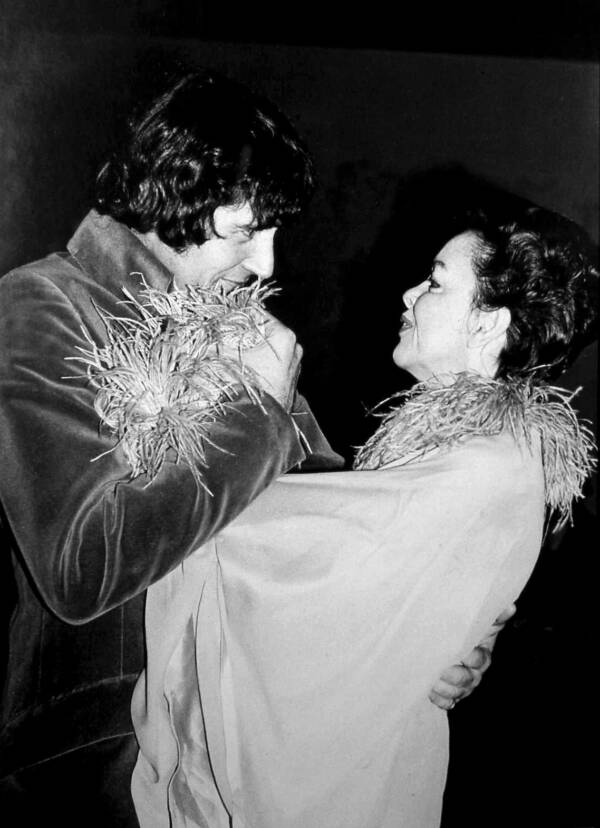
Wikimedia CommonsJudy Garland with her final husband Mickey Deans at their wedding in 1969.
But as the movie depicts, Garland and Deans’ marriage was not a very happy one. He allegedly was mostly with her to make a quick buck and enjoy the close proximity to fame.
Judy’s daughter Lorna Luft recalled that on the way out of her mother’s funeral, Deans insisted that their limousine pull over at a Manhattan office. She realized that he was apparently striking a book deal — mere hours after his wife was laid to rest.
How Judy Garland Died And What Caused Her Demise
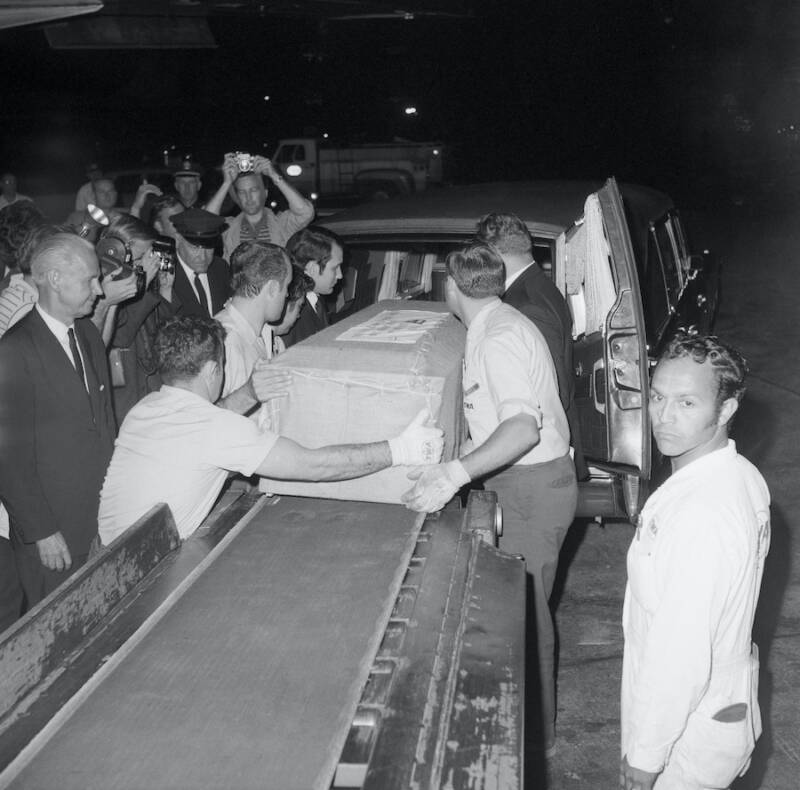
Getty ImagesJudy Garland’s casket is placed into a hearse. 1969.
Deans and Garland were still very much a couple when he found her dead in their Belgravia home on June 22, 1969.
He broke into a locked bathroom door and discovered Garland slumped on the toilet with her hands still holding up her head.
The Scotland Yard autopsy recorded that Judy Garland’s cause of death was “Barbiturate poisoning (quinabarbitone) incautious self-overdosage. Accidental.”
The coroner, Dr. Gavin Thurston, found evidence of cirrhosis of the liver, likely due to the copious amount of alcohol had Garland consumed throughout her life.
“This is quite clearly an accidental circumstance to a person who was accustomed to taking barbiturates over a very long time,” Dr. Thurston said on Judy Garland’s cause of death. “She took more barbiturates than she could tolerate.”
Garland’s daughter Liza Minnelli had a different perspective. She felt that her mother died more from exhaustion than anything else. Though Judy Garland died when she was only 47, she was exhausted from a long career in front of people, always feeling like she was never good enough.
“She let her guard down,” Minnelli said in 1972. “She didn’t die from an overdose. I think she just got tired. She lived like a taut wire. I don’t think she ever looked for real happiness, because she always thought happiness would mean the end.”
When Judy Garland died, it did mean the end. It was the end of her heartfelt connection with her audience and in some ways the end of an era. But it was also the rebirth of her legacy.
A Star Is Gone, But Her Legacy Lives On
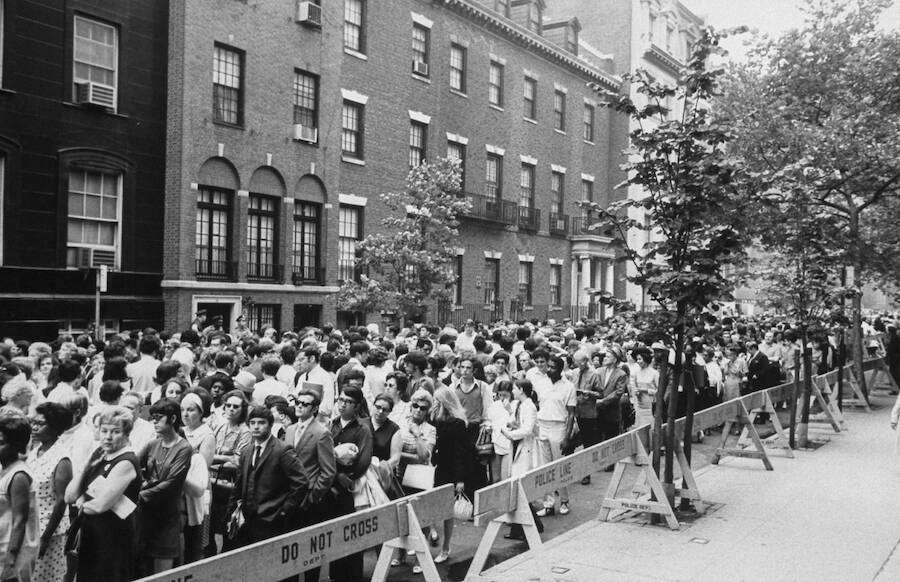
Getty ImagesFans of the late Judy Garland waiting to view her body at the Frank E. Campbell funeral home.
Even more than her lovely voice, a big part of Judy Garland’s appeal was her ability to connect with her audience. In particular, gay men found a kindred spirit in Garland — particularly later in her career.
Perhaps it had something to do with her representing resilience in the face of oppression, stemming from her many comebacks. Or maybe her image simply spoke to different elements within gay subcultures.
One fan suggested, “Her audience, we, the gay people, could identify with her… could relate to her in the problems she had on and off stage.”
Garland’s New York funeral coincided with the Stonewall Riots, credited as a turning point in the gay rights movement. Some LGBT historians believe the grief over Garland’s death may have even heightened tensions among the gay patrons of the Stonewall Inn and the police.
Either way, the grief after Judy Garland’s death was felt worldwide, from fans to her family and friends. Former film partner Mickey Rooney said: “She was a great talent and a great human being. She was — I’m sure — at peace, and has found that rainbow. At least I hope she has.”
Like some other stars who died before her — such as Marilyn Monroe — some of Garland’s staying power can be attributed to the lasting effect that a tragic figure casts in history.
Like Monroe, however, Garland is remembered for so much more than just being a glamorous figure who died too young. The true story of Judy Garland’s life is that of an icon whose legacy will live on forever.
For more tales of Hollywood abuse and neglect of budding young stars after reading about the death of Judy Garland, check out the story of screen siren Hedy Lamarr and shocking Old Hollywood stories that reveal Tinseltown’s dark side.
The post Judy Garland’s Death And The Tragic Story Of What Caused It appeared first on All That's Interesting.

Hulton Archive/Getty ImagesThe breaking wheel has existed in many forms, some lying flat, others stood upright. Each is uniquely brutal.
To this day, the breaking wheel stands as one of history’s most gruesome methods of execution. Largely reserved for the worst criminals, its purpose was to inflict maximum pain and suffering, often before a large crowd.
Those condemned to this punishment were either broken by the wheel or broken on the wheel. In the first, an executioner dropped a wheel on the victim to break their bones. In the second, the victim was tied to a wheel so that an executioner could systematically break their bones with a cudgel.
Afterward, the victim would often be left on the wheel for hours, or even days, their broken limbs gruesomely intertwined in the wheel’s spokes. Needless to say, it frequently took them a long time to die.
One of the most savage and cruel methods of execution ever devised, the breaking wheel eventually faded from use in the 19th century. However, its legacy of horror remains just as disturbing as ever.
The Breaking Wheel In Ancient Rome
Use of the wheel as a form of execution dates as far back as the Roman Empire, to the time of the emperor Commodus, son of Marcus Aurelius.
As Geoffrey Abbott writes in What a Way to Go: The Guillotine, the Pendulum, the Thousand Cuts, the Spanish Donkey, and 66 Other Ways of Putting Someone to Death, the Romans used the wheel as a tool to inflict pain. The executioner secured the condemned to a bench and placed an iron-flanged wheel on their body. They then used a hammer to smash the wheel into the victim, starting at their ankles and working their way up.
The Romans typically used the wheel as a punishment for slaves and Christians — in the belief that it would prevent resurrection — and soon came up with new embellishments for the breaking wheel. As Abbott writes, victims were sometimes suspended vertically, facing the wheel, or bound to the wheel itself or around its circumference. In the latter example, executioners would sometimes light a fire beneath the wheel.
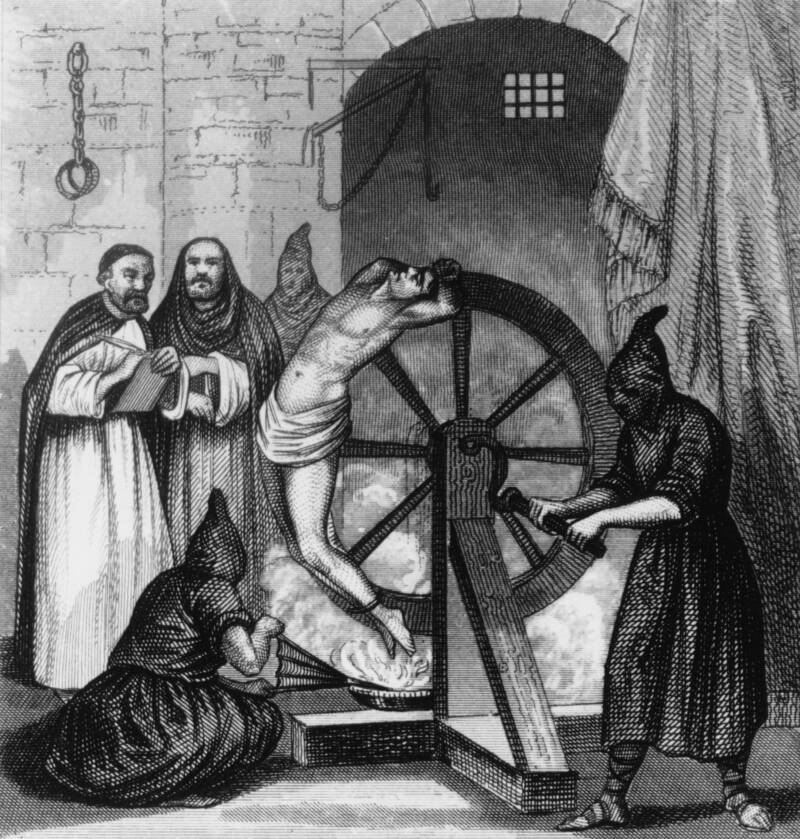
Hulton Archive/Getty ImagesA prisoner being tortured by the Spanish Inquisition on the wheel, with a fire lit below him.
The first-century Roman-Jewish historian, Titus Flavius Josephus, described one such execution by the wheel, writing: “They fixed [the prisoner] about a great Wheel, whereof the noble-hearted youth had all his joints dislocated and all his limbs broken… the whole Wheel was stained with his blood.”
One of the most infamous moments in the history of the breaking wheel, however, came in the fourth century C.E. when the Romans attempted to use the torture device on St. Catherine of Alexandria. A Christian who refused to renounce her faith, Catherine was affixed to the wheel by her executioners. But then the breaking wheel fell apart.
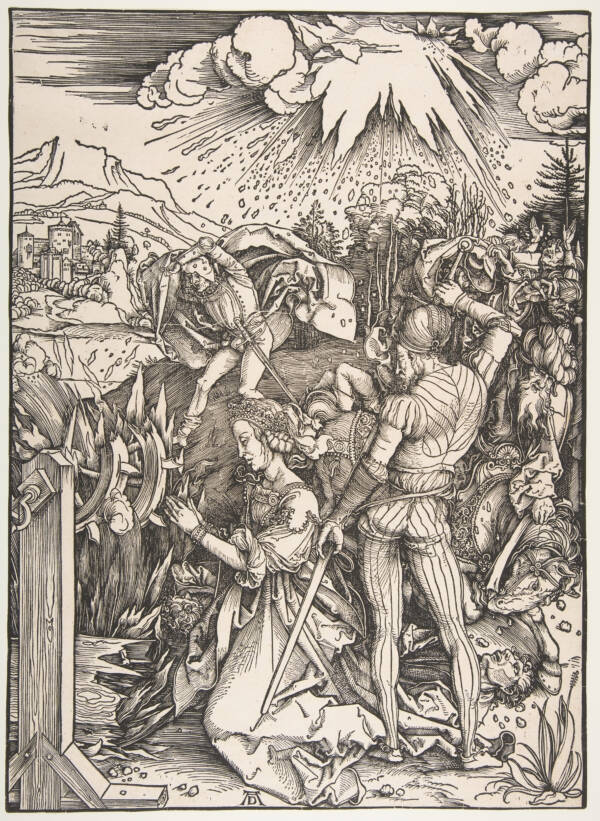
Heritage Art/Heritage Images via Getty ImagesThe Martyrdom of Saint Catherine by Albrecht Durer.
Enraged by this apparent act of divine intervention, Emperor Maxentius ordered Catherine to be beheaded — at which point milk, not blood, allegedly flowed out of her body. Afterward, the breaking wheel came to be sometimes known as the wheel of Catherine.
As time passed, the use of the breaking wheel continued. No longer reserved for slaves or Christians, it came to be used as punishment for crimes ranging from treason to murder.
Breaking Wheel Torture During The Middle Ages
During the Middle Ages, scores of people across Europe — and parts of Asia — were condemned to die by the breaking wheel.
In 15th-century Zurich, for example, there was a methodology in place using the breaking wheel. According to the History Collection, victims were laid facedown on a board with the wheel placed on their backs. They were struck a total of nine times — twice in each arm and leg, and once in the spine.
Next, their broken body was woven through the wheel’s spokes, often while the victim was still alive. The wheel was then attached to a pole and driven into the ground, displaying the dying victim to all who passed.
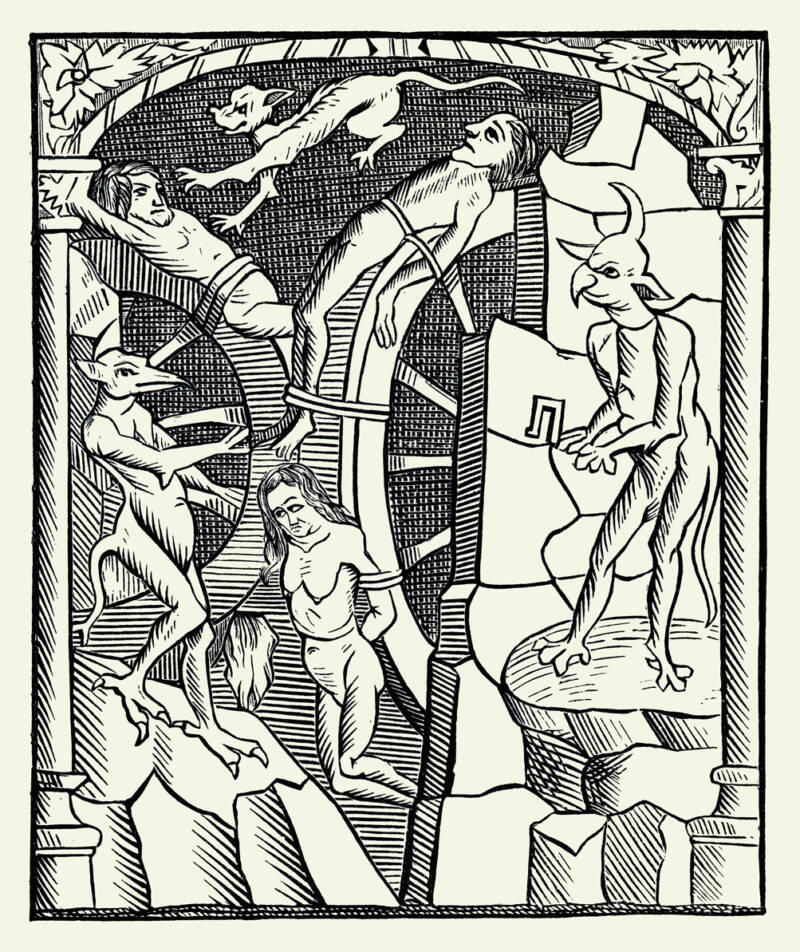
Pierce Archive LLC/Buyenlarge via Getty ImagesDemons applying torture on the wheel.
Meanwhile, in France, executioners often rotated the wheel while the prisoners were affixed to the outer perimeter and struck them with a cudgel as they went around. The number of blows they received was to be determined by the court on a case-by-case basis, with minor offenses resulting in one or two blows before being killed. The final, fatal blow to the neck or chest came to be known as the coups de grâce, the final blow of mercy.
For others, though, mercy was not swift.
In 1581, a German serial killer named Peter Niers was found guilty of 544 murders and sentenced to be broken by the wheel. To ensure that his punishment was severe, the executioners started with his ankles and slowly worked their way up, to cause the utmost amount of pain.
Niers received, in total, 42 blows over the course of two days before being quartered alive.
Other prisoners were often simply left on the wheel after receiving their designated number of strikes. Rarely did they live longer than three days, often dying of shock, dehydration, or an attack from an animal.
And though it seems archaic and even primitive, the breaking wheel actually had a long run as far as execution methods go. In fact, it was used up until the 19th century.
The Wheel’s Final Years In Use
In places like France, the breaking wheel continued to be used as a method of execution long after the end of the Middle Ages. One of the most infamous uses of the breaking wheel took place in 1720, when Count Antoine de Horn and his companion, the Chevalier de Milhe, were accused of murdering a man in a tavern in Paris.
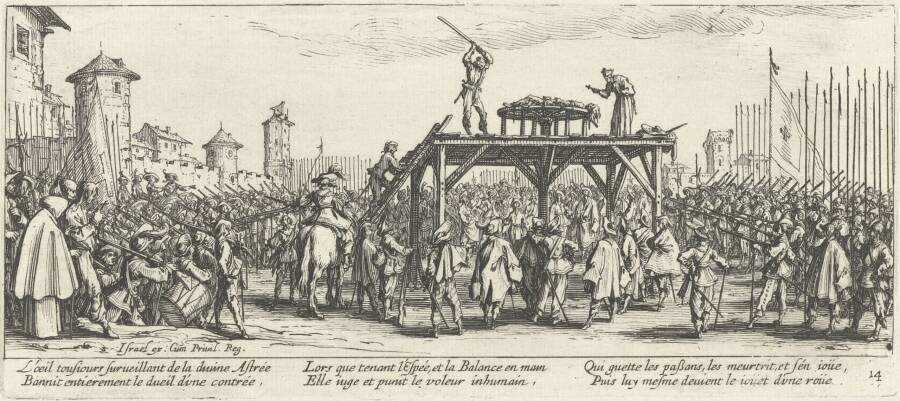
Public DomainA depiction of the breaking wheel in France, circa 17th century.
The two men had made an appointment with their victim, a share dealer, under the guise of selling him shares worth 100,000 crowns. But they actually sought to rob him. When a servant walked in and caught them in the act, they fled, only to be captured and sentenced to death.
Their sentencing caused quite an outrage, however, as numerous earls, dukes, bishops, and ladies pleaded to spare de Horn from his execution.
The pleas fell on deaf ears. Both the Count de Horn and the Chevalier de Milhe were tortured for information, then led to the breaking wheel. But though Count de Horn was killed quickly, de Milhe was tortured for a long time before his executioner delivered the final blow.
The last use of the breaking wheel in France took place in 1788, but it continued elsewhere in Europe and parts of South American well into the 19th century. Today, it’s happily fallen out of fashion.
But for hundreds of years, the breaking wheel stood as one of the most grisly execution methods imaginable. Most weren’t lucky enough to have it fall apart beneath them, as Catherine of Alexandria was. Instead, they suffered broken bones — and prayed for the coup de grâce.
Curious about other horrible executions from history? Learn about scaphism, the horrifying execution method used by the ancient Persians. Or, learn the history behind the cruel, grisly execution of being crushed to death.
The post The Agonizing History Of The Breaking Wheel, One Of History’s Cruelest Execution Methods appeared first on All That's Interesting.

Vitor SilvaA depiction of Tanyka amnicola, the prehistoric, salamander-like creature discovered in Brazil.
During an expedition to Brazil, a team of paleontologists unearthed a prehistoric fossilized jawbone from a riverbed. The bone was strange, oriented sideways to the point that paleontologists initially thought they’d found the remains of a deformed animal. But then they found eight similar bones, confirming that they’d actually discovered a new species.
The species, dubbed Tanyka amnicola, was a highly unusual tetrapod that lived in what’s now Brazil some 275 million years ago. Though many questions about this odd animal remain, its twisted jaw with teeth pointing out to the sides has already secured it a unique place in the annals of paleontology.
“A Really Strange Animal”: The Discovery Of Tanyka Amnicola In Brazil
According to a statement from the Field Museum in Chicago, paleontologists found the first jawbone during fieldwork in Brazil, near the Amazon. To their surprise, the bone was “oddly twisted,” with “some teeth pointed out and to the sides, and numerous smaller teeth lining the inside of the jaws.”

Ken Angielczyk/Field MuseumA jawbone from the newly-discovered species Tanyka amnicola, the remains of which were first found in Brazil.
At first, they thought that the fossilized jawbone was a deformity. However, they then found eight more jawbones with the exact same configuration.
“The jaw has this weird twist that drove us crazy trying to figure it out. We were scratching our heads over this for years, wondering if it was some kind of deformation,” said Jason Pardo, the lead author of a new study about the species that was published in Proceedings of the Royal Society B. “But at this point, we’ve got nine jaws from this animal, and they all have this twist, including the really, really well-preserved ones. So it’s not a deformation, it’s just the way the animal was made.”
The new species, known as Tanyka amnicola (Tanyka meaning “jaw” and amnicola meaning “living by the river” in the local Indigenous Guaraní language), lived in the region some 275 million years ago. So far, paleontologists have only found its jawbone, which includes a set of large teeth pointing to the side, as well as smaller teeth called denticles on the surface of its jawbone that are similar to “a cheese grater.”

Ken Angielczyk/Field MuseumTanyka amnicola had denticles on its jawbone, which would have helped the creature grind up its food.
“We expect the denticles on the lower jaw were rubbing up against similar teeth on the upper side of the mouth,” Pardo explained in the museum statement. “The teeth would have been rasping against each other, in a way that’s going to create a relatively unique way of feeding.”
But while researchers have some idea of how it ate, many questions about this unusual new species still remain.
Remaining Questions About Tanyka Amnicola
There are only a few things that paleontologists know for sure about Tanyka amnicola as of now. They know it was a tetrapod (four-legged animals with backbones), and specifically a stem tetrapod, which is the oldest tetrapod lineage. They know that it was a “living fossil,” even in its day, meaning that it resembled even older species in the fossil record as opposed to resembling its contemporaries. And they believe that it probably looked something like a salamander, albeit with a much longer snout.
But given that paleontologists have only found the species’ jawbones, they still have many questions about what its body looked like, among other things.

Wikimedia CommonsResearchers believe that Tanyka amnicola resembled a salamander (pictured), albeit with a longer snout.
“We found these jaws in isolation, and they’re really weird, and they’re very distinctive,” said Ken Angielczyk, a curator of paleomammalogy at the Field Museum in Chicago, and a co-author of the new paper on Tanyka amnicola. “But until we find one of those jaws attached to a skull or other bones that are definitively associated with the jaw, we can’t say for sure that the other bones we find near it belong to Tanyka.”
For now, paleontologists suspect that Tanyka amnicola was about three feet long, lived in lakes, and, based on the formation of its teeth, was likely an herbivore that used its unique jaws to grind up plants. And while questions remain, this discovery alone provides an insightful look at the region’s prehistoric era, when it was part of a supercontinent called Gondwana.
“The Pedra de Fogo Formation in Brazil is one of the only windows we have into Gondwana’s animals during the early Permian Period of Earth history,” Angielczyk said. “Tanyka is telling us about how this community actually worked, how it was structured, and who was eating what.”
After reading about the 275-million-year-old creature with the bizarre jaw that was discovered in Brazil, read about some of Earth’s most incredible prehistoric animals. Then, learn about some of the weirdest animals alive today.
The post Paleontologists Just Discovered A Strange Salamander-Like Creature With A Sideways Jaw That Predated The Dinosaurs appeared first on All That's Interesting.

Carolyn WarmusDue to the similarities between the Carolyn Warmus case and a recent Hollywood hit, it became known in the media as the “Fatal Attraction murder.”
It reads like something out of a Hollywood script: Carolyn Warmus, a 25-year-old insurance heiress, strikes up a romance with older coworker Paul Solomon. Her new lover, however, is married — though he insists he’s going to leave her as soon as his daughter is out of the house. Warmus gets impatient. Solomon’s wife is found shot dead in her home.
That was the narrative that whipped the media into a frenzy in the late ’80s and early ’90s, as the case against Warmus was built and eventually taken to trial.
After all, there was an eerie parallel between the case and the hit movie Fatal Attraction, which had come out in 1987 and featured a woman, played by Glenn Close, becoming homicidal with jealousy after being spurned by a man who had cheated on his wife with her.
But unlike the events of that film, the details of the case of Carolyn Warmus are far from cut and dry, with conflicting stories, deadlocked juries, and a contentious piece of evidence submitted three years after the murder.
A Privileged Youth — And Ill-Fated Romances

Carolyn WarmusCarolyn Warmus in New York.
Carolyn Warmus was born on January 8, 1964, in Troy, Michigan, into a life of luxury. Her father, Thomas, was a successful insurance executive who owned multiple homes, yachts, jets, and cars, and was reportedly worth over $150 million dollars.
Carolyn received a bachelor’s degree in Psychology from the University of Michigan and later a degree in teaching from Columbia University.
According to friends interviewed in a 1990 New York Magazine article, Warmus tended to chase older, “unattainable men.”
In one such incident, she had been dating teaching assistant Paul Laven at Michigan for a few months when he broke things off, becoming engaged to another student shortly after.
Warmus allegedly began contacting Levan at home and work, and later broke into the new couple’s apartment. According to a 1990 New York Times article, she even left a note for the fiance at one point: “I really hope you enjoyed this past week of not being bothered by me, because now that I’m back from vacation you can start worrying all over again.”
Before their wedding in 1984, Laven and his fiance got a temporary restraining order against Warmus. They said they were worried she might arrive uninvited at the ceremony or reception. After the wedding, the restraining order was made permanent.
In the wake of the incident, friends said she had become suicidal.
A few years later, in 1987, Carolyn Warmus was working as a computer teacher at Greenville Elementary in Greenburgh, New York, when she met Paul Solomon.
Carolyn Warmus Meets Paul Solomon
Paul Solomon was a fellow teacher — and, at 40 years old, 17 years Warmus’ senior. Solomon had been married to his wife, Betty Jeanne, for nearly 20 years, and the two had a teenage daughter. Both Solomon and his wife worked jobs to stay financially afloat.
Those details were seemingly unimportant to Warmus and Solomon, who embarked on an affair not long after they met.
Warmus said Solomon told her he was planning to leave Betty Jeanne after their daughter, Kristan, graduated high school. According to Betty Jeanne’s mother, speaking to New York Magazine, she wasn’t so sure about the relationship herself. Friends of Betty Jeanne described Solomon as “possessive and domineering and jealous,” saying she became “quiet and reclusive” after the two got together.
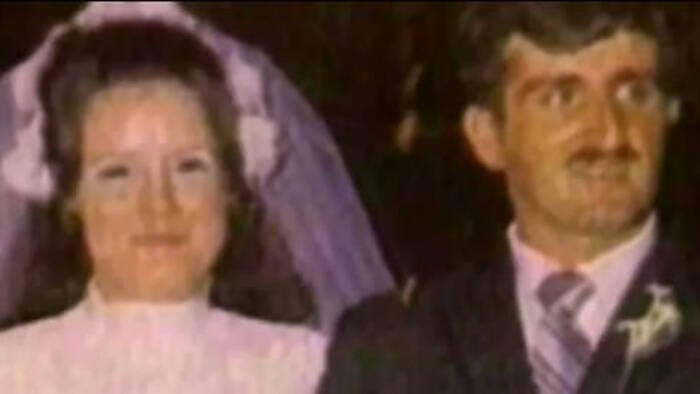
Paul SolomonPaul Solomon and Betty Jeanne’s wedding.
“Ma,” her mother said Betty Jeanne had told her at one point, “I’m thinking about leaving him.”
The Death Of Betty Jeanne Solomon
On the evening of Jan. 15, 1989, Paul Solomon and Carolyn Warmus met for drinks before moving to the car to have sex.
When Solomon arrived at his home in Greenburgh, New York, late that night, he claimed he found Betty Jeanne dead on the living room floor, shot nine times.
Police immediately suspected Solomon. Under questioning, Solomon initially said he had gone bowling on the night of the 15th, but eventually admitted that he and Warmus had been together after bowling with friends.
Following Betty Jeanne’s death, Warmus and Solomon were not in contact — Solomon’s lawyer had advised severing ties with her — and the widower soon found a new girlfriend. Then, the tone of the investigation changed abruptly.
Five months after Betty Jeanne’s death, Solomon and his girlfriend went on vacation to Puerto Rico — and Warmus did too.
She reportedly called the new flame’s family, impersonating a police officer, and tried to convince them to end the woman’s relationship with Solomon.
Warmus claimed Solomon invited her to Puerto Rico. Solomon said she was stalking him, and reported her to the police. Authorities immediately became suspicious of Warmus, transitioning the case from an investigation of an unfaithful husband to that of a jilted lover.

Carolyn WarmusCarolyn Warmus had a tendency to chase “unattainable men,” according to friends.
As media interest in the case grew, it came to be called the “Fatal Attraction murder.”
The Trial Of Carolyn Warmus
Finally, in February 1990, just over a year after Betty Jeanne Solomon’s death, Carolyn Warmus was indicted for her murder, and the trial began in January 1991.
“She would do anything to get Betty Jeanne out of the picture,” prosecutor James McCarty said at trial, according to CNN.
The prosecution pointed to Vincent Parco, a private investigator who said Warmus had previously tried to hire him to find compromising information about a married bartender she was dating to break up the man’s marriage.
The prosecution and Parco claimed that just days before Betty Jeanne’s death, Warmus had bought a .25 caliber gun along with a silencer — the same kind of weapon believed to have killed Betty Jeanne.
However, no actual physical evidence tied Warmus to the crime, and in the end, the jury could not convict on the circumstantial arguments. After a 12-day deadlock, the case ended in a mistrial.
But Carolyn Warmus was far from in the clear.
New Evidence Suddenly Emerges In The Fatal Attraction Murder
Less than a year later, in January 1992, a new trial would begin in earnest. The critical difference was that this time, prosecutors claimed they had new evidence: a bloody glove that supposedly belonged to Warmus — and which Solomon claimed to have found in his home three years after his wife’s murder.
Warmus’ attorney, William Aronwald, remains skeptical of the glove’s late introduction.
“It wasn’t available at the first trial and then suddenly materialized,” Aronwald told The Journal News. “There was no way of determining whether or not it was the glove depicted in the photographs. Number two, there was no way of knowing whether the glove had been tampered with.”
The jury deliberated for six days, but this time, the accusation stuck, and they found Warmus guilty of second-degree murder.
Warmus begged for leniency from the judge but was handed the maximum sentence for her conviction: 25 years to life in prison.
“I did not kill Betty Jeanne Solomon,” Warmus said, according to Oxygen. “I don’t want to spend time in jail for something I didn’t do. If I’m guilty of anything at all it was simply being foolish enough to believe the lies and promises that Paul Solomon made to me.”

The Journal NewsA spread from a local newspaper covering the Carolyn Warmus case.
Following the verdict, Solomon asked to be left alone.
“I beg of you all now to allow Kristan and me and our families to go forward,” Paul Solomon said. “I will not make another statement. We need to now have the time to properly go forward.”
Where Is Carolyn Warmus Today?
Over two decades into her sentence, Warmus received an MRI and discovered she had a “massive brain tumor.”
She was denied parole around that time, refusing to agree with her conviction for a crime she maintains she didn’t commit. In prison, her options for treatment were limited.
“I am a victim. I’m the collateral damage,” Warmus said at the time. “I’m sitting here in prison for 25 years, and may end up dying shortly in prison and not see the light of day again.”
Warmus, released from prison on parole in 2019, said she underwent multiple surgeries while incarcerated and many more subsequently.
She’s still working to clear her name, pushing to have multiple items — including the glove — from the crime scene DNA tested. To date, no testing has been done.
After reading about the murky case of Carolyn Warmus, learn about Kelly Cochran, the ‘Devil Woman’ of Michigan who murdered her husband and lover. Then, read the story of Candy Montgomery, the suburban housewife who chopped her best friend up with an axe for sleeping with her husband.
The post Carolyn Warmus, The Woman Convicted In The Infamous ‘Fatal Attraction Murder’ Of Her Lover’s Wife appeared first on All That's Interesting.
An old man wandering around in his pajamas, a bathrobe, and a ratty pair of house slippers muttering to nobody in particular is a fairly typical sight in New York City, but Vincent Gigante was anything but typical.
Partly because he wandered the streets of Greenwich Village in an elaborate performance of insanity, Mafia boss Vincent “Chin” Gigante eluded prosecution for decades as a supposedly unstable and incompetent man.
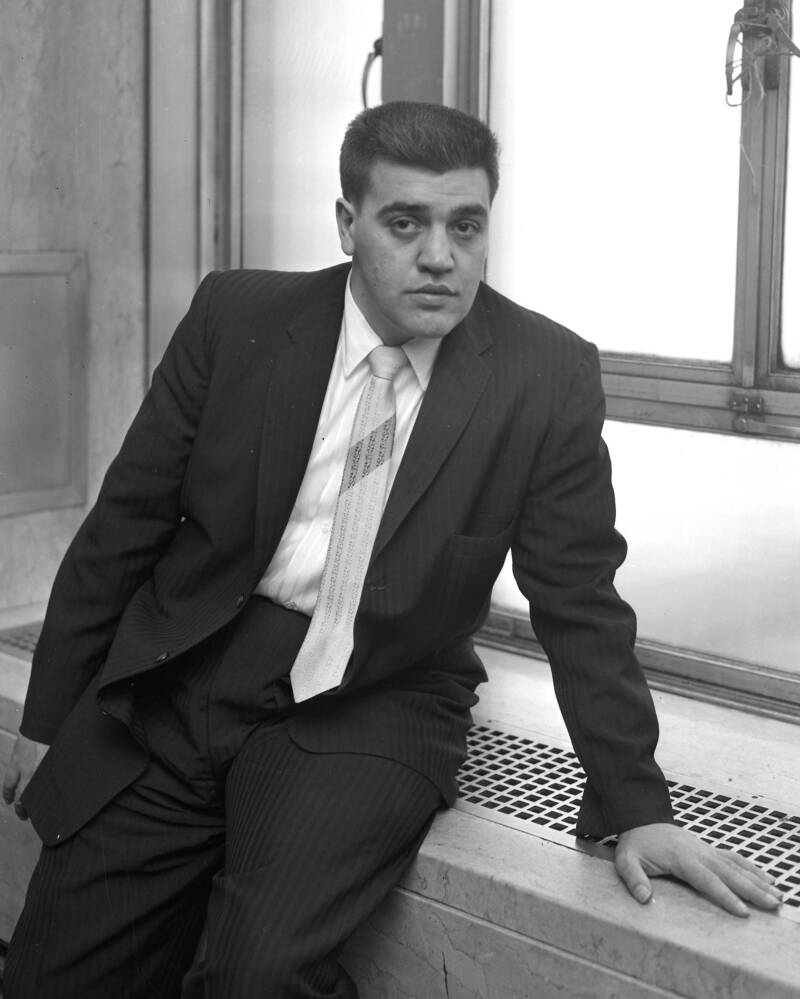
New York Daily News/Getty ImagesVincent Gigante in court following the shooting of mob boss Frank Costello.
Meanwhile, this sly fox of a crime boss built the Genovese family into an expansive empire that is thought to have brought in more than $100 million a year at its height.
In the end, Vincent Gigante was one of the most successful and notorious Mafia Dons in American history.
The Early Career of Vinny “The Chin” Gigante
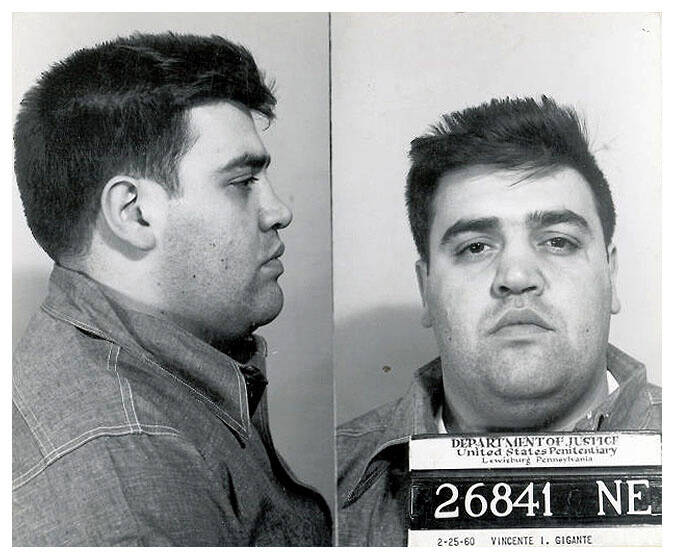
US Department of Justice/Wikimedia CommonsA mugshot of Vincent Gigante taken in 1960.
Born in New York City on March 29, 1928, Vincent Gigante was one of five sons of Salvatore and Yolanda Gigante, both first-generation immigrants from the Italian city of Naples.
While his parents were honest workers — Salvatore was a watchmaker and Yolonda a seamstress — Gigante’s life of crime began shortly after he dropped out of high school at age 16 to become a boxer.
Nicknamed “The Chin” (which was inspired by his mother’s heavy-accented Italian pronunciation of the diminutive of the Italian form of his name), Vincenzo Gigante would go on to win 21 of 25 fights in his brief career. Though an able boxer, it would be his battles outside of the ring that would quickly become his life’s work.
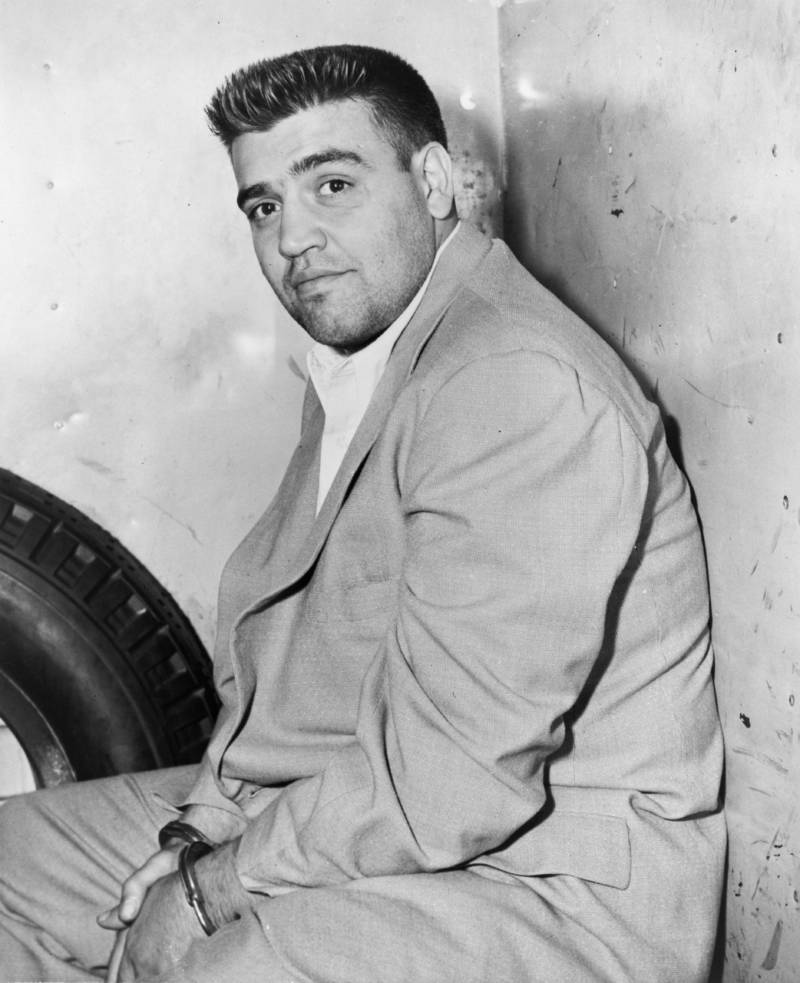
Phil Stanziola/Library of CongressVincent Gigante in 1957.
Powerful Mafia boss Vito Genovese soon took a liking to the young Gigante and became his mentor. Gigante, in turn, took his mob apprenticeship seriously, doing anything asked of him, to the point that he was arrested seven times before he turned 25 for crimes ranging from auto theft to arson.
By the 1950s, Vincent Gigante had risen to become a full-time gangster, working as an enforcer for the Genovese family, where his career in organized crime began to ascend to historic heights.
The Attempted Murder Of Frank Costello
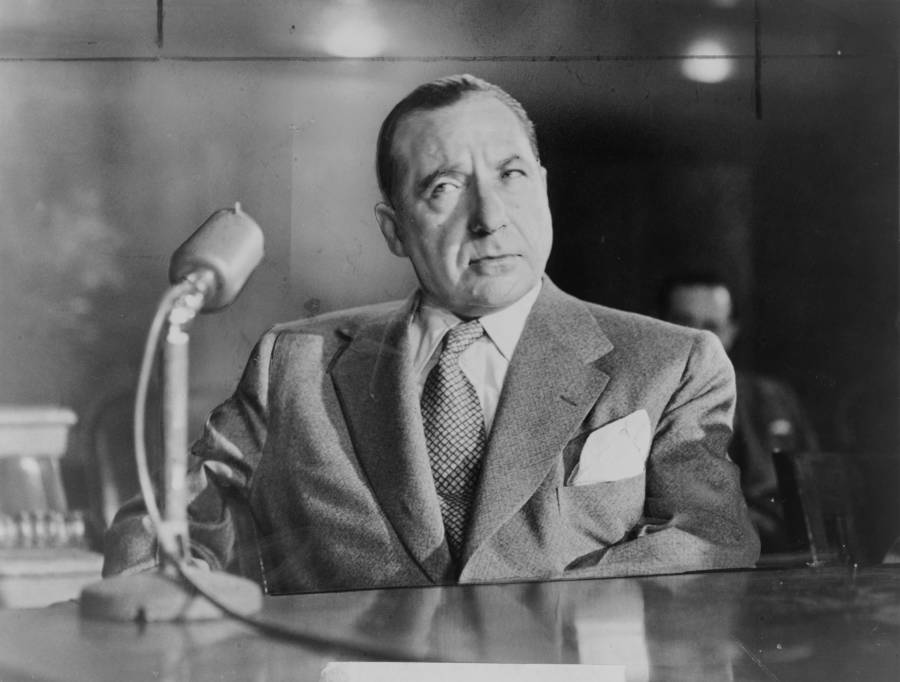
Al Aumuller/Library of CongressIn 1951, Frank Costello testified before the Kefauver Committee during its investigation of organized crime.
Though named for him, Vito Genovese wasn’t the founder of the Genovese crime family. Charles “Lucky” Luciano founded the family in the 1930s with Genovese as one of his most trusted allies.
In the 1940s, however, Luciano’s luck in the U.S. finally ran out and after a brief stint in prison, he was deported back to Italy. Shortly thereafter, he appointed Frank Costello to head up the Genovese family — to the chagrin of Genovese, who had hoped to lead the family himself.
Genovese was a loyal subordinate to Luciano, but he was furious at Costello’s ascension. Though it would take nearly a decade, Genovese was determined to take Costello out of the picture and would eventually turn to Gigante to help make it happen.
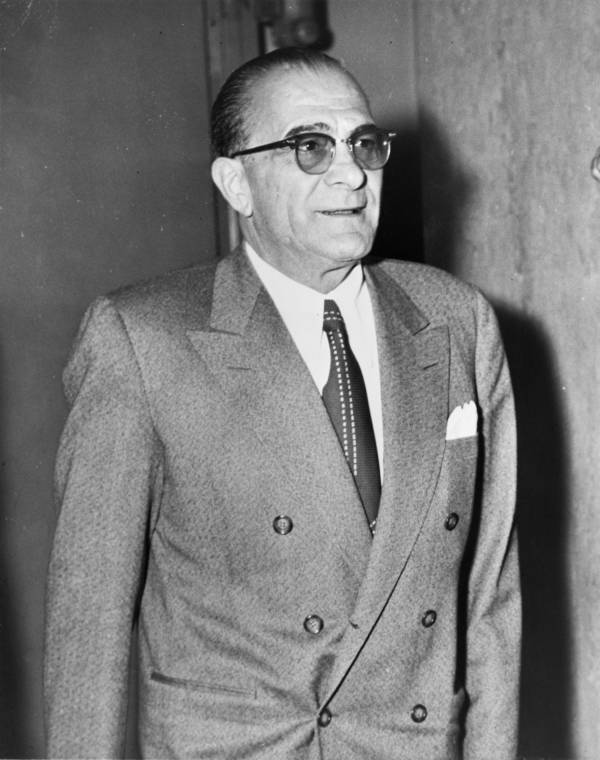
Phil Stanziola/Library of CongressVito Genovese in 1959.
On the evening of May 2, 1957, Costello returned home after enjoying dinner with his wife and a few friends. As Costello’s taxi arrived at his apartment building near Central Park and Costello made his way to the front door, a black Cadillac slowly pulled up to the curb behind it.
As Costello entered the vestibule of the building, a shot rang out. Staggering into the lobby, Costello collapsed onto a leather couch while a gunman ran out the door and jumped into the waiting Cadillac, which immediately sped away.
Though the intent was obviously to murder Costello, the bullet only grazed his skull and he survived the assassination attempt. Police officers questioned Costello about the man who tried to kill him, but he repeatedly told them that he never got a good look at his attacker; he even claimed to not have heard the gunshot.
Police were more successful with the doorman, however, who described the gunman as a six-foot-tall man with a stocky build. The New York Police Department put 66 detectives on the case, and soon the doorman identified Vincent Gigante as the shooter.
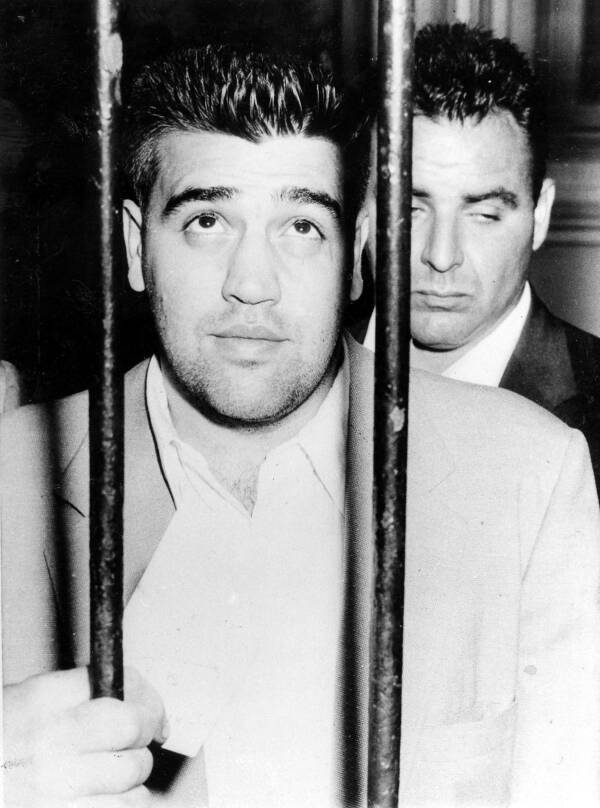
Apic/Getty ImagesVincent “Chin” Gigante in custody after his failed assassination attempt on Genovese family boss Frank Costello. August 20, 1957.
Vincent Gigante was arrested and was tried for attempted murder in 1958. Even with the doorman’s identification, however, prosecutors couldn’t secure a conviction since Costello maintained that he could not identify his attacker, and without a positive identification, Gigante was acquitted.
According to reporters in the courtroom, following Gigante’s acquittal, he was overheard saying to Costello, “Thanks, Frank.” Costello clearly took the hint from Genovese and retired soon afterward, leaving Genovese as the undisputed boss of Luciano’s family in New York.
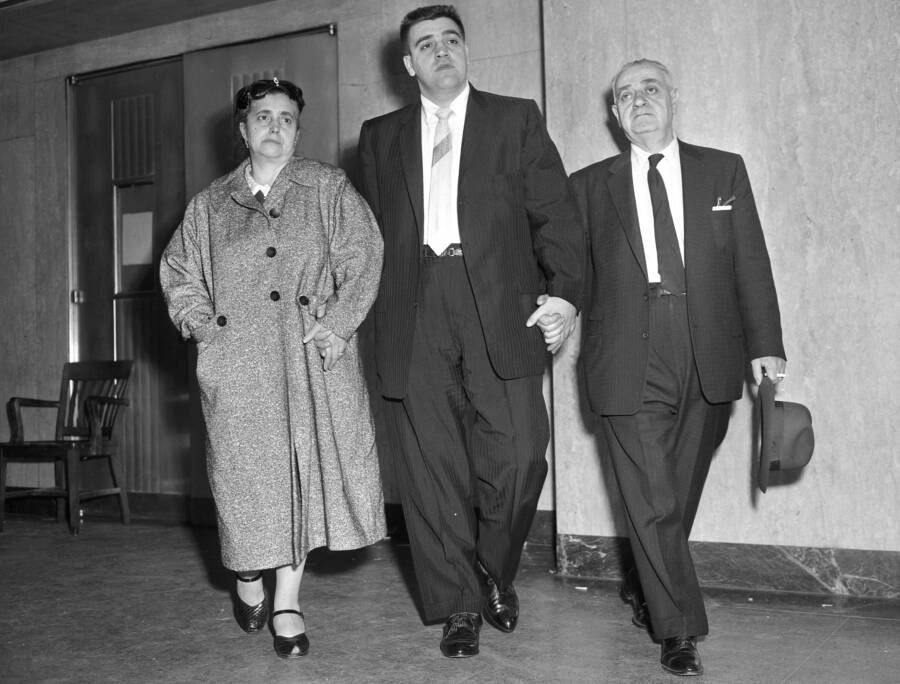
New York Daily News/Getty ImagesVincent Gigante with his parents Yolanda Gigante and Salvatore Gigante in court.
Genovese would not enjoy his time at the top for long, however; at least not as a free man.
In 1959, Gigante and Genovese would both be convicted in federal court on charges of heroin trafficking, largely believed to have been arranged by Luciano and rival family head Carlo Gambino. Gigante was sentenced to seven years — about half of Genovese’s sentence — after the sentencing judge read a slew of letters attesting to Gigante’s good character and work on behalf of New York City youth.
Vincent Gigante was paroled after five years, and Genovese died a few years later, in 1969, the same year Gigante began his notorious, decades-long ruse.
The Elaborate Ruse Of “The Oddfather”
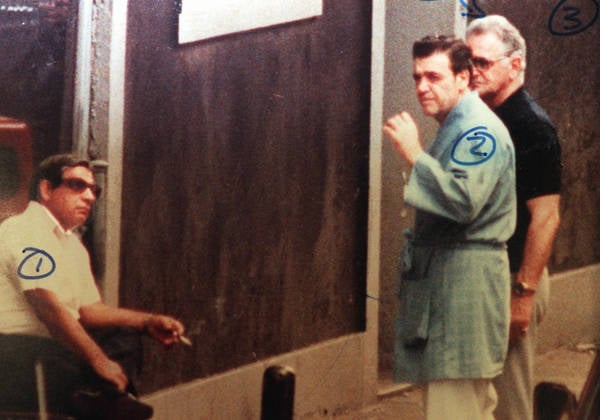
FBI/Wikimedia CommonsVincent Gigante (second from the right) wearing a bathrobe sometime between 1983 and 1985. An undercover police detective testified that the ‘Oddfather’ acted normally when not playing the role of an unstable man.
In 1969, Vincent Gigante was indicted in New Jersey for a bribery scheme in which members of the Old Tappan Police Department would tip him off whenever he was being surveilled. Now a capo, or captain, in the Genovese family, his higher profile brought a lot more heat than a foot soldier had to contend with, so Gigante went all-out and began his now-infamous pretense of mental illness to avoid prosecution.
His lawyers presented reports from psychiatrists at his trial that he suffered from paranoid schizophrenia, and he was declared unfit to stand trial and the charges against him were dropped.
His power and influence within the Genovese family grew over the next decade or so and, according to mob informers, Vincent Gigante took over complete control of the family in a peaceful transition following the retirement of the Genovese family boss, Philip Lombardo, due to declining health.
Upon assuming control, Gigante established strict internal security protocols. No one was to say his name, instead they were to touch their chin or form the letter “C” with their hand if they ever needed to refer to him.
Gigante also stepped up his public performance of mental incapacity, wandering around Greenwich Village in his pajamas and bathrobe, talking to parking meters, and urinating in the street.
Gigante’s family was an integral part of the ruse, with his younger brother, Louis, a Roman Catholic priest, repeatedly attesting to Gigante’s various mental illnesses.
“Vincent is a paranoid schizophrenic. He hallucinates. He’s been that way since 1968,” he said, swearing that his brother took several medications to treat his debilitating conditions, adding considerable credibility to the mobster’s defense in court.
Psychologists and other mental health professionals attested to Gigante’s condition, claiming that he had been in and out of psychiatric hospitals more than two dozen times between 1969 and 1995.
Meanwhile, Gigante built the Genovese crime family into the largest mob family in the country. Gigante expanded the operations of the family in all areas, from loan-sharking to bookmaking to extortion and bid-rigging for New York City infrastructure contracts.
Under Gigante’s leadership, this powerhouse criminal enterprise brought in around $100 million a year at its height, making it the most lucrative Mafia enterprise in American history.
The Feds Finally Bring Vincent Gigante To Justice
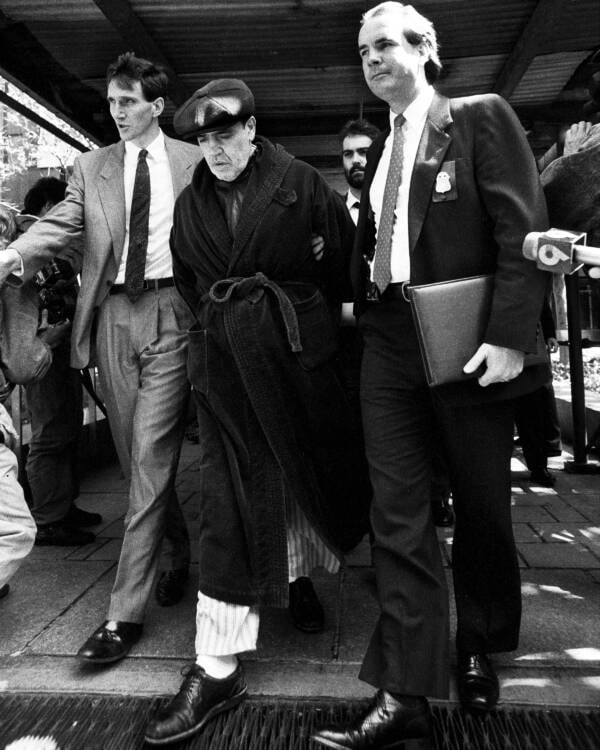
New York Daily News/Getty ImagesA bathrobe-clad Vincent “The Chin” Gigante in custody and placed under arrest.
The elaborate pretense of insanity that Vincent Gigante put on for decades was put to its ultimate test in 1990 when he was indicted on federal charges in Brooklyn along with 14 other defendants for a bid-rigging scheme for multi-million dollar contracts with the New York City Housing Authority to install new windows in public housing units.
Those charges were followed up in 1993 with an indictment that charged him with ordering the murders of several mobsters as well as conspiracy to commit murder in three other cases. This included ordering a hit against John Gotti, who became the boss of the Gambino crime family after he had the previous family boss, Paul Castellano, killed in 1985.
For years throughout these trials, Gigante’s lawyers presented evidence of Gigante’s unfitness, but in 1996, the federal judge in the case had enough, ruling that Gigante was mentally competent to stand trial. Vincent Gigante was convicted of racketeering and conspiracy to commit murder on July 25, 1997, and sentenced to 12 years in prison.
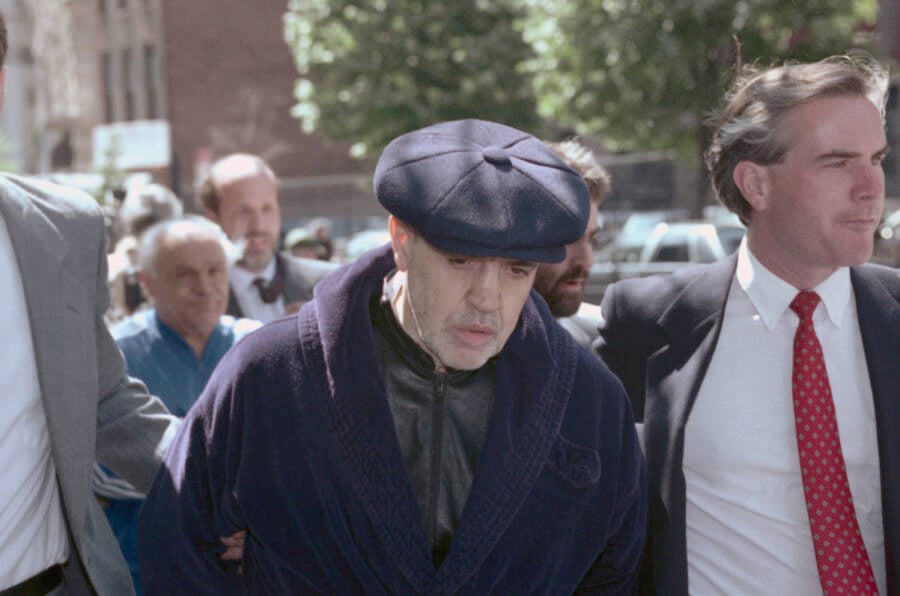
Bettmann/Getty ImagesVincent “The Chin” Gigante enters a car after he was arrested along with several other top mob figures.
Later that year, the sentencing judge in Gigante’s case said, “He is a shadow of his former self, an old man finally brought to bay in his declining years after decades of vicious criminal tyranny.”
Gigante was said to continue to run the Genovese family from prison until 2003. That year, Gigante finally admitting to faking his insanity in a plea deal on obstruction charges stemming from the 1990 and 1993 charges.
Gigante’s lawyer said after the plea, “I think you get to a point in life – I think everyone does – where you become too old and too sick and too tired to fight.”
Soon after, Vincent Gigante died in prison at the age of 77, following a more than 50-year run as one of America’s most powerful mobsters.
After learning about Vincent Gigante, discover some of the deadliest Mafia hitmen of all time. Then, discover the story of feared crime boss Anthony Casso.
The post Vincent Gigante, The ‘Oddfather’ Mob Boss Who Pretended To Be Crazy appeared first on All That's Interesting.
Between 1997 and 2017, authorities pulled the dead bodies of more than 40 young men out of rivers and lakes in more than 25 cities across 11 states. Most of them were college-aged, popular, and athletic. Nearly all the men had last been seen leaving bars or parties while inebriated.

The bodies of at least 45 young men were pulled from bodies of water over an 11-year period — and in many cases, there were smiley faces painted nearby.
Time and again, police understandably theorized that the men had become too drunk, wandered too close to the water, and simply fallen in with no hope of climbing out in their intoxicated state.
But in 2008, two retired New York City police officers-turned-private investigators who had been looking into the deaths announced their eerie findings. Painted on walls near the locations where at least a dozen of the bodies were found was the same symbol over and over: a smiley face.
Given the presence of the graffiti and the similarities among the victims, the two investigators insisted that the deaths had been the work of a serial murderer (or gang of murderers) now widely known as the Smiley Face Killer.
“They’re psychopaths,” one of the investigators said of the potential culprits. “They have no remorse.”
But is the Smiley Face Killer really out there — or was there never any murderer at all?
Inside The First Smiley Face Killer Murder
The investigators responsible for popularizing the Smiley Face Killer theory in 2008, Kevin Gannon and Anthony Duarte, based a significant amount of their theorizing on the disappearance of Fordham University student Patrick McNeill in New York City on Feb. 16, 1997.
That night, McNeill was last seen leaving a bar called the Dapper Dog on Manhattan’s Upper East Side. McNeill’s friends and family members searched tirelessly for him alongside police until April 7, when his body was found floating in the water near a pier in the Bay Ridge neighborhood of Brooklyn.
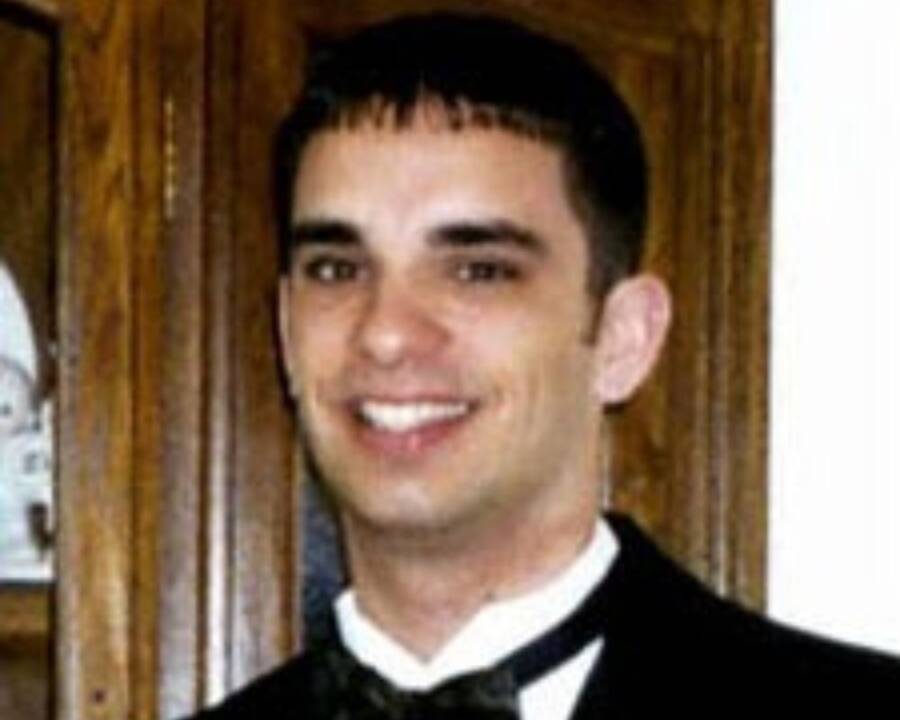
Morbid Podcast/InstagramPatrick McNeill was 21 years old when he died in 1997.
It seemed like an accidental drowning, but Gannon disagreed. He vowed to the young man’s parents that he would discover the truth. After retiring from the New York Police Department in 2001, he enlisted Duarte, his old partner, and they set out to learn what had happened to McNeill — and the other young men who had died under similar circumstances — under the banner of their Nationwide Investigations firm.
Their official report in the case of McNeill found copious evidence suggesting that someone had killed him and then placed him in the water: intoxication consistent with drugging, a car seen following him after he left the bar, ligature marks on his neck, charring on his head and torso, and the fact that his body’s position in the water was inconsistent with a typical drowning incident.
Gannon and Duarte concluded that McNeill had been stalked, drugged, abducted, bound, burned, killed, and dumped in the water. The two detectives were sure they had a murderer on their hands — and that McNeill was far from the only victim.
Untangling The Smiley Face Killer Theory
While the Patrick McNeill case may have ignited Gannon and Duarte’s suspicions, they began working on the Smiley Face Killer theory even more intensely after learning about other young men who had died in eerily similar ways.
Gannon and Duarte were now more sure than ever that they were chasing a serial killer — or killers. Furthermore, they suggested that this Smiley Face Killer may have been motivated to murder out of envy.
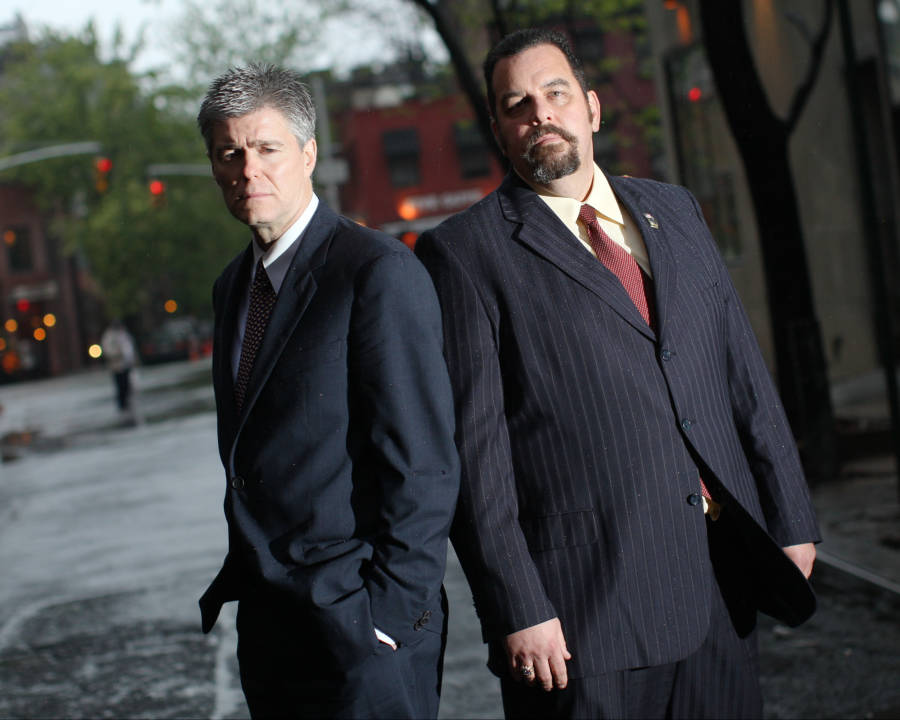
Michael Appleton/NY Daily News Archive via Getty ImagesKevin Gannon (left) and Anthony Duarte (right), the detectives behind the Smiley Face Killer theory.
Duarte told CNN in 2008 that the killer was likely “the opposite [of the victims], not smart, someone not good in school, maybe doesn’t have a job, not popular,” and lashed out by drugging and murdering the men before dumping their bodies in the water.
In addition to killing their victims, the Smiley Face Killer was believed to have left their signature behind at the scene. Perhaps they were signing their work, as it were, or taunting police. However, any other significance of the symbol remains unclear — as does the explanation for the occasional appearance of the word “Sinsinawa” at some of the death scenes.
While such elements of the case remained a mystery, the investigators believed they’d finally caught a break in 2006.
A University of Minnesota student named Christopher Jenkins had been pulled out of the Mississippi River in Minneapolis after a night of bar-hopping with friends four years earlier, and his official cause of death was listed as accidental drowning. But the detectives believed that he fit the victim profile for their Smiley Face Killer.
His parents did not accept the official version of events and insisted that foul play had been involved in their son’s death. “He was loaded into a vehicle, a van, driven around and eventually murdered,” his mother, Jan Jenkins, told CNN. “He was murdered and thrown away like a piece of trash.”
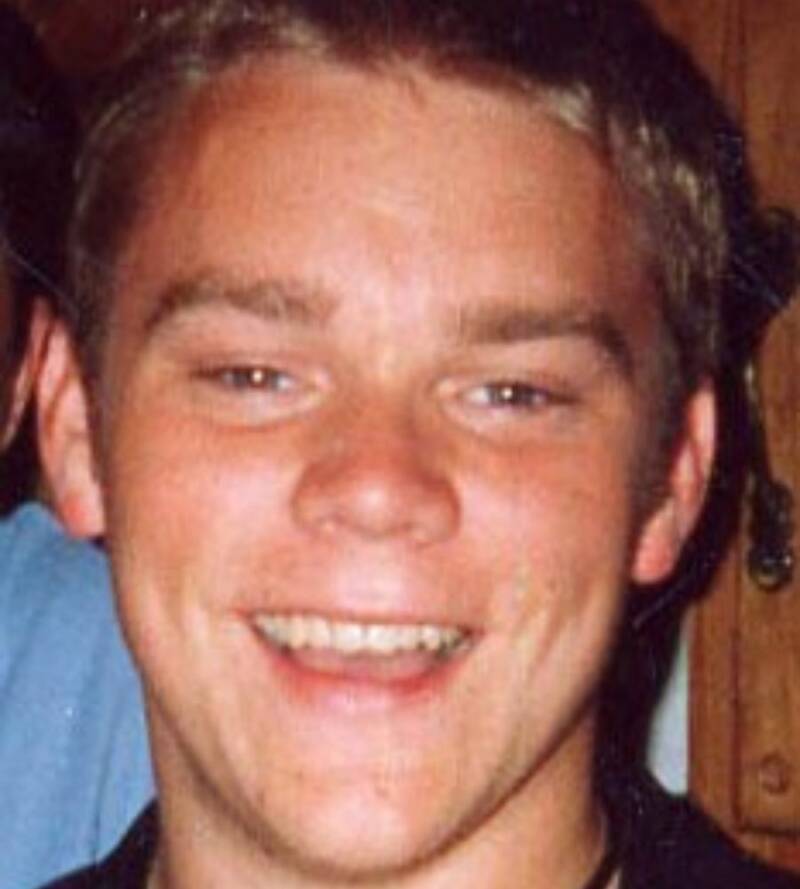
Twitter (X)Christopher Jenkins vanished after leaving a Halloween party in 2002.
It was in 2006 that an informant finally came forward in prison and gave police enough information regarding Jenkins’ demise that they officially changed his cause of death from accidental drowning to homicide.
Nevertheless, the Minneapolis police came out and said that they didn’t believe that a serial killer was responsible for Jenkins’ death — or for the dozens of other deaths that Gannon and Duarte had folded into their Smiley Face Killer theory.
So, does this mysterious murderer really exist?
Evidence For And Against The Smiley Face Murders
While Gannon and Duarte turned up a wealth of disturbing details over the years, the fact remains that the theory of the Smiley Face Killer has been widely discredited.
The police departments involved do not officially treat these deaths as part of a serial killer investigation. Law enforcement aside, the Minneapolis nonprofit Center for Homicide Research (CHR) released a thorough report on the Smiley Face Killer theory in 2010 that firmly debunked the entire idea.
In addition to citing law enforcement and criminal justice experts who believe there’s no serial killer, the researchers investigated the cases themselves. They came up with a list of 18 reasons why they’re sure there’s no Smiley Face Killer.
According to the CHR, most of the victims displayed no evidence of physical trauma or drugging, while the circumstances did indeed suggest accidental drowning. Moreover, they point to the absence of motive or any hard evidence actually linking the deaths.

Going West Podcast/InstagramThe Center for Homicide Research states that none of the smiley faces reportedly found near the bodies of more than a dozen victims matched each other — so they weren’t drawn by the same killer.
As for the smiley faces, the researchers state that they’re not consistent with each other, were never proven to have been made around the times of the deaths, and don’t reliably occur within close proximity to the death scenes. Experts also say that “Sinsinawa” is a Native American word meaning “rattlesnake” that often appears in graffiti across the Midwest.
However, Gannon and Duarte have stood by their theory, insisting that the cases are linked and that the Smiley Face Killer is still at large. But if the CHR is correct and there is no killer, then why are people so willing to believe there is?
As the researchers wrote in their paper, “Throughout history, society has always needed to produce monsters… to help explain the unexplainable.”
After this look at the Smiley Face Killer theory, discover the most disturbing quotes ever uttered by serial killers. Then, read up on the horrifying crimes of Ed Kemper, the “Co-ed Killer.”
The post Inside The Disturbing Theory Of The Smiley Face Killer And The Baffling Deaths Behind It appeared first on All That's Interesting.
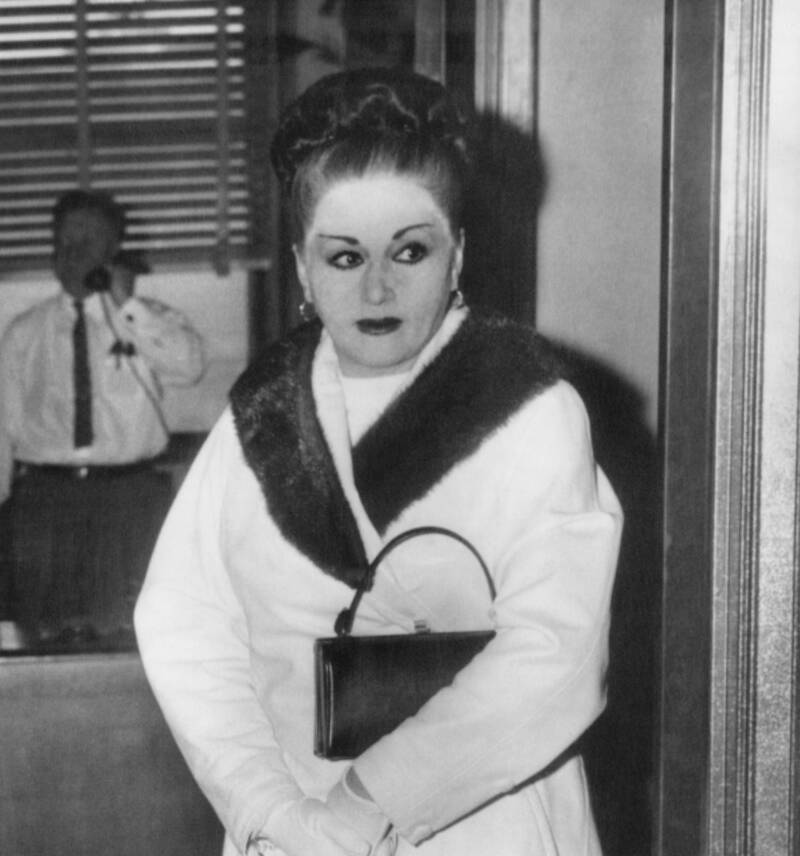
Everett Collection Historical/Alamy Stock Photo
Anna Genovese, the estranged wife of Vito Genovese.
In the criminal underworld of 20th-century New York, men like Charles “Lucky” Luciano and Frank Costello ruled with iron fists. But among the top ranks, one woman carved out her own empire: Anna Genovese.
A formidable force, Anna ran her own network of illicit gay bars in New York City, and even dared to testify against her estranged husband, Vito.
Even with her power, though, Anna Genovese faced serious challenges. Her marriage was tumultuous at best, and outright abusive at worst. And according to many, her involvement with New York’s gay scene extended far beyond just the business potential — adding just one more complex layer to the legacy of the Mafia’s most fascinating woman.
Early Life And Introduction To The Mob
Born Giovaninna “Anna” Petillo on October 28, 1905, to Italian-Catholic immigrants Aniello Vincenzo Petillo and Concetta Cassini Genovese (a cousin of Vito Genovese’s), Anna Genovese grew up in New York City. As she came of age, the American Mafia became gradually more powerful.
Not much is known about Anna’s early life, but when she was 19 she fell in love with Gerard “Gerry” Vernotico, a baker in New York City’s Little Italy. Speaking to Mob Queens podcast hosts Jessica Bendinger and Michael Seligman, Anna’s great-niece Kate Harmon said the union “was not looked upon kindly” by her family as Vernotico was a “young man of no means.” But Anna was in love, and she helped support her growing family with Vernotico by working nights at a club in Greenwich Village.
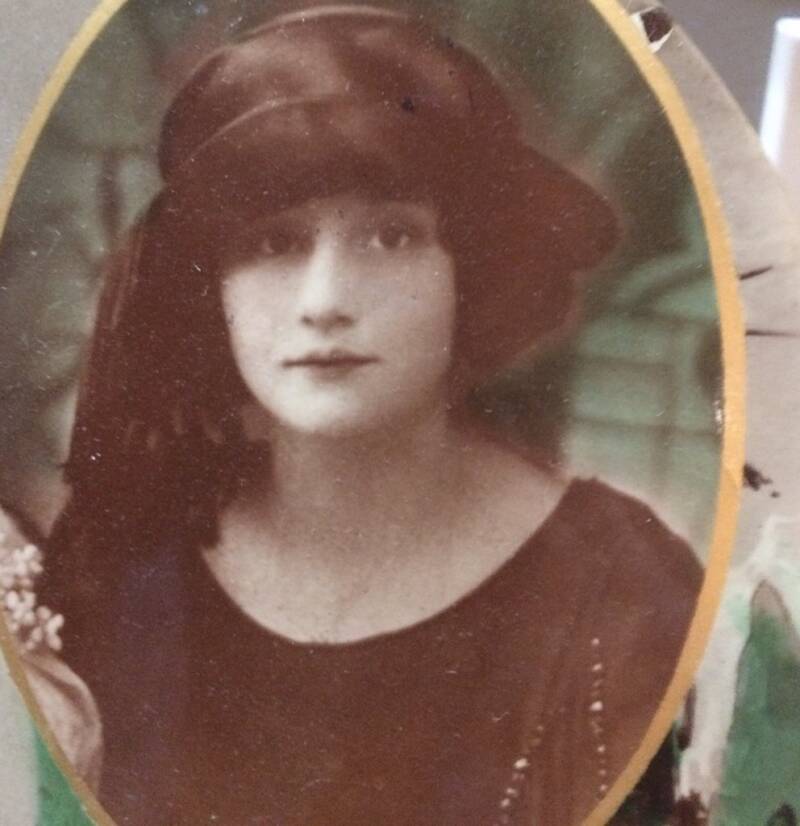
MobQueensPod/XAnna Genovese as a girl, provided to the Mob Queens podcast by her granddaughter, Mia.
Unfortunately, the marriage would end in tragedy.
Anna and Vernotico had had one baby, and were expecting their second, when Gerard was brutally strangled to death on a rooftop in March 1932. Just two weeks later, Anna agreed to marry the mobster Vito Genovese.
Indeed, the general consensus is that Vito — long obsessed with Anna — had put out the hit on her husband. Her great-niece told the podcast that Anna “hated Vito” but felt she had no choice but to accept. After all, Anna had suddenly found herself raising two children alone.
It was a whirlwind wedding — and Anna’s formal introduction to the Mafia. But Anna would soon make her own mark on the city’s criminal underworld.
Anna Genovese’s Network Of Gay Bars In New York City
As Vito Genovese became one of the most powerful Mafia bosses in the country, Anna Genovese largely stayed behind the scenes, as mob wives often do. But in 1934, just two years after their marriage, Vito was forced to flee the United States to escape a murder charge.
During this time, Anna began running a network of gay bars and drag clubs in New York City. She — and other mafiosos — were taking advantage of “Gay Prohibition.” Though actual Prohibition had ended, New York bars could get in trouble for serving alcohol to gay patrons. So the Mafia began to take over the business. The organization both protected gay patrons from law enforcement, by bribing local police, and collected the bars’ profits.
“I was the safest on the streets of New York that I had ever been,” one gay bartender recalled to the New York Post in 2014. “If anybody ever threatened me or intimidated me, I had recourse. I had been stopped by the police and… all I had to do was give them the name of my employer and they let me go, because we were both working for the same people. The law made the gay bars illegal. The Family made it operable.”
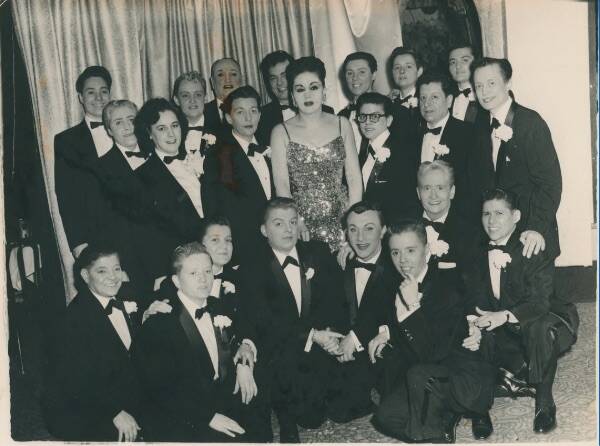
The Lesbian, Gay, Bisexual & Transgender Community Center/InstagramAnna Genovese surrounded by patrons at one of her clubs.
Indeed, Anna operated a number of gay bars in Greenwich Village and Lower Manhattan (and the Genovese crime family ultimately ran the iconic gay bar, Stonewall). Her first club, Club Caravan, opened in 1939 and hosted some of the era’s biggest drag queens. She also co-owned the 181 Club, which people referred to as the “homosexual Copacabana.” Anna Genovese thus played a key role in Manhattan’s drag bar scene in the mid-20th century.
Anna Genovese had taken advantage of a business opportunity, but her involvement with the gay community was about more than just profit. As the Daily Mail noted in 2021, Anna Genovese was bisexual, her lesbian affairs an open secret among the community. She created safe havens for queer people using her mob connections to keep the police away, and forked over some of the profits to the Mafia in exchange for protection.
But then, in 1945, Vito Genovese returned.
Anna And Vito Genovese’s Shocking Divorce
After Vito got back to the United States, a number of crucial witnesses who’d promised to testify against him turned up dead, and the case against him collapsed. He then moved his family from New York to New Jersey, which meant that Anna could no longer run her clubs.
Their relationship grew increasingly acrimonious, and in 1950, Anna walked out on Vito. Being married to the mobster, she claimed in a court filing, had “endangered her health and made her life extremely wretched.” Then, seeking financial support in 1953, Anna agreed to testify against Vito in court.
This was a seismic event that sent shockwaves through the American Mafia, given that it was the first time a high-ranking mob wife publicly broke the code of omertà, the sacred vow of silence.
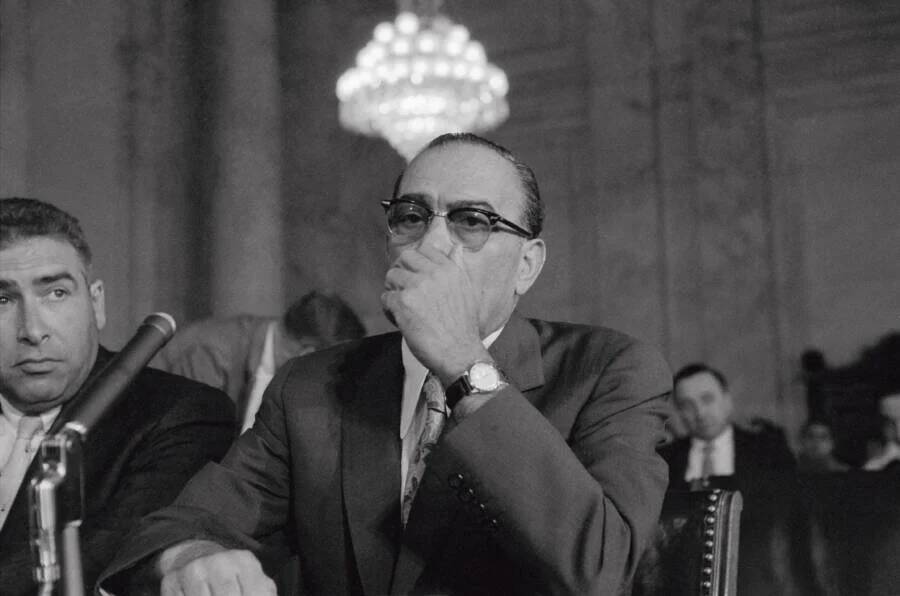
Bettmann/Getty ImagesVito Genovese appearing before the Senate Labor Rackets Committee in 1958.
That March, Anna took the stand and delivered testimony that left the Mafia world reeling. She spoke bluntly about Vito’s cruelty toward her — and provided a blueprint of his criminal enterprise.
She named names, detailed methods, and explained the financial structure of her husband’s operation. She also testified that Vito controlled a vast network involved in narcotics trafficking, gambling, and labor racketeering, and claimed that he made $40,000 a week (more than $400,000 today).
It was a credible and incredibly detailed testimony that provided federal investigators with the roadmap they had been desperately seeking. And it was an extremely dangerous thing to do. Newspaper columnist Dorothy Kilgallen, who was close with mobster Frank Costello, even wrote: “If I were Mrs. Vito Genovese, I’d be awful careful crossing streets.”
This was seen as a thinly veiled threat toward Anna. But, in the end, Anna Genovese’s divorce case and Vito’s countersuit against her, were both dropped. And no one ever retaliated against Anna Genovese, who lived the rest of her life out of the spotlight.
She remained married to Vito, but the couple lived entirely separate lives. Vito took over the powerful Luciano crime family in 1957, establishing the Genovese crime family, but was convicted of narcotics conspiracy in 1959. He sentenced to 15 years in federal prison, where he died in 1969.
Anna, meanwhile, remained a ghost. For a time she worked at the Warwick Hotel — and purportedly even befriended Cary Grant, who was staying there as a guest — until she died of a stroke in 1982. By then, her name had largely faded out of the news. But her connection to Vito remained, and Anna was ultimately buried in the Genovese family plot.
Today, she’s a footnote to the larger Mafia history. But Anna Genovese had proven that the Mafia’s code of silence could be shattered, even from within.
After reading about Anna Genovese, the estranged wife of Vito Genovese who testified against him and ran gay bars in New York City, look through this stunning collection of colorized photos from the early days of organized crime in the United States. Or, learn about Johnny Torrio, the ruthless gangster who taught Al Capone everything he knew.
The post Anna Genovese, The Wife Of Mobster Vito Genovese Who Dared To Testify Against Him appeared first on All That's Interesting.

Panama Ministry of CultureArchaeologists excavate pottery buried in Tomb 3 at Panama’s El Caño Archaeological Park.
Recent excavations in central Panama have uncovered a pre-Columbian tomb filled with elaborate artifacts. The grave contains multiple bodies, but it’s clear that one individual held a higher status than the others.
This latest discovery at the El Caño Archaeological Park is revealing new information about the Coclé culture, which thrived in the region more than 1,000 years ago. The arrangement of the bodies and the grave goods buried along with them adds new evidence to what researchers know about the civilization’s funerary rituals, social structures, and relationships with other groups across Central America.
The Pre-Columbian Tomb Filled With Gold That Was Recently Uncovered In Panama
Tomb 3 at El Caño Archaeological Park was first identified in 2009, but archaeologists only fully explored it during the 2026 excavation season. A series of digs uncovered an elaborate tomb structure consisting of multiple burials and a large variety of grave goods dating back to between the 8th and 11th centuries C.E.
The central figure in the burial — seemingly an elite member of Coclé society — was surrounded by the remains of several other people as well as high-status objects, such as gold jewelry and fine ceramics made in the local tradition. Many of the relics featured popular pre-Columbian motifs like bats and crocodiles.
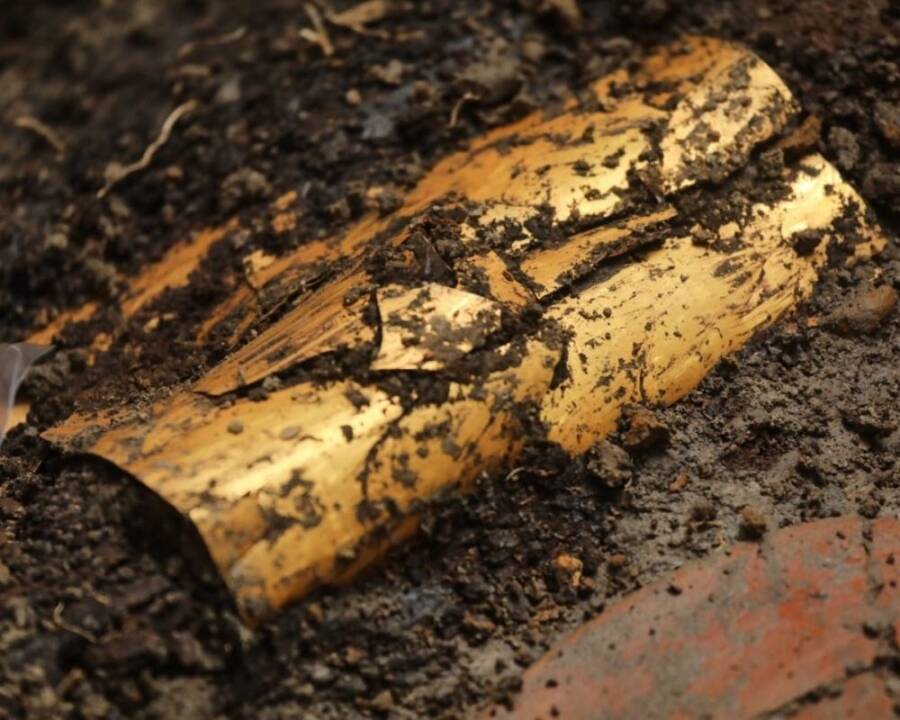
Panama Ministry of CultureOne of the gold artifacts found in the tomb at El Caño.
While these artifacts served to illustrate the wealth of Tomb 3’s primary individual, they also revealed more about how the Coclé people traded with surrounding societies. Similar grave goods were previously found at Sitio Conte, for example, another necropolis not far from El Caño.
An official statement from Panama’s Ministry of Culture notes: “The stylistic and technological similarities between the objects recovered at both sites reinforce the hypothesis that these communities shared a common cultural tradition and maintained close political and economic ties.”
So, who were the Coclé people, and what else can this new discovery tell us about this long-lost culture?
The Gran Coclé Culture That Flourished In And Around El Caño
The Gran Coclé emerged as early as 150 C.E. and existed in various forms until the 16th century, when Spanish colonizers arrived in Central and South America. El Caño is one of the most important pre-Columbian cemeteries in Panama because it has revealed so much about this lost society since it was first excavated in the 1920s. It’s even been referred to as “Panama’s Valley of the Kings.”

Panama Ministry of CultureThe Coclé culture was known for their unique pottery.
Based on previous discoveries made at El Caño, researchers suspect that the Coclé people believed in an afterlife and saw death as a transition to another realm. They also believed that the social standing of the deceased followed them to this new domain. The value of the grave goods found in Tomb 3 supports this theory, as the gold and pottery would have marked the primary figure’s importance during their time on Earth.
As the Ministry of Culture explains, “The display of material wealth in the burial of the principal individual can be interpreted as a tangible manifestation of their power.” What’s more, the arrangement of the artifacts and other human remains around the deceased provides additional information about this “elaborate belief system” of the Coclé people.
The discovery of Tomb 3 also adds to mounting evidence about the power of the Coclé culture, which was seemingly capable of “mobilizing resources, organizing large-scale ceremonies, and maintaining long-distance exchange networks.”

Panama Ministry of CultureThe tomb dates back more than 1,000 years.
“The new tomb expands the known funerary records and will provide new information about social organization, political power, exchange networks, and ritual practices,” states the Ministry of Culture.
María Eugenia Herrera, Panama’s Minister of Culture, said of the astounding discovery, “We are ready to tell the world much more about our cultural richness and to celebrate it, so that all Panamanians can feel proud of our identity, thanks to all this valuable research being carried out by the El Caño Foundation together with the Ministry of Culture.”
After reading about the 1,000-year-old tomb of an elite individual uncovered in Panama, learn about the Darién scheme, Scotland’s attempt to build a colony in Panama. Then, go inside the story of Simón Bolívar, the “liberator” of South America.
The post Archaeologists In Panama Just Unearthed A Luxurious Pre-Columbian Tomb Filled With Ornate Ceramics And Gold appeared first on All That's Interesting.
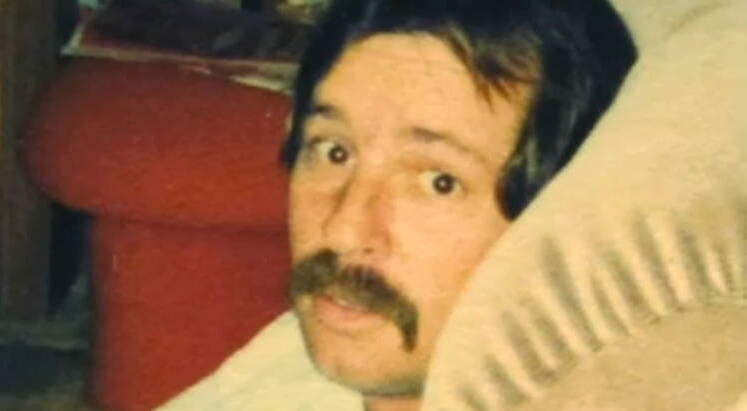
Find A GraveCharles Manson’s son, Charles Manson Jr., who changed his name to Jay White in order to distance himself from his father.
Even after Charles Manson died of natural causes at 83 in Bakersfield, California, his horrific legacy of violence lived on — as did his progeny. Though by that time, only one remained. And according to Heavy, Manson’s first-born, Charles Manson Jr., did everything in his power to distance himself from such a legacy — including take his own life.
Thrust into a world with a father who wrought havoc like the bloody Sharon Tate murders of 1969, perhaps Charles Manson Jr. never stood a chance at a normal life.
The Birth Of Charles Manson Jr.
Charles Manson Jr. was born in 1956, one year after his father married Rosalie Jean Willis in Ohio. She was 15 years old at the time and working as a waitress in a hospital whereas Manson was already 20 years old.
Though the marriage didn’t last long — largely due to Manson’s erratic criminal behavior and subsequent stints in prison — he later said their time as husband and wife was a delight.
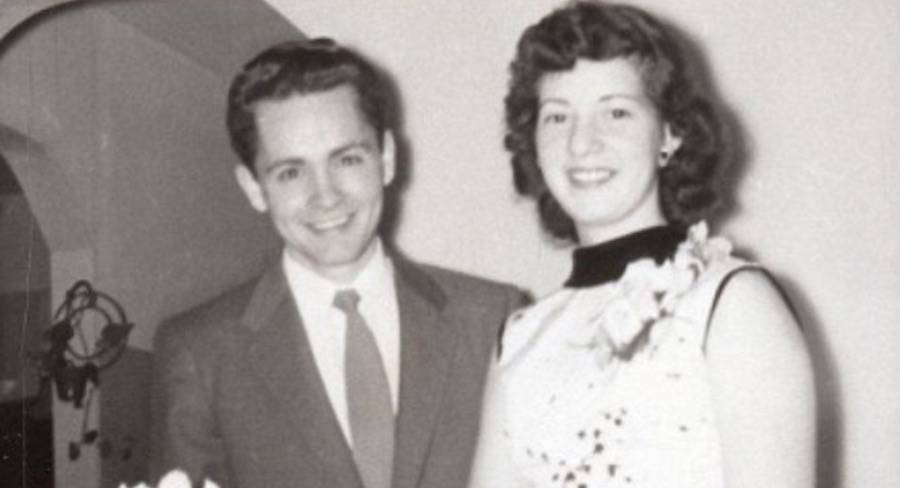
Public DomainCharles Manson with wife Rosalie Willis. Circa 1955.
When Willis neared her second trimester, the couple moved to Los Angeles. It didn’t take long for Manson to get arrested for taking a stolen car across state lines — then get sentenced to five years probation for it.
Mischievous and psychotic, Manson couldn’t contain himself and was imprisoned at Terminal Island in San Pedro, California that same year. With him behind bars and Willis managing her pregnancy alone, their son Charles Manson Jr. was born to a single mother.
Not long after, Willis filed for divorce and tried to live a more normal life. Charles Manson, meanwhile, went on to amass a loyal following of “Manson Family” cultists who would commit several of American history’s most infamous murders in 1969.
And while Manson fostered this chaotic, unofficial family, Manson’s biological son tried to escape his father’s dark shadow.
Growing Up As Charles Manson’s Son
Not much is known about Charles Manson Jr.’s personal life, particularly as an adolescent. What’s clear, however, is that he never cared for his familial background. The shadow of the Tate murders plagued him so deeply that he eventually changed his name, just as his youngest biological brother, Valentine Michael Manson, would.
For inspiration, he looked no further than his stepfather, Jack White, who his mother married while Charles Manson was serving prison time. No longer calling himself Charles Manson Jr., the newly renamed Jay White hoped to distance himself from his father and forge a path independent of his biological history. His stepfather, meanwhile, fathered two more sons, Jesse J. and Jed White.
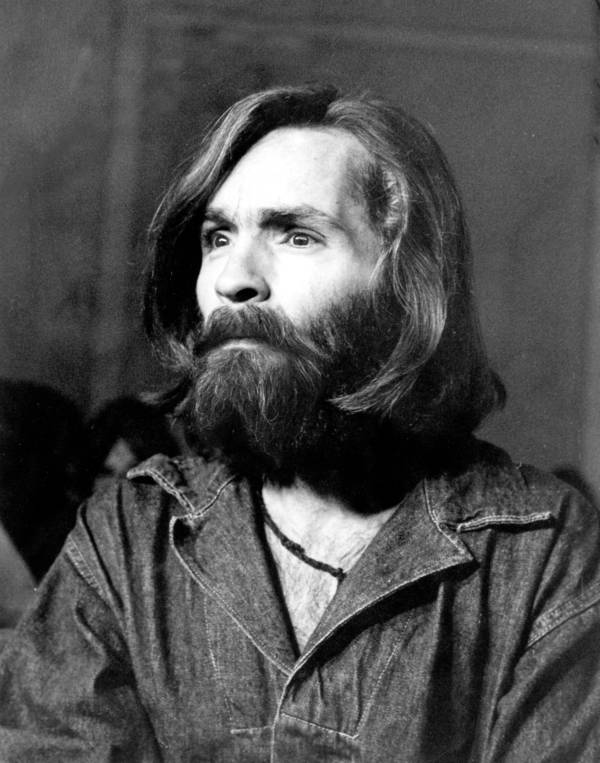
Michael Ochs Archives/Getty ImagesCharles Manson at trial in 1970.
Jesse J. White was born in 1958 and his brother was born a year later. Tragically, the latter died of an accidental gunshot wound as a pre-teen in January 1971. The shooter was his 11-year-old friend who barely understood his mistake.
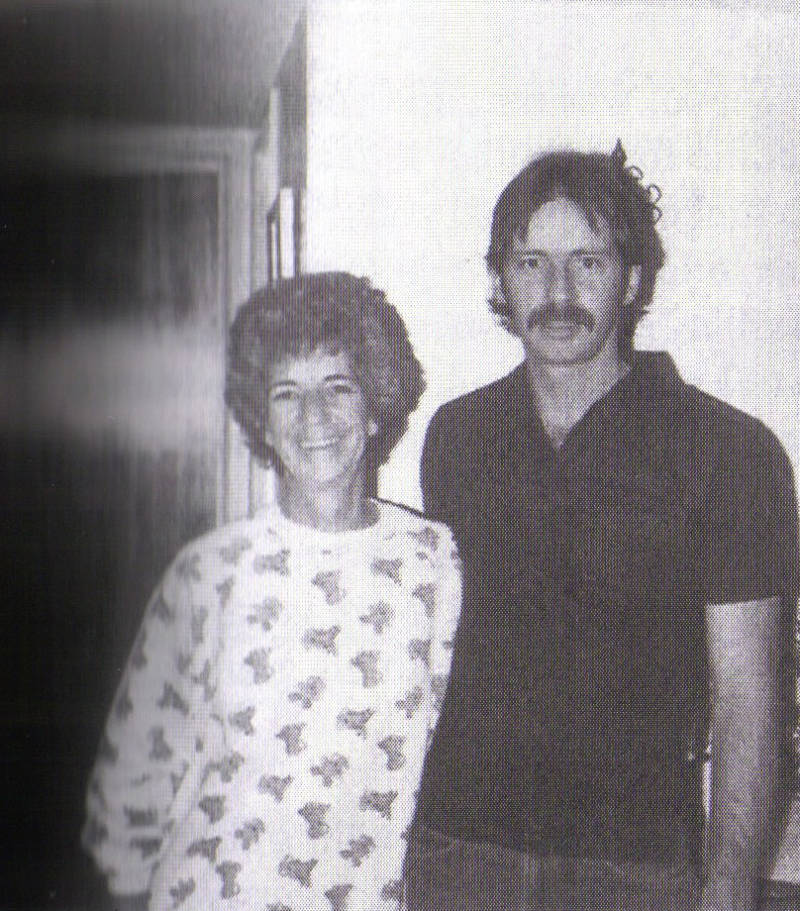
Rosalie Willis with her son, Charles Manson Jr., who had already changed his name to Jay White. Date unspecified.
Unfortunately, tragedy didn’t end there for the White brothers. Jesse J. White died of a drug overdose in Houston, Texas in August 1986. His friend discovered the body in a car around dawn after a long, seemingly fun night of drinking at a bar.
Most wrenching of all was Jay White’s own death seven years later.
The Death Of Jay White
Jay White committed suicide on June 29, 1993. According to CNN, the motivation was never entirely clear, though a combination of distress over who his father was and a need to distance himself from his own son in an effort to protect him is largely thought to be at the foundation.
Regardless, the incident happened on a barren stretch of highway in Burlington, Colorado near the Kansas state line. His death certificate confirmed that he died from a “self-inflicted gunshot wound to the head” at Exit 438 on Interstate 70 at around 10:15 a.m.
The shadow of White’s father likely haunted him from the first blips of consciousness to the very end. His own child, a kickboxing cage fighter named Jason Freeman, has fortunately managed to process the two generations of trauma that preceded him.
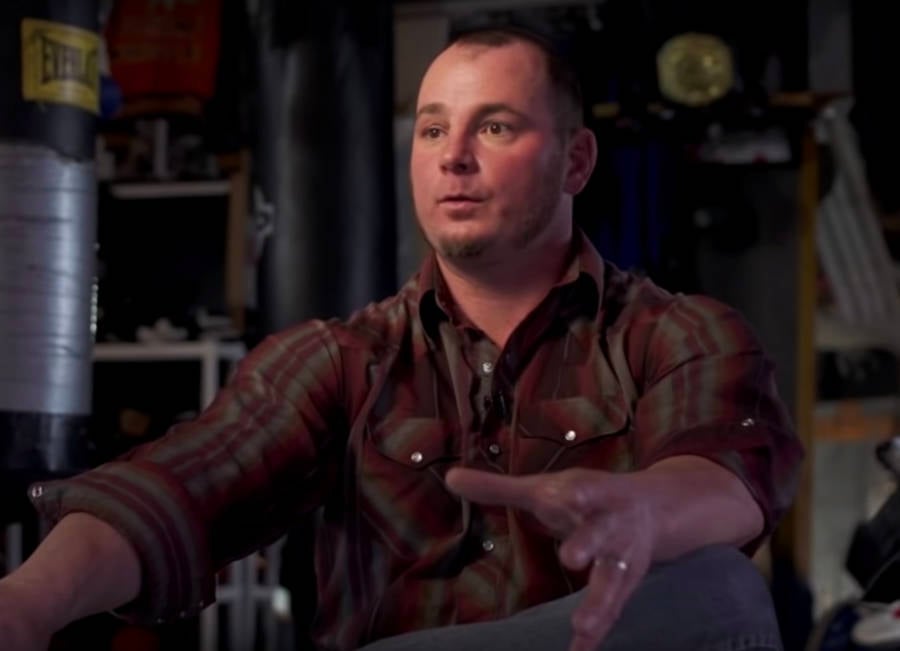
The 700 Club/YouTubeJason Freeman wished his father had stayed strong and let go of his past. He now kickboxes and tries to set an example for those with troubled parents.
Freeman described the cloud over his life as a “family curse,” but decided to use that frustration as motivation. He recalled one day in an eighth-grade history class when his teacher “was talking about Charles Manson, and I’m looking around like, are there people staring at me?”
“I’m personally, I’m coming out,” he announced in 2012, referring to his effort to neutralize the toxicity of the Manson name.
Freeman, a 6-foot-2 kickboxer, said he was frequently bullied as a child due to his biological connection to the notorious criminal. Forbidden to discuss his grandfather at home or in school, even his grandmother, Rosalie Willis, ordered him never to mention her late former husband.
“He just couldn’t let it go,” said Freeman of his father, Charles Manson Jr. “He couldn’t live it down. He couldn’t live down who his father was.”
Charles Manson’s grandson may look like the hardened, emotionally unwavering type, but when he was asked what he would’ve liked his father to consider before killing himself, the tough exterior crumbled.
“I want him to know… he missed out on a lot,” Freeman whispered of his father Charles Manson Jr., battling tears. “I see my kids, you know, and that’s kinda where I get shook up. I would hate to see them grow up without a father. That’s important. Very important.”
Freeman later tried to reconnect with his infamous grandfather, whose name and legacy ultimately killed his own father. “From time to time, every now and then, he’d say ‘I love you,'” Freeman said of his conversations with Manson. “He’d say it back to me. Maybe a couple times he said it first. It took a while to get to that point though, trust me.”
Jason Freeman engaged in a battle for the rights to his grandfather’s body and estate against his biological uncle, Valentine Michael Manson (later Michael Brunner, born to Mary Brunner). He eventually won the rights to Manson’s body and he had the cult leader cremated and scattered. He hopes to win the rights to his grandfather’s estate so that he can sell his memorabilia for charity.
“I don’t want to be viewed for the actions of my grandfather,” he added. “I don’t want the backlash from society. I walk a different walk.”
Ultimately, Charles Manson Jr.’s son expressed an unrealistic wish of turning back time to June 1993 and helping him to overcome his shame. Whatever Jay White felt at the time before his death, Freeman explained that he would have loved to let him know that a better life was waiting for him.
After learning about Charles Manson’s son, Charles Manson Jr., read up on a few Charles Manson facts that demystify the monster. Then, read about the troubled life of Charles Manson’s own mother, Kathleen Maddox. Finally, learn about Tex Watson, Manson’s right-hand man, and discover who Charles Manson actually killed.
The post The Brief And Tragic Life Of Charles Manson Jr., The Cult Leader’s Son Who Killed Himself appeared first on All That's Interesting.

MediaNews Group/Boston Herald via Getty ImagesCharla Nash’s new face, post-surgery.
On Feb. 16, 2009, Charla Nash visited the home of her longtime friend, Sandra Herold, like she’d done many times before. Unfortunately, the visit was anything but normal.
Sandra and her husband, Jerome Herold, had adopted a young chimpanzee named Travis over a decade earlier. Although he had grown up in the home alongside humans from the time he was only three days old and was a beloved member of the community, he had been having fits of erratic behavior for several years.
Tragically, the chimp — who had dressed himself, done chores around the house, and kept Sandra company after her husband’s passing — viciously attacked Charla Nash that morning, leaving her permanently disfigured.
Charla Nash And Sandra Herold’s Longtime Friendship
Sandra Herold had recently suffered a pair of tragedies. In September 2000, the Herolds’ only child, Suzan, died after her car collided with a tree along an empty Virginia highway. Suzan’s infant daughter was unscathed, but Sandra Herold spiraled into depression and struggled to maintain a relationship with her grandchildren.
The second tragedy came in April 2005, when Herold’s husband died of stomach cancer after a weeks-long stay in the hospital. The sudden loss not only sent her into a severe depression — but their pet chimp, Travis, as well.
“We are both lost without him and miss him dearly. Travis still waits for him especially at supper time, because at that time they both had a glass of wine with their supper,” Herold wrote in a letter to a chimpanzee sanctuary owner in Florida, nearly a year after Jerry’s death.
“I live alone with Travis, we eat and sleep together but I am worried that if something happens to me as suddenly as my husband what would happen to Travis, therefore I have to try to do something before that happens.”
Throughout this time period, Sandra Herold’s isolation and unfortunate circumstances in Charla Nash’s life had caused the two friends to drift apart.

Public DomainCharla Nash and Travis the Chimp, years before the attack when he was still a baby.
Nash and her then-12-year-old daughter struggled to find permanent housing and stayed in a homeless shelter for more than a year at one point. Nash was scraping by on odd jobs, doing yard work, and cleaning horse stalls.
But Nash and Herold reconnected shortly after Jerry’s death, and what’s more, Herold offered Nash and her daughter a rent-free loft apartment that had belonged to her late daughter. She also gave Nash a job handling towing dispatch and bookkeeping.
Charla Nash also took care of Herold’s lawn and looked in on Travis, who had by this time become morbidly obese, spending most of his time snacking, watching TV, playing on the computer, and roaming the house which had become a mess of unworn clothes stuffed into plastic bags and bins.
Things were clearly unwell in the Herold household, but Nash and Herold’s friendship seemed to be a small beacon of light.
Travis The Chimp’s Savage Assault On Charla Nash
One February weekend in 2009, Sandra Herold and Charla Nash embarked on a rare outing, going to the Mohegan Sun Casino in Montville, Connecticut. Herold took her friend to the salon before they left — just in case, she joked, two eligible bachelors happened to appear.
But when they returned on February 16, Herold came home to a highly agitated Travis. While she was cleaning his room, he took her keys from the kitchen counter, unlocked the door, and went out into the yard.
For the rest of the day, he showed no interest in the things that he typically enjoyed. Concerned, Herold put a Xanax in his afternoon tea.
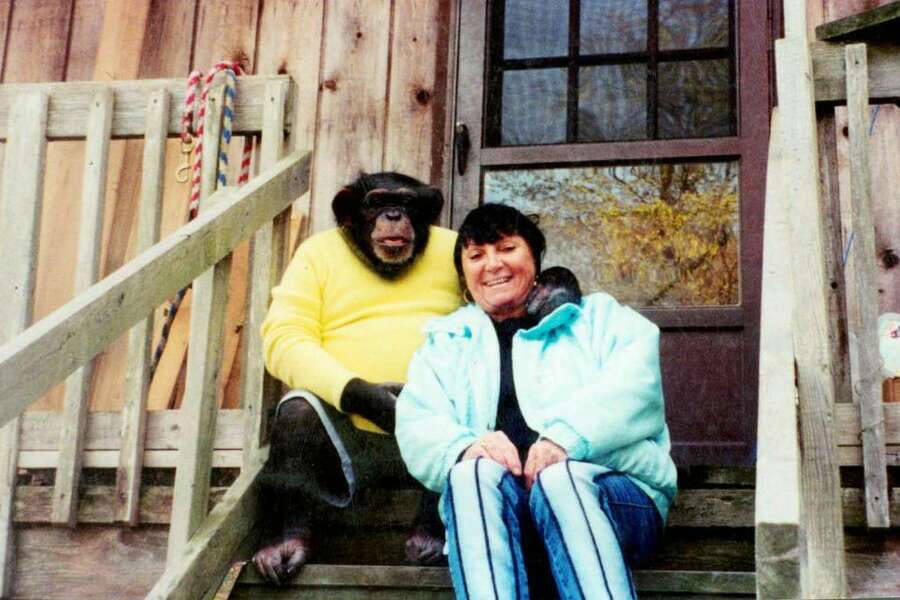
Sandra Herold/Contributed Photo/Connecticut PostSandra Herold and Travis the Chimp in 2002, when Travis was 10-years-old.
Here, the accounts split — Nash maintained that Herold called and asked for her help coaxing Travis back into the home. Herold, however, has said that Nash offered her help.
In either case, Charla Nash arrived at the Herold home around 3:40 p.m. Travis was in the front yard. To try and lure him back into the house, Nash showed him his favorite toy, a Tickle-Me-Elmo doll.
Something in Travis snapped then. He knuckle-ran over to Nash, stood on his two legs, and threw her into the side of her car, then to the ground. He continued to ravage the woman as she lay on the ground bleeding.
Herold began hysterically beating Travis over the head with a shovel, but the chimp wouldn’t stop. Not knowing what else to do, she ran into her house, grabbed a butcher knife, and stabbed him in the back. Still, he didn’t stop. She stabbed him twice more.
Travis stood up, looked his owner directly in the face, and then continued his assault on Nash.
Frantically, Herold dialed 911. “He’s killing my friend!” she screamed. “He ripped her apart! Hurry up! Hurry up! Please!”
Nearly incomprehensible with panic, she told the dispatch officer, “He — he ripped her face off … He’s eating her!”
Her Lifetime Of Recovery
When police arrived, they found Travis stalking the area, covered in blood. The officer fired several rounds into him, and Travis, bleeding, fled into the house. A trail of blood followed his path through the kitchen and bedroom, into his room where he died grasping his bedpost.
Bits of Nash’s body littered the yard — flesh, fingers, and nearly half her body’s blood. Travis had ripped off her eyelids, nose, jaw, lips, and a large portion of her scalp.
As the officer approached what was sure to be her lifeless body, she reached out for his leg. Somehow, Charla Nash was still alive.
Three days after the attack, in critical condition, she was flown from Stamford to the Cleveland Clinic — where she would undergo 15 months of intervention.
Nine months after the attack, on Charla Nash’s 56th birthday, she revealed her face live on Oprah Winfrey’s show in what is now recognized as one of television’s most extraordinary moments.
In the years since, she has undergone several reconstructive surgeries, including a face transplant.
“I’ve never been a quitter,” she said to Oprah ahead of the transplant. “Unfortunately, there’s not a whole lot I can do … It’s very hard to live. Not even live — half-live.”
Perhaps the saving grace in Charla Nash’s story — if there is to be one — is that she doesn’t remember the attack, over a decade later.
“I’m told that it could stay hidden for years, and it could possibly hit me and cause me nightmares and such,” she told TODAY. “In the case that it does, I can reach out for psychological help, but knock on wood, I don’t have any nightmares or remembrance.”
Nash, now in her late 60s, spends her time listening to audiobooks and music, but she is still blind from the attack. She may not have lost her life, but the woman she was is all but gone — she even wears another person’s face entirely.
Still, she has remained positive about her recovery and hopes that her surgeries could help soldiers who face similar disfigurements in the future.
“Don’t think about the past and what has happened,” she offered as advice. “Think about what you’re going to be, going forward, and what you want to do next. Never give up.”
After reading about Charla Nash’s miraculous survival, learn about chilling, real-life cannibal attacks. Then, learn about the runner in Colorado who fought off a mountain lion with his bare hands.
The post How Charla Nash Survived One Of The Most Horrifying Animal Attacks In History appeared first on All That's Interesting.

Tennessee Bureau of InvestigationsElizabeth “Beth” Thomas and Tad Cummins, her former teacher.
On March 13, 2017, 15-year-old high school student Elizabeth Thomas disappeared. After an Amber Alert and a 38-day search, she was found in northern California, where she was being held by a 50-year-old married father of two named Tad Cummins, her former health teacher at Culleoka Unit School in Tennessee.
While Cummins’ kidnapping of Thomas was already reprehensible, the situation was made all the more tragic when Thomas revealed that she had initially viewed Cummins as a mentor and protective figure — only for him to then abuse that connection and groom the teenager for months prior to her disappearance. Cummins even tried to twist his actions in court, claiming that Thomas had wanted to run away and he was concerned about her going out on her own, so he joined her.
In truth, however, Tad Cummins had been actively grooming his young student. Just before the kidnapping, he was suspended from his position as a teacher after another student saw him kissing Thomas on school grounds.
Her family claimed that he had spent months pressuring Thomas into spending time with him. Cummins ultimately wound up pleading guilty to federal counts of transporting a minor across state lines for the purpose of engaging in criminal sexual conduct.
How Tad Cummins Groomed And Manipulated Elizabeth Thomas
On the morning of March 13, 2017, Tad Cummins left a note for his wife in which he wrote that he was leaving to “think.” He also asked her not to call the police.
Later that same evening, Anthony Thomas reported his daughter missing. What followed was a 38-day manhunt for Cummins and Thomas that led police to a remote cabin in Cecilville, California — a small, four-walled shack where Cummins had holed up in with his underage victim.
Despite Cummins’ initial claims during police interviews that he “never touched another woman” in his 31 years of marriage, investigators uncovered a series of shocking revelations after his arrest.

Tad Cummins/TwitterTad Cummins was 50 years old when he began a sexual relationship with 15-year-old Elizabeth Thomas.
According to The Tennessean, Tad Cummins first set his sights on Elizabeth Thomas while she was enrolled in his health class.
Tad Cummins was described as a masterfully manipulative predator, pressuring Thomas to go out with him and threatening her with repercussions at school if she refused. A petition filed by Thomas’ father explained that the teenage girl told friends she was scared of Cummins and felt in over her head.
She had just recently begun making the transition from homeschooling to public school. Thomas also said that her mother had abused her growing up, and perhaps that is why she initially felt such a strong connection to Cummins.
“He made me feel like I didn’t have anyone else, and no one really cared about me like he did,” she recalled to ABC’s 20/20. “Whenever I tried to seek mental help, he told me no. I was feeling real low… and he told me no and not to do it ’cause it’d change who I was.”
Thomas was given a seat near Cummins’ desk in his class. Other students also reported seeing him initiate physical contact with her during school hours, including rubbing her shoulders and back.

Tennessee Bureau of InvestigationsTad Cummins and Elizabeth Thomas in his classroom.
At one point, when she was alone in the classroom with her, he told her, “You’d look pretty nice naked.”
Then, when a student saw Cummins kiss Thomas at school, it took a week before the teacher was suspended. During that week, he was the chaperone for a field trip Thomas went on.
He reportedly also picked Thomas up from her home and took her out to meals, threatening her with repercussions at school if she refused.
Even after he was suspended, he continued to pursue Thomas, showing up at her after-school job. According to court papers, she would often hide from him and ask her coworkers to lie and say she wasn’t at work.
“He said if he couldn’t have me, he’d kill himself,” Thomas recalled. “Any time he threatened himself, he’d threaten my family.”
But Thomas reportedly felt guilty about Tad Cummins’ suspension and equally worried that he would find a way to punish her for it.
In a way, she was right, as Cummins ultimately showed up one day in his wife’s Nissan Rogue and told Thomas to get in. He convinced her to run away with him and, as a silent threat, placed a gun on the console.
“He threatened my family,” Thomas later said. “My little sister was there and my whole family was there and if I didn’t go something bad would happen to them… I knew once I got in that car, I wasn’t getting out.”
The Kidnapping Of Elizabeth Thomas
Tad Cummins wanted to be sure that he wouldn’t get caught. After he took Thomas away with him, he made her throw her phone off a bridge, disconnected the GPS in his wife’s car, and even went as far as to unhook the radio.
Cummins drove them across nine states, renting a different hotel room each night, usually in rooms with only one bed. His control went further, though, as he even controlled what Thomas ate.
“He told me he likes skinny girls,” she said. “And I ate what he told me to ’cause if I didn’t, I wouldn’t get it at all.”

Tennessee Bureau of Investigations Elizabeth Thomas told friends that she was both in love with Tad Cummins and terrified of him.
“I know he’s a bad man,” she told 20/20. “He only used me for one thing.”
Thomas also said that Tad Cummins had sexually abused her and that they had sex nearly every night while they were on the run. Cummins also admitted to this during an interview with the FBI.
Cummins used his own name when booking hotel rooms for the two to stay in. A Walmart security camera in Oklahoma captured images of the two in the store together, but for a time it seemed like their trail had gone cold. Then, another Tennessee native named Griffin Barry made a phone call that led investigators right to Cummins.
Barry had been a caretaker for the California property where the cabin that Cummins and Thomas were staying in was located. He recognized Cummins’ face from news reports and photographs, and called in a tip. Authorities moved in and arrested Cummins, and Thomas was flown home to be reunited with her family.
Of course, it wasn’t easy for Thomas to put everything behind her, and the emotional damage she suffered as a result of the experience lingered for years.
Elizabeth Thomas Describes The Abuse She Faced At The Hands Of Tad Cummins
“What you did to me was unspeakable,” Thomas said to Cummins in a statement during his trial. “You saw a broken girl, who was lonely, scared and traumatized. You made her feel safe and loved because you saw what she needed and made her believe you would be her ‘protector’… All you were was a man who wanted sex… Tad Cummins is a sick, disgusting criminal.”

Tennessee Bureau of InvestigationsTad Cummins and Elizabeth Thomas caught on camera at an Oklahoma Walmart.
Two years after the abduction, when Thomas spoke with 20/20 for the first time, she detailed how the manipulation skewed her perceptions of trust and love. Other teachers at the school had teased her following Cummins’ suspension. Other students bullied her. She was a girl from a damaged home, trying to fit in like everyone else, and instead, a man she wanted to trust took advantage of her.
Cummins had repeatedly told Thomas that “the devil made” him pursue a relationship with her.
“But if that’s true, then you are the devil,” her statement continued. “Your choices were yours and yours alone. A 17-year-old girl should not have to tell a 52-year-old man this, but choices have consequences. Your choices destroyed not just my family, but also yours.”
Thomas also expressed anger at Cummins’ demeanor in court, during which he wept and appeared to show remorse for his actions.
“Where was any of that when you directed me into your classroom closet and violated me over and over again for months?” Thomas asked. “Where was any of that when you spent untold amounts of time and effort into manipulating, pressuring, and deceiving me into thinking that you were the only person who cared about me?”
Before his sentencing in court, Tad Cummins once again appeared emotional and apologetic.
“To the victim, I want you to know: I agree. This was not your fault. You were a kid. My misguided attempt to help you went sideways,” he said. “Anything I can do to give you closure, I stand ready.”
After reading about Tad Cummins crimes, read the disturbing story of Nathaniel Kibby, the New Hampshire man who kidnapped a 14-year-old girl and held her prisoner for nine months. Then, read the story of Andrey Emelyannikov, the student who took a selfie with the body of a teacher he murdered just before killing himself.
The post Tad Cummins, The Tennessee Teacher Who Kidnapped His 15-Year-Old Student And Claimed ‘The Devil Made Him’ Do It appeared first on All That's Interesting.
Historically, dictators have been known for their cruelty, abuse of power, and willingness to kill anyone who gets in their way. But of all of history’s worst dictators, there are a few who stand out as particularly vile.
Nazi leader Adolf Hitler is likely the first who comes to mind, given that he and his genocidal regime organized the Holocaust, but Hitler is shockingly not responsible for the highest number of deaths in history. And while the exact death tolls from these authoritarian figures are unknown — they didn’t keep proper records of every single person they killed, after all — the estimates tell a profoundly dark and disturbing story.
So, if not Hitler, who was the deadliest dictator of all time?
Mao Zedong’s Devastating “Great Leap Forward”
Public DomainMao Zedong’s rule lasted nearly 30 years, during which millions of people died.
Although his name comes up less often in conversations about the world’s most murderous leaders than Hitler or Stalin, Mao Zedong’s dictatorship in China resulted in deadly policies and horrific crimes. And recent scholarship suggests that Mao Zedong was the deadliest dictator in history.
According to historian Frank Dikötter, who published Mao’s Great Famine: The Story of China’s Most Devastating Catastrophe, 1958–1962 in 2010, “at least 45 million people between 1958 and 1962” died due to Mao’s policies. Some have suggested that the real number could be as high as 80 million.
As a Chinese communist leader and founder of the People’s Republic of China, Mao Zedong ruled over the country from 1949 until he died in 1976. During this period, he implemented radical campaigns that led to catastrophic loss of human life. The most devastating of Mao’s policies was what he called the Great Leap Forward, an ambitious attempt to rapidly transform China from an agrarian society into an industrialized communist society, partly through the formation of people’s communes.
This campaign led to the deadliest famine in human history, causing an estimated 30 million deaths (though some say the real number could be as high as 55 million). The famine was primarily caused by misguided agricultural policies that diverted valuable labor from farming to industrial projects like the widespread construction of backyard furnaces, resulting in food shortages. Even for a country that had experienced nearly 2,000 known famines throughout its history, this was a staggering level of devastation.
Public DomainChinese government officials traveling to the countryside during the Great Leap Forward.
As expert Judith Shapiro wrote in the book Mao’s War Against Nature, “Maoism constructed a world that pitted humans against nature, and inculcated this world view among the people through repression, indoctrination, utopian promises and censorship.”
This “war against nature” involved unscientific agricultural experiments, widespread deforestation, and even trying to stop birds from eating grain. As one study examined, in addition to the millions of people that Mao’s regime killed, millions of sparrows were also killed — which led to a noticeable increase in locust populations, which then ravaged crops.
On top of this, Mao’s regime also implemented brutal political purges and repressive campaigns to intimidate, harm, and kill possible opponents.
The Cultural Revolution, for example, was launched to help remove opposition and reconsolidate Mao’s power. During this time, his Red Guards targeted teachers, intellectuals, and perceived “revisionists,” subjecting them to public humiliation, torture, and execution. At one point, Mao reportedly boasted that while China’s first emperor Qin Shi Huang had buried alive 460 scholars, his regime had buried alive 46,000 scholars.
The death toll from Mao’s policies extended beyond famines and political purges. The Chinese labor camp system, similar to the Soviet gulag, imprisoned an estimated 50 million people from the 1950s through the 1980s, with about 20 million dying due to primitive conditions and forced labor.
Public DomainMao Zedong, pictured with Soviet premier Nikita Khrushchev.
Despite the overwhelming evidence of his policy failures, Mao refused to acknowledge the famine’s severity. He had positioned himself as a demigod who could do no wrong — admitting to making crucial mistakes would have been in direct conflict with this self-imposed image. When other highly influential Chinese political leaders spoke out against Mao, they often put their jobs, reputations, and lives at risk.
As the Monthly Review noted in 2006, though, Mao’s deadly regime is a curious case, as far as dictators go. Mao, unlike other dictators, had not brazenly committed outright genocide against a specific group or groups of people, but his confident incompetence in his rush to mass modernize China ultimately led to millions upon millions of deaths. At the same time, the country did see some success in industrializing, life expectancy (ironically), and overall production. It just came at a tragic human cost.
And after Mao’s death, his successor Deng Xiaoping publicly stated that he felt Mao was “70 percent right and 30 percent wrong” on his policy positions — though, privately, it seemed that Deng felt those numbers might have been flipped. Either way, the fact that so many people died as a result of Mao’s dictatorship is evidence enough of the horrors within his movement.
Of course, there were also dictators who did target specific groups of people for murder — and this alone makes their rule all the more horrifying.
Joseph Stalin’s Great Purge, Gulag System, And Authoritarian Policies
Public DomainSoviet leader Joseph Stalin.
There is some irony in Joseph Stalin and Mao Zedong both ranking among history’s deadliest dictators. Initially, Mao had viewed Stalin and the Soviet Union as the model for revolutionary success, with Mao using many of Stalin’s tactics, such as purges of perceived political enemies.
However, as time went on, Mao began to resent Stalin’s condescending attitude toward him and the Chinese Revolution. And when Stalin was reluctant to fully support the Chinese Communists in their fight against the Chinese Nationalists, Mao never forgave the betrayal.
Eventually, he criticized Stalin, acknowledging that Stalin had made serious mistakes. But he never fully denounced Stalin’s Great Purge.
Photo 12/Alamy Stock PhotoThe aftermath of the Katyn massacre, where thousands of Polish prisoners were slaughtered by the Soviet NKVD.
The Great Purge was the most intense phase of Stalin’s political repression. Launched after the assassination of party official Sergei Kirov — which Stalin possibly orchestrated as a pretext — the purge targeted virtually every segment of Soviet society. The Soviet secret police, known as the NKVD, arrested, tortured, and executed Stalin’s political rivals and critics, intellectuals, Old Bolsheviks, ethnic minorities, citizens accused of “counter-revolutionary activities,” and even senior military officials.
Show trials forced prominent figures to confess to absurd charges before being executed. Notably, the executions of many experienced military leaders and other soldiers weakened the Red Army before World War II.
Beyond political killings, Stalin’s policies also caused mass starvation. The Holodomor in Ukraine, a deliberately engineered famine, killed millions of people as grain was confiscated while starving peasants were prevented from leaving their villages or seeking out food elsewhere.
Library of CongressA Soviet gulag.
The gulag system imprisoned millions in brutal forced labor camps, where it’s been estimated that some 10 percent of prisoners died every year. Projects like the White Sea-Baltic Canal were built by prisoners who died by the thousands due to exhaustion, malnutrition, and exposure.
The total death toll under Stalin is estimated to be between 6 million and 20 million people, though some scholars suggest even higher numbers.
Adolf Hitler, The Nazi Regime, And The Holocaust
Time Life Pictures/National Archives/The LIFE Picture Collection/Getty ImagesAdolf Hitler, the leader of Nazi Germany and one of the deadliest dictators.
Although in terms of numbers alone, Adolf Hitler’s death toll was not the highest, it is still perhaps the most prominent and infamous example of mass murder perpetrated by a dictator.
After becoming chancellor of Germany in January 1933, Hitler rapidly dismantled the country’s democratic institutions, banned all opposing political parties, and established a totalitarian state built on racial ideology, antisemitism, and absolute obedience to the Führer.
The Holocaust, Nazi Germany’s deliberate genocide of European Jews, was the regime’s most infamous atrocity. Between 1941 and 1945, the Nazis systematically murdered approximately 6 million Jews through mass shootings, gas chambers, starvation, and brutal treatment in extermination camps like Auschwitz, where an estimated 1.1 million victims were killed.
United States Holocaust Memorial Museum via Wikimedia CommonsA famous image from the Warsaw Ghetto uprising during the Holocaust.
The death toll under Hitler extended far beyond Jewish victims. The Nazis also murdered millions of non-Jewish civilians and prisoners of war. Other victims included over 3 million Soviet prisoners of war, nearly 2 million non-Jewish Poles, over 250,000 disabled people, hundreds or possibly thousands of gay men, Jehovah’s Witnesses, and various political opponents.
And despite the horrific nature of Hitler’s crimes, which only fully came to light after his death and the defeat of Nazi Germany, this was sadly not the last time a mass genocide was carried out by a country’s leader.
Pol Pot And The Cambodian Genocide

Pictorial Press Ltd/Alamy Stock PhotoPol Pot, one of history’s deadliest dictators, pictured around 1978.
Pol Pot, leader of the Khmer Rouge, orchestrated one of the most brutal genocides of the 20th century after seizing control of Cambodia in 1975.
His radical communist regime sought to create an agrarian utopia by forcibly emptying cities and marching millions to the countryside to work as peasant laborers. This forced exodus, known as “Year Zero,” marked the beginning of a systematic campaign to eradicate all aspects of modern society.
The genocide targeted multiple groups for extermination. Ethnic minorities faced particular brutality — the Muslim Cham population was nearly annihilated, while Vietnamese and Chinese communities were also systematically eliminated. The Khmer Rouge also murdered professionals, intellectuals, and people thought to have too many foreign connections.
SJOBERG/AFP/Getty ImagesA photo from the day that Cambodia fell under control of the Khmer Rouge forces in 1975.
Even wearing glasses could put your life at risk.
The regime established concentration camps and security centers, with Tuol Sleng becoming the most infamous interrogation facility, where an estimated 17,000 to 20,000 people were tortured and executed. Starvation, disease, and forced labor killed many more in the agricultural communes.
Roland Neveu/LightRocket via Getty ImagesA woman crying over the body of her dead husband, who was murdered by the Khmer Rouge.
From 1975 to 1979, an estimated 2 million people — nearly a quarter of the country’s population — died under Pol Pot’s regime. The genocide ended only when Vietnam invaded Cambodia in 1979, overthrowing the Khmer Rouge, and leading to the revelation of the full extent of the atrocities to the world.
Pol Pot died, reportedly from heart failure, in 1998, without ever facing justice for his crimes against humanity in Cambodia.
And unfortunately, that is often the case with dictators. The regimes fall, the surviving people are eventually liberated, memorials are erected to honor the murdered victims, but the men who orchestrated the mass suffering of millions of people often either die while in power, or at least in relative safety, or take their own lives to escape accountability.
It’s a stark reminder that sometimes, the law only applies to those who are too powerless to oppose it.
After reading about history’s deadliest dictators, go inside the tragic true stories of the nine deadliest days in American history. Then, discover the deadliest Mafia hitmen in history — and the gruesome stories behind them.
The post The Gulag, The Holocaust, And The ‘Great Leap Forward’: Inside The Stories Of History’s Deadliest Dictators appeared first on All That's Interesting.

Wikimedia CommonsA votive plaque showing elements of the Eleusinian Mysteries that dates to the mid-4th century B.C.E.
Twice a year in the ancient Mediterranean, untold numbers of people descended on the small town of Eleusis, Greece to participate in a secret series of rituals known as the the Eleusinian Mysteries. Famous Greeks and Romans, from Plato to Augustus, participated in these rituals, which involved bathing, fasting, and drinking an elixir — which scientists have long suspected was laced with the ergot fungus to create psychedelic hallucinations.
But there was one problem with this theory: The ergot fungus is highly toxic and can cause debilitating symptoms, even death. Researchers thus wondered if the ancient Greeks had the ability to neutralize the fungus, eliminating its toxic proteins while retaining its hallucinogenic properties.
A new study, however, has proven that methods known during antiquity — such as combining water and ash to make lye — could indeed neutralize the toxins in ergot, suggesting that ancient Greek priestesses would have been capable of using it to brew a psychedelic elixir during the Eleusinian Mysteries.
How Ancient Greek Priestesses Could Have Brewed A Psychedelic Elixir Using Ergot
According to a new study from Scientific Reports, researchers set out to revisit a hypothesis first raised in the 1970s. This theory says that the Eleusinian Mysteries — which were practiced between 1600 B.C.E. and 392 C.E., and honored the story of Demeter and Persephone — could have involved hallucinogenic substances made from the ergot fungus. Indeed, traces of ergot have been found in a ceremonial vase at an Eleusinian site in Spain, as well as in the dental plaque of someone buried there.
The problem with this theory about the Eleusinian Mysteries has long been the nature of the fungus itself, which is highly toxic and capable of killing those who consume it. Thus, the question is whether or not ancient people possessed the knowledge to neutralize the toxic attributes of the fungus, thus making it safe to consume. To explore this question, researchers set out to neutralize the fungus using only methods available in antiquity.

Evangelos Dadiotis and Romanos AntonopoulosResearchers attempted to neutralize the ergot fungus by using only methods available in the ancient world.
Their experiment was a success. By using a combination of water and wood ash, the researchers were able to produce an alkaline solution that broke down the toxic properties of the ergot fungus but maintained the hallucinogenic ones. These latter effects are due to the chemical lysergic acid amide (LSA), which is similar to the drug LSD and can be a precursor to it.
The researchers’ method, as they recently wrote, could have “been readily applied by the priestesses of Eleusis,” who would have been well-aware of the method of combining water and ash to produce a simple lye.
But aside from the consumption of ergot, perhaps, what exactly happened during the Eleusinian Mysteries themselves, the ancient rituals attended by everyone from Roman emperors to Greek philosophers?
Inside The Ancient Greek Secrets Of The Eleusinian Mysteries

Wikimedia CommonsA stone relief from the first century B.C.E. showing an initiation into the Eleusinian Mysteries.
The Eleusinian Mysteries took place in Eleusis, Greece, just north of Athens. They celebrated the story of Demeter and her daughter, Persephone, who was kidnapped by Hades and brought to the Underworld.
According to ancient Greek myth, Demeter’s grief over the loss of her daughter made the world barren, so Zeus persuaded Hades to return Persephone to her mother for part of the year. The myth thus explained the changing of the seasons. But for participants in the Eleusinian Mysteries, this story also represented overcoming the fear of death.
These rituals began in ancient Greece around 1600 B.C.E. and took place twice a year, once in the spring and once in the fall. They reenacted Demeter’s search for Persephone, by walking from Athens to Eleusis along an important road known as the Sacred Way.
The rituals themselves would then involve ceremonial bathing in the sea, animal sacrifices, and the consumption of an elixir called kykeon, which was made of barley and flavored with herbs. Kykeon, researchers now believe, was also treated with the ergot fungus, which caused participants to hallucinate.
Participants were said to emerge from the Eleusinian Mysteries with a newfound fearlessness about death which, given the very lethal properties of the ergot fungus they consumed, was perhaps well earned.
After reading about the psychedelic elixir that ancient priestesses may have used during the Eleusinian Mysteries, discover the story of the Gorgons from Greek myth, the fearsome monsters who had snakes for hair and could turn men to stone. Then, learn about Ganymede, the handsome Trojan prince of Greek myth who was kidnapped by Zeus to be the gods’ cupbearer, and who has since become a queer symbol.
The post Ancient Greece’s Most Secretive Cult May Have Used A Psychedelic Hallucinogen For Its Rituals appeared first on All That's Interesting.
Wikimedia CommonsThe last lifeboat to leave the doomed ship carries Titanic survivors to safety.
Of the estimated 2,224 passengers and crew aboard the Titanic when it struck an iceberg and sank on April 15, 1912, some 1,500 died in the cold waters of the North Atlantic. A mere 700 people lived on. These are some of the most powerful stories of the Titanic survivors:
Titanic Survivors: The “Navratil Orphans”
Wikimedia CommonsThe Navratil boys, Michel and Edmond. April 1912.
A dramatic divorce and scandal brought the young Michel and Edmond Navratil to the bow of the Titanic in 1912.
They were accompanied on the voyage by their father, Michel Navratil Sr., who was still smarting from his recent separation from their mother, Marcelle Caretto.
Marcelle had won custody of the children, but she had allowed them to visit Michel over the Easter holiday. Michel, believing that his wife’s infidelity made her an unsuitable guardian, decided to use that weekend to relocate with his children to the United States.
He bought second-class tickets on the Titanic and boarded the doomed ship, introducing himself to fellow passengers as the widower Louis M. Hoffman, a man traveling with his sons, Lolo and Momon.
On the night the Titanic struck the iceberg, Navratil was able to get the boys aboard a lifeboat — the very last lifeboat to leave the ship.
Michel Jr., though only three at the time, remembered that just before placing him in the boat, his father gave him a final message:
“My child, when your mother comes for you, as she surely will, tell her that I loved her dearly and still do. Tell her I expected her to follow us, so that we might all live happily together in the peace and freedom of the New World.”
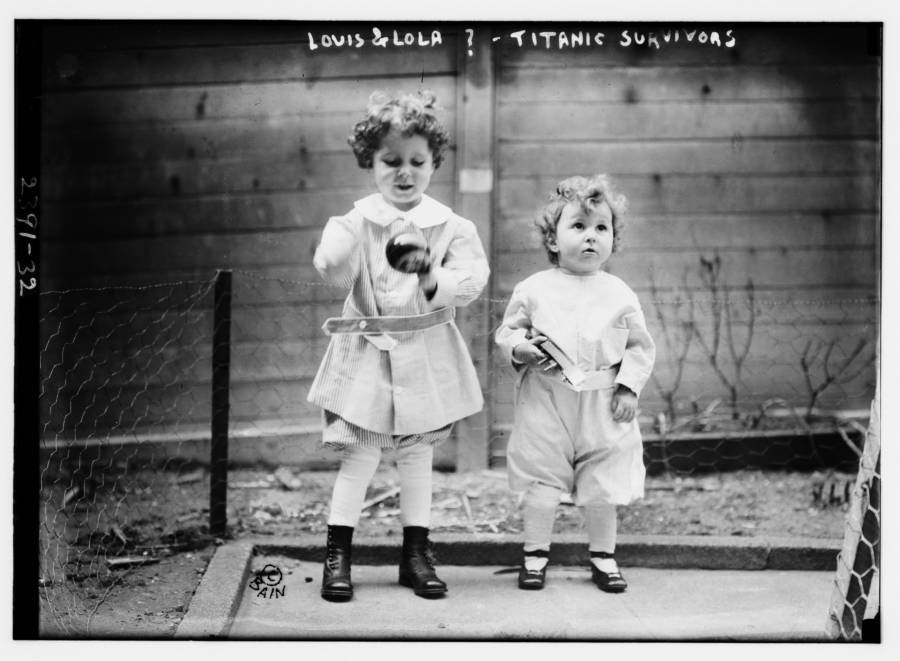
Wikimedia CommonsThe Navratil brothers, still unidentified, in New York after the sinking of the Titanic. April 1912.
Those were Michel Navratil’s last words. Though he died in the disaster, his sons survived. They spoke no English and might have been in serious trouble in New York, but a friendly French-speaking woman who also survived took them in and cared for them.
The publicity surrounding the Titanic’s sinking was what saved them: their photographs appeared in newspapers around the world. Their mother, home in France with no idea where her sons had disappeared to, spotted their photo in the morning paper.
On May 16, more than a month after the ship sank, she reunited with her boys in New York, and all three returned to France.
Michel Jr. would later recall the splendor of the Titanic and the childish sense of adventure he felt while getting into the lifeboat. Only when he grew older did he realize what had been at stake that night and how many had been left behind.
The post 12 Titanic Survivors Whose Stories Reveal The Tragedy’s True Scope appeared first on All That's Interesting.

Mark McDermott/YouTubeOxana Malaya spent nearly five years living in a kennel with stray dogs.
On one bitterly cold night in the 1980s, a three-year-old Ukrainian girl named Oxana Malaya was left out overnight by her neglectful alcoholic parents.
Desperate for warmth and shelter, she followed her dog Naida into her family’s dog kennel — and stayed there for nearly five years.
During this time, she lived with a pack of strays and picked up a number of dog-like behaviors. By the time authorities finally found her, she fully behaved like a dog, crawling around on all fours, barking, and sleeping on the floor.
Oxana Malaya’s Life With The Dogs
Oksana Oleksandrivna Malaya, or Oxana Malaya, was born on November 4, 1983. She grew up in poverty in Nova Blagovishchenka, Ukraine. Her parents, who struggled with alcoholism, ignored her for most of her childhood.
“Mum had too many kids,” Oxana later told 60 Minutes, according to The U.S. Sun. “We didn’t have enough beds.”
So when she got locked out of the house one night, that’s where she stayed. She soon joined a pack of local strays, surviving on raw meat and scraps. She gradually lost all ability to speak, instead communicating in barks and growls.
“I would talk to them they would bark and I would repeat it,” she said. “That was our way of communication.”
Her unusual living situation went unnoticed for nearly five years. It wasn’t until Oxana barked at a neighbor that anyone suspected anything was wrong.
How Oxana Malaya Was Finally Rescued
When authorities finally found Oxana Malaya, the pack of dogs had come to view her as one of their own. They were so protective of Oxana that they wouldn’t let the police get anywhere near her. Officers had to lure the dogs away with food so they could take her away.
Oxana was taken to a children’s home, where she was given years of intense, specialized therapy and education.
“She was more like a little dog than a human child,” the director of the institute said in an interview with 60 Minutes. “She used to show her tongue when she saw water and she used to eat with her tongue and not her hands.”
Despite not speaking any human language until she was almost eight years old, she picked up language and other basic skills fairly quickly.
Still, her doctors said it was unlikely she will ever be completely rehabilitated. Even though Oxana is now over 40 years old, researchers still consider her level of development and intellectual capacity to be comparable to that of a six-year-old.

Mark McDermott/YouTubeBy the time authorities found seven-year-old Oxana Malaya, she behaved like a dog.
Today, Oxana Malaya lives in a special care home, where she spends most of her time looking after animals. Despite her progress, she says she sometimes reverts back to dog-like behavior.
“When I feel lonely… I crawl on all fours. This is how lonely I feel,” she said, according to The Sun. “Because I have nobody, I spend my time with dogs, I go for walks and do anything I want to. Nobody notices that I walk on all fours.”
Nature Versus Nurture
Oxana Malaya’s condition furthers the scientific debate about “nature versus nurture” when it comes to how childhood development.
“Nature,” in the context of this debate, refers to a person’s innate being, predetermined by factors like genetics. “Nurture,” on the other hand, means environmental factors during a child’s development, such as social interaction, childhood experiences, and whether or not basic needs are met.
Personality and behavioral traits lie at the center of the nature versus nurture debate. For instance, are children who are aggressive or grow up to commit violent crimes born that way, or are their violent tendencies the result of the way they were raised?
Scientists have come to somewhat of a consensus that both nature and nurture play important roles in shaping personality. But the question still remains: which is the most influential?

Mark McDermott/YouTubeAfter intensive therapy, Oxana Malaya developed language skills and learned to walk upright.
Oxana Malaya’s case certainly indicates that nurture has a profound influence on a child. The fact that she developed doglike behaviors — complete with canine appetites, habits, and vocalizations — emphasized the importance of socialization in shaping one’s personality.
In recent years, research in the field of epigenetics, or the study of how environmental factors change the way genes function, has lended support to the theory of “nature through nurture,” which suggests that traits have both inherent genetic and environmental influences.
This is seen commonly among cases of extreme emotional distress, mental illness, or personality disorders. A prominent example is psychopathy, which is often inherent in a person’s genetics but gets triggered by intensely negative environmental factors.
“Epigenetic stressors during early childhood can make certain genetic traits like the hallmarks of psychopathy turn against someone in a bad way,” writes Dr. Caroline Leaf. “The cortisol from abuse, trauma, or being abandoned can shape how they interact with others by affecting the development of their ability to socialize.”
‘Feral’ Children And Their Rehabilitation Into A Normal Life
Sadly, Oxana Malaya is far from the only child who suffered this kind of parental abandonment or neglect.
In Russia in 2008, a seven-year-old boy named Vanya Yudin was rescued from his mother’s home when it was discovered that she had been raising him as a pet bird. He could only communicate through chirps, and was sent to a psychological care center for rehabilitation.
“[His mother] had her own domestic birds and fed wild ones. [She] neither beat him nor left him without food. She just never talked to him. It was all the birds that communicated with the boy and taught him birds’ language,” the Russian newspaper Pravda reported, according to the Daily Mail. “He just chirps and when realizing that he is not understood, starts to wave hands in the way birds winnow wings.”
In another case in 1970, a girl named “Genie” Wiley was brought to a children’s hospital in Los Angeles, where doctors said she was “the most profoundly damaged child they had ever seen.”
Her father, Clark Wiley, had slipped into a state of rage and depression after his mother was killed by a drunk driver, and he locked Genie in a tiny bedroom when she was just 20 months old. For most of her childhood, she was restrained in a homemade straitjacket and always harnessed to either a toilet seat or a wire mesh-covered crib.
Genie’s mother, Irene, finally fled from Clark after a decade of abuse, alerting welfare officers to Genie’s condition. When they found her, she weighed under 60 pounds, and while she at first appeared no older than six or seven, she was soon determined to be 13 years old. She was sent to a children’s hospital, and is believed to still be under state care today.
Children like these who have been deprived of human contact from a young age are commonly referred to as feral children. These children often have incredible difficulties reintegrating into society, as they lack socialization and language skills.
While many feral children, such as Oxana Malaya, can regain these skills to some degree, Susan Curtiss, a linguistics professor who studied and befriended Genie, said that the window for linguistic ability seems to close when a child is between five and 10 years old. After that, some communication skills and vocabulary can be gained, but one’s understanding of grammar and ability to communicate in sentences is likely past the point of no return.
“Does language make us human? That’s a tough question,” Curtiss told The Guardian. “It’s possible to know very little language and still be fully human, to love, form relationships, and engage with the world. Genie definitely engaged with the world.”
After learning about Oxana Malaya, the girl who was raised by dogs, read about the real-life feral child who may have inspired “The Jungle Book.” Then, discover the heartwarming stories behind some of the world’s most famous dogs.
The post The Heartbreaking Story Of Oxana Malaya, The Feral Child Who Lived In A Dog Kennel appeared first on All That's Interesting.
Vlado Taneski, the Macedonian serial killer.
For 20 years, Vlado Taneski was a journalist in the small town of Kičevo, Macedonia, covering topics like community news and municipal affairs. But then, in 2005, he got a big story. A woman had gone missing, a local cleaner. Her body was found a few weeks later, wrapped in plastic bags, and investigators determined that she’d been raped before her murder. Taneski covered the story, and received praise for his engaging, informative articles.
He went on to write about the murders of two other women, but by 2008, investigators had started to grow suspicious. Taneski’s articles were filled with details that only the killer could know. And, looking back, investigators realized that he’d pitched articles about the murders surprisingly quickly.
To their horror, they soon realized that Vlado Taneski knew so much about the murders because he was the killer. The journalist was arrested for the crimes, but died by suicide in prison before he could go to trial.
This is his disturbing story.
The Quiet Life Of A ‘Gentle’ Journalist
Born in 1952, Vlado Taneski grew up in Kičevo, where he purportedly had a strained relationship with his mother, a local cleaner. Their relationship soured even further in 1990, when Taneski’s father died by suicide.
Still, Taneski lived a fairly normal life. He married and had two children, and his ex-wife later described their relationship as an “ideal marriage.” She stated that he had always been “quiet” and “gentle,” though she had observed the deep resentment he felt toward his mother.
Zero/Wikimedia CommonsThe small town of Kičevo, Macedonia, where Vlado Taneski committed at least three murders.
“The only time I ever saw him get aggressive was when we were living with his parents,” Taneski’s ex-wife told a local TV station.
Meanwhile, he established a career as a journalist in Kičevo. Taneski wrote for local papers Nova Makedonija and Utrinski Vesnik, mostly covering the day-to-day news of the town, subjects like education and municipal affairs.
This all changed in 2005.
How Vlado Taneski Reported On His Own Murders
In late 2004, a 64-year-old woman named Mitra Simjanoska vanished. Then, in January 2005, her body was discovered wrapped in a plastic bag. Simjanoska had been brutally tortured, raped, and strangled — and Vlado Taneski began to report on the murder investigation.
Over the next three years, two more women vanished: 56-year-old Ljubica Licoska, who disappeared in November 2007, and whose body was found in February 2008, and 65-year-old Zivana Temelkoska, who disappeared in May 2008, and was found roughly a week later. Like Simjanoska, Licoska and Temelkoska had been raped and murdered, then wrapped in plastic and dumped around Kičevo. And all the murders were covered by Taneski.
Police HandoutVlado Taneski wrapped his victims in plastic bags before he disposed of their bodies.
Indeed, Vlado Taneski seemed to have a special intuition when it came to the string of murders. He was able to report about them in detail, and when Temelkoska’s body was found in May 2008, he showed surprising speed in pitching the news of her murder to Nova Makedonija.
Yet those who worked with him had little inkling that something was wrong.
“He was very quietly spoken but also very persuasive,” Goce Trpkovski, a reporter at Nova Makedonija, told The Guardian in 2008.
A crime reporter who worked with Taneski, Ognen Cancarevik, seconded Trpkovski to The New York Times that same year. “He was a nice and educated guy who seemed completely normal,” Cancarevik said.
But while his colleagues didn’t suspect a thing, police began to question how Taneski had gotten his information.
The Arrest And Death Of Journalist-Murderer Vlado Taneski
As they investigated the murders of Simjanoska, Licoska, and Temelkoska, as well as a 78-year-old woman who went missing in 2003, local police read Vlado Taneski’s articles about the brutal crimes. And they began to notice that the journalist had surprisingly good information about details of the murders — details that only the killer would know.
“We read his stories and it made us suspicious,” police spokesman Ivo Kotevski told The New York Times. “He knew too much.”
In 2008, police were able to definitively tie Taneski to the murders. They found that his DNA matched semen found on the victims, and a search of his house turned up items which had belonged to the victims, as well as telephone cords similar to the one that had been used to strangle the women. They also found a large collection of pornographic material.
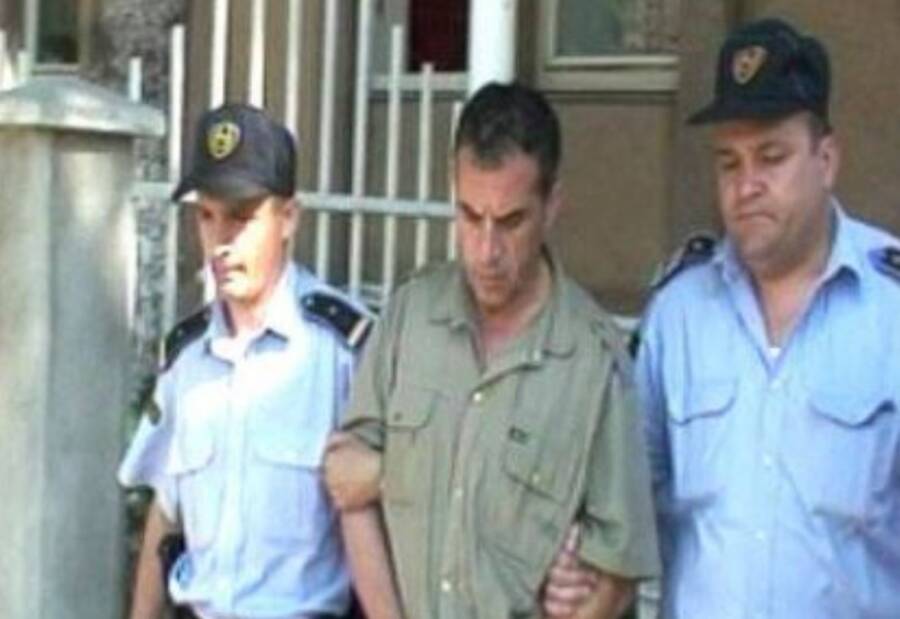
YouTubeVlado Taneski was arrested for the murders when his DNA was found on one of the victims.
Vlado Taneski was arrested on June 22, 2008.
Police had enough evidence to charge him for two of the murders. They were also hoping to charge him for the third murder, and to see if Taneski knew anything about the woman who had vanished in 2003. But before they could ask the journalist-murderer questions about his crimes, Taneski died by suicide by drowning himself in a bucket of water in his cell.
Though he never confessed, police were confident that Taneski was guilty.
“All these women were raped, molested and murdered in the most terrible way and we have very strong evidence that Taneski was responsible for all three,” Kotevski stated following his death. “In the end there were many things that pointed to him as a suspect and led us to file charges against him for two of the murders. We were close to charging him with a third murder, and hoped he would give us details of a fourth woman who disappeared in 2003 – because we believe he was involved in that case, too.”
But while Taneski’s involvement in the murders was obvious to police, his former newspaper colleagues were still shocked to learn that the journalist had killed the women he’d written about.
“When the police rang me to say, ‘Your reporter is the murderer,’ I could barely believe my ears,” Cancarevik, the crime reporter who worked with Taneski, exclaimed. “[Taneski] was so calm when he was discussing the murders. All of these women lived only meters away from his house.”
Why did Vlado Taneski turn from a mild-mannered journalist into a serial killer? While his suicide means that police will never know for sure, they’ve theorized that his violence had something to do with his resentment toward his mother. Before her death, Taneski’s mother was a cleaner, like his victims.
In fact, all his victims had known Taneski’s mother.
After learning about the crimes of journalist-murderer Vlado Taneski, read about the still-unsolved Cleveland Torso Murders. Then, read about Hans Schmidt, the only priest ever executed in the U.S.
The post The Horrific Story Of Vlado Taneski, The Serial Killer Journalist Who Reported On His Own Murders appeared first on All That's Interesting.
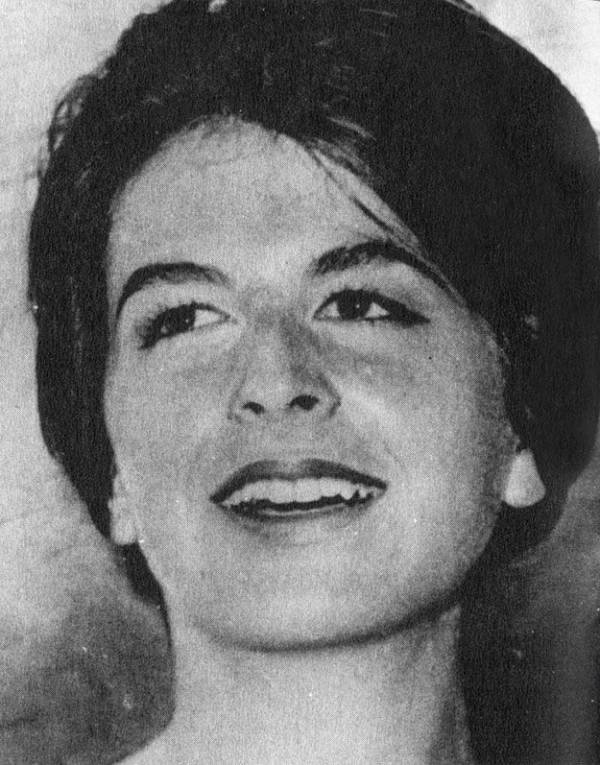
YouTubeAbigail Folger was the heiress to a massive coffee fortune.
Abigail Folger had a charmed life: She was an heiress to the Folgers Coffee fortune who was dating Polish actor and screenwriter Wojciech Frykowski and spending the summer of 1969 at the Beverly Hills home of Roman Polanski and Sharon Tate.
Tragically, it was this time in Los Angeles that led to Folger’s violent end. On August 9, 1969, four members of the Manson Family cult broke into Tate’s house and brutally slaughtered everyone inside. Folger was stabbed 28 times while trying to escape, and the police found her mutilated body crumpled in the yard the next morning.
The murder of a prominent heiress at the hands of the crazed followers of Charles Manson would surely have been enough to fill the front pages of newspapers across the country for weeks on its own. However, such was the fame of the other victims that Folger’s name was merely a footnote in the reports.
This is Abigail Folger’s full story, from her auspicious beginnings to her fateful final days at 10050 Cielo Drive.
The Early Life Of Coffee Heiress Abigail Folger
Abigail Anne Folger was born on August 11, 1943, to Ines Mejia and Peter Folger, the chairman of the Folger Coffee Company. She was raised in the San Francisco area, where she took piano lessons and was presented as a high-society debutante in 1961.
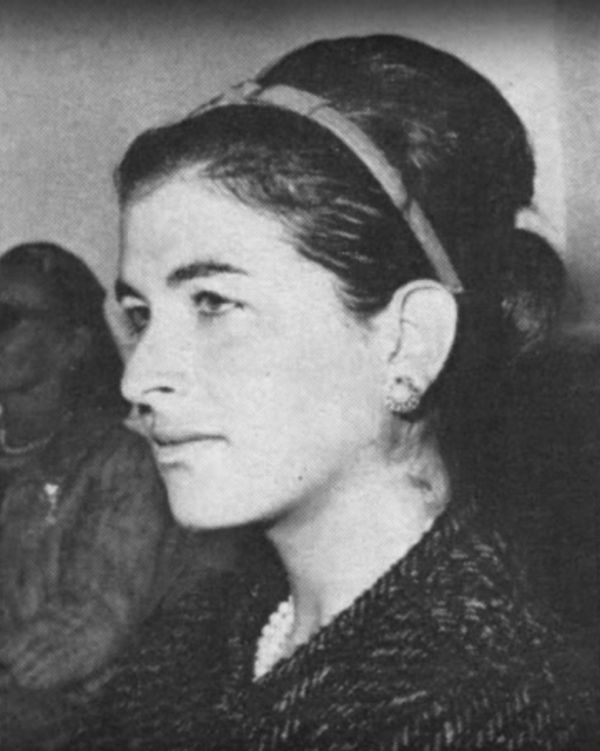
Find a GraveAbigail Folger was murdered just two days before her 26th birthday.
After graduating from Radcliffe College in Cambridge, Massachusetts, Folger went on to earn a master’s degree in art history from Harvard. She secured a job at an art museum in California in 1967, but she soon moved to New York City to work for a magazine publisher and later a bookstore.
It was in New York that she met Wojciech Frykowski in early 1968. He had recently arrived in the U.S. from Poland, where he’d tried to break into the filmmaking industry after befriending Roman Polanski. Folger and Frykowski quickly hit it off, and they decided to move to Los Angeles together just a few months into their relationship.
Back in the Golden State, Folger started volunteering with the welfare department, helping impoverished children, and supporting civil rights causes. Frykowski, hoping to make some more connections in Hollywood, briefly worked as a set constructor.
In the spring of 1969, Polanski asked Frykowski to housesit for a few months while he and Tate were in Europe working on separate films. He readily agreed, and he and Abigail Folger moved into 10050 Cielo Drive that April.
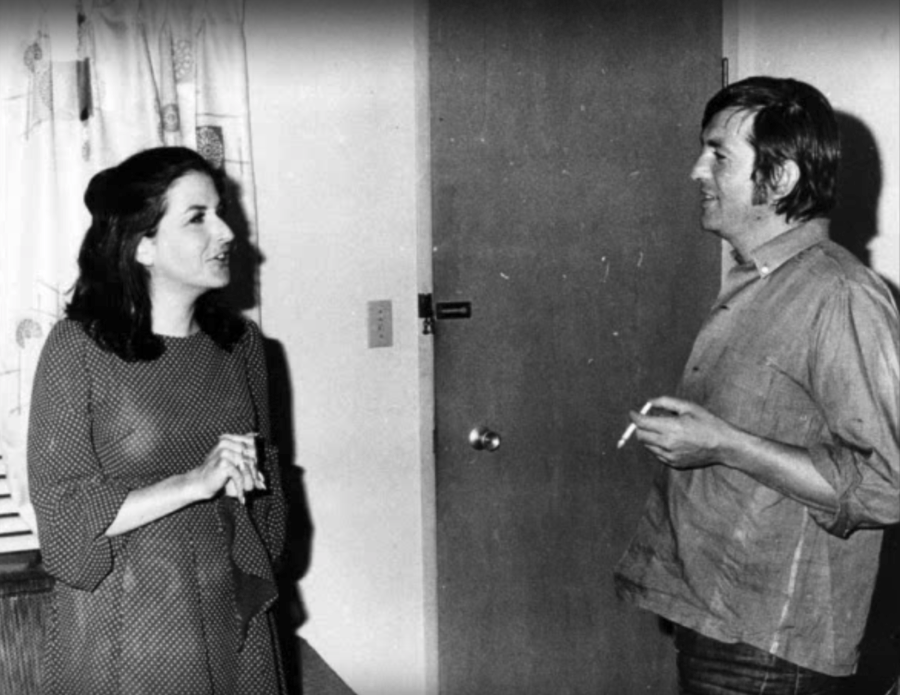
YouTubeAbigail Folger and Wojciech Frykowski were staying at the Los Angeles home of Roman Polanski and Sharon Tate at the time of the murders.
Over the summer, the couple’s relationship began to break down. They were both using drugs and arguing frequently — potentially about Folger’s money. In Helter Skelter: The True Story of the Manson Murders, prosecutor Vincent Bugliosi wrote, “Friends of Abigail Folger told the police that Frykowski had introduced her to drugs so as to keep her under his control… According to the police report: ‘He had no means of support and lived off Folger’s fortune.'”
Folger’s therapist thought that she was finally making plans to leave Frykowski. But she would never get the chance.
Abigail Folger’s Vicious Murder At The Hands Of The Manson Family
Sharon Tate returned to Los Angeles in late July 1969. She was eight months pregnant, and she asked Folger and Frykowski to continue staying with her until Roman Polanski returned from London the following month.
On August 8, the three of them met celebrity hair stylist Jay Sebring at a Mexican restaurant for dinner before returning to Tate’s house. Tate and Sebring stayed up chatting while Frykowski fell asleep on the couch. Folger spoke with her mother on the phone around 10 p.m. and then went to her bedroom to read.
Just after midnight, Folger glanced up to see a woman passing by her open door. She assumed the stranger had been invited over by Tate or Sebring, so she smiled and waved before turning her attention back to her book.
In reality, the woman was Susan Atkins, a member of the Manson Family cult. She had sneaked into the house alongside Tex Watson, Patricia Krenwinkel, and Linda Kasabian — and the four of them were on a mission to kill everyone inside.
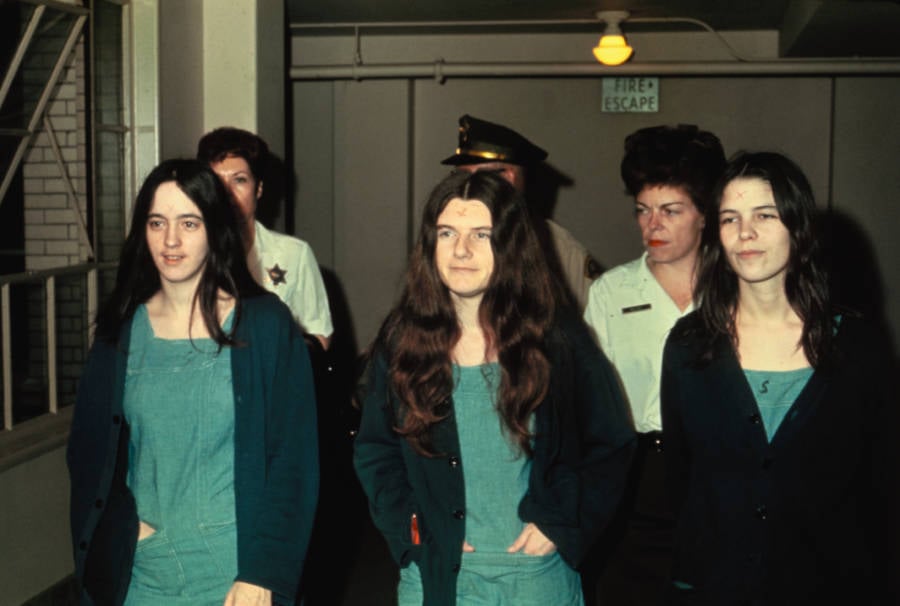
Bettmann/Getty ImagesLeft to right: Susan Atkins, Patricia Krenwinkel, and Leslie Van Houten, who was involved in the LaBianca murders the night after Abigail Folger’s death.
It’s still unclear why exactly the Manson Family targeted 10050 Cielo Drive. Prosecutors later claimed that Charles Manson had wanted to start a race war. Others believe that Manson chose the home because it had previously been rented by Terry Melcher, a producer who once rejected Manson’s music. Perhaps the cult leader didn’t realize that Melcher no longer lived there. Perhaps he didn’t care.
Regardless, the Manson Family arrived at Tate’s house in the early morning hours of August 9, 1969, with a taste for blood. Frykowski was startled awake by Tex Watson kicking him in the head and telling him, “I’m the Devil, and I’m here to do the Devil’s business.”
Meanwhile, Atkins returned to Abigail Folger’s room and ordered her into the living room. Once Folger, Frykowski, Sebring, and Tate were all together, the intruders tried to tie them up, but chaos erupted. Watson shot Sebring, Frykowski broke free, and Folger tried to escape down a hallway.
She made it onto the lawn before Patricia Krenwinkel caught up with her and tackled her to the ground. Tex Watson soon joined her, and the two cult members stabbed Folger 28 times. A New York Times article from 1970 described Folger’s stab wounds: “Four to the face, one in the left ear, five in the neck, six in the chest, two in the stomach, two in the back, one in the right arm, one in the right shoulder, one in the left arm, two on the left thigh, one on the right hand, and two on the wrist.”
Police HandoutAbigail Folger was stabbed to death in Sharon Tate’s yard.
Dr. Thomas Noguchi, the Los Angeles County coroner who examined the bodies of the victims of the Manson murders, stated that there were “five or six stab wounds that should be considered fatal stab wounds.”
Folger reportedly begged for her life as Krenwinkel and Watson attacked her, screaming, “I give up, you’ve got me,” and, “I’m already dead.” The killers left her corpse sprawled on the grass, where Polanski and Tate’s maid, Winifred Chapman, spotted it when she arrived for work around 9:15 a.m.
The police raced to the scene, but by then, Abigail Folger was long gone.
Tracking Down The Manson Family Murderers
Investigators arrived to find that 10050 Cielo Drive had been turned into a human slaughterhouse. Steven Parent, an 18-year-old who had been driving away after visiting the property’s caretaker when the Manson Family arrived, was slumped over in the front seat of his car with four bullet wounds in his torso.
The word “PIG” was scrawled on the front door in Sharon Tate’s blood. The actress had been stabbed 16 times and hanged with a nylon rope — with Sebring tied to the other end.
On the lawn, Abigail Folger was lying where she’d fallen. Her nightgown was so soaked in blood that it was hard to tell that it had once been white.
Frykowski’s body was about 50 feet away. He’d been stabbed 51 times and beaten in the head with the butt of a gun. An investigator on the scene told Los Angeles Magazine in 2009, “In the space of 10 minutes I saw all five bodies. I’d worked homicide for five years and seen a lot of violence. This was the worst.”
It would be months before the police were finally able to catch the perpetrators, who had gone on to kill another couple, Leno and Rosemary LaBianca, the night after the murders at 10050 Cielo Drive.
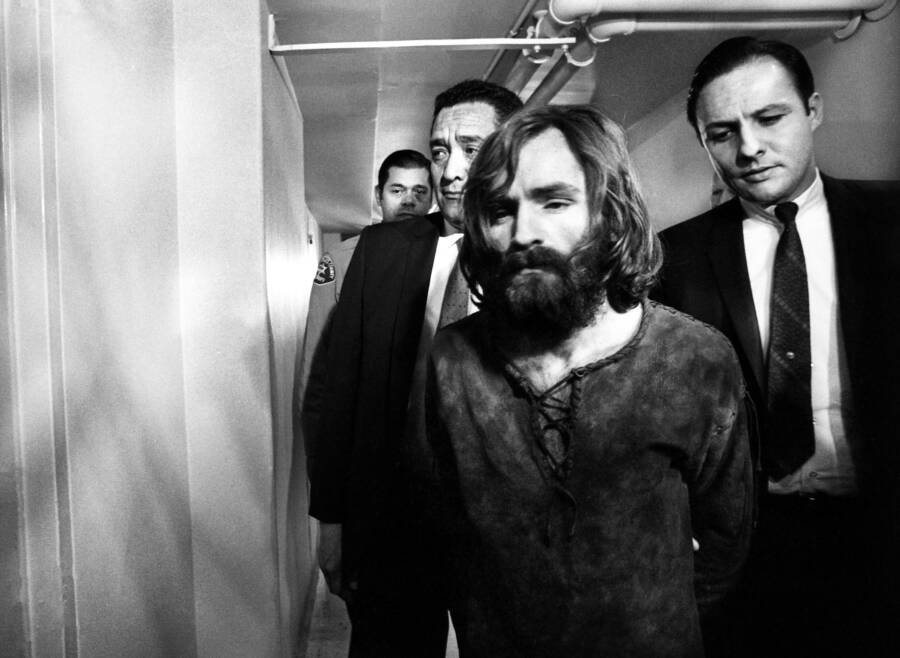
Bettmann/Contributor/Getty ImagesCharles Manson leaves the courtroom in December 1969.
Finally, that October, officers raided Spahn Ranch, the Manson Family’s headquarters. Several cult members were arrested for auto theft and possession of stolen property, including Susan Atkins, who later bragged to one of her cellmates about her involvement in the Tate murders. The women, in turn, informed the police, securing the conviction and imprisonment of both the culprits who carried out the slayings and Charles Manson himself.
As for Abigail Folger, her body was returned to San Francisco following the coroner’s examination, and her funeral was held on August 13, 1969. She had been killed just two days before her 26th birthday. In another world, her name would only be associated with Folgers coffee — but it is now forever entwined with the grisly Manson Family murders.
After reading about the tragic fate of Abigail Folger, learn about Manson Family member and would-be presidential assassin Squeaky Fromme. Then, check out the sordid true story of the haunted Cecil Hotel in Los Angeles.
The post Abigail Folger, The Heir To Folgers Coffee Who Was Brutally Murdered By The Manson Family appeared first on All That's Interesting.

A recreation of how the SS Ourang Medan might have looked.
In the 1940s, a bizarre story began circulating in newspapers around the world. A ship called the SS Ourang Medan had reportedly exploded near Indonesia after its entire crew died under mysterious circumstances.
Different versions of the tale varied slightly, with one even claiming that a lone survivor had washed up on the shore of the Marshall Islands. And with each version of the story came new theories about what had really happened to the ship.
Some said the vessel was attacked by pirates. Others claimed it was smuggling dangerous chemicals that suffocated the crew and caused the ship to explode. And a few conspiracy theorists even believed the incident had supernatural causes.
Since it first appeared, the legend of the Ourang Medan has been repeated again and again — but did the ship ever really exist? And if so, why are there no records of it?
The Eerie Legend Of The SS Ourang Medan
The story of the SS Ourang Medan differs depending on the source, but one of the most popular versions of the tale states that the ship was traveling through the Strait of Malacca at some point during the 1940s.
Another ship that was nearby picked up a strange message coming from the Ourang Medan: “We float. All officers, including the captain, dead in chartroom and on the bridge. Probably whole of crew dead… I die.”
An American vessel called the Silver Star set out to investigate. When the ship came across the Ourang Medan, a group of men boarded it to find a grisly sight awaiting them.
The entire crew was dead, “teeth bared, with their upturned faces to the sun, staring, as if in fear…” Even the ship’s dog had died mid-snarl. Strangely, however, none of the bodies showed any signs of physical injuries.
The crew of the Silver Star was about to tow the SS Ourang Medan to port when they noticed smoke billowing from the vessel. The rescuers made it to safety just before the ship exploded. The Ourang Medan then sank to the bottom of the sea, never to be seen again.
Many versions of the legend end there. However, one report claimed there was a lone survivor who provided more details about the ship’s fate.
A Survivor Tells His Chilling Story
As reported by The Shipyard Blog, one account of the SS Ourang Medan spoke of a man named Jerry Rabbit.
Rabbit reportedly washed up on the shore of the Marshall Islands in a lifeboat with six dead crew members ten days after the Ourang Medan exploded. He made contact with a missionary and told him a peculiar tale of survival.
Rabbit said that he had joined the crew of the Ourang Medan in Shanghai. He claimed that 15,000 crates of unknown cargo were loaded onto the vessel before it set off for Costa Rica. It was only then that Rabbit realized he had joined a smuggling operation.

Wikimedia CommonsShips on the Strait of Malacca in 2017.
When Rabbit heard his fellow crewmen complaining of stomach cramps, he grew suspicious. And when a crew member died, he knew he had to find out what the ship was carrying. He peeked at the vessel’s logbook and discovered that the crates from China held sulfuric acid, potassium cyanide, and nitroglycerin. Rabbit suspected that the sulfuric acid was leaking, creating a gas that was slowly suffocating the crew.
As more men started dropping dead, Rabbit and six others sneaked away in a lifeboat. None of his crewmates had survived the journey, and Rabbit himself died soon after repeating his strange tale.
Aside from one story printed in a 1940s newspaper, there is no record of Jerry Rabbit’s existence. In fact, there is no record of a ship by the name of SS Ourang Medan at all.
Did The SS Ourang Medan Ever Exist?
According to Lloyd’s Register of Ships, which has kept a record of every merchant ship since 1764, no ship by the name of SS Ourang Medan was ever documented. And there are no official incident reports about the ship’s sinking.
What’s more, no evidence of the wreck was ever found in the Strait of Malacca or elsewhere.
A German researcher named Professor Theodor Siersdorfer once found a 1953 publication titled The Death Ship in the South Seas that offered evidence about the incident.
The book suggested that the Ourang Medan was indeed carrying potassium cyanide and nitroglycerine, which caused it to explode. If the ship sank either during or directly after World War II, the secrecy surrounding the vessel would make sense. Those materials were sensitive items to be transporting at the time.
However, one reported account of the ship does not mean that it truly existed.
As Michael East, a history and true crime writer, told How Stuff Works, “There is no shipping record of a vessel under that name. Nobody ever came forward to say they knew the ship or had served on her. Equally, the inconsistent dates constantly stand out, as does the changing location.”

Flickr/Alan SzalwinskiThe legend of the ghost ship SS Ourang Medan still haunts mariners today.
Indeed, the fact that so many versions of the story of the SS Ourang Medan have appeared over the years points to the tale being more fictional than truthful.
The first newspaper account reportedly appeared in 1940 in Britain. However, it didn’t make its way to the U.S. until around 1948, when news of the Ourang Medan was printed in reputable publications such as The San Francisco Examiner. Why did the stories emerge eight years apart? And what caused many of the details in them to differ so drastically?
Today, there are still many questions that remain unanswered about the mystery of the SS Ourang Medan — so many, in fact, that the ship’s tale has been relegated almost completely to the realm of legend.
After learning about the SS Ourang Medan, read about the infamous ghost ship Mary Celeste. Then, go inside the mystery of the Flying Dutchman.
The post The Story Of The SS Ourang Medan, The Ghost Ship Whose Entire Crew Died With Faces Frozen In Terror appeared first on All That's Interesting.

Steve SnowdenThe self-proclaimed psychic Sylvia Browne, pictured during an interview in her later years.
For most people, television psychics are obvious charlatans who manipulate psychological sleight of hand. The power of suggestion and the ability to lure someone along through a threadbare detail are certainly impressive, but not supernatural.
In Sylvia Browne’s case, however, fame and credibility walked hand in hand for a while — at least for her devoted listeners, viewers, and readers. Dubbed “America’s most controversial psychic” by The Guardian’s Jon Ronson, the supposed medium entertained (or fooled) the public for decades.
She was born Sylvia Shoemaker on Oct. 19, 1936, in Kansas City, Missouri. The Society of Novus Spiritus — a Gnostic Christian organization she founded in 1986 — claims she received a graduate degree in English at an unidentified school and worked as a teacher for 18 years before training as a “trance medium.”
YouTubeA publicity still of Sylvia Browne.
Browne’s niche was telling the distraught parents of missing children what had happened to them. The Montel Williams Show would host and facilitate these sessions, in which Browne essentially fabricated entire narratives surrounding missing, and possibly dead, children.
“Your child is dead,” Browne would sometimes say. Alternatively, she told one pair of parents, “Your child was sold into slavery in Japan.” Her self-proclaimed ability to see into the past, future, and afterlife ran the gamut.
Inside Sylvia Browne’s Shockingly Wrong Visions
According to The New York Times, Sylvia Browne claimed she was able to glimpse back centuries into the past. She said she could speak to the dead and that her abilities helped various police departments solve numerous murders and locate suspects previously unknown to authorities.
When missing congressional intern Chandra Levy was found dead in Washington’s Rock Creek Park in May 2002, Browne quickly took credit for predicting the discovery. But police had already been searching the area since May 2001 — making it a fairly warranted bet to double down on.
In 2004, Browne directly told the mother of Ohio kidnapping victim Amanda Berry that her daughter was dead. There was a major issue with the psychic’s supposed ability to know this, though, because about a decade later, a very much alive Berry escaped from her abductor Ariel Castro.
After Berry freed herself and alerted police by using a neighbor’s phone, she was devastated to learn that her mother had died of heart failure while she was in captivity. Some partly blamed Browne for Berry’s mother’s demise, with one person claiming, “She literally died of a broken heart.”
This wasn’t an isolated case, either. Browne told parents of missing children supposed “facts” like this far more than once. She’d often tell them their child was either missing — which, when parents don’t know where their kids are, is a literal fact — or deceased.
Sometimes, Browne would tell these parents specific places where their dead children were buried. She was mostly wrong.
One time, when another kidnapping victim turned up alive after Browne predicted he had died, Browne justified her wrong vision by saying, “I think what I did was I got my wires crossed. There was a blonde and two boys who are dead. I think I picked up the wrong kid.”
When Browne wasn’t peddling fabricated narratives about missing children on Larry King Live and The Montel Williams Show, she made her money from fans who spent $700 per 30 minutes to ask her questions over the phone.
That’s $23 per minute.
Sylvia Browne’s Infamous Prediction About Opal Jo Jennings
Perhaps Sylvia Browne’s most shocking choice as a psychic was to tell a saddened grandmother that her granddaughter was sold into slavery in Japan. Browne made this bizarre statement after six-year-old Opal Jo Jennings went missing in 1999, and the girl’s loved ones became desperate for answers.
Opal had been kidnapped from her grandmother’s front yard in Texas in March 1999. She was playing with her cousin when suddenly, a man forcibly grabbed her and threw her into his truck. He hit her as she screamed and drove off before anyone could rescue her. When a month passed with no answers, her grandmother went on Montel’s show in the hopes that Browne could help.
“This is too much for my family and me to handle,” she said. “We want her back. I need to know where Opal is. I can’t stand this. I need your help, Sylvia. Where is Opal? Where is she?”
The moment came for Browne to provide arguably the most unexpected and preposterous prediction of her entire career.
“She’s not dead,” said Browne. “But what bothers me — now I’ve never heard of this before — but she was taken and put into some kind of a slavery thing and taken into Japan. The place is Kukouro. So she was taken and put on some kind of a boat or a plane and taken into white slavery.”
The crowd of The Montel Williams Show was completely floored, as evidenced by the moment of baffled silence that followed.
Of course, this didn’t help Opal’s grandmother. Now she had a stranger’s opinion that her kidnapped granddaughter was “put into some kind of a slavery thing,” and not much else to go on.
Wikimedia CommonsAuthor Ben Radford at a Sylvia Browne protest during the annual “The Amazing Meeting 2012” conference of skeptics.
As usual, Browne’s prediction was not only baseless and likely damaging to the woman’s mental health, but also entirely incorrect. Opal was eventually found dead and buried in Fort Worth, Texas. The pathologist concluded that she was killed the same night that she was abducted.
Opal wasn’t put on a boat, nor a plane, nor forcibly taken to Japan, and she certainly did not experience white slavery. Browne simply made it up and fed the misinformation to a family in emotional and spiritual turmoil for televised adoration and a chance at even more fame (or infamy).
The motive was obvious: money and the national spotlight. The moral basis to go through with this required a rare breed of egocentrism and greed. According to Browne’s FBI file, she certainly had plenty of it.
The Damning Evidence That Sylvia Browne Was A Charlatan
Debunking someone’s statements before the advent of the internet wasn’t as straightforward as it is now. When Sylvia Browne claimed to have worked with law enforcement on numerous cases, many people simply took her word for it.
“I remember when I was working on the Bundy case,” she told Montel Williams during a November 2004 appearance. According to The Skeptical Inquirer, which explored Browne’s FBI files through a standard Freedom of Information Act request, she did no such thing.
The Bureau had been investigating the supposed medium for fraud as her roster of books, media appearances, and CDs were raking in millions of dollars a year. Browne even charged the Thibodaux Police Department $400 for a psychic analysis of a murder case in 1997. Ultimately, her “work” had no impact on the police investigation whatsoever.
FBI/Public DomainOne of the many documents in Sylvia Browne’s FBI file.
She also said that the FBI wanted her testimony on the World Trade Center attacks of 1993. There is not a single piece of documentation from the agency to support that claim. The notion that she was a serial liar was further evidenced by her no contest plea with the State of California for “selling securities without a permit,” which she made on March 8, 1993. Notably, this case led to her becoming a convicted felon.
The Bureau itself labeled her a “self-proclaimed psychic,” and had investigated her Nirvana Foundation for Psychic research years earlier for “violations of federal law in applying for loans from federally insured financial institutions” for over $1 million.
The government was largely curious about the “fraudulent documents, including income tax returns and financial statements to enhance her net worth in making these loan applications.” The FBI claimed that she used “loan proceeds to support an extravagant lifestyle.”
Ultimately, the U.S. Attorney chose not to prosecute that part of the Bureau’s case, stating there was “insufficient evidence to indicate criminal intent.” The FBI subsequently ceased its investigation.
A Legacy Of Supposed Goodwill And Blatant Deceit
According to CNN, Sylvia Browne published over 50 books — 22 of which reached the New York Times Best Sellers list. She said that her supposed psychic abilities became apparent when she was a toddler and that it was a “very scary thing” for her to know when someone was going to die. Of course, her many incorrect predictions cast serious doubt on her “abilities” as time went on.
So how was she able to maintain such a large audience? Aside from her dramatic personality that seemed to be made for TV, she also made a number of statements about faith, confrontation of death, and general well-being that deeply resonated with people. It’s believed that her more benevolent statements, coupled with her memorable persona, inspired so many people to stick with her — and help make her a millionaire.
“If you’re afraid to die, you will not fully live,” she told her Facebook followers before she died on Nov. 20, 2013 at the age of 77 in a California hospital. “My one prayer every morning that has carried me through my life is, ‘Hi God, it’s me again,'” she wrote a few weeks later.
“It doesn’t matter how you pray,” she added. “It can be just simply talking to God. Remember, God knows your heart and soul.”
In the end, some fans may have felt that they benefited from Browne’s more generic advice to remain positive in the face of difficult moments. The parents of missing, kidnapped, or dead children, however, were irreparably traumatized by a woman — on national television — lying to their faces.
After learning about Sylvia Browne and how she made millions off of supposed psychic revelations, read about pseudoscientific cons that are somehow still legal in America. Then, go inside the real story of “The Conjuring” ghost hunters Ed and Lorraine Warren.
The post The Infamous Story Of Sylvia Browne, The Television Psychic Who Shared Her ‘Visions’ With Grieving Parents appeared first on All That's Interesting.

Robert Lender/Wikimedia CommonsThe Costa Concordia, a 114,000-ton cruise ship, was among the largest cruise ships built in Italy.
On Jan. 13, 2012, the Italian cruise ship Costa Concordia set out on what should have been a routine Mediterranean voyage. Thousands of people — families, couples, and retirees — boarded the massive vessel expecting a week of luxury at sea. Instead, the first day of the ship’s journey ended in a tragedy that no one could have imagined.
By the next morning, 32 people were dead, and thousands were stranded on a tiny Italian island. One of the largest cruise ships ever built lay on its side just offshore, slowly sinking into the water.
What had happened to the ship? The Costa Concordia disaster was ultimately a tale of poor decision making by its crew, which sadly cost dozens of human lives.
A Luxurious City At Sea
When the Costa Concordia entered service in 2006, it was one of the largest cruise ships ever constructed. The massive vessel stretched 952 feet long, weighed more than 114,000 tons, and could carry over 3,700 passengers alongside 1,100 crew members. It was thus far larger than the Titanic.
And the ship was not only large — it was luxurious. Inside, every imaginable comfort awaited guests, including swimming pools, a movie theater, bars and nightclubs, a casino, and a luxury spa. The ship felt like a city at sea.

Robert Lender/Wikimedia CommonsInside the Costa Concordia’s dining room, where many passengers were eating dinner when the ship lost power and began listing.
The first five years of its service passed largely without incident — aside from when high winds pushed the ship against a dock in Palermo, Italy, in 2008, damaging its bow. As such, the Costa Concordia’s planned cruise in January 2012 was expected to proceed as normal.
The voyage was intended to be a seven-day Mediterranean cruise, leaving from Rome’s port of Civitavecchia, with stops in Italy, France, and Spain. For the 3,206 passengers onboard, the first night of the cruise was supposed to be the beginning of a carefree vacation.
But it would end up being one of the worst nights of their lives.
How The Costa Concordia Disaster Began
Just after 7:00 p.m., the Costa Concordia left Civitavecchia. A few hours later, it sailed toward Giglio Island, a small rocky outcrop off the Tuscan coast. Instead of staying on its planned course, the ship moved closer to shore.
The ship’s captain, Francesco Schettino, had ordered a sail-by salute, a tradition meant to impress locals by passing near land. He had performed similar salutes before without incident, although Schettino would later be accused of ordering this particular salute in order to impress his girlfriend.
At 9:40 p.m., Schettino called his former mentor, Senior Captain Mario Palombo, who lived on Giglio. He told Palombo the ship would sound its horn as a tribute while passing by. Palombo said he wasn’t on the island that night, and according to Vanity Fair, advised Schettino to only quickly honk his horn and to stay far from the shore. Moments later, disaster struck.
YouTubeFrancesco Schettino, the captain of the Costa Concordia.
At 9:45 p.m., the Costa Concordia struck a reef known as the Scole Rocks. The collision tore a huge gash along the port side, measuring 115 to 174 feet, flooding the engine rooms and cutting power to the ship.
Inside, the lights went dark. Passengers heard banging noises and the sound of the ship groaning, but not everyone immediately realized that something was wrong. According to CNN, when the ship’s lights went out during a magic show, some passengers thought it was just part of the act. But then the ship began to list sharply to the starboard side. In the dining areas, dishes, tables, and people tumbled down. Elsewhere, in an ironic twist, the the Oscar-winning song “My Heart Will Go On,” from the film Titanic played.
Fifteen minutes after the initial collision, Schettino called Roberto Ferrarini, the ship’s crisis coordinator. He initially downplayed the damage to the ship, saying that just one compartment was flooded. Over two subsequent conversations with Ferrarina, Schettino admitted that two compartments were flooded (in fact five were flooded).
“I have made a mess and practically the whole ship is flooding,” Schettino told Ferrarini. “What should I say to the media?… To the port authorities I have said that we had… a blackout.”
Panic On The Costa Concordia As The Ship Sank
Schettino had called Ferrarini, but the first calls to the Italian Search and Rescue Authority did not come from the ship, but from the shore — a passenger’s mother had called the police after learning that the passengers were putting on life jackets. Search and Rescue then called Schettino.
But the captain didn’t initially reveal the full truth of the Costa Concordia disaster. It wasn’t until 10:22 p.m. that he admitted that the ship had had a “failure” and needed help. And at 10:33 p.m., passengers were ordered to make their way to muster stations and await instructions.

YouTube The port side of the Costa Concordia after capsizing.
However, by this point, that was easier said than done. The ship had tilted more than 30 degrees, making navigating its labyrinth of corridors extremely difficult. What’s more, some passengers claimed that they never heard the instructions to proceed to the lifeboats though, at 10:54 p.m., Schettino had given the order to abandon ship.
As the Costa Concordia tilted more steeply, passengers were forced to climb slanted corridors to reach lifeboats. Some jumped into the cold water and attempted to swim toward shore, more than 300 feet away. Those who waited to get onto a lifeboat found themselves facing utter chaos as the passengers elbowed each other to escape the ship.
Meanwhile, by 11:19 p.m., Schettino had abandoned the vessel.
He later claimed that he had fallen into a lifeboat because of the listing of the ship, but a coast guard member who encountered him angrily told the captain: “Vada a bordo, cazzo!” — “Get back on board!”
Meanwhile, Giglio Island’s deputy mayor, Mario Pellegrini, had raced toward the scene from shore to help. To his shock, he couldn’t find any senior officers on board — just one “young, a second-class officer,” as he later told the BBC. The two worked together to navigate passengers toward the lifeboats and, by 12:15 a.m., almost everyone from the Costa Concordia’s starboard side had escaped the vessel. But then the ship began to roll.

Rvongher/Wikimedia CommonsThe Costa Concordia rests on its side near Giglio Island after running aground on January 13, 2012.
“I couldn’t understand what was going on, the movement was so violent,” Pellegrini told Vanity Fair. “Suddenly it was difficult to stand. It was very disorienting. If you took a step forward, you fell. You couldn’t tell which way was up or down. You couldn’t walk… That’s when the panic hit, and the electricity went out as well. Lights winking out all over.”
The movement of the ship caused seawater to surge down new corridors, trapping passengers throughout the ship. Hundreds of people were still onboard, and Pellegrini and the second-class officer worked until dawn to rescue who they could.
But not everyone could be saved. Thirty-two people lost their lives in the Costa Concordia disaster, both on the ship and in the cold water surrounding it. The last victim’s body was not recovered until November 2014.
The Legal Aftermath Of The Maritime Disaster
In the aftermath of the Costa Concordia disaster, many of the ship’s crew were convicted for their role in the sinking, and several were sentenced to time in prison. Captain Francesco Schettino was found guilty of manslaughter, causing a shipwreck, abandoning ship before passengers and crew were evacuated, and lying to authorities about the disaster. In 2015, he was sentenced to 16 years in prison.
Meanwhile, the wreck of the Costa Concordia sat in the shallow water off the coast of Giglio Island for more than two years. In September 2013, the ship was righted during a massive 19-hour operation.

Rvongher/Wikimedia CommonsThe decaying Costa Concordia at Genoa after the disaster that killed 32 people.
By July 2014, the wreck was towed to Genoa for dismantling, and scraping of the ship was completed in 2017. The operation cost nearly $2 billion — more than three times the ship’s original construction price.
But the Costa Concordia disaster cost far more than that. Thirty-two people lost their lives, and thousands were traumatized. Most tragic of all, the Costa Concordia did not sink because of rough conditions at sea, but because of the poor decisions made on its bridge that night.
Crew member Roberto Bosio, who helped dozens of women and children into lifeboats and is believed to have helped coordinate much of the rescue effort throughout the night, said of Captain Schettino: “Only a disgraceful man would have left all those passengers on board. It was the most horrible experience of my life. A tragedy, a heartache that I will carry with me forever.”
Now that you’ve read about the Costa Concordia, read about how researchers found the USS Nevada after 72 years. Then, learn the story of the SS Cotopaxi, the ship that vanished from the Bermuda Triangle in 1925.
The post The Shocking Story Of The Costa Concordia, The Luxury Cruise Ship That Catastrophically Capsized Near Italy appeared first on All That's Interesting.
When Columbine High School seniors Dylan Klebold and Eric Harris murdered 12 students, one teacher, and ultimately themselves in an April 20, 1999 shooting in Littleton, Colorado, the media initially described them as victims of bullying and outcasts thirsty for revenge.
They were allegedly members of a goth subculture known as the Trench Coat Mafia that fueled their hatred for mainstream society.

Jefferson County Sheriff’s OfficeThe media painted Columbine shooters Eric Harris and Dylan Klebold as bullied members of an outcast group known as the Trench Coat Mafia, but it wasn’t true.
But this narrative has since been proven false.
“Most of the initial reporting was wrong,” explained Dave Cullen, a journalist who spent a decade researching the school shooting and chronicled its aftermath. “We were so anxious to answer that burning question for you that we jumped to conclusions on tiny fragments of evidence in the first days, even hours.”
At the time, the Columbine High School massacre was the deadliest school shooting in the history of the United States. It changed everything from how the adults in the nation thought of their children to how first responders approached similar such high-risk crises and how parents thought about violence in the media.
As such, there was a scramble on behalf of the public and media alike to make sense of the seemingly senseless killing. But those media reports were wrought with contention and misunderstanding, and consequently, a large portion of the immediate coverage on the massacre was actually inaccurate, including the narrative of the Trench Coat Mafia.
Wikimedia CommonsEric Harris and Dylan Klebold in the Columbine cafeteria during the shooting on April 20, 1999.
But the colorful myths and erroneous details in the supposed story of the shooting since the initial coverage are now firmly in place. And as school shootings spike nationwide to unprecedented levels, it’s time to root out the truth behind the motives of Dylan Klebold and Eric Harris.
Indeed, “Understanding what happened can help us try to prevent these things from happening again in the future,” Kirsten Kreiling, president of the Columbine Memorial Foundation said. “If you don’t understand history, you are doomed to repeat it.”
The Mythic Trench Coat Mafia
In the aftermath of the Columbine shooting, Harris and Klebold were presented by the media not only as members of the Trench Coat Mafia but as victims of bullying by the more popular members of their high school. This was supposedly the reason why they responded with such violence. But in reality, Harris and Klebold were not victims. They weren’t out for revenge against jock bullies or an entire school that had ostracized them.
Through extensive communication with the local Jefferson County Sheriff’s office, the FBI, and students alike, Cullen revealed that the two shooters were actually socially accepted teenagers who weren’t bullied — but they certainly weren’t “normal” teenagers either.

Columbine.WikiaDylan Klebold (left) and Eric Harris. Circa 1998-1999.
It was claimed that Harris and Klebold were members of the Trench Coat Mafia, a school group initially reported by the media to perpetuate violence and described as a “sick Goth subculture.” It was said that the Trench Coat Mafia admired guns, Nazis, the military, and shock rock singer Marilyn Manson.
But the Trench Coat Mafia was really a school community of harmless computer gamers who wore black trench coats.
Moreover, Cullen’s conversations with students and an analysis of police documents uncovered that Harris and Klebold were not, in fact, a part of the Trench Coat Mafia. They did not appear in any of the group’s annual photos and members of the actual Trench Coat Mafia graduated years before Klebold and Harris.
Both Harris and Klebold had their own circle of friends, with the latter even attending the school prom with a date on his arm in a limousine filled with a dozen classmates days before the shooting. Klebold also assisted in student theatrical productions and was a computer assistant.
Harris was described by his parents as athletic and he too enjoyed computer programming. He was a member of a video production group with the school’s Rebel News Network and worked in the school’s computer labs as well, but wasn’t a member of the Trench Coat Mafia. His parents said he was content to be alone, but was by no means a loner and did have his own group of friends.
“I don’t believe bullying caused Columbine,” said Jeff Kass, who reported on the event for Rocky Mountain News. “My reason for that is they never mentioned it in their diaries.”
Kass eventually penned his own tome on the subject — Columbine: A True Crime Story — and like Cullen, detailed the duo’s personal lives, which each strongly indicated potentially dangerous and suspicious activity long before April 20, 1999. None of this chilling foreshadowing had anything to do with the Trench Coat Mafia.
Ignored Warning Signs About Eric Harris And Dylan Klebold Before The Columbine Shooting
Despite being accepted members of their community, Eric Harris and Dylan Klebold were far from normal in terms of their attitudes towards violence and society.
Cullen found that Harris had thoroughly voiced his bleak perspective on modern society on numerous occasions before the massacre. Harris allegedly found joy in manipulating people, lying to them, and expressed little to no empathy regarding their troubles.
“God I can’t wait till they die. I can taste the blood now…You know what I hate?…MANKIND!!!…kill everything,” Harris wrote in his notebook.
As for Harris’ partner, Cullen wrote, “Klebold is easier to comprehend, a more familiar type. He was hotheaded but depressive and suicidal. He blamed himself for his problems.”
A picture of a calculated killer, Harris, and a troubled young man, Klebold, appeared to be the more likely profile of the shooters to Cullen than victims-turned-aggressors.
Kass also got a hold of Klebold’s college application essay through a Freedom of Information Act request and found that the young killer was somewhat self-aware and made active attempts to make sense of himself and his life. Klebold acknowledged in the essay that he had made mistakes and had become part of a bad crowd during his sophomore and junior years. But that he completed a college application at all strongly indicated to Kass that Klebold at least considered living out a future.
Nonetheless, both Harris and Klebold gave their parents and local authorities a hefty supply of warning signs — which went largely ignored and unreported.
In 1998, Harris and Klebold were arrested for breaking into a Jefferson County vehicle and placed into a juvenile diversion program by authorities. Meanwhile, Klebold recorded depressing and alarming notes in a personal day planner. He wrote unrequited love letters, and described feeling alone and wanting to die. In November 1997, Klebold wrote that he wanted someone to buy him a gun so that he could kill himself with it.
Harris And Klebold Prepare For Bloodshed, Taking No Cues From The Trench Coat Mafia
Photo by Rick Maiman/Sygma via Getty ImagesEric Harris in the Columbine yearbook. 1998-1999.
Dylan Klebold and Eric Harris were busy making pipe bombs and quietly amassing a sizable arsenal of weapons which Harris recorded on his personal website. In 1998, junior Brooks Brown discovered his name on that very website and that Harris had threatened to murder him.
“When I first saw the Web pages, I was utterly blown away,” said Brown. “He’s not saying that he’s gonna beat me up, he’s saying he wants to blow me up and he’s talking about how he’s making the pipe bombs to do it with.”
When parents Randy and Judy Brown visited the Jefferson County Sheriff’s Office to alert them of this, they were told Harris already had a well-documented criminal file. Both Harris and Klebold were still on probation at this time for having broken into a car and for theft.
Jefferson County Sheriff’s Department via Getty ImagesEric Harris practices firing a weapon at a makeshift shooting range. March 6, 1999.
“I was utterly dumbfounded that they did nothing with the Web pages,” said Brooks Brown. “Eric was saying how he was gonna blow people up. ‘Hey, I’m making pipe bombs. I’ve got the designs for them on my Web site. I’m gonna kill these people. Here’s why.’ That’s a level beyond making a joke.”
A document obtained by CBS confirmed that investigators “met with Mrs. Judy Brown” and subsequently tried to get a warrant to search Harris’ home but they failed to do so. Oddly, a sheriff’s deputy reportedly found “a pipe bomb…consistent with the devices” Harris described on his website without having searched the young killer’s home.
Fellow Columbine student Nate Dykeman said that Harris and Klebold had shown off their weapons and bragged about them months before the shooting. Meanwhile, Devon Adams, a sophomore in 1998, also found herself mentioned on Harris’ website as an intended target.
Klebold even handed in an assignment that was so violent that his teacher later called it “the most vicious story she’d ever read.”
“The man unloaded one of the pistols across the fronts of four innocents…The…streetlights caused a visible reflection off of the droplets of blood…I understood his actions.”
By then, Klebold and Harris had added two sawed-off shotguns, a semiautomatic pistol, and a rifle to their stockpile.
What’s more, Joe Schallmoser and Howard Cornell, who were in charge of drafting a new set of security guidelines for the district following the shootings at Paducah, Kentucky and Jonesboro, Arkansas, reported that Columbine High school rejected implementing the safeguards just eight months before the attack.
Jefferson County Sheriff’s Department via Getty ImagesEric Harris (left) and Dylan Klebold examine a sawed-off shotgun at a makeshift shooting range. March 6, 1999.
The guidelines would’ve required that the school notify parents and law enforcement about “a threat by any student” to “commit any act of violence.” Even though Columbine said they’d already discovered a potential threat — Harris — they added they didn’t need any assistance and thus did not take preemptive action against the future killer.
Why The Destruction At Columbine Was Supposed To Be Even More Far-Reaching
One of the more universally held beliefs since the shooting was that Harris and Klebold managed to successfully accomplish everything they set out to do that day.
However, this is at least halfway incorrect, as the pair’s primary intention was to set off bombs that would earn them comparisons to Timothy McVeigh and the destruction he wrought during the Oklahoma City bombing a few years prior.

Craig F. Walker/The Denver Post via Getty ImagesEvidence, including the propane bombs, presented to the public five years after the Columbine shooting. Feb. 26, 2004.
Investigators eventually uncovered that fact after they read the journals left behind by Harris and Klebold. The statements found therein, of course, explained the two failed 20-pound propane bombs the pair carried into the cafeteria that morning.
The original plan was for the explosions to wreak havoc while Harris and Klebold waited near their cars in the parking lot to pick off anyone and everyone frantically exiting the building. The plan was to kill hundreds, with two massive homemade bombs putting things into motion — but their strategy failed, and the bombs didn’t go off.

Jefferson County Sheriff’s Office/Getty ImagesThe west entryway to Columbine, with flags marking points where bullet casings were found. April 20, 1999.
According to chief of investigations for the Jefferson County Sheriff’s Department, John Kiekbusch, the propane bombs failed because of their shoddy wiring, the Arizona Daily Sun reported. Only then, while waiting outside in frustration for the bombs to go off, did the two shooters re-enter the school and begin their massacre before taking their own lives shortly after 12 p.m.
During their shooting spree, the pair even tried to set the cafeteria bombs off by firing at them but to no avail. It was shortly after that, when the SWAT team finally entered the building, that they killed themselves.
How The Columbine Massacre Caught Officials Off Guard
Most of the immediate coverage surrounding the shooting suggested that Harris and Klebold had taken the school hostage and made it difficult for the police to intervene.
In reality, it was simply a scenario that Jefferson County Police — or most of the country, for that matter — had never encountered. Columbine was “the first major hostage standoff of the cellphone age,” wrote Cullen, who added that police “had never seen anything like it.”
According to Cullen, though Columbine was never a hostage situation, the police approached the situation that way. He described how the police had “set up a perimeter, made sure that the gunmen didn’t escape and were waiting for their demands, essentially. And at one point also going into the building, about an hour into it, the first SWAT team went in.”

Steve Liss/The LIFE Images Collection/Getty ImagesFBI domestic terrorism squad agent Rich Price working on the Columbine case, with a chart of the cafeteria behind him.
The authorities had taken a defensive stance as opposed to an aggressive one which is utilized today and as such, mishandled the entire situation at Columbine. The notion that Harris and Klebold barricaded themselves inside, held students hostage and would’ve probably made demands had things not gone off the rails was a major misinterpretation of the scenario.
Why Mental Health Struggles, Not The Trench Coat Mafia, Were To Blame
David Butow/Corbis via Getty ImagesStudents gather at a memorial for the victims. May 1999.
Eric Harris and Dylan Klebold weren’t social outcasts who were desperate to extoll vengeance on those who wronged them. Far more likely are the well-founded theories that the two teenagers were psychotic and clinically depressed, respectively. They weren’t outcast members of an angry group called the Trench Coat Mafia, but actually a calculating killer and troubled young man.
Perhaps the plain answer millions long for even decades after the Columbine High School massacre as to why the two boys committed the atrocious acts of violence they did has nothing to do with any Trench Coat Mafia and is instead likely best explained by one straightforward statement: They were mentally unwell.
“Oddballs are not the problem. They do not fit the profile. There is no profile. All the recent school shooters shared exactly one trait: 100 percent male. Aside from personal experience, no other characteristic hit 50 percent, not even close,” Cullen wrote.
Parents across the nation were desperate to make any semblance of sense of the tragedy and were eager to pin the terrifying behavior on an unorthodox subculture that the Trench Coat Mafia came to represent. No one wanted to believe that their children died for no reason and everyone wanted to believe that acts like this don’t come from just anyone, but a special kind of person, like a Trench Coat Mafia kind of person.
“Harris and Klebold planned for a year and dreamed much bigger,” said Cullen. “The school served as means to a grander end, to terrorize the entire nation by attacking a symbol of American life. Their slaughter was aimed at students and teachers, but it was not motivated by resentment of them in particular.”
“The path toward violence is an evolutionary one,” Cullen also wrote, “with signposts along the way.”
After this look at the Trench Coat Mafia and other myths from the Columbine school shooting, read the stories of two of the massacre’s victims, Rachel Scott and Cassie Bernall.
The post What Was The Trench Coat Mafia? Inside The Infamous Myth That Defined Columbine appeared first on All That's Interesting.
Rick James’ death struck the music world like a tidal wave. In the 1980s, the “Super Freak” singer had taken funk music out of the nightclub and delivered mainstream hits on a silver platter. He had sold over 10 million records, was a Grammy Award winner, inspired countless artists, and become an icon in his own time.
Then, suddenly, he was gone.
George Rose/Getty ImagesRick James’ cause of death was a heart attack, but the drugs in his body may have contributed to his demise.
On August 6, 2004, Rick James was found dead by his full-time caretaker in his Hollywood home. He was 56 years old. By that point, it was well known that James had indulged in numerous vices throughout his career, including hard drugs. He had once even described himself as an “icon of drug use and eroticism.” So, many fans logically feared that James had died of an overdose.
However, Rick James’ cause of death turned out to be a heart attack. That said, a toxicology report also revealed that he had nine different drugs in his system at the time of his death — including cocaine and meth.
The Los Angeles County coroner said that “none of the drugs or drug combinations were found to be at levels that were life-threatening in and of themselves.” Still, it’s believed that the substances in his body — as well as his long history of drug abuse — contributed to his early demise.
While the coroner’s findings did provide a sense of closure to James’ loved ones, it also left many of them saddened. Apparently, James had ravaged his body to such an extent for so many decades that by that point, it could take no more. This is the story of Rick James’ death.
The Turbulent Early Years Of Rick James
Wikimedia CommonsBefore Rick James became a superstar, he dabbled in a life of crime as a pimp and burglar.
Born James Ambrose Johnson Jr., on February 1, 1948, in Buffalo, New York, Rick James was the third of eight children. Since his uncle was bass vocalist Melvin Franklin of The Temptations, the young James had music in his genes — but a potpourri of trouble would nearly lead him to a life of obscurity.
Accompanying his numbers-running mother on her routes to bars, James got to see artists like Miles Davis and John Coltrane at work. James later said that he lost his virginity at age 9 or 10, and claimed that his “kinky nature was there early.” As a teen, he began dabbling in drugs and burglary.
To avoid the draft, James lied about his age to join the Navy Reserve. But he skipped too many Reserve sessions and ended up getting drafted to serve in the Vietnam War anyway — which he dodged by escaping to Toronto in 1964. While in Canada, the teen went by “Ricky James Matthews.”
Ebet Roberts/Redferns/Getty ImagesRick James at the Frankie Crocker Awards in New York City in 1983.
James soon formed a band called the Mynah Birds and found some success. He also befriended Neil Young and met Stevie Wonder, who urged him to shorten his name. But after a rival ratted James out for going AWOL, he surrendered to authorities and spent a year in jail for draft evasion.
After he was released, he moved to Los Angeles to meet up with some friends from Toronto, who had since set their sights on Hollywood. While there, James met a socialite who wanted to invest in him. His name was Jay Sebring, “a cat who’d made millions selling hair products.” Sebring invited James and his then-girlfriend to a party in Beverly Hills in August 1969.
“Jay was in a great mood and wanted to take me and Seville to Roman Polanski’s crib, where the actress Sharon Tate was living,” James recalled. “There was gonna be a big party, and Jay didn’t want us to miss it.”
This party would later turn out to be a site of the Manson Family Murders.
How The King Of Punk-Funk Went From A Life Of Decadence To Decline
Flickr/RV1864Rick James with Eddie Murphy, a close friend and occasional collaborator.
Luckily for Rick James, he avoided being killed by Charles Manson’s followers — all because he was too hungover to attend the party. However, his budding fame as a performer eventually led to a different kind of darkness: addiction. In 1978, James released his debut album and soon became a star.
Touring the world while selling millions of records, James became so wealthy that he purchased the former mansion of media mogul William Randolph Hearst. But he also used his money on drugs. And his casual cocaine use of the 1960s and ’70s became a regular habit by the 1980s.
“When I hit it that first time, sirens went off,” he recalled of his first time trying freebasing cocaine. “Rockets were launched. I was sent reeling through space. At the time, the physical exhilaration of smoking coke in pure form overpowered any semblance of sense I ever possessed.”
L. Cohen/WireImage/Getty ImagesRick James, pictured just two months before his death in 2004.
For years, James had unapologetically pursued drugs — and wild sex — along with his music. But after his mother died of cancer in 1991, James said, “There was nothing to keep me from descending into the lowest level of Hell. That meant orgies. That meant sadomasochism. That even meant bestiality. I was the Roman emperor Caligula. I was the Marquis de Sade.”
Around the same time, James was found guilty of assaulting two women. Disturbingly, one of the women claimed that James and his then-girlfriend had imprisoned and tortured her over a period of three days in his Hollywood home. He spent over two years in prison as a result.
After he was released in 1995, he tried to make a comeback in the music industry. But while James had once produced Eddie Murphy’s hit song “Party All The Time,” his own party was clearly coming to an end. In 1998, after his final album peaked at No. 170 on the Billboard charts, he suffered a debilitating stroke that abruptly halted his entire career.
Inside The Death Of Rick James

YouTube/KCAL9The Toluca Hills Apartments, where Rick James died of a heart attack in 2004.
Though Rick James spent several years out of the limelight, he made an unexpected return in 2004 — thanks to an appearance on Chappelle’s Show. Chronicling his infamous escapades to a comical effect, James introduced himself to a whole new audience who was not only happy to hear him speak but also to see him perform on stage once again at awards shows.
But later that year, he would breathe his last. On August 6, 2004, Rick James was found unresponsive in his Los Angeles home. His personal physician said Rick James’ cause of death was an “existing medical condition.” Meanwhile, his family attributed the death to natural causes. Fans awaited clarity on the legendary singer’s final hours as many grieved their loss.
“Today the world mourns a musician and performer of the funkiest kind,” announced Recording Academy president Neil Portnow, shortly after Rick James’ death. “Grammy winner Rick James was a singer, songwriter, and producer whose performances were always as dynamic as his personality. The ‘Super Freak’ of funk will be missed.”
On September 16th, the Los Angeles County coroner revealed Rick James’ cause of death. He died of a heart attack, but had nine drugs in his system at the time, including meth and cocaine. (The other seven drugs included Xanax, Valium, Wellbutrin, Celexa, Vicodin, Digoxin, and Chlorpheniramine.)
Frederick M. Brown/Getty ImagesRick James’ children — Ty, Tazman, and Rick James Jr. — at his funeral at Forest Lawn Cemetery in Los Angeles.
Just a couple of months before he died, Rick James had accepted a Lifetime Achievement Award at the Rhythm & Soul Awards that was made of smooth glass. He then famously quipped, “Years ago, I would have used this for something totally different. Cocaine is a hell of a drug.”
Though he insisted in his later years that he had kicked his old habits, his toxicology report clearly showed that wasn’t the case. While Rick James’ cause of death was not a drug overdose, it’s possible that the substances in his body — as well as his past drug abuse — contributed to his demise.
By the time the tragic report was revealed, it had already been weeks since James was laid to rest. Around 1,200 people had attended the public memorial. “This is his moment of glory,” his daughter Ty said at the time. “He would’ve loved to have known he had this much support.”
In the end, the coroner ruled Rick James’ death an accident. It was ultimately a heart attack that led his body to shut down for good. And while the singer had ingested a cocktail of substances and medications before his final moments, none of the drugs had directly caused him to die.
During Rick James’ funeral, journalist David Ritz recalled a fitting sendoff.
“A giant joint was placed atop one of the speakers facing the mourners,” Ritz wrote of the otherwise somber scene. “Someone lit it. The smell of weed began drifting over the hall. A few turned their heads to avoid the smoke; others opened their mouths and inhaled.”
After learning about the death of Rick James, read about the last days of James Brown. Then, take a look at 33 photos of the crack epidemic that ravaged America in the 1980s and early ’90s.
The post The Inside Story Of Rick James’ Death And His Tumultuous Final Years appeared first on All That's Interesting.

Bettmann/Getty ImagesBetter known as “Squeaky,” Manson Family member Lynette Alice Fromme served 34 years in prison for trying to kill President Gerald Ford in 1975.
On the morning of September 5, 1975, an impassioned young woman in a red-hooded robe traveled to Sacramento, California to plead with President Gerald R. Ford on behalf of the state’s redwood trees, which she believed to be in danger. Rather than a peaceful protest, however, Lynette “Squeaky” Fromme had something else in mind. Armed with a loaded .45 caliber pistol, Fromme pushed her way to the front of the crowd and pointed the gun at the president from an arm’s length away.
After the gun misfired, the president walked away from the encounter unharmed and Squeaky Fromme was arrested, but this was far from the only dramatic incident in her disturbing story. As her arrest records soon revealed, Fromme not only had prior experience with crime, but with one of the most infamous criminals in history: Charles Manson.
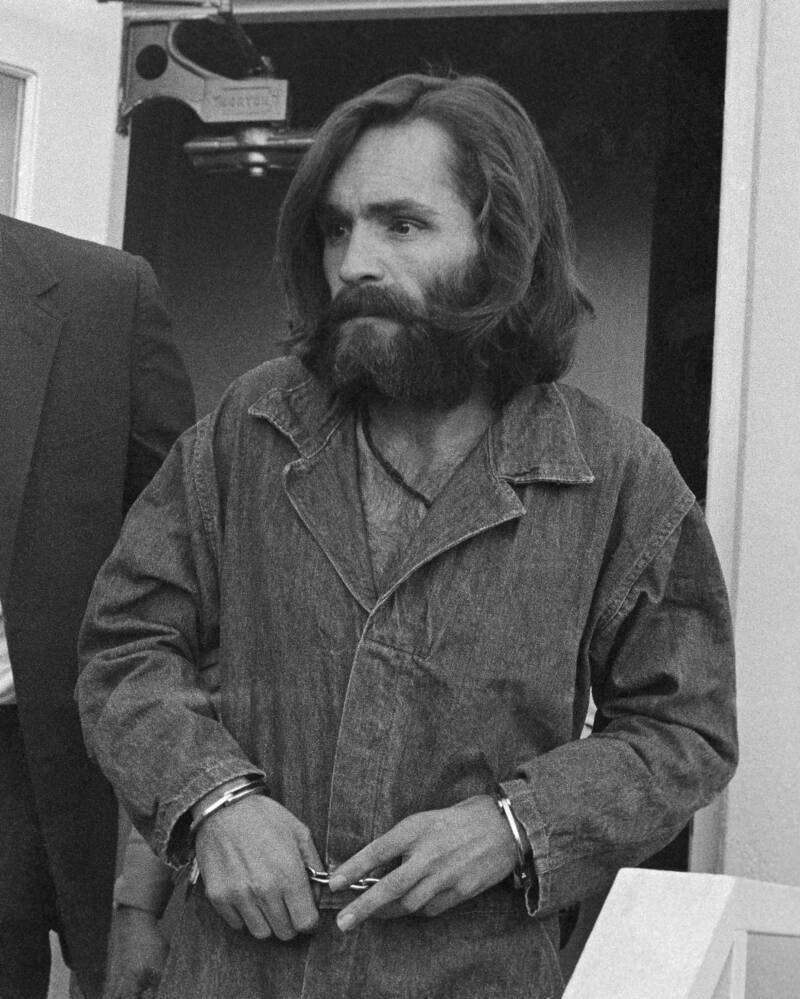
Bettmann/Getty ImagesCharles Manson arrives at the Inyo County Courthouse in the aftermath of the Tate murders on December 3, 1969.
Indeed, Lynette “Squeaky” Fromme had been one of the first and most zealous members of the Manson Family that terrorized Los Angeles with a series of brutal murders in the summer of 1969.
In all, Squeaky Fromme went from an all-American girl-next-door to a devoted member of one of the most notorious cults in American history to serving a life sentence for trying to assassinate a U.S. president.
She was eventually released in 2009, and now lives her life out of the spotlight. But for years, Squeaky Fromme was a uniquely terrifying figure in the American consciousness. This is her story.
Lynette Fromme’s Life Before Joining The Manson Family
Ironically, roughly 15 years before attempting to assassinate the President of the United States, Squeaky Fromme was invited to perform at the very place where he lived.
Born on October 22, 1948, to middle-class parents in Santa Monica, California, Lynette Alice Fromme was a typical all-American girl. She was described as a sweet child who enjoyed playing outside with friends and being active.
Wikimedia CommonsLynette Fromme’s high school yearbook photo.
As a young girl, Lynette Fromme joined the Westchester Lariats, a well-known dance group in the area. In the late 1950s, Fromme and the Westchester Lariats began touring the United States. and Europe, traveling to Los Angeles to perform on the Lawrence Welk Show, and later to Washington D.C. to perform at the White House.
But Lynette Fromme’s good-girl personality was not long for this world. In 1963 when Fromme was 14, her parents moved to Redondo Beach, California. She quickly fell in with the “wrong crowd,” as her family said, and began drinking and using drugs. Before long, her grades slipped and she found herself suffering from depression.
She was in her first year of college when her father, an aeronautical engineer, kicked her out apparently because she was promiscuous and insubordinate. By 1967, she was homeless, depressed, and looking for an escape.
And someone was willing to take Squeaky Fromme in.
Squeaky Fromme Joins Charles Manson’s Disturbing Family
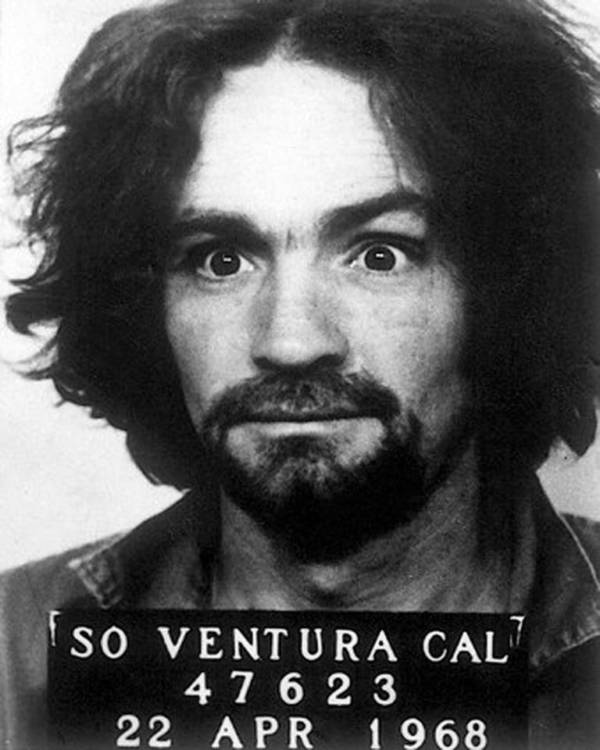
Wikimedia CommonsCharles Manson, the cult leader who drew Squeaky Fromme into his web.
Charles Manson found Lynette Fromme on the shores of Redondo Beach in 1967.
Despite the fact that he had just recently been released from prison, Squeaky Fromme became enamored with Manson. She fell in love with his philosophies and attitude toward life, later calling him a “once-in-a-lifetime soul.”
“Don’t want out and you’re free,” he told her during their first encounter. “The want ties you up. Be where you are. You got to start someplace.”
Within days, Squeaky Fromme had all but become a Manson Family member. She traveled with Manson and by association became friends with fellow family members Susan Atkins and Mary Brunner.
Life With The Manson Family At Spahn Ranch Before And After The Tate-LaBianca Murders
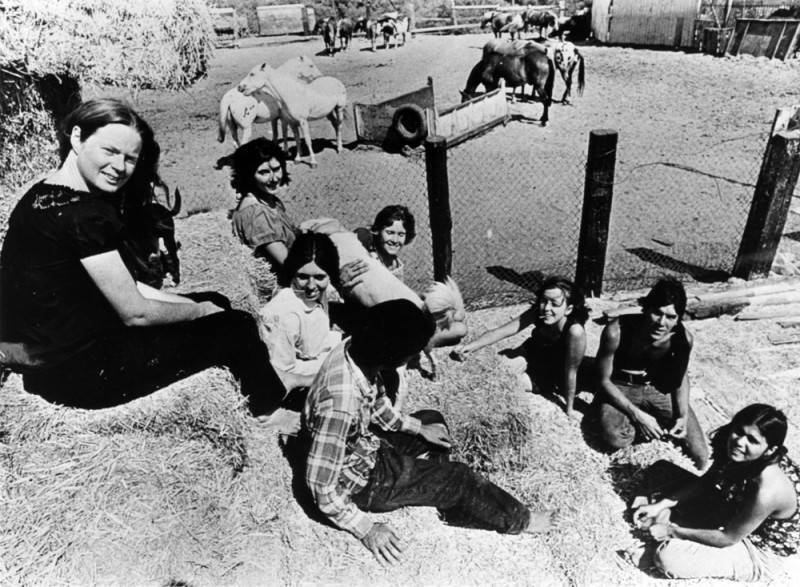
Michael Haering/Los Angeles Public LibraryThe Manson Family at Spahn Ranch.
In 1968, the Manson Family found their home at the Spahn Movie Ranch outside Los Angeles. With little money to pay for rent, Manson reached a deal with George Spahn, the ranch’s owner: The 80-year-old Spahn, who was nearly blind, would have sex with any of the Manson Family “wives” whenever he wanted and the family would be able to live on the ranch for free. The teenage Fromme was Spahn’s favorite and she was assigned to serve as his “eyes” and de-facto wife. Spahn gave her the nickname “Squeaky,” as Fromme squeaked whenever he pinched her thigh.
In August 1969, Manson instructed his followers Tex Watson, Susan Atkins, Patricia Krenwinkel, and Linda Kasabian to go the house at 10050 Cielo Drive and murder everyone inside.
Indeed, the killers brutally slaughtered actress Sharon Tate as well as her friends Jay Sebring, Wojciech Frykowski, and Abigail Folger. The next night, Manson had those same followers as well as Leslie Van Houten murder supermarket executive Leno LaBianca and his wife Rosemary inside their Los Angeles home.
However, Squeaky Fromme was never implicated in any of these incidents, by far the most infamous of all of the Manson Family’s many crimes.
During Manson’s trial in 1971, in which ex-Family member Linda Kasabian helped bring him down, Squeaky Fromme held a vigil outside of the courthouse and argued against his incarceration. Manson was sentenced to death that year and in 1972 he was re-sentenced to life in prison after a court decision neutralized California’s death sentences.
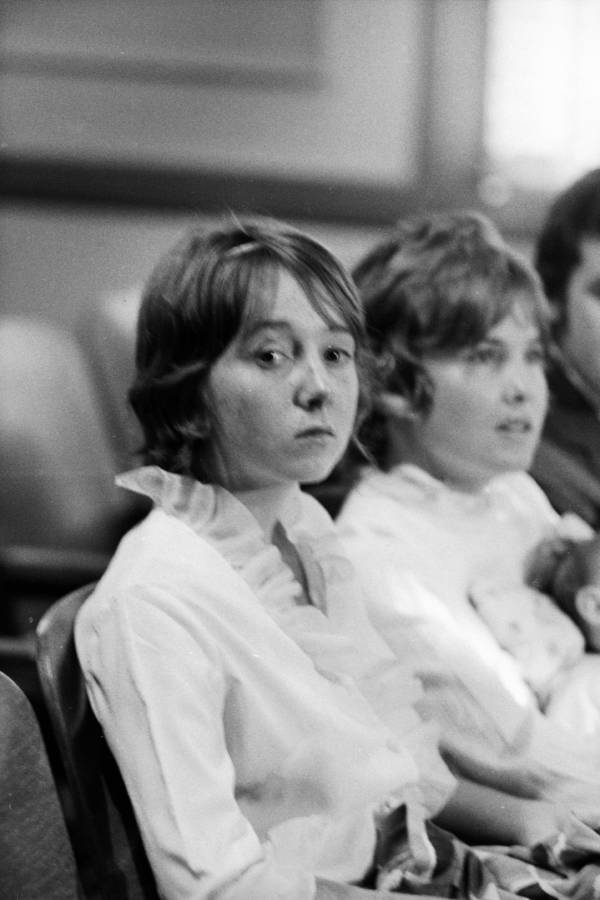
Getty ImagesSqueaky Fromme and fellow Manson follower Sandra Pugh sit in court during a preliminary hearing for Charles Manson.
Following the fall of their leader, most of the outlying Manson Family members denounced their support of Manson. But Fromme never did. After Manson was moved to Folsom Prison, Fromme and fellow family member Sandra Good moved to Sacramento to remain close.
From the dilapidated apartment the two lived in, Squeaky Fromme began writing a memoir detailing her life with Manson. She wrote about how, from a young age, she wanted to be free and “[shed] all the guilt feelings.” Her goal in life was “to find something exciting and do something that felt good… I didn’t, I wouldn’t, adjust to society and the reality of things… I’ve made my own world… It may sound like an Alice in Wonderland world, but it makes sense.”
Time obtained a manuscript in 1975, but after discussing the matter with Steve “Clem” Grogan, Fromme decided not to publish it on the grounds that it was too incriminating.
Squeaky Fromme Falls In With Another Bad Crowd

Wikimedia CommonsSandra Good, Squeaky Fromme’s partner in crime in the years after Manson was imprisoned.
Despite Charles Manson’s imprisonment and the rest of the family’s denouncement of his teachings, Squeaky Fromme and Sandra Good continued to wreak havoc in his name.
In 1972, Fromme moved to Sonoma County and found herself caught up in another murder trial.
The group of people she had been living with had murdered a married couple during a Russian-roulette-style game gone wrong.
Squeaky Fromme denied involvement with the murder, claiming she had been on her way to visit Charles Manson in jail as her alibi. She was held for more than two months but was ultimately cleared.
After the incident in Sonoma County, Fromme moved back in with Sandra Good in Sacramento and fell deeper into Manson’s cult teachings than ever before. She and Good changed their names, Fromme to “Red” and Good to “Blue,” and began wearing robes of their respective colors to represent their love of the California redwoods (Fromme) and the ocean (Good).
It was during this bout of existentialism that Fromme would finally end up in jail.
The Attempted Assassination Of Gerald Ford
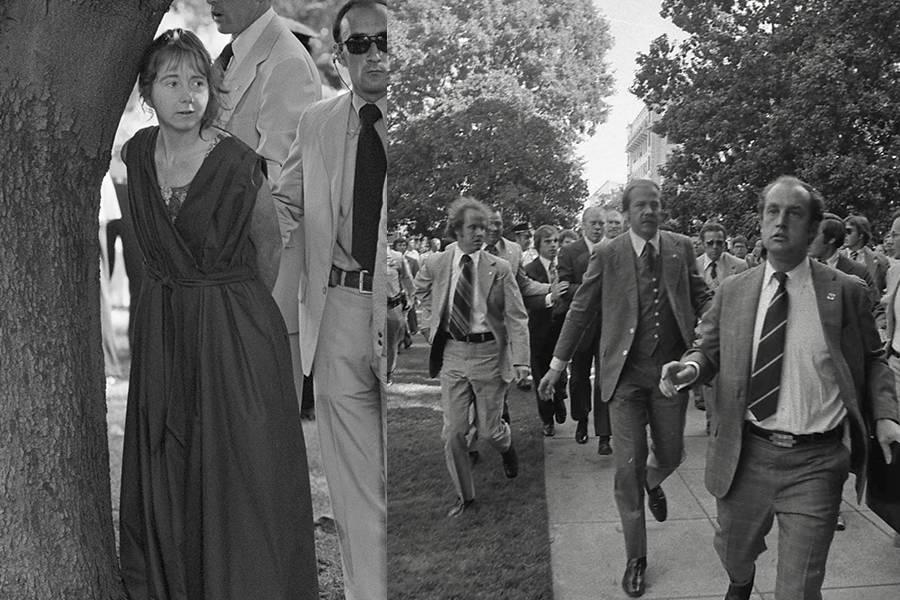
Getty Images/Wikimedia CommonsSqueaky Fromme is handcuffed after trying to assassinate President Gerald Ford in Sacramento.
While she watched the news one day, Lynette Fromme learned that President Gerald Ford would be speaking at the Sacramento Convention Center on the morning of Sept. 5, 1975. Ford had just asked Congress to relax provisions of the Clean Air Act, and Fromme — a tree-lover who feared automobile smog would wreak havoc on California’s coastal redwoods — wanted to confront him on the issue. The convention center was less than a mile from her apartment.
With an antique .45 caliber Colt pistol strapped to her left leg, and dressed in a bright red dress with a matching hood, Squeaky Fromme headed to the grounds outside the state capitol building, where the president headed after his breakfast speech. She pushed her way to the front until she was within a few feet of him.
Then, she raised her gun.
Those around her claim to have heard a “click,” but the gun never fired — it was unloaded. As Secret Service agents tackled her, Squeaky Fromme could be heard marveling at the fact that the gun “never went off.”
She was arrested and taken into custody.
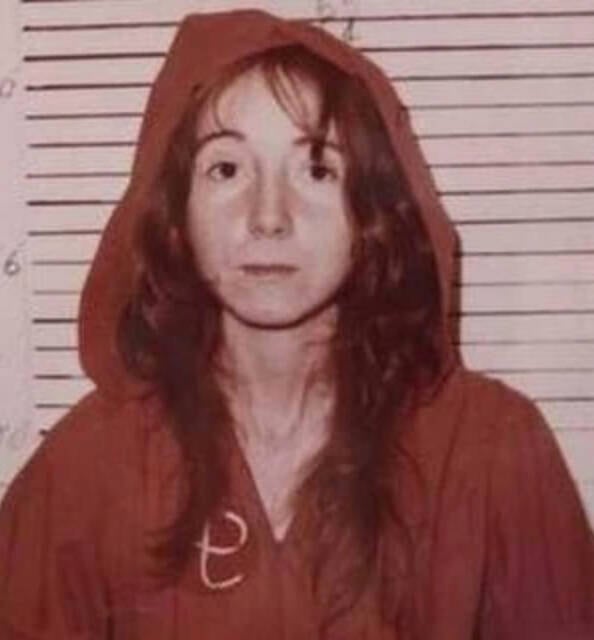
Public DomainLynette “Squeaky” Fromme remains most infamous for attempting to assassinate President Gerald Ford in Sacramento, California on September 5, 1975.
Gerald Ford, for his part, continued with his scheduled meeting and never mentioned the attempt on his life until after business had been discussed. During Fromme’s trial, he became the first U.S. President to testify in a criminal case when he submitted his video testimony.
In 2014, a judge ordered the release of the audio recordings of Fromme’s 1975 psychiatric evaluation. In the recordings, she says she thinks she has about a 70 percent chance of being found “not guilty.”
The Fate Of Squeaky Fromme Today
On November 19, 1975, Lynette “Squeaky” Fromme was convicted of attempting to assassinate the President of the United States. She was sentenced to life in prison. In 1987, she managed to escape for two days but was ultimately recaptured. The escape resulted in an extension of her sentence, but she remained eligible for parole. She was finally released in 2009.
Following her release, Fromme moved to Marcy, in upstate New York, and in with her boyfriend, a fellow convicted felon. A supposed Manson fanatic, he began writing to Fromme when they were both behind bars.
Over the years, Squeaky Fromme has been portrayed in several movies and one Broadway musical. She published her memoir, Reflexion, in 2018, the year after Charles Manson died in prison at age 83. In 2019, Fromme spoke with ABC for their 1969 documentary series, saying, “Was I in love with Charlie? Yeah. Oh yeah. Oh, still am. Still am. I don’t think you fall out of love.”

Oxygen/YouTubeSqueaky Fromme during an interview following her release from prison.
But for the most part, Squeaky Fromme keeps a pretty low profile.
“[Squeaky and her beau] don’t get involved in drama,” one neighbor recently told the New York Post. “They’re not ones who are out [saying], ‘Oh, look who I am,’ bragging about their past.” For now, those interested in what’s left of the Manson Family will have to settle for the few photos taken by curious passersby and the thought that one still-devoted family member is roaming free.
After this look at Lynette “Squeaky” Fromme, read up on some chilling facts about Charles Manson. Then, read about Manson victim Sharon Tate.
The post Squeaky Fromme And Her Disturbing Time Inside The Manson Family appeared first on All That's Interesting.
From 1979 to 1981, there were about 29 murders in the Atlanta area that appeared to be linked. Most of the victims were boys, and all of them were black. The majority were young — and some were even children. The community dubbed the killing spree the Atlanta Child Murders.
In 1981, a man named Wayne Williams was arrested for the murder of two young men in Atlanta. But many soon believed that his trail of death may have been far more gruesome and that he was the man behind the Atlanta Child Murders.
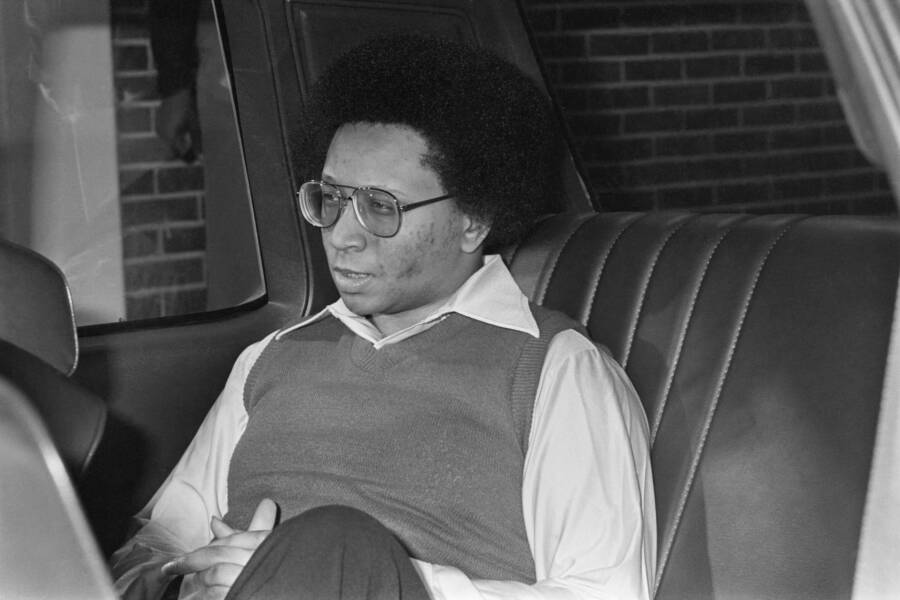
Bettmann/Contributor/Getty ImagesWayne Williams, the man believed to be responsible for the Atlanta Child Murders.
While his eventual arrest and conviction for two murders coincided with the end of the reign of terror over Atlanta, speculation persists as to whether Wayne Williams was truly guilty of the Atlanta Child Murders or if he was merely a convenient scapegoat.
The Early Life Of Wayne Williams
Wayne Bertram Williams was born on May 27, 1958, in Atlanta. The only child to two school teachers, Williams excelled in class. He was a bright young boy whose teachers and classmates described him as a “virtual genius.”
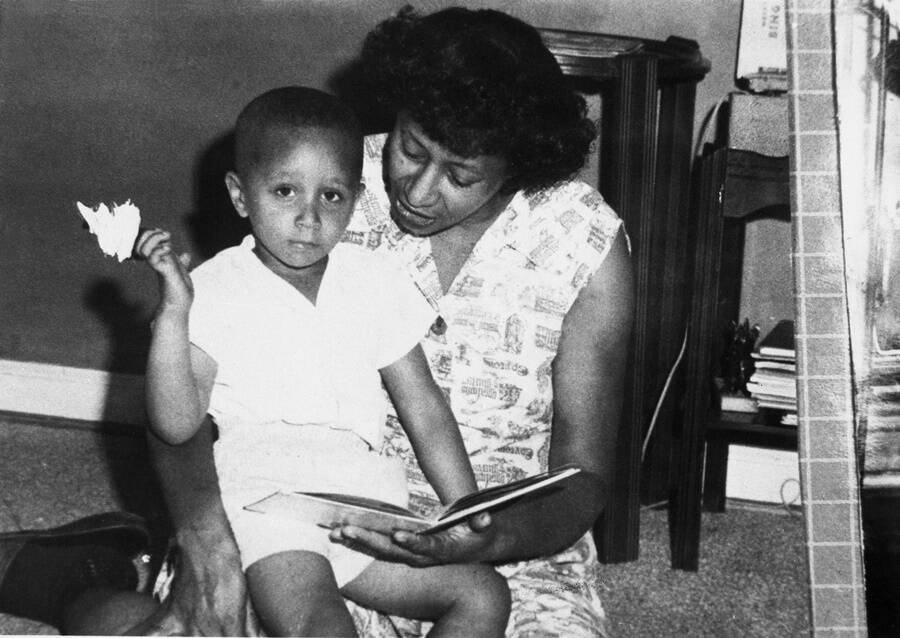
Bettmann Archive/Getty ImagesWayne Williams as a child in a photograph taken by his father.
His entrepreneurial spirit was exhibited through his attempt to start a radio station in his parents’ basement. He also earned a brief flicker of fame after being covered in Jet magazine.
In 1976, young Wayne Williams graduated from Douglass High School and went on to enroll in Georgia State University, only staying for a year before he quit. From then on, it seemed like the once-promising young man began to lose direction. By age 23, he was jumping from one thing to the next, going from radio work to record production to talent scouting.
Eventually, Williams also began dabbling in freelance photography. Despite hefty career ambitions, Williams’ work never took off. His dreams cost his parents significant amounts of money, and they ended up filing for bankruptcy.
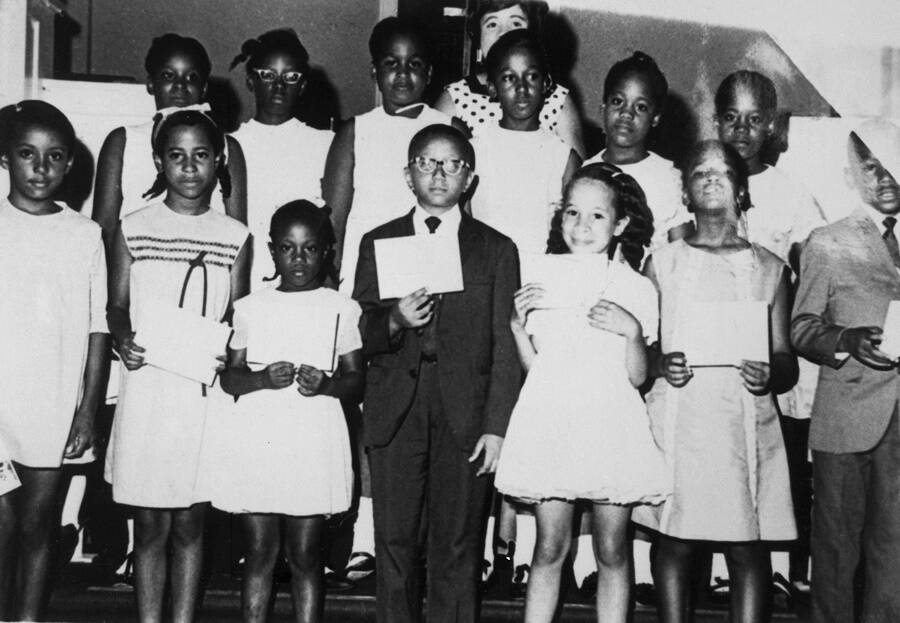
Bettmann Archive/Getty ImagesWayne Williams teachers and classmates described him as a “virtual genius.”
A longtime neighbor of the Williams later told FBI agents that kids in the neighborhood thought Wayne Williams was a policeman because he spoke and acted like one, even carrying a badge around with him.
“Many of them thought he started acting crazy two to three years ago… he would approach kids in official looking vehicles, telling them to get off the street or he would lock them up,” the unidentified neighbor said.
On May 22, 1981, things took a turn for the worst. Around 3 AM that day, police officers patrolling a bridge over the Chattahoochee River stopped Wayne Williams while he was driving his car. Though they eventually let him go, they would definitely be back.
Two days later, the dead body of Nathaniel Cater, 27, was discovered downstream nearby where police had questioned Williams. It was believed to be linked to the string of homicides terrorizing the city.
This is when Wayne Williams officially became a suspect in the Atlanta Child Murders.
The Atlanta Child Murders
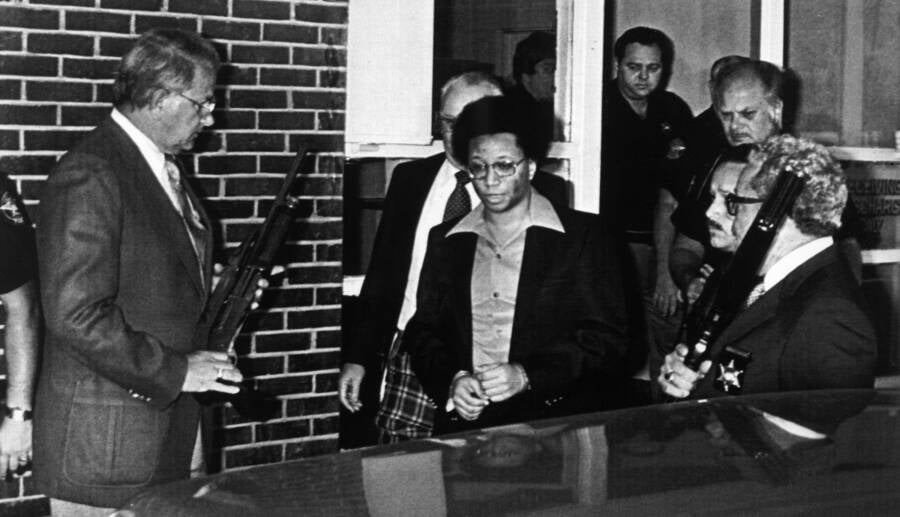
Bettmann/Contributor/Getty ImagesPolice officers escort Wayne Williams as he is taken to court in 1982.
The first victims of the Atlanta Child Murders were two boys, one 14 and the other 13, both of whom disappeared within three days of each other. Both were found dead on the side of a road beside each other on July 28, 1979. One was shot and the other was murdered by asphyxiation.
From there, bodies continued to pile up. By March 1980, the official death toll had reached at least six.
Frustratingly, every lead in the Atlanta Child Murders case turned up nothing for local authorities. Before long, it was time for the FBI to step in.
Famed FBI profiler John Douglas weighed in on a potential killer profile of the Atlanta murders culprit. He had already devoted much of his work to interviewing serial killers and assassins, which would go on to include James Earl Ray, David Berkowitz a.k.a “Son of Sam“, and Richard Speck.
So it’s no surprise that Douglas had a hunch about this particular case.
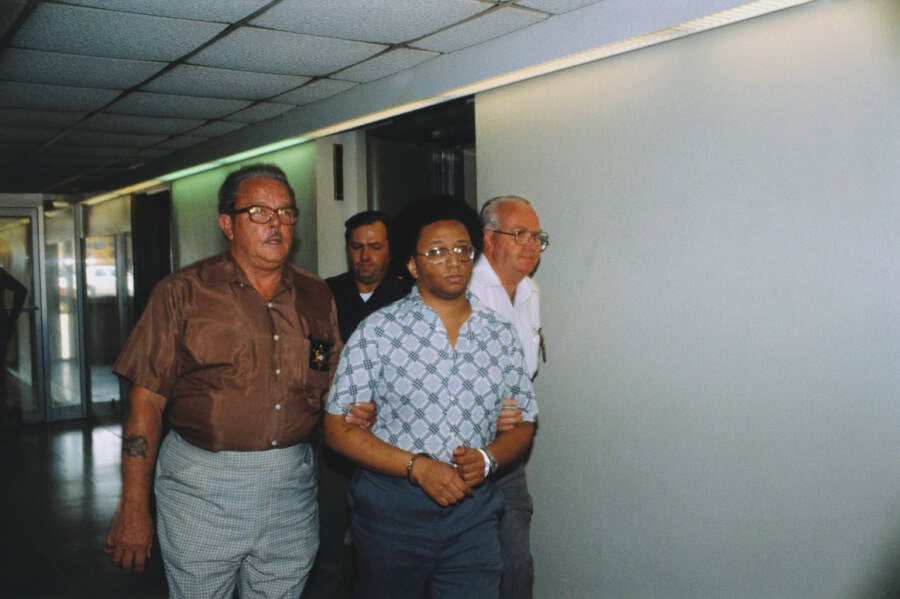
Bettmann/Contributor/Getty ImagesWayne Williams, the suspect in the Atlanta Child Murders, being led in handcuffs.
In his case files on the Atlanta Child Murders, Douglas (the inspiration for the main character on Mindhunter) reported that he believed the murderer was someone black and not white. He theorized that in order to have access to black children, the Atlanta killer would need access to the black community without arousing suspicion.
By late May of 1981, many of the dead bodies linked to the case had been recovered within the same geographic parameters. Some had been pulled out of the Chattahoochee River, so investigators staked out its bridges.
That’s when they found Wayne Williams, who was close to where Cater’s body was later discovered. The body of 21-year-old Jimmy Ray Payne was also found nearby — apparently allowing cops to build their case.
Wayne Williams Is Arrested
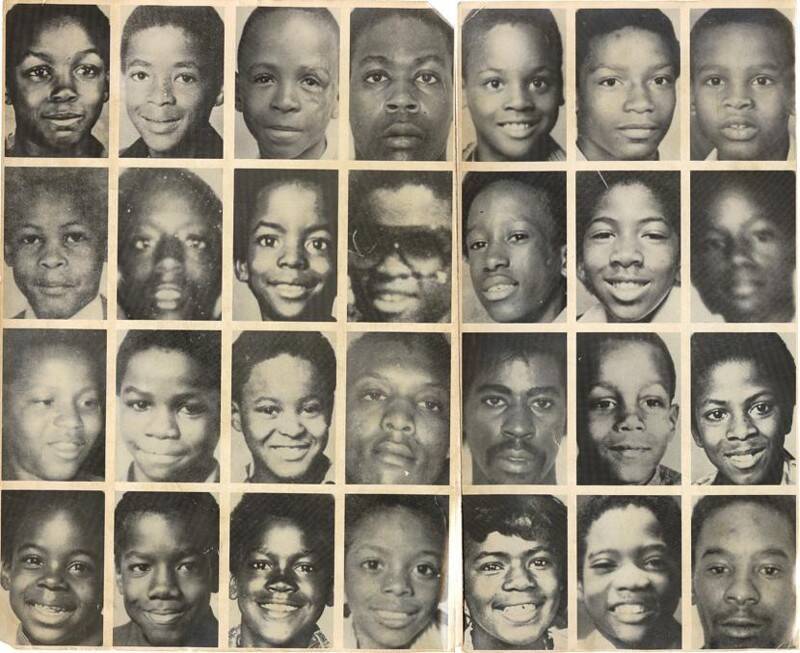
Handout/AJCApproximately 29 black youths were killed in Atlanta over the span of about two years.
It wasn’t until June 21, about a month after the discovery of the bodies, that police were able to arrest Wayne Williams. He was cuffed after it was found that his alibis were weak and he failed a polygraph test.
Police also had collected fibers from Williams’ car and his family dogs. These same fibers were found on both Cater and Payne’s bodies.
In addition to the mounting evidence, FBI profiler John Douglas detected a convincing motive for Williams. Douglas pointed to Williams’ many failures in life and theorized that he may have felt like he was losing control. In a sense, the murders could have hypothetically given him back a sense of control.
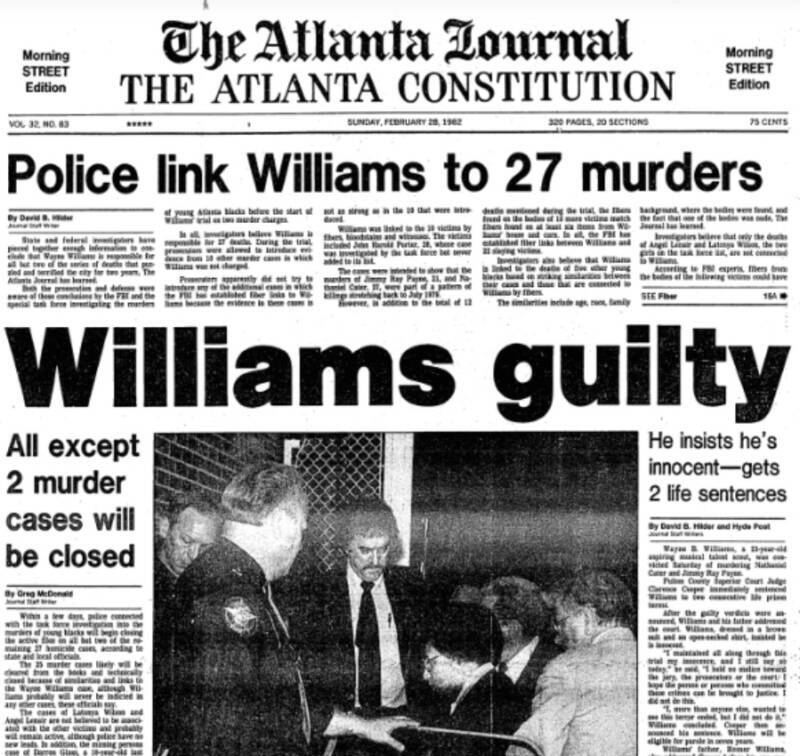
AJCAn Atlanta Journal-Constitution article about Wayne Williams conviction.
Douglas sat in on Williams’ trial and concluded that the man “is very much like other serial killers researched and interviewed in the past by the FBI’s Behavioral Sciences Unit.”
In his notes, the FBI agent suggested that Williams was thirsty for the limelight as he displayed signs of enjoying the attention brought on by the murder case. Like many serial killers, Douglas noted, Williams didn’t think he would ever be discovered for his crimes.
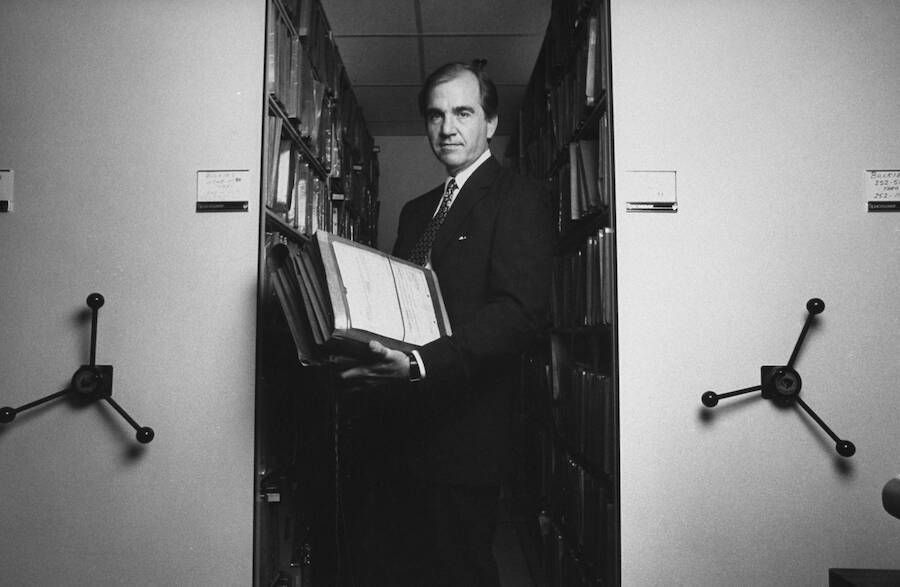
Getty ImagesFBI profiler John Douglas suspected Wayne Williams was responsible for some of the murders — but not all.
But Wayne Williams’ calm demeanor changed as his case began to lose ground.
Douglas advised prosecutors to focus on Williams’ failures and his inconsistent statements during his cross-examination. Once they deployed this tactic, Williams became argumentative, calling the prosecutor a “fool.”
When the prosecutor asked if he had been coached for his testimony, Williams responded defensively, “No. You want the real Wayne Williams? You got him right here.”
But Was He Really The Atlanta Serial Killer?
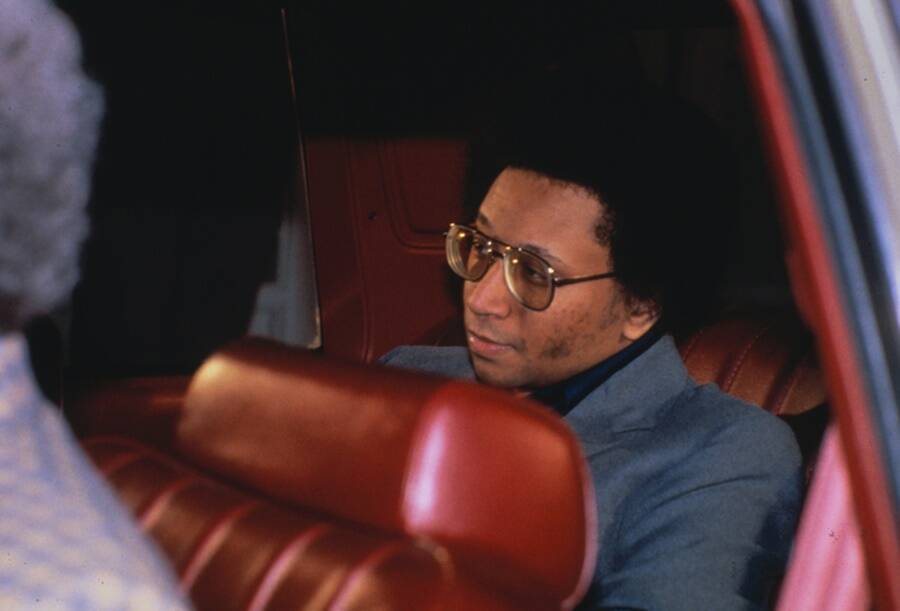
Getty ImagesWayne Williams sits in the back of a car on his way to his court trial in 1982.
In February 1982, Wayne Bertram Williams was convicted and subsequently handed two life sentences for the murders of Payne and Cater. Williams was never convicted of the rest of the murders in the Atlanta Child Murders case but local police alleged that he was responsible for them.
While FBI profiler John Douglas connected Williams to about 12 of the murders, most of those cases remained unsolved. And though the murders seemed to stop once Williams was taken into custody, the lack of evidence fueled speculation of his innocence.
Wayne Williams has consistently maintained his innocence ever since he was put in jail decades ago. In one 1991 interview, Williams said he accepts his fate and that God has a plan for him.
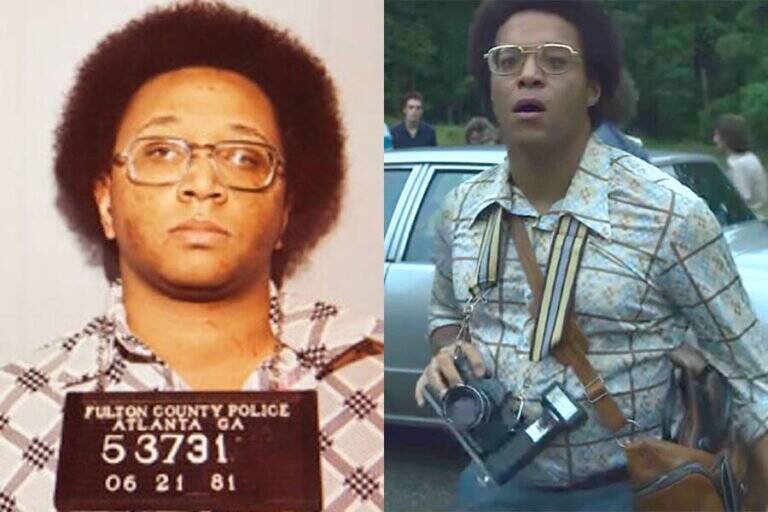
Wikimedia Commons/NetflixWayne Williams was depicted in the series Mindhunter on Netflix.
But in 1994, Williams penned a letter to the parole board to make a case for his release:
“I’ve realized it’s not always a case of right or wrong, guilt or innocence, but how we handle adversity and grow from our errors… My life has been an example of going from promise to the pits. Now, I only ask for the chance to do my part in restoring the confidence so many once had in me.”
Some Atlanta residents, including relatives of the Atlanta Child Murders victims, believe Wayne Williams did not commit the crimes. Filmmakers Payne Lindsey and Donald Albright compiled research and interviews to find out whether Williams was the Atlanta child serial killer.
The project was part of a 10-episode podcast titled Atlanta Monster, which digs into the nearly 40-year-old case.
“The families of the victims are the ones saying they don’t think he did it. They don’t feel like their child was ever actually given justice,” Albright said.
There was also a bombshell report by Spin magazine, which revealed that the Georgia Bureau of Investigation (GBI) had suppressed evidence that may have implicated a member of the Ku Klux Klan in the murders. But in an effort to prevent racial strife, the GBI kept this information under wraps.
Williams’ lawyers have referred to his arrest as a scapegoat — investigators had found their assumed black murderer and were able to cleanly close a politically rife case.
But the Atlanta murders mystery was further complicated in 2010 by DNA forensics, which strengthened the original case with modern-day testing on the hairs originally found at the scene. Officials involved in the original investigation maintain their case against Williams and believe he is responsible for the Atlanta Child Murders.
Meanwhile, Wayne Williams bides his time in prison. He has repeatedly been denied parole even as a fresh investigation into the murders was opened by Atlanta Mayor Keisha Lance Bottoms in 2019. A spokesman for the parole board stated that Williams’ next date of parole consideration is November 2027 — the furthest date that the board is allowed to push it to now.
After learning about the alleged serial killer Wayne Williams, check out the true story of the Lizzie Borden murders. Then, check out the strange story of Myra Hindley and the Moors Murders.
The post Was Wayne Williams Really The Serial Killer Responsible For The Atlanta Child Murders? appeared first on All That's Interesting.
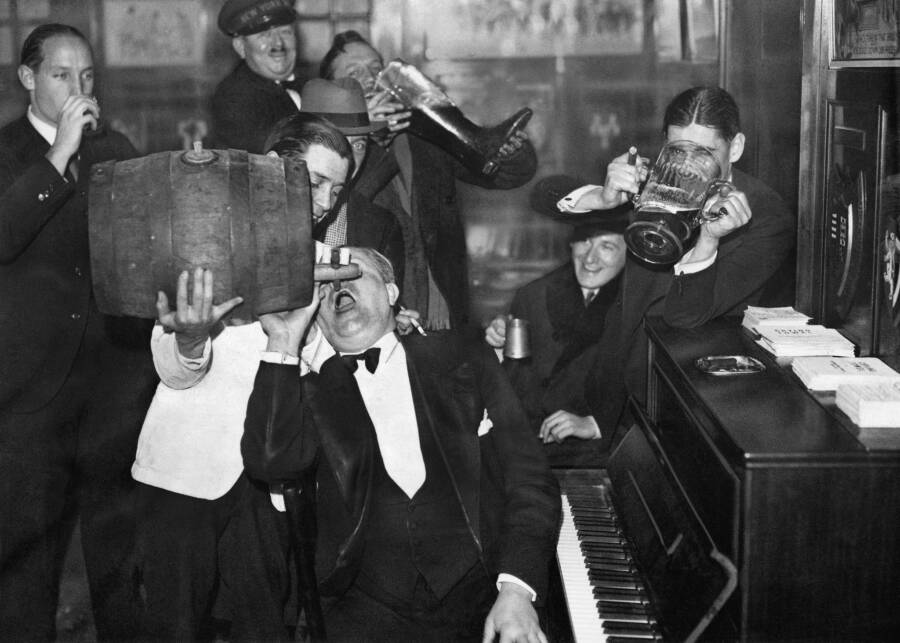
Public DomainRevelry after the repeal of Prohibition.
Prohibition was a strange time in American history. Ultimately a social experiment, Prohibition was a constitutional attempt to legislate morality that came with many unintended consequences.
What began as a progressive reform movement championed by temperance advocates and religious groups quickly devolved into a period full of speakeasies, bootleggers, unregulated liquor, and the rise of organized crime.
The so-called “noble experiment” — a term coined by President Herbert Hoover — ended up exposing flaws in the relationship between the law and personal liberty. This turbulent period paved the way for organized crime figures like Al Capone, transformed cities into battlegrounds between law enforcement and criminal enterprises, and fundamentally altered American attitudes toward government regulation.
Below are answers to 20 frequently asked questions about Prohibition.
When Was Prohibition In Effect In The United States?
Prohibition was in effect in the United States from 1920 to 1933.
What Amendment To The U.S. Constitution Established Prohibition?
Bettmann/Getty ImagesMen enjoying a drink together in 1919, just before Prohibition began.
The 18th Amendment to the U.S. Constitution established Prohibition, banning the manufacture, sale, and transportation of alcoholic beverages nationwide.
Why Was Prohibition Enacted In The First Place?
Prohibition was enacted primarily due to the temperance movement, which framed alcohol consumption as a destructive force corroding American society.
Led by organizations like the Anti-Saloon League and the Woman’s Christian Temperance Union, the temperance movement linked liquor to issues like domestic violence, poverty, and industrial accidents, arguing that it threatened the family unit and national productivity. The movement gained momentum during World War I, sometimes by connecting German American brewers with enemy sympathies, stoking anti-immigrant sentiment. After all, some U.S. citizens feared the “foreign drinking habits” of those from other countries.
Progressives believed that eliminating alcohol would create a more disciplined, efficient workforce and reduce urban corruption. Many Protestants, meanwhile, viewed it as a moral crusade against societal decay. Eventually, with these forces aligned, the political pressure became too great to ignore.
What Organization Was Most Influential In Promoting Prohibition?
The Anti-Saloon League was the most influential organization promoting Prohibition in the United States. Founded in 1893 in Ohio, it rapidly became a national organization by 1895 and quickly established itself as the most powerful group lobbying for Prohibition in America.
The League surpassed other organizations like the Woman’s Christian Temperance Union (WCTU) and the Prohibition Party through its focused, single-issue approach and sophisticated political tactics.
Under leaders like Wayne Wheeler, the Anti-Saloon League pioneered the modern pressure group in U.S. politics, making Prohibition a wedge issue and successfully promoting pro-Prohibition candidates. And unlike the WCTU, which employed educational and social methods, the Anti-Saloon League concentrated primarily on legislative reform, applying intense political pressure to achieve state and federal anti-alcohol laws.
How Did Prohibition Actually Affect Alcohol Consumption In America?
Imagno/Getty ImagesProtesters taking to the streets to speak out against Prohibition.
Prohibition had a mixed and ultimately limited effect on alcohol consumption. Initially, consumption dropped by approximately 30 percent as the legal methods of obtaining alcohol vanished. However, this decline was short-lived.
Americans quickly adapted, creating a vast underground economy of bootleggers, speakeasies, and home distillers. Over the next several years, consumption rebounded to roughly 60 to 70 percent of pre-Prohibition levels.
Rather than eradicating alcohol, Prohibition merely shifted its production and distribution into the shadows, fostering disrespect for the law.
What Were Speakeasies And How Did They Operate?
Bettmann/Getty ImagesA speakeasy bartender pouring beer from the tap.
Speakeasies were illegal, secretive drinking establishments that operated during Prohibition, often disguised as legitimate businesses like soda shops or “dry” clubs. They required patrons to “speak easy” or quietly to gain entry, often using a secret password.
Located in basements, back rooms, or behind unmarked doors, they flourished in urban areas. These venues offered live jazz music, dancing, and gambling, creating a vibrant underground social scene. To avoid raids, speakeasies employed elaborate security measures, including peepholes, lookout systems, and arrangements with corrupt police officers.
Despite their illegality, tens of thousands of speakeasies operated nationwide, becoming symbols of the era’s defiance and social rebellion.
How Did Organized Crime Benefit From Prohibition?
Organized crime syndicates thrived during Prohibition by monopolizing the illegal production, distribution, and sale of alcohol. This lucrative black market generated enormous profits, allowing criminal organizations like the Mafia to expand their operations, bribe public officials, and establish sophisticated networks.
Who Were Some Of The Most Famous Bootleggers During Prohibition?
Bettmann/Getty ImagesAl Capone, pictured during his trial for tax evasion.
The most famous bootleggers of Prohibition were entrepreneurial criminals who built vast empires from illegal alcohol. Al Capone, for instance, dominated Chicago, controlling speakeasies, breweries, and distribution networks, earning millions annually.
In New York, Dutch Schultz and Waxey Gordon ran competing operations, often engaging in violent turf wars. Meanwhile, Charles “Lucky” Luciano began his rise to power working in bootlegging before organizing the National Crime Syndicate, bringing together Italian and Jewish mobsters to help run various bootlegging operations.
George Remus, a former attorney, became the “King of the Bootleggers” in Cincinnati, for exploiting medicinal whiskey loopholes. Bill McCoy earned the nickname “The Real McCoy” by smuggling high-quality Caribbean liquor without diluting it. In Detroit, the Purple Gang controlled much of the Canadian whiskey trade.
These figures transformed small-scale smuggling into sophisticated criminal enterprises, using violence, bribery, and business acumen to profit from America’s thirst for illegal alcohol.
What Was Al Capone’s Role During Prohibition?
Al Capone was the most notorious figure of the Prohibition era, transforming Chicago into his criminal empire. As leader of the Chicago Outfit, he controlled the city’s illegal alcohol industry, from speakeasies and breweries to distribution networks, earning an estimated $100 million a year at his peak.
Capone used a combination of ruthless violence, political corruption, and public relations to maintain power. He famously bribed police and politicians while cultivating a public image as a generous businessman.
His reign reportedly led to the 1929 St. Valentine’s Day Massacre, which eliminated his rivals but drew national attention. Though he was eventually imprisoned for tax evasion rather than Prohibition violations, Capone and his criminal enterprise demonstrated how organized crime could flourish under the ban, making him the enduring symbol of Prohibition’s lawlessness.
How Did The Government Enforce Prohibition?
Public DomainFederal agents dumping illegal liquor into the sewers during Prohibition.
The federal government first enforced Prohibition with the help of U.S. Marshals, followed by the Bureau of Prohibition and its agents. These agents were tasked with investigating, raiding, and prosecuting illegal alcohol operations. They conducted surprise raids on speakeasies, breweries, and distilleries, often leading to violent confrontations.
At the same time, the Coast Guard patrolled coastlines to intercept smugglers arriving by boat, while the Internal Revenue Service pursued tax evasion cases against prominent bootleggers.
State and local police also enforced the laws, though corruption was widespread, and many officers were bribed to ignore illegal drinking establishments.
Despite these efforts, the government struggled with limited resources, jurisdictional issues, and public resistance, making enforcement increasingly ineffective as organized crime networks grew more sophisticated and public support for the ban waned.
What Were The Economic Effects Of Prohibition?
Prohibition had largely negative economic effects. For starters, it immediately eliminated legal alcohol industry jobs, from brewers and distillers to bartenders and related suppliers.
At the same time, it created plenty of opportunities for bootleggers and speakeasy operators, but since these positions existed outside of the law, they were untaxed and unregulated.
The government lost substantial tax revenue from alcohol sales, while simultaneously spending millions on enforcement efforts. Restaurants and entertainment industries suffered, as legitimate establishments could no longer serve alcohol to patrons. The start of the Great Depression compounded these economic issues, with some even arguing that legalizing and taxing alcohol would provide crucial government revenue during the financial crisis.
What Was The “Noble Experiment” That President Hoover Referred To?
President Herbert Hoover referred to Prohibition as a “noble experiment,” calling it a “great social and economic experiment, noble in motive and far-reaching in purpose.” Reformers’ goals of reducing alcohol abuse, strengthening families, and improving public health and morality were seen as “noble,” and since such broad legislation regarding morality had never been done before, it could be seen as an “experiment.”
Although Hoover had supported enforcement, the phrase was eventually used in a more sarcastic or even mocking fashion, as Prohibition increasingly failed to achieve its aims, instead fostering organized crime, widespread lawbreaking, and economic woes.
How Did The Repeal Of Prohibition Come About?
Imagno/Getty ImagesAmericans enjoying drinks after the repeal of Prohibition.
By the early 1930s, public support for Prohibition was virtually nonexistent. The Great Depression in particular had highlighted the economic costs of the ban, and many within the government felt that legalizing and taxing alcohol — which people were clearly still drinking — would bring in significant revenue.
As organized crime continued to run rampant and control the flow of alcohol, the general public grew more and more disillusioned with Prohibition.
Eventually, Franklin D. Roosevelt made repeal part of his 1932 presidential platform, recognizing the policy’s failure. After his election, Congress soon put an end to the failed “noble experiment.”
What Amendment Repealed Prohibition And When Was It Ratified?
The 21st Amendment repealed Prohibition in the United States. It was ratified on Dec. 5, 1933, ending the nationwide ban on the manufacture, sale, and transportation of alcoholic beverages that had been in place for 13 years.
This amendment is also unique in U.S. history as the only one passed specifically to repeal another constitutional amendment (the 18th Amendment).
What Were The Unintended Consequences Of Prohibition?
The unintended consequences of Prohibition were numerous and far outweighed its goals. Most significantly, it fostered the rise of powerful organized crime syndicates, as criminals like Al Capone built their empires on the illegal alcohol trade. This led to shocking levels of violence, corruption of public officials, and a general erosion of respect for the law.
On top of that, the ban led to dangerous, unregulated alcohol products that caused illness and even death, as some consumers turned to toxic moonshine and other unsafe spirits. While wealthy Americans continued to have access to the best alcoholic drinks, impoverished citizens were often at risk of purchasing completely unregulated and sometimes even tainted liquor. At one point, as many as 1,000 people were dying per year from the effects of drinking tainted booze.
Rather than eliminating drinking, Prohibition simply drove it underground, making consumption more secretive. It sometimes also made drinking seem more glamorous. The government, meanwhile, lost substantial tax revenue and bled money trying to enforce Prohibition laws.
In the end, Prohibition demonstrated the failure of trying to legislate morality, while the American public grew more distrustful of government regulation — especially after 10,000 people died from government-poisoned alcohol.
How Did Prohibition Affect The American Healthcare System?
Prohibition significantly altered the American healthcare system, primarily through the creation of a legal loophole for “medicinal whiskey.” Physicians gained special, never-before-seen authority to prescribe alcohol for various ailments, from anxiety to tuberculosis, leading to a dramatic increase in prescriptions — with some estimates at 11 million prescriptions annually by the late 1920s.
What Was “Medicinal Whiskey” During Prohibition?
California State LibraryPatrons at the Senator Hotel in Sacramento enjoying post-Prohibition drinks.
“Medicinal whiskey” was a legal loophole that allowed physicians to prescribe whiskey for therapeutic purposes during Prohibition.
This created a system where doctors could write prescriptions for whiskey to treat various ailments, from anxiety and tuberculosis to common colds. Pharmacists filled these prescriptions, often charging high prices. Naturally, the system was widely abused.
Not only did this system expose the hypocrisy of the Prohibition movement, but it also strained the credibility of the medical profession.
How Did Other Countries View America’s Prohibition Experiment?
Other countries generally viewed America’s Prohibition experiment with skepticism, amusement, and sometimes concern. Many European nations saw it as an extreme measure that contradicted their own drinking cultures. Some international temperance movements initially praised the American experiment, but most foreign observers saw it as creating more problems than it solved.
The Canadian government, despite having its own provincial prohibition laws, was critical of America’s approach. Mexico and Caribbean nations became popular destinations for American “booze tourists” and profited from smuggling operations. British and French newspapers, meanwhile, often mocked American puritanism while reporting on the rise of gangland violence.
What Happened To The Brewing And Distilling Industries After Prohibition Ended?
After Prohibition ended in 1933, the brewing and distilling industries faced significant challenges in rebuilding their operations. Many former legitimate breweries had been converted to other uses or had fallen into disrepair, requiring substantial renovations to resume production.
Large companies like Anheuser-Busch and Schlitz quickly regained market dominance, while numerous smaller operations never reopened. The distilling industry recovered more slowly, due to the lengthy aging process required for some spirits.
Some former bootleggers transitioned into creating legitimate businesses, but the industry landscape was permanently altered by the 13-year hiatus and changing consumer preferences.
Did Any States Maintain Prohibition After The Federal Repeal?
Yes, some states maintained Prohibition after the federal repeal. The 21st Amendment, which repealed Prohibition at the federal level, explicitly allowed states to continue banning alcohol if they chose to do so.
Per the National Constitution Center, Mississippi was the last state to maintain statewide Prohibition, finally ending it in 1966.
But even today, some remnants of Prohibition remain, albeit on a smaller scale. Certain states have “dry” counties, and it’s estimated that over 80 counties still completely ban the sale of alcohol to this day.
After learning about the history of Prohibition in America, check out these colorized photographs from the Roaring Twenties. Then, meet some of the most notorious gangsters of the 1920s.
The post 20 Facts About Prohibition That Reveal The Truth Behind America’s Failed ‘Noble Experiment’ appeared first on All That's Interesting.
Human history is scattered with cold-blooded killers. Some of them led nations and saw millions perish under their harsh rule. Others took lives single-handedly, either as soldiers or as murderous serial killers. But who killed the most people in history?
In the running for history’s worst mass murderers are vicious leaders like Genghis Khan, Adolf Hitler, and King Leopold II. But other candidates include soldiers like Simo Häyhä, whose hundreds of kills make him the world’s deadliest sniper, and the prolific Colombian murderer Luis Garavito.
Below, learn who has killed the most people in history — through their rule or with their bare hands — and how they did it.
Who Killed The Most People In History?
Who killed the most people in history? People often suggest Nazi leader Adolf Hitler or Soviet dictator Joseph Stalin, both of whom saw millions die as a direct result of their policies. But recent scholarship suggests that the world’s most murderous leader is China’s Mao Zedong.

Apic/Getty ImagesScholars estimate that Mao Zedong killed the most people in history through his harsh policies during the “Great Leap Forward.”
The founder of the People’s Republic of China, Mao Zedong ruled over the country from 1949 until he died in 1976. During that time, he sought to reshape China into a communistic world power — by any means necessary.
Once in power, Mao put economic production under the ownership of the state, organized farms into collectives, and brutally suppressed anyone who tried to resist his new policies.
And in 1958, he took things a step further with his “Great Leap Forward.” Hoping to make China competitive on the world stage, Mao set out to mobilize the Chinese workforce. But his harsh policies forced millions from their homes, subjected civilians to punishments, and triggered famines.
During this time, people were horrifically disciplined for minor transgressions, forced to work no matter the conditions, and brutally and purposefully starved. According to historian Frank Dikötter, who published Mao’s Great Famine: The Story of China’s Most Devastating Catastrophe, 1958–1962 in 2010, two or three million alone were tortured and killed for stepping a toe out of line.
“When a boy stole a handful of grain in a Hunan village, local boss Xiong Dechang forced his father to bury him alive,” Dikötter wrote for History Today, offering one of many harrowing examples of Mao’s brutality during this era. “The father died of grief a few days later.”
So how many people did Mao kill? Dikötter estimates that “at least 45 million people between 1958 and 1962” died due to his policies. That number, however, could be as high as 78-80 million. Either way, it means that Mao killed the most people in history.
But he’s not the only leader who saw millions die during his reign.
Other Leaders Who Killed People En Masse
Mao Zedong may have killed the most people in history, but other leaders have similar body counts. One such leader is Genghis Khan.

Fine Art Images/Heritage Images/Getty ImagesA depiction of Genghis Khan during combat.
During his rule between 1206 and 1227, the Mongol Emperor and his sons succeeded in creating the largest contiguous land empire in human history. And they relied more on violence than diplomacy to conquer territory.
According to History, censuses from the Middle Ages suggest that China lost tens of millions of people during Khan’s reign, and Genghis Khan’s Mongol forces may have wiped out a jaw-dropping 11 percent of the world’s population. Though the total death toll under his rule is difficult to determine, historians estimate that some 40 million people died as he expanded his empire.
That makes Genghis Khan one of the deadliest killers in world history. Other infamous leaders have much lower — but still horrific — death counts.
Take Joseph Stalin. While it’s difficult to know for sure how many people Stalin killed, historians estimate that his policies led to the deaths of between six and 20 million people, if not more. Stalin’s famines, political purges, gulags, and executions brought massive death to the Soviet Union.
Keystone/Getty ImagesJoseph Stalin in 1949. When he died in 1953, millions had perished from famines, executions, or imprisonments.
Adolf Hitler similarly brought horrific suffering to Europe during World War II. The Nazi policy of exterminating Jewish people and other groups, like people with disabilities, gay people, and the Romani, led to the deaths of 11 million people. (Though the total death count for WWII itself is much higher.)
Meanwhile, rulers like Belgium’s King Leopold II saw between eight and 11 million people perish on his watch, and Cambodia’s Pol Pot orchestrated the deaths of an estimated one-and-a-half to two million people.
So, who killed the most people in history? When it comes to rulers, the answer is clear. But it changes if you look at soldiers and serial killers.
Soldiers And Serial Killers With High Kill Counts
When it comes to who killed the most people in history, it’s easy to think about rulers like Mao Zedong or Joseph Stalin, who could kill millions through their orders. But some people have single-handedly killed shockingly high numbers of their fellow humans.
Sometimes, they killed in the name of war. Finland’s Simo Häyhä became the world’s deadliest sniper during his country’s Winter War (from November 1939 to March 1940) with the Soviet Union.
Wikimedia CommonsSimo Häyhä with a rifle gifted to him from the Finnish government.
During the roughly 100 days of conflict, Häyhä, cloaked in white and using an iron sight, killed hundreds of Soviet troops. He likely took out between 500 and 542 soldiers on his own, which makes Häyhä the deadliest sniper in human history.
But not everyone with a high kill count took lives during a war. Some of the most prolific killers in history did it to satisfy their own sick cravings.
Luis Garavito is one of those men. A Colombian serial killer, Garavito is believed to be the world’s most prolific murderer. Between 1992 to 1999, he raped, tortured, and murdered 100 to 400 boys between the ages of six and 16. Officially, Garavito confessed to killing 140 children.
Likewise, another Colombian serial killer named Pedro Lopez is believed to be one of the deadliest murderers in history (second only to Garavito himself). Known as the Monster of the Andes, Lopez may have killed as many as 300 young girls. According to The Sun, he was convicted of killing 110 and later confessed that he had killed 240 more.
Chillingly, some of America’s most infamous serial killers — like Ted Bundy or Jeffrey Dahmer — killed just a fraction of the victims killed by Garavito and Lopez.
As such, there are many answers to the question, “Who killed the most people in history?” If you look at rulers, then it’s Mao Zedong, who killed at least 45 million people in his attempt to jumpstart China’s economy. And if you look at soldiers or serial killers, then you have to consider people like Simo Häyhä or Luis Garavito as the world’s most prolific killers.
But when discussing the world’s worst killers, it’s also important — if difficult — to consider the victims. The millions upon millions killed by Mao, Stalin, or Hitler, and the hundreds killed by murderers like Garavito or Lopez, were more than a number on a sheet. They were people.
After learning who killed the most people in human history, look through this list of the deadliest disasters in modern history. Or, discover the stories behind 10 of the weirdest people in history.
The post Who Actually Killed The Most People In History? It’s Not As Straightforward As You Think appeared first on All That's Interesting.
Charlotte Meyer Collection/Stedelijk Museum ZutphenOne of the dozens of Rembrandt etchings that sat in a private collection in the Netherlands for years.
When Charlotte Meyer’s grandfather died, he left her a collection of etchings that he’d collected during the early 20th century. Meyer thought the prints were “beautiful,” but didn’t give them much thought over the years. It wasn’t until the COVID-19 pandemic that she sat down and took a closer look at them — and, with the help of experts, ultimately discovered that they were actually the work of none other than Rembrandt.
Though the 17th-century Dutch artist Rembrandt van Rijn is best known for his paintings, he also created hundreds of etchings. Apparently, Meyer’s grandfather had been able to acquire 35 of them, which are now on display at the Stedelijke Museum Zutphen.
“A Beautiful Story”: The Lost Collection Of Rembrandt Etchings Found In The Netherlands
According to a report from the NL Times, Charlotte Meyer of Zutphen, Netherlands, inherited a folder of prints when her grandfather died. For years, the folder was tucked away and forgotten, but during the COVID-19 quarantine, Meyer took another look.

Stedelijk Museum ZutphenCharlotte Meyer, the Dutch woman who found 35 lost Rembrandt etchings that she’d inherited from her grandfather.
“They were nothing special. For just a few guilders, my grandfather bought 35 different ones,” Meyer explained. “My grandmother didn’t pay any attention to them. We kept them, but nobody really expected anything from them.”
She had always known the prints were beautiful, but as Meyer examined them more closely, she began to wonder if they were in fact something truly special. Though it’s unclear if Meyer’s grandfather had left behind a hint about the etchings’ provenance, or if Meyer did research therein on her own, Meyer ultimately contacted the Rembrandt House in Amsterdam to learn more.

Charlotte Meyer Collection/Stedelijk Museum ZutphenOne of the etchings from Meyer’s collection: Self-Portrait in a Fur Cap, Rembrandt van Rijn, 1630.
Experts from the Rembrandt house agreed to come see the collection, and were “completely blown away” by what Meyer showed them. As Meyer told NL Times, “They said, ‘Charlotte, you have no idea what you’ve got!'”
As it turned out, all 35 were created by Rembrandt.
In all, Rembrandt had produced hundreds of such etchings in his life, in addition to his more famous paintings. These etchings were largely purchased over the years by collectors and enthusiasts, like Meyer’s grandfather, who acquired his Rembrandt etchings between 1900 and 1920.
And it’s not the first time in recent years that Rembrandt van Rijn has been at the center of a big news story even though he died more than 350 years ago.
Rembrandt van Rijn Discoveries Over The Years
Born in Leiden, Netherlands in 1606, Rembrandt van Rijn began his artistic career around the age of 14, during an apprenticeship with another painter. After spending time in Amsterdam, Rembrandt began to establish a reputation as a painter of historical scenes and, later, portraits. Before his death in 1669, his most famous paintings included The Anatomy Lesson (1632), Danaë (1636), and The Night Watch (1642).
The Night Watch was the subject of another Rembrandt discovery in 2024, when a study of the famous painting detected the presence of arsenic. According to the study, arsenic helped give the uniform of the lieutenant figure, Willem van Ruytenburch, who is dressed in gold, its golden sheen.
Public DomainThe Night Watch by Rembrandt.
And in 2020, another surprising Rembrandt story hit the news when a museum in Pennsylvania discovered that a painting they’d had for decades — previously thought to be a Rembrandt “knockoff” made by one of his assistants or students — was actually an authentic piece painted by the artist himself.
As such, the 17th-century artist is still making headlines, even today. And Charlotte Meyer is thrilled that her grandfather’s collection of etchings, which sat forgotten for years, are now part of the larger Rembrandt story. Her etchings will soon be on display at the Stedelijk Museum Zutphen, alongside dozens of other etchings that she has collected.
“It’s such a beautiful story,” Meyer remarked, “one you can only dream about.”
After reading about the woman who discovered a collection of Rembrandt prints among her family heirlooms, discover the dark story behind the famous 19th-century painting Saturn Devouring His Son by Francisco Goya. Then, look through these chilling stories behind some of the world’s most allegedly haunted paintings.
The post A Woman In The Netherlands Inherited A Folder Of Etchings From Her Grandfather — And They Turned Out To Be A Collection Of 35 Rembrandts appeared first on All That's Interesting.
On March 10, 1928, nine-year-old Walter Collins asked his mother, Christine, for some money to see a movie. She handed him a dime and sent him on his way — but she never saw him again.
Wikimedia CommonsWalter Collins was just nine years old when he vanished from the Lincoln Heights neighborhood of Los Angeles.
Los Angeles police quickly began searching for the boy when he failed to return home from the theater, but they came up empty-handed. Then, five months later, a child claiming to be young Walter turned up in Illinois. Although Christine Collins insisted the boy was not her son, the police were adamant that he was, and they even forced her into a psychiatric ward when she continued to deny their claims.
The impostor eventually admitted that he wasn’t Walter Collins after all. Around the same time, investigators came across a grisly crime scene on a ranch in Wineville, 50 miles outside of L.A. There, a man named Gordon Stewart Northcott had been kidnapping, sexually abusing, and killing young boys with the help of his mother, Sarah Louise Northcott.
Though the police never found any physical evidence linking Northcott to Walter’s disappearance, the killer verbally admitted to murdering the boy on at least one occasion, and Sarah Northcott said she’d also been involved in his death. She was ultimately sentenced to life in prison for Walter’s murder — but the mystery surrounding the boy’s disappearance and the bizarre series of events that ensued remain a source of intrigue to this day.
The Mysterious Disappearance Of Walter Collins
When Walter Collins vanished while walking to a Lincoln Heights movie theater in March 1928, he became one of a string of boys who disappeared from the surrounding area beginning in 1926. A month prior, a headless child had been found in nearby La Puente. And two months later, young brothers Nelson and Lewis Winslow went missing from L.A.’s Pomona neighborhood.
At the time, the city’s police force was facing criticism due to recent corruption scandals, and officers were further embarrassed when they failed to locate Walter in a timely manner. However, they had very little information to go on.
Los Angeles Public LibraryThe truth about Walter Collins’ fate remains unknown to this day.
Walter’s father, who was serving time in Folsom State Prison, thought a former inmate may have kidnapped his son as revenge, because part of his job in the facility’s cafeteria was to report infractions.
Meanwhile, according to Crime Museum, a gas station attendant in Glendale claimed he’d seen a “foreign” couple with a dead boy in the back of their car. He identified the body as Walter’s after seeing a photograph of the child.
Neither of these leads helped detectives, however, and Walter’s case went cold for several months. Then, in August 1928, a boy claiming to be Walter Collins turned up in Illinois — and sparked another police scandal.
How A Crafty Impostor Tried To Fool Christine Collins
Christine Collins had spent five agonizing months waiting for any information about her son’s fate when hope arrived unexpectedly from halfway across the country. Police picked up a boy in DeKalb, Illinois who said his name was Walter Collins. They sent photos to Christine, who wasn’t convinced. However, officers talked her into “trying out” the child and brought him to California.
After three weeks, Christine marched back to the police station with Walter’s dental records and a list of signed statements from people who had known her son. She insisted that the boy from Illinois was an impostor and that she wanted nothing more to do with him.
Christine Collins with Arthur Hutchens, the boy who pretended to be her son.
To save face, officers called Christine Collins a “lunatic” and accused her of trying to embarrass them. They said she was simply attempting to shirk her responsibilities as a mother. According to the Mirror, the police forced the grieving mother into a psychiatric facility using “Code 12,” a policy that allowed them to simply get rid of “difficult” citizens.
While Christine was institutionalized, however, “Walter” admitted that he was indeed an impostor after all when a handwriting expert analyzed his writing style compared to that of the real Walter.
His real name was Arthur Hutchens. He was 12 years old and had decided to impersonate Walter Collins after someone mentioned that he resembled the missing boy. He wanted to go to Hollywood in hopes of meeting his cowboy idol, Tom Mix, so he went along with his made-up story for as long as possible.
Around the same time as the truth about Arthur was coming to light, police made another discovery on a ranch 50 miles outside of Los Angeles. A man named Gordon Stewart Northcott had been kidnapping and murdering young boys — and Walter may have been one of his victims.
Inside The Wineville Chicken Coop Murders
Starting in 1926, Gordon Stewart Northcott began abducting male children, raping them on his ranch in Wineville, California, and bludgeoning them to death with an ax. He later claimed that he abused the young boys because he “loved them.”
He was only caught in September 1928 when his cousin contacted authorities and told them that Northcott had kidnapped her teenage brother and was abusing him. When detectives arrived on Northcott’s property, they uncovered the grisly truth about the Wineville Chicken Coop Murders.
Wikimedia CommonsGordon Stewart Northcott’s ranch in 1928.
On the ranch, investigators found the scattered bone fragments of young males and axes with blood and human hair encrusted on their blades. Reportedly, Northcott verbally admitted that he’d killed five boys, including Walter Collins and the Winslow brothers who had disappeared shortly after him. He confessed that he kidnapped boys to rape them, killed them when he got bored, and then used quicklime to dispose of their remains.
He did all of this, he said, with the help of his mother, Sarah — with whom he also claimed he had an incestuous relationship.
However, when it came time to write and sign an official confession, Northcott changed his story and said he only killed one person, a Mexican boy named Alvin Gothea, in February 1928. With no physical evidence linking Walter Collins to the ranch, the boy’s fate was still unknown. Then, Sarah Northcott came forward with a story of her own.
What Really Happened To Walter Collins?
Sarah Louise Northcott eventually confessed that she had been the one to kill Walter Collins. She dealt him a fatal blow with an ax, she said, and buried him near the chicken coop. She was sentenced to life in prison for his murder.
Meanwhile, Gordon Stewart Northcott was found guilty in February 1929 of killing the Winslow brothers and one other unnamed victim. He was sentenced to death and hanged on Oct. 2, 1930 — and the knowledge of the true fate of Walter Collins may have died with him.
Los Angeles Public LibraryGordon Stewart Northcott was found guilty of murdering three young boys on his Wineville ranch.
To this day, nobody knows what really happened to Walter Collins. Though Sarah Northcott was convicted of his murder, police never found any real evidence that the boy had ever even been on the ranch.
It’s possible that he was abducted by one of his father’s prison enemies or ended up in the back of a “foreign” couple’s car. His body may have been covered in quicklime on Gordon Stewart Northcott’s ranch, never to be seen again. Or perhaps he was never murdered at all. Whatever the truth may be, the story of Walter Collins continues to baffle to this day.
After reading about the tragic story of Walter Collins, go inside the chilling disappearance of Bryce Laspisa, who vanished while driving through rural California in the middle of the night. Then, learn about Sierra LaMar, the 15-year-old cheerleader who disappeared on her way to school.
The post The Puzzling Story Of Walter Collins, The Young Boy Whose Disappearance Led To An Los Angeles Police Scandal appeared first on All That's Interesting.

Courtesy of Düsseldorf PolicePolice in Düsseldorf, Germany, recovered a 20th-century surrealist painting from an airport dumpster.
In what is probably the best case of lost and found, German authorities successfully tracked down and recovered a missing $340,000 surrealist painting from an airport’s recycling dumpster.
According to German news outlet Deutsche Welle, the valuable artwork nearly ended up in a garbage facility after an unidentified businessman traveling internationally from Düsseldorf had forgotten to take the painting on board his flight with him.
The painting was an authentic untitled piece by 20th-century French surrealist Yves Tanguy. A self-taught artist, Tanguy was known for his surreal landscapes such as Le Ruban des excès and The Ribbon of Excess (1932). Before becoming a master painter, Tanguay served in the French military and worked odd jobs.
He secured his first solo show in 1927 at the Galerie Surréaliste in Paris. A year later, his work was being compared to the likes of other revered painters like André Masson, Pablo Picasso, and Salvador Dalí.

Courtesy of Police DüsseldorfThe $340,000 painting had been trashed after it was left at the airport’s check-in counter.
The owner of the Tanguy painting had planned on taking the valuable painting on his flight from Düsseldorf to Tel Aviv, Israel.
The art piece, which measures 16 by 24 inches and is valued at 280,000 euros, was packaged inside a thin cardboard box to protect it during the flight. But the owner accidentally left the boxed painting at the check-in counter, presumably as he was handling his documents to board his flight.
When he realized that he had forgotten the art piece, it was too late.
The man quickly contacted German authorities upon his arrival in Israel, but they could not locate the painting. His luck turned after his nephew boarded a flight from Belgium to Düsseldorf, where he got in touch with police at a precinct near the airport regarding his uncle’s lost painting.
The case was picked up by inspector Michael Dietz, who contacted the cleaning company that worked with the airport. Investigators, together with the facility manager, searched through the piles of garbage dumped inside the paper recycling dumpsters used by the airport cleaning crew.
After rummaging through the piles of recycled waste, low and behold, they found the missing painting.
“This was definitely one of our happiest stories this year,” said police spokesman Andre Hartwig. “It was real detective work.” The owner was able to pick up the lost painting from the police a few weeks after its recovery.
The painting was an untitled authentic piece by French artist Yves Tanguy.
While the painting’s owner in this case can breathe a sigh of relief, other missing painting cases have not had as much luck and could not be recovered.
A slew of missing painting cases has cropped up across Europe in recent years. These include a handful of robberies that took place at museums and other art institutions during the COVID-19 lockdown, which have stumped investigators, and altogether sealed the fate of the stolen masterpieces forever.
The first paintings that were reported missing in 2020 were 16th-century masterpieces stolen from the Christ Church Picture Gallery at the University of Oxford in March. The paintings are worth a combined total of $12 million.
Another art heist occurred a week later when a Van Gogh painting was stolen from the Singer Laren museum in the Netherlands. The art thieves had broken through the closed museum’s glass door and made away with Van Gogh’s famed landscape piece The Parsonage Garden at Nuenen in Spring.
Luckily for the owner of this Tanguy painting, however, his lost piece was easily recovered.
Next, read how a Rembrandt that was believed to be “fake” might actually be the real deal. Then meet Artemisia Gentileschi, the female artist who used her work to exact revenge on her rapist.
The post German Police Rescue $340,000 Painting From A Dumpster After It Was Mistakenly Left At An Airport appeared first on All That's Interesting.
In the late 1990s, Steve Irwin rose to fame as the popular host of the The Crocodile Hunter. With his unbridled passion for animals and daunting encounters with dangerous creatures, the Australian wildlife expert became synonymous with the show that bore his enduring nickname.
While many feared for Irwin’s safety, he seemed to find a way to get himself out of any sticky situation. But on September 4, 2006, Steve Irwin died suddenly after he was attacked by a stingray while filming in the Great Barrier Reef.

Justin Sullivan/Getty ImagesThe story of Steve Irwin’s death remains haunting to this day.
Perhaps the most shocking thing about how Steve Irwin died was the fact that stingrays are naturally calm creatures that usually swim away when they get scared.
So why did this stingray go after him? What happened to Steve Irwin on the day that he died? And how did a man known for wrangling crocodiles and snakes get killed by such a docile creature?
Steve Irwin Becomes The “Crocodile Hunter”

Ken Hively/Los Angeles Times via Getty ImagesSteve Irwin grew up handling wild animals at the Australia Zoo, which was founded by his father.
Born on February 22, 1962, in Upper Fern Tree Gully, Australia, Stephen Robert Irwin almost seemed destined to work with wildlife. After all, his mom and dad were both noted animal enthusiasts. By 1970, the family had relocated to Queensland, where Irwin’s parents founded Beerwah Reptile and Fauna Park — now known as Australia Zoo.
Steve Irwin grew up around animals, and he always seemed to have a sixth sense when it came to wild creatures. In fact, he caught his first venomous snake when he was just 6 years old.
By the time he was 9, he reportedly wrestled his first crocodile under his father’s supervision. With such a wild upbringing, it’s no surprise that Steve Irwin grew up to be a wildlife expert like his father, Bob Irwin.

Justin Sullivan/Getty ImagesSteve Irwin met his wife while she was visiting the park now known as Australia Zoo in 1991.
“He’s like Tarzan meets Indiana Jones,” Steve Irwin’s wife Terri once said.
Irwin’s relationship with his wife was just as daring as his relationship with life. In 1991, Irwin had a chance meeting with American naturalist Terri Raines while she was visiting the park that his parents founded. By that point, Steve had taken over management. Terri described their encounter as “love at first sight,” and the couple got married just nine months later.
Shortly after the pair got hitched, Steve Irwin began to attract media attention. In the early 1990s, he and his wife began filming wildlife videos for a new series called The Crocodile Hunter. A big hit in Australia, the series would eventually be picked up in the United States in the late ’90s.
On the show, Irwin was known for getting up close and personal with some of the world’s most dangerous animals, like crocodiles, pythons, and giant lizards. And audiences loved it.
His Controversial Handling Of Dangerous Animals
Steve Irwin’s love of nature, daring wildlife interactions, and signature “Crikey!” catchphrase made him a beloved international celebrity.
But as his fame skyrocketed, the public began to question his methods, which were sometimes described as reckless. Rex Neindorf, the owner of Australia’s Alice Springs Reptile Centre, recalled that Irwin’s extreme comfort with animals sometimes clouded his judgment.
“I told him explicitly not to handle [the animal] and to use a broom, but Steve completely ignored me,” said Neindorf, referring to a 2003 incident in which Irwin encountered a two-yard-long lizard. “He ended up with about 10 incisor marks on his arm. There was blood everywhere. That was Steve the entertainer. He was a real showman.”
In January 2004, Irwin courted even more controversy when the public witnessed him feeding a crocodile while holding his son Robert — who was only a month old.
Irwin later apologized on several TV outlets. He appeared on Larry King Live and claimed that the camera angle made the crocodile look much closer than it actually was.
“I’ve been [feeding crocodiles] with [my older child] Bindi for like five odd years,” Irwin told King. “I would never endanger my children.”
While Irwin’s colleagues argued that he was cautious about safety, his uninhibited relationship with animals would ultimately catch up to him.
How Did Steve Irwin Die?

Justin Sullivan/Getty ImagesSteve Irwin died in 2006 after an unexpected stingray attack.
On September 4, 2006, Steve Irwin and his film crew headed to the Great Barrier Reef to film a new series called Ocean’s Deadliest.
Just over a week into filming, Irwin and his crew initially planned to shoot scenes with a tiger shark. But when they couldn’t find one, they settled on an eight-foot-wide stingray instead — for a separate project.
The plan was for Irwin to swim up to the animal and have the camera capture the moment that it swam away. Nobody could’ve predicted the “freak ocean accident” that would happen next.
Instead of swimming away, the stingray propped on its front and began stabbing Irwin with its barb, striking him multiple times in the chest.
“It went through his chest like a hot knife through butter,” said Justin Lyons, the cameraman who filmed the ill-fated scene.
Lyons didn’t realize how severe Irwin’s injury was until he saw him in a pool of blood. He quickly got Irwin back in the boat.

Paul Drinkwater/NBCU Photo Bank/NBCUniversal via Getty Images via Getty ImagesSteve Irwin’s philosophy of “conservation through exciting education” made him a popular TV figure.
According to Lyons, Irwin knew he was in trouble, saying, “It punctured me lung.” However, he didn’t realize that the barb had actually pierced his heart.
Lyons said, “As we’re motoring back, I’m screaming at one of the other crew in the boat to put their hand over the wound, and we’re saying to him things like, ‘Think of your kids, Steve, hang on, hang on, hang on.’ He just sort of calmly looked up at me and said, ‘I’m dying.’ And that was the last thing he said.”
The cameraman added that the stingray had done so much damage to Steve Irwin’s heart that there was little anyone could’ve done to save him. He was just 44 years old when he died.
As for the reason why the stingray went after Irwin, Lyons said, “It probably thought Steve’s shadow was a tiger shark, who feeds on them pretty regularly, so it started to attack him.”
According to Lyons, Irwin had strict orders that anything that happened to him should be recorded. So that meant that his gruesome death and the multiple attempts to save him were all caught on camera.
The footage was soon turned over to authorities for them to review. When it was inevitably concluded that Steve Irwin’s death was a tragic accident, the video was returned to the Irwin family, who later said that the footage of Steve Irwin’s death had been destroyed.
The Legacy Of Steve Irwin

bindisueirwin/InstagramSteve Irwin’s legacy is carried on by his wife and his two children, Bindi and Robert.
After Steve Irwin’s death, the Prime Minister of Australia offered to hold a state funeral for him. Although the family declined the offer, fans quickly scrambled to the Australia Zoo, where they left flowers and condolence notes in his honor.
Fifteen years later, Steve Irwin’s death remains heart-wrenching. However, Irwin’s legacy as an enthusiastic wildlife educator is still revered to this day. And his commitment to conservation continues with the help of his two children, Bindi and Robert Irwin.
Irwin’s children grew up handling wild animals just as he did as a child. His daughter Bindi was a regular fixture on his TV show and also hosted her own wildlife series for kids, Bindi the Jungle Girl. His son Robert stars in the Animal Planet series Crikey! It’s the Irwins alongside his mom and sister.
Both of Irwin’s children have become wildlife conservationists like their father and help run the Australia Zoo with their mother. And before long, a new generation of Irwins will likely be joining in on the fun. In 2020, Bindi and her husband announced that they are expecting their first child.
There’s no question that Steve Irwin inspired his kids to carry on his legacy. And it’s clear that they’re determined to make sure his love of animals is never forgotten.
“Dad always said he didn’t care if people remembered him,” Bindi Irwin once said, “as long as they remembered his message.”
After learning about how Steve Irwin died, read the full story behind John Lennon’s death. Then, go inside nine other deaths that rocked Hollywood.
The post Inside The Tragic Death Of Steve Irwin, The Crocodile Hunter Who Faced Down Nature’s Fiercest Creatures appeared first on All That's Interesting.
Public DomainA painting of Emperor Nero’s corpse by 19th-century Russian painter Vassily Sergeyevich Smirnov.
History is riddled with seismic events that mark the end of an era and herald unprecedented change, and the death of Emperor Nero was no different. His demise confirmed the unthinkable: The Roman Empire could fall.
Nero’s reign had been controversial from the beginning. He spent extravagantly, acted tyrannically, and debased himself in the eyes of the elite by singing and acting in public. The empire began to rally behind a different ruler, and the Senate declared Nero an enemy.
Rather than face public execution, Nero decided to take his own life. He fled to a villa outside of Rome on June 9, 68 C.E., and stabbed himself in the throat with the help of his personal secretary, Epaphroditus. He was just 30 years old at the time.
Rome would ultimately survive without him, but Emperor Nero’s death in 68 C.E. brought a permanent end to the first imperial bloodline, a dynasty that had ruled the empire since its inception. And without an heir to take his place or codified rules of succession, dangerous and wholly unprecedented uncertainty swept the corridors of power.
The Early Life Of A Future Leader
Nero was a direct descendant of Augustus, the founder of the Roman Empire, making his place on the imperial throne his arguable birthright. Born Lucius Domitius Ahenobarbus in the coastal town of Antium in 37 C.E., he was the only child of politician Gnaeus Domitius Ahenobarbus and Agrippina the Younger, the great-granddaughter of Augustus and the sister of Caligula.
Gnaeus died when Nero was three, leaving Agrippina alone to fend for their son’s future. She wasted no time in romantically approaching her uncle, Emperor Claudius, whose third wife had recently died.

Dosseman/Wikimedia CommonsA relief of Nero and Agrippina from the first century C.E.
Agrippina was apparently unbothered by the fact that Claudius had his late wife executed on charges of supposed treason and adultery, and after a brief courtship, the two were formally wed in 49 C.E. Nero was adopted by the emperor the following year — at his mother’s politically savvy and relentless insistence.
Then, in 54 C.E., Claudius died suddenly, purportedly after eating mushrooms. Whether he was poisoned by his wife remains a subject of debate, though she certainly knew that Claudius’ son Britannicus was his legitimate heir. However, Britannicus also mysteriously perished the following year — seemingly poisoned by Nero himself — allowing for Nero’s ascension without objection.
The Rise Of Emperor Nero
Nero came to power at the age of 16 as the fifth and final emperor of the Julio-Claudian dynasty. He succeeded emperors Claudius, Caligula, Tiberius, and Augustus — the great-nephew and adopted son of Julius Caesar who famously transformed the Roman Republic into the Roman Empire after defeating Mark Antony and Cleopatra in 31 B.C.E.
The Roman Empire that Nero inherited was vast, spanning from Britain to Egypt and from Spain to Syria. While the emperor would eventually grow cruel and sadistic, he seemingly began his reign with careful consideration of how to rule over this ever-growing expanse.
The Romans were initially pleased by their newly-crowned ruler, as Nero began holding lavish spectacles for his empire’s plebeian citizens. He also reduced taxes, eliminated secret trials, and gave the Senate more freedom. His subjects saw him as a kind and generous emperor — but that wouldn’t last.

Public DomainA bust of Emperor Nero dating to the first century C.E.
He first lost the support of the wealthy elite by appearing in public to play the lyre, act in theatrical performances, and recite poetry. These actions were seen as degrading to the role of an emperor, but they increased Nero’s popularity among Rome’s lower classes.
However, this approval was fleeting. Nero would soon reveal himself as one of the cruelest and most violent rulers of the early Roman Empire.
The Fall Of Rome’s Tyrannical Ruler
Nero’s descent into cruelty was gradual at first, but it grew in lockstep with the emperor’s ego and increasing sense of invulnerability. He began accusing various senators and generals of treason and ordering their execution. As the Roman historian Suetonius wrote in The Lives of the Twelve Caesars, Nero “showed neither discrimination nor moderation in putting to death whomsoever he pleased on any pretext whatever.”
Meanwhile, Nero grew ever more paranoid — and his delusions soon honed in on his mother.
Public DomainThis painting by Arturo Montero y Calvo depicts Nero standing over the corpse of his mother, Agrippina the Younger.
By the age of 22, Nero was determined to murder Agrippina, not despite her integral role in bringing him to power, but because of it. Agrippina was highly motivated and ambitious, wielding enormous power in Rome’s political affairs. She also opposed Nero’s relationship with Poppaea Sabina, whom he would later marry.
Nero’s initial scheme on Agrippina’s life failed. He staged a shipwreck, but she survived by swimming to shore. When the emperor learned that his plot had gone awry, he instead accused his mother of conspiring against him, had her put to death, and then claimed that she’d taken her own life.
The emperor reportedly grew even more cruel following this matricide, and by the time the Great Fire of Rome devastated the city in 64 C.E., even his loyal subjects had started to turn on him. While Nero never actually fiddled while Rome burned, rumors quickly spread that he had started the blaze so that he could redesign the city.
In reality, he had organized and personally funded relief efforts, opened his palaces to provide shelter, and fed the survivors. But none of this mattered due to his past behavior. So, seeing that public opinion had hardened against him, Emperor Nero tried another tactic.
Public DomainThe Fire of Rome (1785) by Hubert Robert.
According to the Roman historian Tacitus, Nero blamed the fire on Christians. “First, then,” Tacitus wrote, “the confessed members of the sect were arrested; next, on their disclosures, vast numbers were convicted… And derision accompanied their end: they were covered with wild beasts’ skins and torn to death by dogs; or they were fastened on crosses, and, when daylight failed were burned to serve as lamps by night.”
By 68 C.E., officials were rebelling against Nero’s rising taxes. Support began to rise for Servius Sulpicius Galba, a governor in what’s now Spain. The empire had fallen into discontent — and the Senate declared Nero a public enemy.
Inside Emperor Nero’s Death By Suicide
On June 9, 68 C.E., Nero awoke in his palace in Rome to discover that his guards had abandoned him. The prefect of the Praetorian Guard had already declared his allegiance to Galba. With just a handful of freedmen left on his side, Nero fled Rome in disguise, rushing to a villa outside of the city.
Public DomainA 19th-century engraving by Italian artist Bartolomeo Pinelli depicting the moments before Emperor Nero’s suicide.
According to Suetonius, Nero had his men dig him a grave as he wept, “What an artist the world is losing!” Then, he noticed the approaching hoofbeats of soldiers coming to detain him for his public execution. Suetonius wrote:
“When he heard them, he quavered: ‘Hark, now strikes on my ear the trampling of swift-footed coursers!’ and drove a dagger into his throat, aided by Epaphroditus, his private secretary. He was all but dead when a centurion rushed in, and as he placed a cloak to the wound, pretending that he had come to aid him, Nero merely gasped: ‘Too late!’ and ‘This is fidelity!’ With these words he was gone, with eyes so set and starting from their sockets that all who saw him shuddered with horror.”
Although the Romans had pushed their ruler to suicide, Emperor Nero’s death threw the empire into chaos that threatened to ruin it.
The Aftermath Of Emperor Nero’s Death
The death of Emperor Nero brought about the Year of the Four Emperors. Galba, Otho, and Vitellius rose to power as quickly as they fell before Vespasian finally took the throne and ruled for the next decade.
Helen Cook/Wikimedia CommonsA statue of Nero in his birthplace of Antium, modern-day Anzio, Italy.
Roman writers would portray Nero as the image of excess, violence, and utter egomania. He became a cautionary tale whose statues were dismantled and memory was condemned.
Some historians have painted a different picture, however, alleging that Rome’s lower classes would whisper that Nero wasn’t actually dead but in hiding, just waiting to return to power. There are even accounts of impostors claiming to be the late emperor.
In the end, however, there was one defining lesson in Emperor Nero’s death: Rome had told itself a story that hereditary rule ensured stability and order. But the calamitous end of the Julio-Claudian dynasty, with all its suicides, rebellions, and chaos, was a reminder of the most undying truth for all empires: Power rests on force, not tradition.
After reading about Emperor Nero’s death, learn when exactly Rome fell. Then, go inside the story of Locusta of Gaul, Nero’s personal assassin.
The post The Death Of Emperor Nero, The Notorious Despot Who Slit His Own Throat After Rome Turned On Him appeared first on All That's Interesting.

Mike Hoffmann/Wikimedia CommonsThe airplane involved in the Korean Air Lines Flight 007 disaster, pictured here in 1980.
On August 31, 1983, Korean Air Lines Flight 007 took off from New York City with 246 passengers and 23 crew members on board. It was bound for South Korea — but it would never arrive.
After a brief stop in Anchorage to refuel, the plane continued its journey across the Bering Sea. However, a navigational error sent it off its planned course and directly into Soviet airspace.
As military forces in the U.S.S.R. watched the aircraft on radar, senior officials made the decision to shoot it down if it strayed into their territory again. So, when the plane crossed over Sakhalin Island, a Soviet pilot fired two air-to-air missiles. Korean Air Lines Flight 007 crashed into the Sea of Japan a few minutes later. There were no survivors.
In the aftermath, the U.S.S.R. claimed that they’d thought the aircraft was a spy plane. However, U.S. President Ronald Reagan suggested that the incident was an intentional “act of barbarism,” adding fuel to the blazing flames of the Cold War.
The Ill-Fated Journey Of Korean Air Lines Flight 007
Korean Air Lines Flight 007 left John F. Kennedy International Airport shortly after midnight on August 31, 1983. It landed as scheduled at Anchorage International Airport to refuel before continuing on to its final destination of Gimpo International Airport in Seoul.
There were 246 passengers and 23 crew members on board, for a total of 269 people, including 22 children under age 12. U.S. Representative Larry McDonald was also on the plane, heading to Seoul to celebrate the 30th anniversary of the United States-South Korea Mutual Defense Treaty.
The flight was supposed to follow a common path across the Bering Sea that took it south of Soviet territory and across northern Japan before landing in South Korea. Just 10 minutes after taking off from Alaska, however, it began deviating from its planned route, straying slightly to the north.

Public DomainA flight map of Korean Air Lines Flight 007’s intended route (dotted line) versus its actual path (solid line).
Experts believe that the crew either failed to switch the autopilot into the proper mode or did so too late. Either way, nobody noticed that the aircraft was heading straight for Russia’s Kamchatka Peninsula.
It was an error that proved to be fatal.
The Soviet Union Shoots Down A Civilian Plane
Korean Air Lines Flight 007 entered Soviet airspace at a particularly precarious moment in history. Tensions were high between Moscow and Washington, D.C. A few months earlier, President Reagan had denounced the U.S.S.R. as an “evil empire.” Now, 269 passengers and crew members were caught in the middle of a geopolitical storm.
Around 5:30 a.m. on Sept. 1, 1983 (the plane had crossed the International Date Line during its journey west), Flight 007 entered the restricted airspace surrounding the Kamchatka Peninsula. Soviet forces were carefully monitoring the radar because they were carrying out a missile test in the area. They were also aware that the U.S. Air Force had deployed an RC-135 military reconnaissance plane nearby.
Public DomainU.S. Representative Larry McDonald was among the passengers on the doomed flight.
As the passenger plane approached the peninsula, the Soviets sent four jets to intercept it, but the flight returned to international airspace before they could reach it. General Valeri Kamensky, Commander of the Soviet Far East District Air Defense Forces, then ordered the plane’s destruction if it was positively identified as a military aircraft.
But General Anatoly Kornukov, who commanded the Sokol Air Base, was more aggressive with his assessment. He stated that since the plane had already entered Soviet airspace once, it should be destroyed if it did so again, even without proper identification.
As reported by The New Yorker in 1993, Kornukov said, “I am giving the order to attack if it crosses the state border.”
So, when Korean Air Lines Flight 007 flew over Sakhalin Island, Major Gennadiy Osipovich fired two air-to-air missiles from his Su-15 fighter jet.
Whether one or both missiles made impact remains unclear, but the fate of everyone on board was sealed. The plane didn’t explode immediately, though. Its descent into the Sea of Japan lasted several excruciating minutes, ending in a violent downward spiral that left no survivors.
The World’s Reaction To The Tragic Attack
The world awoke to shock and confusion on Sept. 1, 1983, as muddled details about the downed Korean Air Lines plane slowly emerged. Early reporting by The New York Times noted that the U.S.S.R. refused to acknowledge that they’d shot down the plane.
Library of CongressMembers of the Korean Association of New York read a New York Post article about the downed aircraft. Sept. 1, 1983.
However, President Reagan called the attack a “horrifying act of violence” and demanded an explanation.
Moscow initially stayed silent on the matter, but Soviet officials soon responded with a narrative of their own: The U.S.S.R. claimed that the apparently unidentified aircraft had deliberately provoked Soviet defenses and appeared to be involved in U.S. espionage in enemy airspace, forcing the communist regime to shoot the airliner down.
International outrage followed. Numerous governments suspended negotiations, canceled prior agreements, and imposed new restrictions on the U.S.S.R. Public demonstrations against the Soviet Union sprang up in New York City, Seoul, and Tokyo before a damning national address from President Reagan on Sept. 5.
“Commercial aircraft from the Soviet Union and Cuba on a number of occasions have overflown sensitive United States military facilities,” Reagan said, as documented by the Ronald Reagan Presidential Library and Museum. “They weren’t shot down. We and other civilized countries believe in the tradition of offering help to mariners and pilots who are lost or in distress on the sea or in the air.”
The president added, “We believe in following procedures to prevent a tragedy, not to provoke one. But despite the savagery of their crime, the universal reaction against it, and the evidence of their complicity, the Soviets still refuse to tell the truth. They have persistently refused to admit that their pilot fired on the Korean aircraft.”
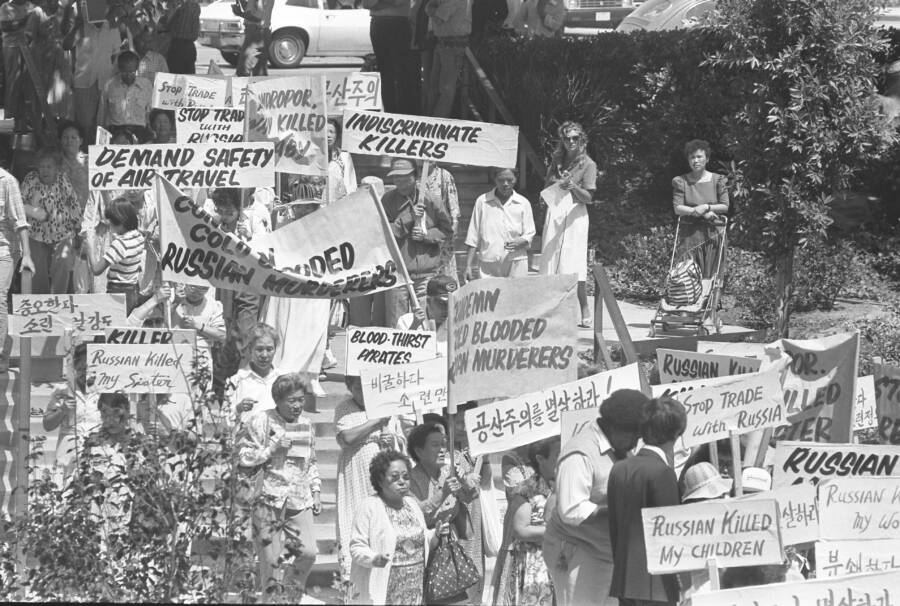
Los Angeles Times Photographic Collection/UCLA Library Digital CollectionsKorean Americans in Long Beach, California, protesting the attack on Korean Air Lines Flight 007. Sept. 7, 1983.
And as more information came out about the incident, the political fallout continued to escalate.
The Turbulent Aftermath Of The Korean Air Lines Flight 007 Tragedy
The International Civil Aviation Organization launched its own investigation of the tragedy and came to two conclusions:
According to their findings, “The flight crew did not implement the proper navigation procedures to ensure the aircraft remained on its assigned track throughout the flight.” In addition, “The U.S.S.R. air defence command assumed that KE 007 was a United States RC-135 reconnaissance aircraft before they ordered its destruction.”
However, the Soviet Union wasn’t innocent by any means. They had found the wreckage in the Sea of Japan and secretly retrieved the plane’s voice recorder, which confirmed that the flight wasn’t part of a U.S. reconnaissance mission. Soviet leadership had been desperate to maintain this narrative as justification for shooting down the aircraft.
Then, in 1996, Gennadiy Osipovich, the pilot who downed Korean Air Lines Flight 007, made a shocking revelation. He told The New York Times, “I saw two rows of windows and knew that this was a Boeing. I knew this was a civilian plane. But for me this meant nothing. It is easy to turn a civilian type plane into one for military use… I did not tell the ground that it was a Boeing-type plane. They did not ask me.”
It was also discovered that Soviet forces had seen that the passenger plane had navigational lights, which a military aircraft wouldn’t have been using during a spy mission. Still, they decided to fire the missiles, killing hundreds of innocent people.

Public DomainShips search for the wreckage of Korean Air Lines Flight 007 during recovery operations in the Sea of Japan. Sept. 17, 1983.
The incident went on to have major consequences for air travel. President Reagan noted in his national address that Soviet military planes were not equipped with international radio wavelengths, communication through which could have prevented the fatal aerial escalation in 1983. As a result, the U.S. announced that Global Positioning System (GPS) would be standardized and freely available for civil aviation.
The tragedy also fueled conspiracy theories that continue to this day. One claims that the U.S. downed the plane itself to kill Rep. Larry McDonald, who had spoken out against industrialists such as the Rockefellers and their alleged efforts to create a “one-world government.”
What’s more, divers exploring the crash site purportedly found very little luggage and only a few bodies. They stated that it looked as if the debris had been dragged to the seafloor. The Soviets also claimed that former president Richard Nixon was expected to be on the plane — until the CIA warned him not to board.
In the end, however, no conspiracy theory can change the fact that 269 people lost their lives due to navigational error, political mistrust, and the heightened tensions of the Cold War.
After reading about the tragedy of Korean Air Lines Flight 007, go inside the worst plane crashes in aviation history. Then, learn about Camp Century, the U.S. military base built in Greenland during the Cold War.
The post The Tragic Story Of Korean Air Lines Flight 007, The Civilian Plane Shot Down In 1983 appeared first on All That's Interesting.

Utah Department of Cultural & Community EngagementArchaeologists and volunteers teamed up to uncover more than 5,000 artifacts at Alta Ski Area near Salt Lake City.
In the summer of 2025, the installation of snowmaking pipes at Utah’s Alta Ski Area uncovered thousands of relics from a mining town that stood at the site more than a century ago. Alta was founded around 1865 to house prospectors working in the silver mines of Little Cottonwood Canyon, but it was mostly destroyed 20 years later by an avalanche and subsequent fire.
The area where the excavations took place was once a busy thoroughfare known as Water Street. Archaeologists and volunteers unearthed bottles, shoe soles, bullets, a leather mining hat, and much more, revealing the intimate details of daily life in Alta in the late 19th century.
An Unexpected Archaeological Treasure Trove At Alta Ski Area
When the U.S. Forest Service asked archaeologist Jeremy Moore to oversee planned construction work at Alta Ski Area last summer, Moore didn’t expect to find much, particularly after the first day of the dig was uneventful. But toward the end of day two, historical artifacts began emerging from the dirt.
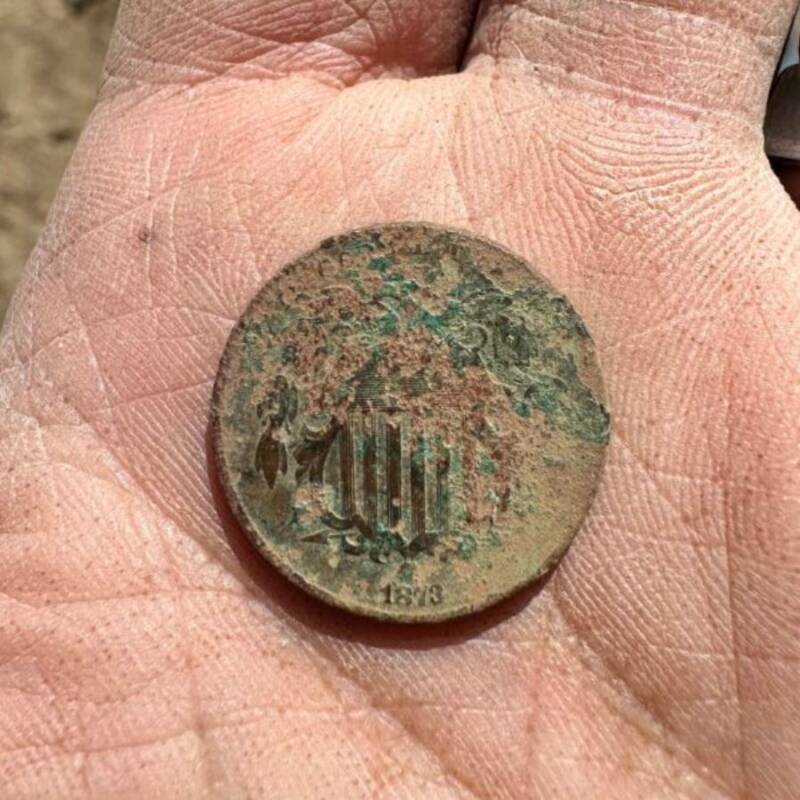
Utah State Historic Preservation OfficeA coin from 1873 that was uncovered during excavations at Alta.
As Moore told The Salt Lake Tribune, “Essentially, I’m one person here and my job is to kind of watch and make sure [the workers digging the trench] are not going to mess anything up, but there are already hundreds and hundreds of things, and I’m trying to screen dirt while I’m watching and trying to pull out artifacts.”
Many of the items were in pristine condition, from bottles and coins to clothing and bullets. They were the remnants of the 19th-century mining town of Alta, which was built at the site of the current ski resort around 1865.
When it became clear that there were still thousands of artifacts to uncover, the Utah State Historic Preservation Office called in volunteers to help. Over the following days, they found bones, shoe soles, cookware and fine china, ink wells, pistols, a 16-pound dumbbell, perfume bottles, and more.
One bottle still had a label for Dr. Crossman’s Specific Mixture, which was marketed as a cure for “Gonorrhoea, Gleets, Strictures, and analogous complaints of the Organs of Generation.” Another, still corked, was full of alcohol. It’s currently being analyzed, and so far, experts believe it’s an apple-based sherry or cider.

Utah Department of Cultural & Community EngagementA 150-year-old corked bottle was still full of alcohol, which is believed to be sherry or cider.
Perhaps the most fascinating artifact was an intact leather hat with two small holes where miners would have inserted a “Sticking Tommy,” a piece of iron that held a candle to create a makeshift headlamp.
While none of these discoveries are particularly valuable or groundbreaking, they do show what day-to-day life was like for the miners and their families who lived in Alta more than a century ago.
The History Behind The 19th-Century Mining Town Of Alta, Utah
In the 1860s, silver was discovered in Utah’s Little Cottonwood Canyon, and several small communities were built to house the miners flocking to the area. One of these was Alta, which was constructed on a flat stretch along Little Cottonwood Creek just outside of Salt Lake City.
Saloons, brothels, stores, butcher shops, laundromats, hotels, restaurants, Chinese apothecaries, and houses soon popped up around Water Street, forming a town of more than 1,000 people that thrived until the mid-1870s. Then, the falling value of silver led to a drop in population, but around 300 residents remained.
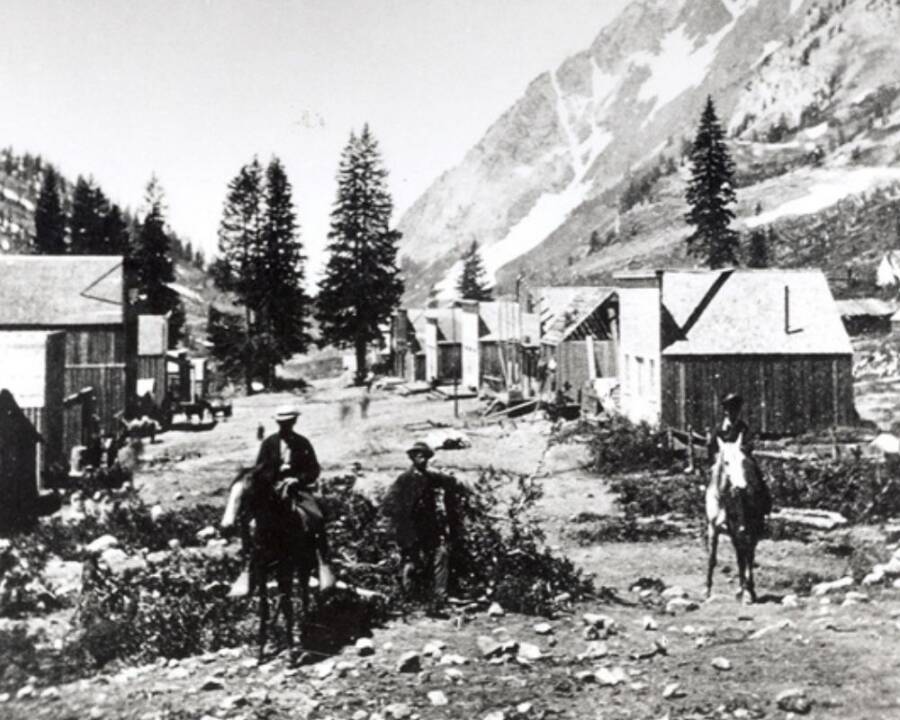
Utah State Historical SocietyThe town of Alta in the 1870s, when it was home to more than 1,000 silver miners and their families.
But in 1885, disaster struck. A massive avalanche destroyed much of Alta and killed at least 13 people. An article in The Salt Lake Herald from February 15, 1885, declared “The Dread Avalanche Sweeps Over the Town… Demolishing all the Houses in the Place but Seven — A Terrible Disaster.”
In the aftermath of the avalanche, a fire destroyed many of the remaining structures, and Alta was all but abandoned. However, it was these very tragedies that preserved so many artifacts for more than a century. The snow, ash, and dirt covered the objects and discouraged looters, while the cold temperatures for much of the year slowed the items’ decay.
So far, between 5,000 and 6,000 artifacts have been uncovered, but archaeologists think there may be a million more still buried beneath Alta Ski Area. They hope to conduct another dig this coming summer to learn even more about the long-lost mining town and the people who lived there.
After learning about the mining town artifacts found at a Utah ski resort, look through 33 photos of other Wild West mining towns. Then, go inside 13 of America’s eeriest ghost towns.
The post Thousands Of Artifacts From A 19th-Century Mining Town Were Unearthed In Utah During Construction At A Luxury Ski Resort appeared first on All That's Interesting.
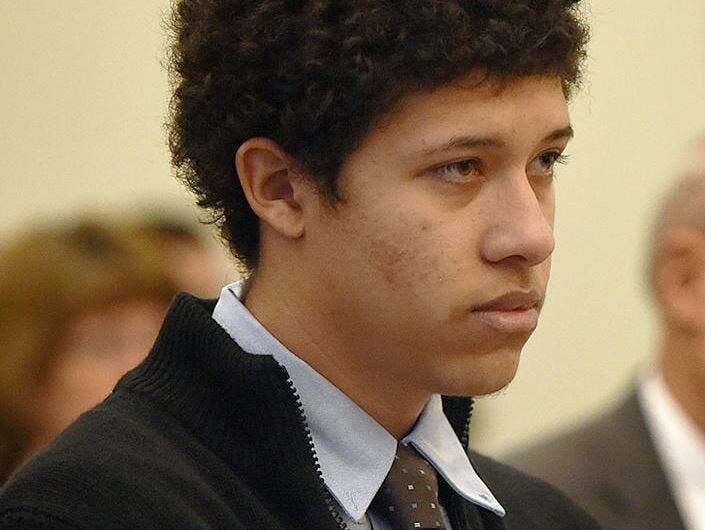
Getty ImagesPhilip Chism was just 14 when he brutalized and murdered his math teacher Colleen Ritzer.
On October 22, 2013, a ninth grader at Danvers High School in Massachusetts named Philip Chism did the unthinkable. At just 14, he brutalized his 24-year-old math teacher, Colleen Ritzer.
The reportedly joyful Ritzer was known to go out of her way to help her students with math and had asked Chism to stay after school that fateful day in October. She did not know the plot Chism had put into motion days before.
At the end of the school day, Philip Chism followed Ritzer into a school toilet. Wielding a box cutter, Chism robbed, raped, and killed her, then rolled her body in a garbage can to the woods behind the school. Chism then took himself into town and bought a movie ticket using Ritzer’s credit card.
When police caught him the following morning, Philip Chism had not washed his hands — and was still covered in Ritzer’s blood.
Who Was Philip Chism?
Philip Chism was born on January 21, 1999. In the fall of 2013, Chism had recently moved from Tennessee to Danvers, Massachusetts, where he wasn’t that well known at the school apart from being a good soccer player. One report did refer to him as “anti-social” and “really tired and out of it.” It was also reported that his mother was going through a difficult divorce at the time of his crime.

ABC NewsColleen Ritzer was 24 when she was murdered. She is remembered by faculty and family as a caring teacher.
Colleen Ritzer, meanwhile, was a beloved member of the faculty. According to one struggling student, she was always positive and happy. “She made me feel like I wanted to go to math class,” they told the The New York Times .
And Philip Chism was no exception to her. A student overheard Ritzer complimenting Chism on his drawing skills at the end of class and then requested that he stay after school so she could help him prepare for an upcoming test.
Chism then reportedly grew visibly upset at Ritzer when she mentioned his move from Tennessee. Ritzer consequently changed the subject, but the student witness later observed Chism apparently talking to himself.
Hours later, Philip Chism did the unthinkable.
The Brutal Murder Of Colleen Ritzer
Danvers HS Surveillance VideoFootage of Philip Chism from the school’s CCTV camera on the day he killed Ritzer.
On the morning of Oct. 22, 2013, the Danvers High School’s newly-installed security camera system showed 14-year-old Philip Chism arriving at school with several bags, which he placed into his locker. Contained within his bags were a box cutter, mask, gloves, and a change of clothing.
The school security footage showed Ritzer exiting the classroom toward the second-floor women’s bathroom at around 2:54 p.m.
Chism can then be seen walking into the hallway looking her way, then ducking back into the classroom and reemerging with his hood over his head. Trailing Ritzer, Chism pulled on gloves as he entered the same bathroom.
Chism proceeded to rob Ritzer of her credit cards, iPhone, and her underwear, before raping and stabbing her 16 times in the neck with the box cutter. A female student entered the bathroom at one point, but glimpsing someone partially unclothed with a pile of garments on the floor, she quickly left thinking they were getting changed.
Philip Chism appeared in several different outfits throughout the crime, which police later said showed how he’d planned the murder in advance. At 3:07 p.m., Chism left the bathroom with a hood over his head and walked outside to the parking lot. When he came back in two minutes later, he was wearing a new white T-shirt.
Chism then went back to the classroom in a different red hooded sweatshirt over his head, then returned to the bathroom at 3:16 p.m. pulling a recycling bin. He reemerged in the white T-shirt and a black mask, pulling the bin with Ritzer’s body toward an elevator and then outside of the school.
He dragged the bin all the way to a wooded area behind the school, where he raped Ritzer’s again, but with a tree branch.
Cameras then picked Philip Chism up coming back into the school, wearing a black shirt and glasses and carrying a pair of bloody jeans, completing his macabre fashion show.
Philip Chism Faces Justice For Colleen Ritzer’s Murder
Danvers Police/Public DomainPhilip Chism pulls Colleen Ritzer’s body outside Danvers High School.
When neither Philip Chism nor Colleen Ritzer were seen after school, they were both reported missing. After speaking with students and staff at the school, police found blood in the bathroom, Ritzer’s bag, the bloody recycling bin, and Ritzer’s clothing near the cross-country path the woods behind the school.
By 11:45 p.m., the CCTV footage was acquired and scoured — and Chism became a suspect. Meanwhile, Chism used Ritzer’s credit card to buy a movie ticket, then left the theater to steal a knife from another store. He was walking along a darkened highway outside Danvers when he was stopped by police on a routine safety call at 12:30 a.m.
A frisk search of Chism for identification turned up Ritzer’s credit card and driver’s license. Chism was taken to the local station where his backpack was searched and Ritzer’s purse and underwear were found, alongside the box cutter covered with dried blood.
According to court documents, when Philip Chism was asked whose blood it was, he said, “It’s the girl’s.” When asked if he knew where she was, he chillingly replied, “She’s buried in the woods.”
At 3 a.m., police discovered the gruesome sight of Ritzer’s half naked body covered with leaves near a pair of stained white gloves. A branch had to be pulled from her vagina, and a folded handwritten note lay nearby worded, “I hate you all.”
Philip Chism was indicted for the murder, aggravated rape, and armed robbery of Colleen Ritzer. He was tried as an adult, and on Feb. 26, 2016, he was sentenced to serve at least 40 years in prison.
After learning the disturbing story of Philip Chism, read about how Maddie Clifton was brutally murdered by her 14-year-old neighbor. Then, learn the chilling case of Daniel LaPlante, the teenager who lived in his victim’s walls.
The post The Disturbing Case Of Philip Chism, The High School Freshman Who Murdered His Teacher In The School Bathroom appeared first on All That's Interesting.
Richard Wershe Jr. was arrested in his home in 1988 with 17 pounds of cocaine. He was 17 years old. Reporters and the police broadcasted the teenager all over the news with headlines that called him the leader of a drug cartel. Wershe, the police claimed, was a dangerous cocaine godfather known to his underlings as “White Boy Rick.”
Convicted murderers came and went while Wershe was behind bars for possession. “I told on the wrong people,” Wershe confessed.
Public DomainRichard Wershe Jr.’s 1988 mugshot.
That’s because White Boy Rick wasn’t a drug lord — he was an FBI informant. At the age of 14, the FBI taught Wershe how to deal drugs and planted him inside one of the city’s most dangerous gangs.
But when Wershe uncovered a police corruption problem that ended with the mayor of Detroit, the men who trained him cut him loose. Then they had him thrown in prison for life.
Richard Wershe Jr. Becomes An Informant
Click On Detroit/WDIV/YouTubeRick Wershe Jr. in prison.
“I was brought into this life by law enforcement,” Richard Wershe Jr. reported to Vice, “I was taught it, they left me alone, and a year later I’m busted and put in jail for life.”
The law enforcement to which he’s referring are the FBI agents who came to his door for his father in 1984.
White Boy Rick’s father, Richard Wershe Sr., wasn’t a man who lived entirely within the law. He raised his son and daughter alone in a Detroit slum overrun with crack addicts and gangsters. He made his living running scams and selling guns out of his own home.
The FBI, though, wasn’t there to send him to prison. They wanted information. They came with an envelope full of pictures and hoped that Richard Wershe Sr. would recognize the faces. Richard Wershe Sr. didn’t have any answers but his 14-year-old son, Richard Wershe Jr., knew every name.
The 14-year-old wasn’t a drug dealer or a gangster. Though he wasn’t an angel — he already started looting people’s homes for cash — Wershe Jr. had never touched cocaine in his life. He was just aware of what went on around him in his community, a streetwise kid, and the FBI was willing to pay to find out just how much he was aware of.
Wershe Jr.’s father saw this as an opportunity to keep food on their table. As Richard Wershe Sr. put it:
“I took the money. I wasn’t doing all that well at the time. And I thought it was the right thing – keep some drug dealers off the street and get paid for it.”
And to the 14-year-old Richard Wershe Jr., it was an adventure:
“What kid doesn’t want to be an undercover cop when he’s 14, 15 years old?”
That’s how Richard Wershe Jr. became the FBI’s youngest informant.
White Boy Rick Is Born
Click On Detroit/WDIV/YouTubeRick Wershe Jr. in court, shortly after his arrest.
Richard Wershe Jr. was good at what he did. He went above and beyond what the FBI asked him to do.
He took up with the Curry Gang, the foremost drug slingers in Detroit at the time, and made friends with dangerous criminals so that he could get better information.
The FBI, in turn, began to train the young Wershe Jr. on how to be a gangster. They taught him how to pedal drugs on the street. They even gave him money specifically to buy cocaine so that the FBI could use it as evidence.
To put a 14-year-old boy’s life at risk wasn’t exactly FBI protocol but “White Boy Rick” – as Wershe then began to call himself – was too useful to let go. According to FBI Agent John Anthony, at that time, White Boy Rick was the single most productive informant the FBI had in Detroit.
The FBI covered their tracks. On paper, they recorded White Boy Rick’s tips under his father’s name.
A 15-Year-Old Exposes Widespread Corruption In Detroit

Wikimedia CommonsColeman Young, the Detroit mayor who was allegedly involved in the police corruption scandal exposed by Rick Wershe Jr.
White Boy Rick, though, was a little bit too good. Pretty soon he uncovered a conspiracy that ran through the whole city.
Rick Wershe Jr. began to see the corruption when a 13-year-old boy was shot by the Curry Gang and the Detroit police did nothing about it. Their chief of homicide, Inspector Gilbert Hill, deliberately diverted the investigation away from the gang leader, Johnny Curry.
White Boy Rick knew this was because Johnny Curry was connected to Detroit Mayor Coleman Young; in fact, the king of Detroit crime, Johnny Curry, dated the mayor’s niece Cathy Volsan. In Mayor Young’s city, to get Curry into trouble was dangerous for himself and bad for his business. Curry, Rick found out, had slipped Inspector Hill a $10,000 bribe.
BoogeyMan Ben/YouTubeInspector Gil Hill was a minor celebrity. This picture of him is a still from his role in the movie Beverly Hills Cop.
His information helped uncover one of the biggest corruption cases in police history. More than a dozen police officers were implicated.
Inspector Hill and Mayor Young, though, would walk away free. According to one anonymous FBI agent, the agency was ordered to let the mayor go. The order came down the pipe that the nation didn’t want to deal with another news story about a corrupt mayor: “Washington didn’t want another Marion Barry,” the Washington D.C. mayor who had recently been caught smoking crack.
The Hit On White Boy Rick
Al Profit/YouTubeNate Boone Craft, the convicted hitman who claims he was hired to kill Rick Wershe Jr.
The case had grown exponentially. The FBI was now involved in mayoral corruption. But they worried that if they took action on their findings, the agency would get wind of their all-too-young informant.
So the FBI left Richard Wershe Jr. to fend for himself. He was forced to find a way to navigate the streets and make ends meet without the FBI’s protection, which wasn’t easy. Though Rick didn’t know it, there was a price on his head.
Nate Boone Craft, a hitman with thirty confirmed murders under his belt, claims that Inspector Gil Hill offered him a small fortune to kill the teenager who knew too much. Craft, years later, told reporters:
“I was told to kill White Boy Rick. He said, ‘$125,000, I’ll make sure you get it as long as that boy is dead.’ His keyword, ‘Dead.’ … This came from Gil Hill’s mouth to me.”
Rick Wershe had already taken a bullet to the stomach from another Curry Gang member. The man who shot him had claimed it was an accident but Rick had his suspicions that there were people out to get him. He needed protection, and he needed money.
White Boy Rick only knew one way to do it. He did what the FBI taught him to do.
He sold cocaine.
A 16-Year-Old Detroit Drug Lord

Click On Detroit/WDIV/YouTubeRick Wershe Jr. in prison.
In Detroit in the ’80s, everyone knew when White Boy Rick was around. He might have been a pimple-faced teenager who struggled to pull off a mustache but he came out in style.
Rick went out in mink coats wrapped up with a belt made of solid gold and a diamond-encrusted Rolex on his wrist. He’d roll up in a white jeep he was too young to legally drive, with “The Snowman” emblazoned on the back.
Johnny Curry was history. Rick’s information had gotten the drug lord locked up behind bars and White Boy Rick began to take his place. He’d even taken his girlfriend, Cathy Volsan, the mayor’s niece.
Every drug dealer was impressed. One gang lord, B.J. Chambers, praised White Boy Rick’s climb up to the top:
“He rose all the way through the ranks. He did it just as big as me, the Curry brothers, Maserati Rick — whoever you want to name.”
The FBI had nobody to blame for this new drug lord but themselves. Agent Gregg Schwarz would later admit:
“We brought him into the drug world. And what happened? He became a drug dealer. And we’re surprised by that?”
17-Year-Old Richard Wershe Jr. Goes On Trial
White Boy Rick was still a few days shy of his 18th birthday when the Detroit police broke down his front door. They caught him with 17 pounds of cocaine. The police took White Boy Rick right to the media.
The baby-faced teenager, the news said, wasn’t just a drug dealer. He was a kingpin. They put up pictures of a criminal hierarchy, and each one showed 17-year-old White Boy Rick at the top of the ladder with every dangerous, hardened criminal in the city listed as his underling.
It was a bit of stretch. White Boy Rick was certainly involved in drugs, and he definitely moved cocaine. But the news made him bigger than he was because the police were out for blood.
During his trial, the judge had no sympathy. White Boy Rick was “worse than a mass murderer”.
Richard Wershe Sr. tried to get the FBI to help his son but they refused to say a word. Richard Wershe Jr. was sent to prison for life at 18 years old.
A 48-Year-Old Up For Parole And The Hollywood Adaptation Of White Boy Rick

Click On Detroit/WDIVRichard Wershe Jr. during his parole hearing.
It took 30 years for Richard Wershe Jr. to win his freedom. While the people he exposed were sent free, Wershe stayed behind bars and spent the bulk of his life in a jail cell.
It was journalism that saved him. In 2014, freelance writer Evan Hughes read Wershe’s seemingly outlandish claims about a conspiracy that had put him behind bars and started to look into whether they were true. When he followed up with the FBI, Hughes found out that Wershe was telling the truth.
Pandemonium followed. Hollywood went to work making a film version of White Boy Rick’s life, while an HBO documentary crew moved into the prison to film a tell-all about his story.
For the first time in 30 years, White Boy Rick’s name was back in the headlines – but this time, the real story was printed underneath.
White Boy Rick’s new fame changed his life. On July 14, 2017, just a few days shy of his 48th birthday, Richard Wershe Jr. was finally granted parole.
“I’ve lost 30 years of my life,” Wershe said during the parole meeting. “All I can give you is my word. I’ll never commit another crime.”
It won’t be easy. Even now, the only trade Wershe knows is crime. From the moment he started high school, he was pulled away from a normal life and dragged into a life on the streets.
But Richard Wershe Jr. is ready to try. “All I can do is try to be the best man I can from this day forward,” Wershe says. “I can’t look back.”
After learning about White Boy Rick, find out about the unjust convictions of Richard Glossip and of Lawrence McKinney, who was given $75 to make up for 31 years of wrongful imprisonment.
The post The Story Of Richard Wershe Jr., The 1980s Detroit Drug Lord Known As ‘White Boy Rick’ appeared first on All That's Interesting.

Alvintrusty/Wikimedia CommonsArtist and photographer Walter Wick, one of the creators of the I Spy series.
Most people might not immediately recognize the name Walter Wick, but they are most assuredly familiar with his work. In 1991, Wick began collaborating with writer Jean Marzollo to create a series of books that would go on to sell millions of copies worldwide: the I Spy picture riddles.
Wick began as a commercial photographer, but by the 1980s, he’d started creating photo illustrations and puzzles for books and magazines. That hobby expanded into an incredible career, and today, he’s celebrated for his pictures that appear in the I Spy and Can You See What I See? books.
Walter Wick didn’t just photograph the elaborate puzzles, though — he built them. From miniature towns to intricate Rube Goldberg machines, Wick painstakingly designed each page of his books to capture the whimsy of childhood.
Even now, more than 30 years after Wick’s first I Spy book was published, his work continues to enthrall children around the world.
Walter Wick’s Early Life And Career
Walter Wick was born in Connecticut on Feb. 23, 1953, and grew up in East Granby. Living in a small, rural town meant that he had to find ways to entertain himself. So, he began to tinker with things, making his own toys out of various objects he found lying around the house.
When he was eight, his brother introduced him to photography. Wick reflected on the first roll of film he ever used in a blog post on his website, describing the excitement and frustration of learning how to take good photos.
“I distinctly remember the moment for both the failures and success when the prints came back from the drugstore,” he wrote. “The cause-and-effect aftermath lingered in my head years later. But lost pictures are no different than any other undocumented childhood memories: over time, you begin to wonder if certain events of your life actually happened.”

Walter WickWalter Wick at the age of eight.
It wasn’t until later in life, after high school, that Walter Wick decided to seriously pursue photography as a career. He studied photojournalism at Paier College of Art in Connecticut, graduating in 1973. He then spent several years working as a lab technician and photographer’s assistant.
In 1978, Wick moved to New York City and opened a small commercial photography studio. However, finding clients was difficult, so he spent much of his time developing new ideas and techniques.

Walter WickWalter Wick working on a scene called “Toppled” from his book Hey Seymour!
Wick married his wife, Linda Cheverton — a photo prop stylist for magazines and cookbooks — in 1980, and as his career continued to grow, he began working with magazines such as Psychology Today and Discover. Then, in 1981, he crafted his first photographic puzzle, “The Amazing Mirror Maze,” for the magazine Games.
He continued to contribute small puzzles to various publications over the next decade, but it wasn’t until 1991 that he and Jean Marzollo came up with the idea for I Spy. At the time, Marzollo was the editor of the Scholastic children’s magazine Let’s Find Out, and she hired Wick to photograph “fasteners” to include as a poster in an upcoming issue.
“I was organizing screws, paper clips and other odds and ends,” Wick recalled to Deseret News in 2009. “As I began sorting, I liked the way the objects looked spread out on my light box. After hours of careful arranging, I took a picture. This photograph of odds and ends was the spark that inspired the first I Spy book.”
Creating The Beloved I Spy Books
The first I Spy book was published in 1992, and it was a breakout success. Wick built the scenes and photographed them for each of the book’s pages, while Marzollo wrote the rhyming riddles that accompanied the images.

Walter WickWalter Wick designing one of his elaborate photographic illusions in 1993.
The popularity of the first I Spy book spawned seven more in the original series, in addition to compilations and spin-offs, each releasing to critical acclaim. But Walter Wick was no one-trick pony.
In 1997, he published A Drop of Water: A Book of Science and Wonder, which won the Boston Globe-Horn Book prize for nonfiction. The next year, The New York Times named Wick’s Optical Tricks one of the year’s “best illustrated children’s books.” And in 2002, Can You See What I See? remained on the bestseller list for a staggering 22 weeks.
Part of what made Wick’s work so successful was the sheer dedication he had to his craft. Speaking to PEOPLE in 2024, Wick revealed that one of his most popular photographs from I Spy — “Levers, Ramps, and Pulleys” — was actually a functional machine, despite the fact that it would only appear in a still frame.

Walter Wick/I Spy“Levers, Ramps, and Pulleys” from I Spy School Days.
“[Jean Marzollo] just thought I was gonna do some levers, ramps, and pulleys in a scene, which would’ve been perfectly sufficient,” he said. “But I decided to make this machine and I said, ‘Well, it’s gotta do something. What’s it gonna do?’ I said, ‘I think it’s gonna pop a balloon.'”
So, Wick spent the next three weeks building what was effectively a Rube Goldberg machine out of tiny objects. “I came up with this Tinkertoy stand that held the balloon and held the thing that popped it at the same time,” he said. He settled on a pencil as the popper, but it had to be sharp, or “it would just bounce off the balloon,” explained Wick. “So I sharpened it and then I accidentally triggered it and almost killed myself with it.”
Wick has called creating these sets and scenes “a joy” — but his greatest pleasure is seeing how children react to his work.
How Walter Wick Continues To Spark Children’s Curiosity And Creativity
Feedback and questions from young readers were some of the motivating factors for Wick to continue making his books over the decades. In 2023, he told CT Insider about an instance in which a four-year-old asked him how he managed to get a doll pictured in one book to balance on one foot as if it was running.
“This is a child who couldn’t read but understood the toy shouldn’t be able to balance as I had it,” Wick said. “That question stuck with me. When you get questions like this, you realize they’re trying to reconcile their understanding of how the world works. I consider these inquiries from kids to be high-value engagement, so I try to always amplify that as much as I can.”

Walter WickWalter Wick working in his studio.
In order to expose his work to even more curious children, Wick has allowed his illustrations and models to appear at exhibitions across the country. An exhibit titled “I Spy! Walter Wick’s Hidden Wonders” also went on display at the Norman Rockwell Museum in 2025, showcasing decades of Wick’s photography.
Through these photos, Wick has provided millions of readers with hours of entertainment. But for the man behind the camera, creating the images brought just as much joy. More than three decades into his career, Walter Wick continues to inspire.
After learning about Walter Wick and his mind-bending photographs, meet Rosalind Walter, the woman behind Rosie the Riveter. Then, read about Stephen Wiltshire, the autistic artist who can draw entire cities from memory.
The post The Remarkable Worlds Of Walter Wick And His Beloved ‘I Spy’ Series appeared first on All That's Interesting.
Unsolved MysteriesMissy Munday, the model student stolen away by Jerry Strickland.
Missy Munday seemed to have everything going for her. Bright and dedicated to her studies, the 15-year-old straight-A student ranked in the top 10 percent of her class at Hancock High School in Maryland, played on the basketball team, and was an active member of the Future Homemakers of America. But everything changed in the spring of 1986.
It began with Jerry Strickland, a smooth-talking stranger in his 20s who arrived in Munday’s hometown, claiming that he wanted to build an orphanage. Instead, he struck up a relationship with the teenager.
Within months, Missy would disappear from her home. Before long, the runaway would also be at the center of a murder investigation – and millions would learn her story from an episode of Unsolved Mysteries that brought the police right to her and Strickland’s door.
How Missy Munday Met Jerry Strickler
Before her life took a sinister turn in the spring of 1986, Missy Munday was the very picture of small-town promise.
Growing up in the quiet community of Hancock, Maryland, the 15-year-old was a standout student, consistently ranking in the top 10 percent of her class at Hancock High School. Her academic excellence was matched by her involvement in school activities, and, by all accounts, she seemed to be a normal teenage girl working toward a bright future.
But as the Washington Post reported back in 1988, everything changed for Munday when Jerry Strickland arrived in town. Then in his mid-20s, Strickland approached Munday’s family about buying or renting a property.
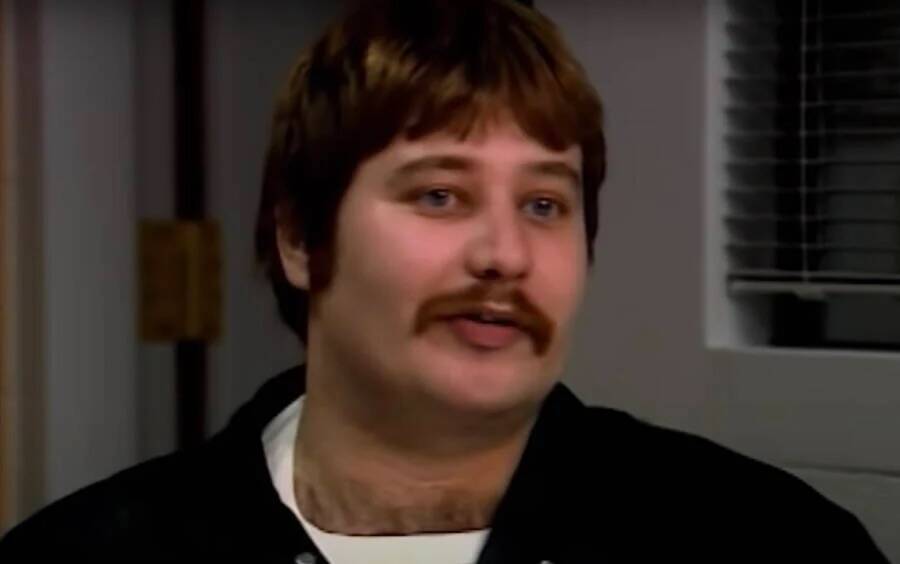
YouTubeJerry Strickland, the “smooth talker” who set his eyes on Missy Munday.
But soon Strickland’s attention wasn’t on real estate; it was on Munday.
He began to single her out, showering the teenager with the attention and validation. While her mother saw Strickland as a “smooth talker,” Munday was infatuated. And soon, she would make a life-changing decision.
The Disappearance Of Missy Munday In April 1986

YouTubeA school photograph of Missy Munday.
In April 1986, Missy Munday vanished. After going to school in the morning like normal, and promising to be home later, the honor student had left behind her textbooks, her friends, and her family.
In her place was a note, signaling she had run away voluntarily. At the same time, Jerry Strickland also vanished from the town of Hancock. It was assumed that they’d run off together, but Munday was still a teenager, and thus classified as a runaway. Though police searched for her, Munday and Strickland had seemingly vanished. The trail went cold.
For nearly a year, Munday’s family lived in agonizing uncertainty. They had no idea if their daughter was safe, where she was, or if she was even still in contact with the man who had lured her away.
The search for the missing teenager became a frustrating waiting game.
Meanwhile, hundreds of miles away in Michigan, Munday and Strickland were building a new life. Now 16, Munday had taken a job as an assistant manager at a Union 76 gas station near Pontiac. She and Strickland were seemingly living under the radar, far from their loved ones, hoping to stay undetected.
But soon the attention of the nation would fall upon them.
The Shocking Murder Of Elmer DeBoer
Find a GraveElmer DeBoer, the victim of Strickland and Munday.
On May 11, 1987, a man named Elmer DeBoer went to Union 76, as he often did. DeBoer was a courrier, and it was his job to pick up cash receipts from the gas stations in town. But on that morning, DeBoer vanished.
So did the $10,000 he was carrying. And so did the young gas station attendant whom he had befriended, a 16-year-old named Missy Munday.
A few hours later, DeBoer’s car was found in the gas station parking lot. The next day, he was found dead, with two bullet holes in the back of his head. But there was no sign of Munday.
Police later came to believe that Strickland had used Munday to lure DeBoer away from his car, then robbed and murdered him. At that point, Strickland and Munday used cash to buy a car nearby, and disappeared yet again.
Thus, the search for Missy Munday, which had begun as a hunt for a runaway, transformed into a nationwide manhunt for a suspected killer. And the break in her case came from a surprising source: a hit television show.
How Unsolved Mysteries Helped A Missing Teenage Runaway
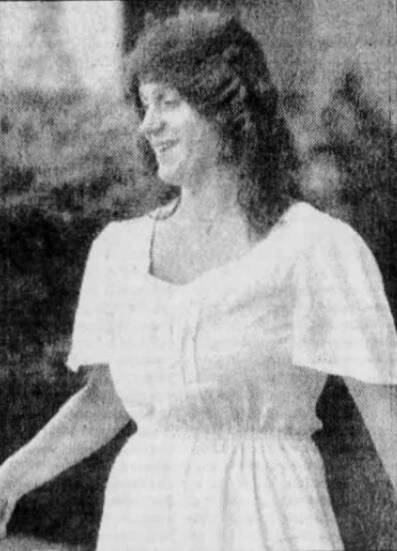
Unsolved MysteriesMissy Munday in court.
In February 1988, nearly a year after the murder of Elmer DeBoer, the story of the missing gas station assistant manager and the murdered courier was featured on the hit show Unsolved Mysteries.
The segment detailed the crime and the disappearance of Missy Munday and Jerry Strickland, broadcasting their faces to millions of viewers across the country. The response was immediate and decisive.
In Moses Lake, Washington, residents flooded the local police department with calls, all reporting the same thing: the couple from the show had moved into their community. He was working at KMart; she at a card shop.
But when officers arrived at their modest rental home, they were surprised to find the couple waiting for them. Missy and Strickland had watched the episode of Unsolved Mysteries too — they knew their time was up.
Though Strickland initially insisted on his innocence, Munday ultimately struck a deal with the prosecution. She agreed to testify against him, and the prosecution dropped the murdering and kidnapping charges against her.
Munday claimed that while she had known about the robbery, she had not known about DeBoer’s murder until after the fact. She testified that Strickland had told her afterward, “in case anything should ever happen, I think you ought to know that I did it.”
The jury was convinced. Jerry Strickland was convicted of first-degree murder and sentenced to life in prison without parole, plus an additional life term for kidnapping.
Thus, the girl who had once been a promising honor student had become a key player in a murder — and her testimony had sealed the fate of the man who had stolen her youth.
The Fallout Of The Trial
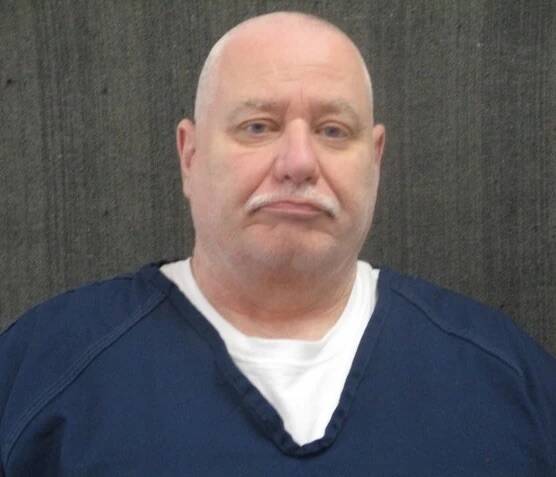
YouTubeJerry Strickland in prison.
Jerry Strickland and Missy Munday’s shared story had come to an end. For her role in the robbery, Missy Munday, tried as a juvenile, was sentenced to time at the Oakland County Children’s Village. But for Strickland, there would be no second act. He disappeared into the Michigan prison system, where he remains to this day.
For Missy Munday, however, things were a bit more complicated.
In her time on the run, she had given birth to Strickland’s son (his second, the other from a previous relationship), but she was still barely an adult. After serving her sentence at the juvenile facility at age 19, she returned to a world she thought she had left behind.
Over time, she faded from the public eye, leaving the true nature of her life after prison — whether she had found peace, redemption, or continued to be haunted by the past — hidden from the public eye.
After reading about Missy Munday, the teenager runaway who participated in a murder and who was found thanks to Unsolved Mysteries, look through these cold cases that remain unsolved to this day. Or, go inside the quest to identify the Zodiac Killer — and the most promising suspects who have emerged during the decades-long investigation.
The post Inside The Case Of Missy Munday, The Teenage Runaway Found Because Of ‘Unsolved Mysteries’ appeared first on All That's Interesting.

Jason Howery/StoryfulPaleontologist Jason Howery with the mammoth bone he found in a Missouri lake.
Today, Missouri consists largely of quiet rolling plains and thick leafy forests home to wildlife like deer and raccoons. But tens of thousands of years ago, during the Ice Age, the area was home to now-extinct behemoths like mastodons and giant ground sloths. Now, the bones of one of those prehistoric animals has been found.
Missouri paleontologist Jason Howery found the bone of a Columbian mammoth while searching for Ice Age remains — a spectacular discovery that sheds light on the state’s prehistoric past.
The Massive Mammoth Bone Found In A Missouri Lake
According to FOX4, Jason Howery has a long track record of finding Ice Age remains, including those of a giant deer, a horse, and a bison. But his most exciting find yet came during his search in Nodaway County, when Howery stumbled across a Columbian mammoth bone.
“When I first got there, it was the very first thing that I saw, and I looked down and there it was and I was like, ‘No way,'” Howery told FOX4. “There’s a specific texture to ice age bone that doesn’t feel like anything else in the world. When you feel it, it has this sticky, glassy texture to it. So as soon as my hands hit it, I was like, ‘I know this feeling.'”
This mammoth bone was located at a known “butcher site,” one of a dozen such sites in North America where prehistoric humans once butchered their prey en masse. The remains of prehistoric animals, as well as human tools, had been found at the site before.

Jason Howery/StoryfulJason Howery found the mammoth bone in a lake, and instantly knew by its texture that he’d found something from the Ice Age.
“There have been somewhere around fifty confirmed butcher sites in North America,” Howery explained. “It’s rare. It’s extremely rare.”
Howery, a self-funded paleontologist, is hoping to raise money to learn more about the bone. Ideally, he’d like to subject the bone to a CT scan and radiocarbon dating in order to determine its exact age.
But in the meantime, the bone simply stands as a remarkable artifact from Missouri’s prehistoric past.
Columbian Mammoths During The Ice Age
In the early Paleozoic era, Missouri was covered by a shallow sea, which shrank over the following 200 million years. During the Ice Age, glaciers coated the north part of the state, whereas the southern part of the state was home to prehistoric beasts like camels, mastodons, and mammoths.

Public DomainThe bone that Howery found belonged to a Columbian mammoth, an enormous creature that once roamed across North America.
The bone that Howery found belonged to a Columbian mammoth, a creature that once roamed across North America. According to the National Park Service, its bones have been found throughout the United States and Mexico, where mammoths thrived in areas rich with grasslands, savannas, and aspen parklands. Though both male and female Columbian mammoths grew tusks, the males of the species were considerably larger, and could grow up to 13 feet tall at the shoulder while weighing roughly 22,000 pounds.
So how did prehistoric humans hunt such massive animals? The answer is still up for debate, but researchers have posited that our ancestors may have thrown spears, teamed up to take down the animals, impaled charging animals, or scavenged the remains of animals who were already wounded.
Howery is hoping to inspire curiosity about questions like these. He shares his Ice Age discoveries with community programs and schools, with the goal to get kids to “put their phones down and get out into nature and explore…[the] history that is still out there right below their feet.”
In the meantime, he’ll keep searching for Ice Age remains across Missouri. But as Howery recently said, even searches that turn up nothing are still satisfying adventures.
“You don’t always find things,” he remarked, “but you find peace, you know?”
After reading about the mammoth bone that was found by a local paleontologist in Missouri, discover the astounding stories of some of the most incredible prehistoric animals to ever walk the Earth. Then, go inside the curious question of when exactly mammoths went extinct.
The post An Amateur Paleontologist In Missouri Just Pulled An Enormous Mammoth Bone Out Of A Lake appeared first on All That's Interesting.

Jesse Grant/WireImage for Yari Film Group/Getty“Rowdy” Roddy Piper, pictured in 2007.
Superstar wrestler “Rowdy” Roddy Piper died suddenly and unexpectedly on July 31, 2015, in his sleep at the age of 61. Given his relatively young age, fans and colleagues were heartbroken at his passing, and when the news broke at a professional wrestling convention in North Carolina, emcees held a 10-bell salute, then shared their memories of this singular performer.
Roddy Piper’s larger-than-life personality defined his career, where he often played the part of the villain in the World Wrestling Federation (now World Wrestling Entertainment) throughout the 1980s, opposite the likes of the legendary Hulk Hogan.
In all, Piper was a wrestler for 45 years, but his high blood pressure would ultimately do him in. After years of suffering from hypertension, Roddy Piper’s death was caused by a blood clot that led to a heart attack. But years after his demise, Piper’s legacy as the ultimate wrestling villain lives on.
Roddy Piper’s Early Life And Wrestling Career
Roddy Piper endured a difficult childhood that involved moving often. His troubled home life, including his relationship with his father, eventually led him to leave home and live on the streets at only 13.
Piper began his career at 15 years old when he was living in a youth hostel. A priest told him that he could earn $25 if he competed in a professional wrestling match.
The extra money appealed to the teen, so he jumped at the chance and earned his first wrestling name as “Roddy the Piper” because of the bagpipes he decided to use as a gimmick in his act.
As reported by Pro Wrestling Stories, the bagpipes were an important part of Piper’s life.
“I picked up the bagpipes somehow,” Piper said. “Those bagpipes have been my entire life. It was my way of escaping when I didn’t have any place to go.”
Incorporating them into his persona was an easy thing to do, and his name even lent itself to this gimmick.
In addition to the bagpipes, Piper used wrestling and boxing as ways to get out his pent-up anger and aggression. These stress-relieving techniques soon helped him into a new career.
His first match was against Larry “The Axe” Hennig, who towered over the 15-year-old at 6’5″ and 320 pounds. Piper lost in spectacular fashion in just 10 seconds, which was the shortest match ever at the Winnipeg Arena.
Rowdy Piper’s Big Break And Rise to Stardom
Piper first came to wrestling prominence in a 45-minute beating at the urging of wrestler Leo Garibaldi. Piper fought Java Ruuk, but upon Garibaldi’s advice, didn’t touch him and let Ruuk wail on him for 45 minutes. He then started managing Ruuk the next week.
During the 1970s, Piper worked for NWA Hollywood Wrestling and the American Wrestling Association (AWA). “Judo” Gene LeBell tutored the young wrestler and helped form him into the star he would become. At this point, he began to feed into the villain persona that would follow him for most of his career.
His first impressions were not positive ones, but they gave him some attention. Piper insulted Mexican fans by saying he would play their National Anthem on the bagpipes but then launched into a rendition of “La Cucaracha” instead. Riots ensued following the insult.
How He Forged His Greatest Legacy As A Wrestling Villain
Getty ImagesRoddy Piper, in a publicity image for John Carpenter’s cult classic 1987 sci-fi thriller They Live.
The 1980s brought about Roddy Piper’s true rise to fame when he joined the World Wrestling Federation (WWF, now the WWE) in 1984. He helped bring the franchise into the limelight.
Piper didn’t wrestle initially due to an injury he suffered after Starrcade ’83 in a dog collar match against Greg Valentine. The match, which was Piper’s idea, involved the two men, each wearing collars connected by a chain.
They then beat each other with this chain and it ended in Piper winning the match. While the match was one of the most famous of his career, Piper suffered some brutal injuries, including losing most of his hearing in his left ear.
Roddy Piper eventually hosted the WWE interview segment “Piper’s Pit” in a format where his interviews often became combative, due to his wit and ability to think quickly on his feet. More than one interviewee got mad and acted out against the charismatic host.
Piper often manipulated them with a barrage of questions until they got fed up with the whole thing. There was one interview where he broke a coconut over Jimmy “Super Fly” Snuka’s head and another interview where Andre the Giant himself flung Piper through the air.
When 1985 came around, WrestleMania was introduced after Piper’s famous matches with Hogan. It built upon the feud that sprang up between the two, and it became an annual event.
Piper last competed — and won — against Adrian Adonis in WrestleMania III before a brief retirement. Not only did Piper win with a sleeper hold, he even shaved his opponent’s head afterwards.
Like many other famous wrestlers, Piper then tried his hand at acting, most notably in John Carpenter’s 1987 film They Live. The legendary line, “I have come to chew bubble gum, and kick ass, and I’m all out of bubble gum,” was actually an original ad lib by Piper in that sci-fi classic.
Piper returned to wrestling in 1992, and in 2005 was inducted into the WWE Hall of Fame by Ric Flair, who called him, “the most gifted entertainer in the history of professional wrestling.”
How Did ‘Rowdy’ Roddy Piper Die?
While heart attacks are not an uncommon way to go, the fact that Roddy Piper was only 61 was truly shocking for fans. After years of high blood pressure, it finally caught up with him in the form of a blood clot in one of his lungs, which triggered the heart attack that took Piper’s life.
High blood pressure wasn’t Roddy Piper’s only health struggle. In 2006 he was diagnosed with Hodgkin’s Lymphoma, but beat cancer and was cancer-free at the time of his death. Beating cancer was far from Piper’s only adventure, though.
He once told The Oregonian:
“I’ve been around the world seven times. I’ve been stabbed three times, been down in an airplane and once dated the Bearded Lady. I’ve had Jo-Jo the Dog-Faced Boy as a tag-team partner. I’ve been in 30 car crashes, none of ’em my fault, I swear … OK, they were probably all my fault.”
Piper also eerily predicted that he wouldn’t make it to age 65, in a 2003 HBO special, according to the New York Daily News.
He was, tragically, proven correct on July 31, 2015. Piper suffered his fatal heart attack days after leaving longtime friend Hulk Hogan a voicemail, in which he told him that he was “just walking with Jesus.”
Hogan later said of Piper’s passing, “I will forever miss him. He was my best friend. He is a legend. “God’s gain is our loss. May his family in this time of need, find peace.”
If you enjoyed reading about Roddy Piper, read about Abraham Lincoln’s wrestling career. Then, about serial killer and pro wrestler Juana Barraza.
The post Inside The Tragic Death Of ‘Rowdy’ Roddy Piper, The Greatest Villain In Wrestling History appeared first on All That's Interesting.

Public DomainSherry Shriner espoused conspiracy theories about reptilians, NATO death squads, and the end of the world.
On July 15, 2017, Pennsylvania police officers arrived at the Coolbaugh Township studio apartment of 32-year-old Steven Mineo to find him dead on the floor with a bullet hole in his forehead. His 42-year-old girlfriend Barbara Rogers had shot him in the head and claimed that Mineo wanted to die because an online cult run by a woman named Sherry Shriner had ruined his life.
“My boyfriend had a gun,” Rogers told the authorities when she called 911 just after the shooting. “He told me to hold it here and press the trigger. Oh my God, he’s dead.”
The couple had been loyal followers of Sherry Shriner, who started espousing conspiracy theories online about an alien-reptile cult in the 2000s. She started with a Facebook page but eventually launched numerous websites and a radio station, then garnered over 20,000 YouTube subscribers — all devoted to exposing “shapeshifting” politicians.
“People call me a false prophet,” said Sherry Shriner. “Out of every four humans, only one is real … we are at critical mass.”
And as chronicled in the VICE series The Devil You Know, Steven Mineo wasn’t even the first to die after falling under Sherry Shriner’s sway. The self-described “Messenger of the Highest God” had brainwashed her followers into believing in nefarious reptilians for years — and even turned them against each other.
The Alien-Reptile Cult Of Sherry Shriner
Sherry J. Shriner was born in Cleveland, Ohio, in 1965. The self-made conspiracy pundit attended Kent State University, where the National Guard shot and killed four unarmed students protesting the Vietnam War in 1970. She graduated with a degree in Journalism, Political Science, and Criminal Justice in 1990.

Public DomainA screenshot of Sherry Shriner’s website and its assortment of fringe topics.
Shriner eventually came to believe in the notion of a New World Order. The conspiracy theory suggested that everyone from Queen Elizabeth II to Barack Obama were shapeshifting lizards whose alien overlords were hellbent on world domination and had placed them in power to establish a “one-world government.”
And with YouTube and Facebook, Shriner found a massive reach for her bizarre theories. In addition to a litany of self-published e-books and YouTube videos, the self-described “Servant, Prophet, Ambassador, Daughter, and Messenger of the Most High God” launched more than 10 websites like TheWatcherFiles.Com and OrgoneBlaster.Com — drawing in thousands of devotees.
“We’ve been seeing it on a massive scale,” said Shriner in 2016. “Celebrities, news announcers, even people in commercials. Everybody you see on TV, about 90 percent, is a clone or a synthetic robotoid.”
One of her followers was Kelly Pingilley, whom Shriner convinced at 19 years old not to waste the “last days” on Earth with college — and to work as a transcriber for her “Aliens in the News” radio show, instead. Pingilley was told the only true God was “Yahuah,” and took routine trips to New York to protest the New World Order.

Barbara Rogers (left) said Steven Mineo (right) became distraught after Sherry Shriner’s cult cast them out.
And on December 28, 2012, Pingilley was found dead from an overdose of 30 sleeping pills while wearing an orgone pendant. Orgone was a pseudoscientific substance Shriner claimed could defeat clones and “synthetic robotoids,” alike. After Pingilley’s death, Shriner sold replicas of her pendant online.
Barbara Rogers Shriner claimed Pingilley had been murdered by a “NATO death squad” for believing in Yahuah, and urged her followers to stay vigilant in the fight against world domination. At that point, Steven Mineo was still on board — but soon became fatally disillusioned with Shriner.
Barbara Rogers Kills Steven Mineo
Steven Mineo and Barbara Rogers were satisfied members of Sherry Shriner’s online following, but things soured when Rogers published a trivial Facebook post about enjoying raw meat and Shriner began branding her as inhuman.
The IndependentIn part due to their involvement in Sherry Shriner’s cult, Barbara Rogers killed her boyfriend Steven Mineo in his Pennsylvania home on July 15, 2017.
“There’s only certain types of people who crave the raw meat, because they crave blood,” said Shriner. “Those with the vampire demon in them.”
Mineo became convinced that Sherry Shriner was a fraud and uploaded five videos between May 29 and July 1, 2017, trying to expose her. Shriner and her loyalists essentially cast the couple out and continued to label Rogers a “Vampire Witch Reptilian Super Soldier.”
On July 15, 2017, Mineo and Rogers went to a local bar and drank until 2 a.m. before returning to his apartment in Tobyhanna. He took Rogers out back to shoot his gun in the woods. When they went back inside, he asked her to shoot him in the head.
The Pocono Mountain Regional Police were called at 2:25 a.m., with officers finding a .45-caliber Glock near Mineo’s body and a hole in his forehead. Rogers was taken to the Monroe County jail, adamant Mineo had forced her to pull the trigger.
Rogers made contradictory claims in custody. She admitted to shooting Mineo at his request but said she didn’t know the gun was loaded. She was offered a guilty plea deal for third-degree murder which carried a sentence between 10 and 15 years, but turned it down.
Meanwhile, Sherry Shriner claimed online that Rogers had “morphed her huge teeth out” and revealed her inhuman shape before killing Mineo. She said Mineo “hated me because I warned him she was going to destroy him and she did. He just couldn’t believe she would do that.”
The Lives Lost To Sherry Shriner
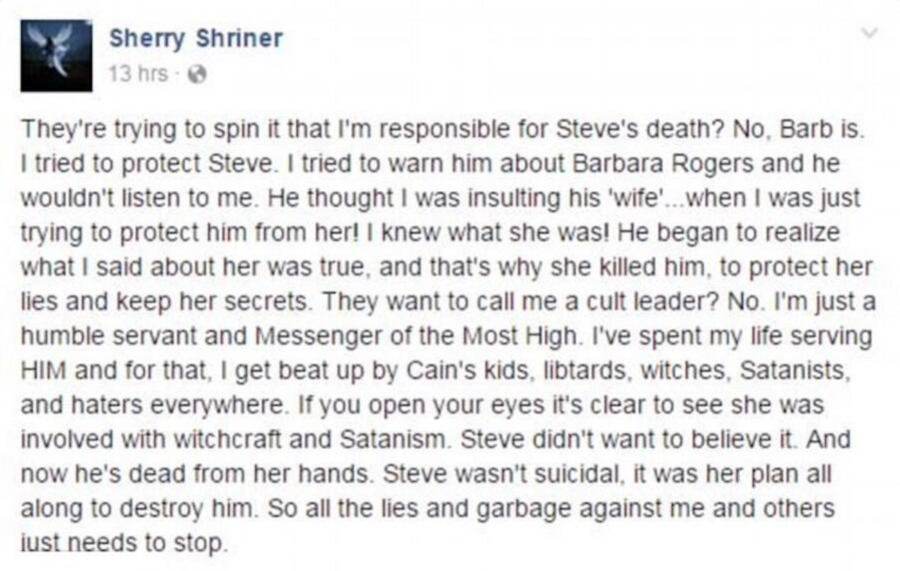
Sherry Shriner/FacebookOn Facebook, Sherry Shriner claimed that Steven Mineo wasn’t suicidal and that Barbara Rogers murdered him.
Sherry Shriner responded to Mineo’s death like she did Pingilley’s years before. She urged her followers to donate to the cause, selling orgone for up to $288 and launching GoFundMe campaigns, profiting until her death by natural causes months after Mineo was killed.
Rogers went to trial in March 2019 and was convicted of third-degree murder on June 10. She was sentenced to 15 to 40 years in prison and said that she “was not in control of the situation that happened. I was not the dominating party in that situation.”

Monroe County District AttorneyBarbara Rogers was sentenced to up to 40 years in prison in 2019.
“To me, it’s amazing that somebody could put a gun to somebody’s head, blow their brains out essentially, and a jury finds them guilty of third-degree murder and not first?” Mineo’s aunt, Jackie Mineo said. “She got a break. She got a big break today.”
Today, all that’s left is a legion of devotees wrangling with the cost of having believed in Sherry Shriner for years on end. Countless posts online mourned her death and wished her well. Other people, specifically relatives of Steven Mineo and Kelly Pingilley, hope self-taught sleuths become a little more discerning in the future.
“You’d think every time one of her predictions doesn’t come true, she’d lose followers, but that doesn’t seem to be the case,” said Nate Pingilley, Kelly’s brother. “If I had to say something of encouragement to people, it would be to tell them, look around you: The world isn’t ending.”
After learning about Sherry Shriner, read about the Denver Airport conspiracy. Then, learn about the U.S. government’s secret Montauk Project.
The post The Bizarre Story Of Sherry Shriner’s Cult — And The Murder It Inspired appeared first on All That's Interesting.
Wikimedia CommonsVirginia Woolf’s suicide note revealed the immense mental anguish the writer was in before she took her life.
The works of prolific English writer Virginia Woolf continue to influence culture a century after they were written. And while her renowned novels like Mrs. Dalloway and essays like A Room of One’s Own remain captivating to this day, so too does the story of Virginia Woolf’s suicide, when on an early spring day in 1941, she filled her pockets with rocks and walked into a nearby river.
But behind the tale of Virginia Woolf’s death is the haunting story of a woman who battled tragedy and mental illness for most of her life, ultimately succumbing to her own harrowing thoughts.
The Woman Behind The Tragedy
On January 25, 1882, Virginia Woolf, née Adeline Virginia Stephen, was born into a privileged English family.
Her parents, Sir Leslie Stephen and Julia Stephen, were prominent figures in their London community. Both were writers themselves, with Leslie working as the editor of the Dictionary of National Biography and Julia penning a book on her profession, nursing.
Woolf and her sister, Vanessa, were first schooled at home in their father’s vast library. Soon enough, they both attended the Ladies’ Department of King’s College London.
Wikimedia CommonsVirginia and her husband Leonard Woolf.
After graduating, Woolf fell swiftly into the world of literature, joining a circle of artists and intellectuals known as the Bloomsbury Group. This is where she met her husband, essayist Leonard Woolf.
Soon after their 1912 marriage, the couple bought a printing press, Hogarth Press, and published the works of writers such as Sigmund Freud and T.S. Eliot.
Woolf also started publishing her own writing, beginning with her first novel, 1915’s The Voyage Out. However, she didn’t reach true renown until her fourth novel, Mrs. Dalloway. Published in 1925, this novel tackled modernist themes such as feminism, mental illness, and homosexuality.
Woolf then published other notable and popular novels such as To the Lighthouse and Orlando, as well as feminist essays such as A Room of One’s Own and Three Guineas. All of these works led to her critical success as a revolutionary and prominent writer.
But, with several failed suicide attempts already behind her, it was clear that Woolf was not as well as her sharp writing and crystalline ideas might have suggested.
What Prompted Virginia Woolf’s Suicide?
Virginia Woolf once said, “Growing up is losing some illusions, in order to acquire others.”
Woolf lost many of her illusions as a young child through multiple instances of trauma. The first of these came when her half-brothers, George and Gerald Duckworth, began to sexually abuse her. In her personal essays, Woolf revealed that the abuse occurred from the time she was six up until she moved out of her family home at the age of 23.
While this sexual abuse most likely prompted many of her struggles with mental illness, her mother’s death in 1895 appeared to be what solidified them. Soon after, at the age of 13, Woolf had her first mental breakdown.
Wikimedia CommonsVirginia Woolf reportedly made several suicide attempts in her lifetime.
In the years following her mother’s death, Virginia Woolf experienced a succession of trauma. Her half-sister Stella passed away two years later and in 1904 her father died from stomach cancer. This soon led to Woolf being institutionalized for a brief amount of time.
Even after her writing success and happy marriage to Leonard, Woolf continued to deal with depression and mental illness. She made several suicide attempts throughout her life and suffered from hallucinations as well as periods of mania.
Woolf tried various psychiatric treatments, but because of the infancy of mental health research during her time, they had only negative results. One of these treatments even involved pulling several of her teeth out, a common medical theory in the 1920s that associated mental illness with dental infections.
Virginia Woolf’s Suicide Note And Final Moments
On the morning of March 28, 1941, Leonard Woolf knew that something was not right with his wife of 29 years.
After speaking with her in her writing lodge outside of their Sussex home, he suggested that she go inside and rest.
This was the last time Leonard saw his wife alive.
Wikimedia CommonsVirginia Woolf’s heartbreaking suicide note. It was the third such note she wrote before taking her life.
After Leonard went to his office, Woolf put on her fur coat and Wellington boots, exited the front gate, and made her way to the River Ouse next to their house. When Leonard went upstairs to check on her a couple of hours later, he found two suicide notes in the place of his wife. One was addressed to him, and the other to her sister, Vanessa.
Virginia Woolf’s suicide note to her husband read, “Dearest, I feel certain that I am going mad again. I feel we can’t go through another of those terrible times. And I shan’t recover this time. I begin to hear voices, and I can’t concentrate. So I am doing what seems the best thing to do.”
The note continued:
“What I want to say is I owe all the happiness of my life to you. You have been entirely patient with me and incredibly good. I want to say that — everybody knows it. If anybody could have saved me, it would have been you. Everything has gone from me but the certainty of your goodness… I don’t think two people could have been happier than we have been.”
Frantic upon reading Virginia Woolf’s suicide note, Leonard Woolf searched nearby for her. He soon found her footprints and walking stick on the river bank, but the water had already swept her body away. It would be found three weeks later, washed up near Southease, England.
When Virginia Woolf’s death was announced, T.S. Eliot wrote that it was “the end of a world.”
The Lasting Legacy Of Virginia Woolf’s Death
Following Virginia Woolf’s death, she was cremated and her ashes were sprinkled beneath the two Elm trees, nicknamed “Virginia” and “Leonard,” in the couple’s backyard. Leonard had a stone engraved with the last lines from her novel The Waves: “Against you I fling myself, unvanquished and unyielding, O Death! The waves broke on the shore.”
She left a novel and autobiography unfinished. Virginia Woolf’s suicide note would be her final piece of writing.
Wikimedia CommonsA portrait taken less than two years before Virginia Woolf’s death.
Woolf’s name and memory, however, have lived on. Her novels have become beloved classics, while her essays have turned her into a modern feminist icon. She was even immortalized in the Pulitzer Prize-winning novel The Hours by Michael Cunningham, with Nicole Kidman playing her in the film adaptation.
Furthermore, Virginia Woolf’s death also inspired a team of researchers to work on creating an app that could predict a person’s suicidal tendencies based on their writing.
By studying Woolf’s diary, which she kept throughout her lifetime, as well as her personal letters, the team hopes to create software that can analyze texts, emails, and social media posts of at-risk patients. When the app identifies a negative change in the writing of the patient, it will automatically alert a caregiver in time to intervene.
In this way, Virginia Woolf has left behind a legacy that is much larger than her life or death. As she once wrote, “When you consider things like the stars, our affairs don’t seem to matter very much, do they?”
Now that you’ve seen Virginia Woolf’s suicide note and read all about her death, discover the stories behind some more of history’s most famous suicides. Then, read about Japan’s haunting suicide forest.
The post ‘I Am Going Mad Again’: The Tragic Tale Of Virginia Woolf’s Death appeared first on All That's Interesting.
The quaint desert hamlet of Dulce, New Mexico has fewer than 3,000 residents — it doesn’t even have a traffic light. But the unassuming little community is a hotbed for ufologists and conspiracy theorists who believe that below the town is a secret, seven-story military facility known as Dulce Base.
While tales of the unexplained centered around sparsely inhabited deserts are nothing new, the legends of a New Mexico alien base picked up steam in the 1970s. It began with a State Trooper who spotted a strange craft in the sky and mutilated cattle on the ground in Dulce, New Mexico. He also found gas masks nearby, which he believed indicated government involvement.
Center for Land Use InterpretationDulce is home to fewer than 3,000 people.
Perhaps most incredible were the claims of Phil Schneider, an alleged former government engineer, who claimed to have helped build the Dulce alien base in 1979. He claimed that he and others encountered aliens during the construction, but that military servicemembers engaged in a gun battle with them — and later brokered a peace deal with the beings.
Although no hard evidence has emerged, rumors continue to circulate of strange goings-on in Dulce, New Mexico.
Early Rumors About Dulce Base

The Archuleta Mesa mountain.
Dulce is home to the headquarters of the Jicarilla Apache Reservation of northern New Mexico and is largely inhabited by Indigenous peoples. Despite its small population, it draws heavy tourism by ufologists, who host an annual “Dulce Base UFO Conference.”
It’s important to note that the existence of the New Mexico alien base itself remains entirely unproven, even as the legends surrounding it are well documented. Stories arose in the mid-1970s with New Mexico State Trooper Gabriel Valdez reporting a series of disturbing cattle mutilations, according to Michael Barkun’s A Culture of Conspiracy.
Valdez claimed to have seen “sophisticated spacecraft” in the Dulce, New Mexico, skies near Where Dulce Base is said to lie — and to have found a mutilated cow with a dead fetus inside. This was no unborn calf, he claimed, and appeared to be a bizarre hybrid that “looked like a human, a monkey and a frog.”
Detritus surrounding the cattle mutilations suggested to Valdez that the government was involved, and that the cattle were not ravaged by wild animals, he said.
“The evidence that was left there — you know, predators don’t leave gas masks, glow sticks, radar chaff,” Valdez said. “They don’t leave that stuff.”
Barkun is quick to note that cattle mutilations are often tied to nearby UFO sightings. The political scientist added that the Colorado-New Mexico border region had become one of the most prominent sites in the country for both kinds of reports by the early 1980s.
Gabe ValdezGabriel Valdez inspecting a mutilated cow in the 1970s.
The claims reached far and wide and were followed in 1979 by stories from Paul Bennewitz, a physicist and Albuquerque businessman. Bennewitz allegedly intercepted electronic signals in Dulce he believed were emanating from deep below the ground — and directed at a target too high for human activity.
With a growing national interest in both cattle mutilations and claims of electronic signals, the Dulce Base legend was born. Bennewitz in 1982 first posited that the secret base existed.
He even published a paper titled “Project Beta” in 1988, detailing how best to infiltrate the facility.

Dulce Base is said to be two miles into the ground and seven stories deep.
By May 1990, John Lear claimed to have garnered “four independent confirmations” that the seven-story structure was real. Lear was a former pilot and government man — as well as the son of the inventor of the LearJet — so people gave some credence to his claims.
His detailed claims went so far as to describe different species of aliens who allegedly visited earth. Lear’s allegations served as the foundation for further claims about the New Mexico alien base.
Phil Schneider Says He Witnessed A Battle In The Dulce Alien Base
Phil Schneider brought Bennewitz and Lear’s claims out of the fringes with his public speeches and bizarre stories about the alleged base. Claiming to be a former government employee and explosives expert, Schneider said that he was involved in the construction of Dulce base.
Perhaps most famous is his 1995 presentation in which he alleged that during the project’s initial stages the military encountered alien entities beneath the ground.
Attendees of the Dulce Base UFO Conference have disagreed, however, whether Dulce Base was built deliberately as a research facility or after a nuclear detonation beneath the New Mexico desert in 1967, when the U.S. government was merely attempting to stimulate subterranean gas reservoirs and encountered the cave-dwelling aliens.
Schneider, however, not only claimed to have seen the beings below, but to have lost several fingers during a firefight between terrified soldiers and frightened alien lifeforms. Both origin stories of the Dulce base legend have the U.S. government encountering various kinds of alien entities and brokering a deal for peace.
PinterestPhil Schneider died by suicide in 1996 after touring with his claims about Dulce base.
While Schneider claimed that roughly 60 people were killed in the purported firefight below the desert, none of his statements have ever been proven. Nonetheless, he was certainly missing numerous digits while claiming as much. He died by suicide in 1996.
Rumors Persist About The Supposed New Mexico Alien Base
There’s no shortage of dubious illustrations of Dulce Base’s layout. So-called experts are confident it reaches seven stories and two miles into the ground, with an increasing military presence the deeper one descends into its bowels.
Each floor is said to be designated for specific research — from mind-control on human beings to genetic experiments resulting in alien-human hybrids. Some diagrams even claim that Grey and Reptilian aliens have their own housing, while employees allegedly claimed that the sixth floor — the so-called “Nightmare Hall” — was the most terrifying of all.
It is here, allegedly, where the screams of human victims being experimented upon echo through the corridors. Schneider claimed that conflict between various factions of aliens and the military eventually broke out, and that Dulce Base is merely one of 129 hidden facilities of its kind in the United States.
Schneider and his supporters have alleged that the United States’ so-called “black budget” likely folds in the secret research at these alleged facilities. The “black budget” is classified military spending, and has been estimated to range between $50 and $80 billion, according to numerous reports.
Ultimately, UFO sightings in the U.S. have yet to cease or even slow. It was only recently that the Pentagon admitted that Air Force footage of unidentified aerial vehicles was real — and that the Navy drafted new guidelines on how to report these phenomena.
For Dulce residents, there’s nothing new under the sun.
“The whole town of Dulce, whoever you want to talk to, they’ll tell you what they’ve seen,” said Geraldine Julian, who claimed to have seen UFOs since the 1960s.
“It’s not just a fairy tale. All the things are true, and I believe every last one of them, too, because I’ve seen it myself.”
After learning about the Dulce Base, read about the alleged time-travel experiments of the Montauk Project. Then, learn about Skinwalker Ranch, a reported hotbed of paranormal activity in Utah.
The post The Disturbing Mysteries Surrounding New Mexico’s Dulce Base appeared first on All That's Interesting.

Northwest Rankin High SchoolAshley Smylie was a math teacher at Northwest Rankin High School in Mississippi.
On March 19, 2024, math teacher Ashley Smylie drove home from her job at Northwest Rankin High School with her 14-year-old daughter, Carly Madison Gregg, who attended the same school. At one point, Ashley texted her husband, Heath Smylie, about plans to go grocery shopping later.
Nothing in her messages hinted at the horror that awaited. That same day, Ashley Smylie would be shot to death in her Brandon, Mississippi home. And shockingly, the killer was her own teenage daughter.
Inside Ashley Smylie’s Tragically Short Life
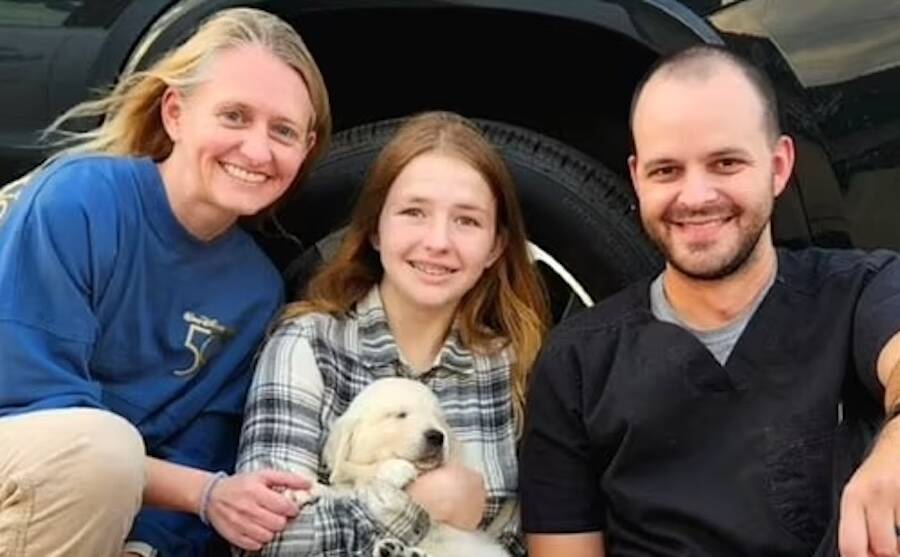
Personal PhotoCarly Madison Gregg, pictured with her mother Ashley Smylie and her stepfather Heath Smylie.
Ashley Nicole Smylie was born on April 11, 1983, in Stuart, Florida. She would eventually make her home in Mississippi with her husband Heath, a physical therapist, and she built a life centered on family and community.
Ashley’s life was not without challenges — her first husband, Kevin Gregg, suffered from mental illness and used drugs, and the pair divorced amidst the strife. And one of Ashley’s daughters had died tragically young due to health issues. Still, Ashley found love again with Heath, who seemed to be a better influence on her surviving daughter, Carly Madison Gregg.
Work was also incredibly important to Ashley Smylie. Teaching wasn’t just a job for her — it was a calling. She spent her days guiding teenagers through the challenges of high school mathematics, patient and steady, earning the respect of students and her fellow colleagues alike.
At home, she was said to be a devoted wife and mother. Ashley loved reading, playing video games, and walking the family’s Golden Retrievers.
But tension in the family had been building. Carly was smoking marijuana, vaping, and using burner phones, all while trying to hide these activities from her mother and stepfather. At one point, she was briefly sent to an alternative school after bringing a Swiss Army Knife to class. As Carly’s behavior became more concerning, fights at home became more frequent.
Meanwhile, Carly kept a private journal that was filled with troubling entries, including statements like, “It’s okay to be evil,” and “You don’t need family.” Carly’s legal team later claimed that she was struggling with dissociation, periods of “blacking out,” and voices in her head.
One of Carly’s friends became concerned about her drug use and burner phones, leading him to tell her mother. Then, after Ashley Smylie reportedly confronted her daughter about her vape pens, the situation turned deadly.
The Horrific Murder Of Ashley Smylie
Around 4 p.m. on March 19, 2024, Carly Madison Gregg entered her parents’ bedroom and retrieved a .357 Magnum pistol from underneath the bed. Concealing it as she moved through the house, she eventually confronted her mother and fatally shot her three times in the head.
Haunting surveillance video footage from inside the home captured Carly’s movements before and after the shooting. The video footage also captured the sound of gunshots — and Ashley Smylie’s screams as she was shot.
Following the shooting, Carly texted her stepfather from her mother’s phone, saying, “Are you almost home, honey?” She also invited a friend over to the house, claiming that there was an emergency.

Law & Crime Trials/YouTubeCarly Madison Gregg was captured on surveillance video footage before and after killing her mother Ashley Smylie.
The friend later testified that after she arrived at the house, Carly said, “Have you ever seen a dead body? My mom is in there.” According to the friend, Carly added that she had three more gunshots waiting for her stepfather.
At 5:03 p.m., Heath Smylie arrived home, unaware of the trap that had been set. As he walked in the front door, Carly opened fire. NBC15 reports that one bullet struck his shoulder. Despite his injury, he wrestled the gun away from Carly. At this point, Carly’s friend was outside in the backyard.
Heath later testified that he initially believed that there was an intruder in his home and recalled that Carly “was screaming out of her mind, scared. It was like she had seen a demon or something.” Carly soon fled the scene, and Heath searched the house for the “intruder.”
Instead, Heath only found his wife, dead. Emergency services were called, and police arrived shortly afterward. As for Carly, she was later found about a half mile away from her house and was quickly taken into custody.
Why Did Carly Madison Gregg Kill Her Mother?

Personal Photo/TwitterAshley Smylie was 40 years old when her daughter murdered her.
Carly Madison Gregg was initially taken to the Rankin County Juvenile Detention Center, charged with the murder of her mother and the attempted murder of her stepfather. Given the severity of the crimes, the case raised immediate questions about whether she would be tried as an adult.
A judge in juvenile court did later approve a request to charge her as an adult, leading to her being transferred to the Rankin County Adult Detention Center ahead of her trial. Carly pleaded not guilty.
During the trial, which took place in September 2024, prosecutors argued that Carly killed Ashley Smylie and tried to kill Heath Smylie because she was about to be punished for having a vape pen, using marijuana, and possessing a burner phone. They believed that the evidence showed planning and intent. State Attorney Michael Smith also argued that Carly “knew the difference between right and wrong” during the shooting.
Meanwhile, Carly’s attorneys insisted that she was having a mental health crisis, and a psychiatrist claimed that Carly didn’t remember committing the murder at all. Her defense team pointed to her history of mental illness, including depression, and her behavioral issues. The teen had also allegedly been prescribed a medication that made her feel “numb.” They asked the jury to find her not guilty by reason of insanity.
At one point, Heath Smylie took the stand and also claimed his stepdaughter did not remember the shooting. “She was not herself and I do not believe she even recognized me,” he testified. Despite everything, he also said that he remained in contact with her after the shooting.
The jury deliberated for two hours before finding Carly guilty of murder and attempted murder. She was sentenced to life in prison without the possibility of parole, marking a rare occasion that a young teenager would face a lifetime behind bars. Rankin County District Attorney Bubba Bramlett said, “Carly Gregg is evil and that’s not easy to say, but the truth of the matter is that sometimes evil comes in young packages.”
While Carly’s team has attempted to reverse the conviction, Ashley Smylie’s friends and colleagues have been mourning her deeply. After her death, Northwest Rankin High School grappled with the loss of a beloved educator and the unsettling reality that the person responsible had been one of their own students. And Ashley had gone home one day, not knowing she was about to die at the hands of her own child.
The motive for her murder may never be fully understood, but what she left behind is the memory of a teacher, a wife, and a mother whose life touched everyone around her and who was gone too soon.
After reading about the murder of Ashley Smylie, go inside the disturbing case of Isabella Guzman, the teen who stabbed her mom 79 times and later went viral on TikTok. Then, learn about the horrific story of Zachary Davis, the 15-year-old who bludgeoned his mother and tried to burn his brother alive.
The post Inside The Tragic Death Of Ashley Smylie, The Mississippi Teacher Murdered By Her 14-Year-Old Daughter appeared first on All That's Interesting.

Bring Michele Hundley Smith Home/FacebookMichele Hundley Smith was 38 years old when she vanished in December 2001.
On the evening of December 9, 2001, Michele Hundley Smith left her home in North Carolina to go Christmas shopping — and she never returned. Her husband reported her missing, but despite an extensive investigation, the police were never able to determine what had happened to this vanished mother of three.
Then, just last week, the Rockingham County Sheriff’s Office received a tip that cracked this cold case wide open. On February 20, 2026 — more than 24 years after Michele Hundley Smith vanished — detectives found her “alive and well.” But her story isn’t over yet.
The Sudden Disappearance Of Michele Hundley Smith In 2001
When Michele Hundley Smith set out to go shopping at a Kmart in Martinsville, Virginia, in December 2001, there was every reason to believe that she’d simply be home in a few hours. But around midnight, her husband woke up their teenage daughter, Amanda. He was worried that Michele hadn’t returned.
The family reported Smith missing on December 31, 2001, and the police launched a search for the 38-year-old woman and the green 1995 Pontiac Trans Sport minivan she’d been driving. A missing poster that was released at the time noted that Smith was “endangered,” noting, “Michele is a mom of three children, she would not leave her kids by choice.”

Rockingham County Crime StoppersThe missing poster that was released shortly after Michele Hundley Smith’s disappearance.
But as the weeks passed, no clues emerged. In fact, it seemed as if Michele Hundley Smith had simply vanished into thin air.
Amanda Smith appeared on an episode of The Vanished podcast in 2018 to speak about the theories surrounding the case. She claimed that her mother was an alcoholic who had been fired from her job shortly before she vanished. Amanda also stated that her parents had a rocky relationship and that her father believed her mother had been stashing away money in the months leading up to her disappearance.
Still, Michele’s family was concerned that something more sinister may have happened.
In a statement, the Rockingham County Sheriff’s Office explained, “Over the years, the case drew the attention and collaboration of multiple agencies, including the North Carolina State Bureau of Investigation (SBI), the Drug Enforcement Administration (DEA), and the Federal Bureau of Investigation (FBI). Despite countless hours of investigative work and the pursuit of numerous leads, Michele Hundley Smith’s whereabouts remained unknown.”
Then, on February 19, 2026, detectives received new information about Michele’s case. The following day, they made contact with her, finding that she was “alive and well” after 24 years. However, Michele asked that her location remain undisclosed. Michele’s family was then notified of these unforeseen developments — to mixed emotions.
Mixed Reactions To Michele Hundley Smith Being Found After 24 Years
In a post on the Facebook page “Bring Michele Hundley Smith Home,” Amanda Smith wrote, “I am ecstatic, I am pissed, I am heartbroken.”
She explained that her father spent decades facing rumors and accusations about his involvement in Michele’s disappearance. “My father has been through so much,” Amanda wrote, “and I want it made clear that while their marriage had issues (just as many marriages go through) that my mom did not leave simply [because] of a bad marriage… My dad is a great man.”
WFMY News 2/YouTubeAmanda Smith, Michele’s daughter, speaking to a local news station in December 2021.
Rockingham County Sheriff Samuel Scott Page noted that Michele made no accusations of foul play, stating only that she “left due to ongoing domestic issues.” Page also confirmed that there were no records of abuse or other allegations on file prior to Michele’s disappearance. The District Attorney’s office is now reviewing the case to determine if any charges for abandonment may apply.
Despite Amanda’s anger, she still hopes that she will one day be able to forgive — or even reunite with — her mother, who is now 62. “When my mom was a part of my daily life, she showed me a love and bond that will never ever be forgotten,” Amanda said.
Michele’s cousin, Barbara Byrd, is experiencing a similar roller coaster of emotions. She told local station WFMY that she promised Michele’s brother, who died several years ago, that they would find her someday.
And now, against all odds, Michele Hundley Smith has indeed been found.
After learning about Michele Hundley Smith, go inside 11 famous unsolved disappearances. Then, go inside the strange story of Vasile Gorgos, the Romanian farmer who returned home 30 years after he vanished with no memory of where he’d been.
The post A North Carolina Mother Of Three Who Mysteriously Vanished In 2001 Was Just Found Alive And Well appeared first on All That's Interesting.
Often, child abuse happens behind closed doors. But the abuse of Gabriel Fernandez was far from a secret to teachers and social workers. Though some adults attempted to help him, they didn’t do enough, and Gabriel Fernandez was tragically murdered at the age of eight.
Since then, Gabriel’s case has provoked anger and repulsion. How did his abuse go uninvestigated for so long? What could the adults in his life have done to save the vulnerable California boy? And how can social workers make sure that what happened to Gabriel never happens again?
This is the story of Gabriel Fernandez and the horrific abuse he openly suffered at the hands of his family before he died in May 2013.
The Abuse Of Gabriel Fernandez
Gabriel Fernandez was just eight years old when he died after being beaten by his mom and her boyfriend.
Born on February 20, 2005, in Palmdale, California, Gabriel Fernandez had a difficult family life from the start. According to The Wrap, his mother, Pearl Fernandez, didn’t want another child and even left him at the hospital.
In fact, Pearl already had a record of child neglect and abuse. One year earlier, Booth Law reports that a relative had notified Child Protective Services, saying that Pearl was beating another son. But nothing was done.
Unwanted by his mother, Gabriel spent much of his life with his great-uncle and his partner. He then later moved in with his grandparents. But in 2012, although Pearl had faced accusations of hitting her daughter and neglecting to feed her, Pearl suddenly insisted that Gabriel wasn’t being properly cared for by his relatives and that she wanted him back.
According to The Atlantic, Pearl actually took Gabriel back because she wanted to collect welfare benefits. Despite the objections of Gabriel’s grandparents, she brought the boy back into her house in October 2012. There, Gabriel lived with his mother, her boyfriend Isauro Aguirre, and two older siblings, 11-year-old Ezequiel and 9-year-old Virginia.
Soon afterward, Jennifer Garcia, Gabriel’s first-grade teacher at Summerwind Elementary in Palmdale, California, started to notice that the boy showed signs of abuse. In fact, Gabriel even told her about it.
“Is it normal for moms to hit their kids?” he asked Garcia one day in October 2012. “Is it normal for your mom to hit you with the part of the belt that has that metal thing on the end? Is it normal for you to bleed?”
After school that day, Garcia called a child-abuse hotline, which put her in touch with a caseworker named Stefanie Rodriguez. Although Garcia initially felt reassured, the abuse of Gabriel Fernandez seemed to continue.
One day, he came to class with chunks of his hair missing. Another day, Gabriel Fernandez appeared with an injured lip and told Garcia that his mom had punched him. And in January 2013, he showed up with round bruises on his face and admitted to Garcia that his mom had shot him with a BB gun.
Garcia continually reached out to Rodriguez, but the caseworker said that she couldn’t discuss the details of Gabriel’s case. Rodriguez had, in fact, visited the Fernandez home, but Gabriel often recanted his stories and Rodriguez noted that the children at the residence seemed “appropriately dressed, visibly healthy, and did not have any marks or bruises.”
Sadly, his abuse was actually much worse than Rodriguez or even Garcia seemed to realize. And in May 2013, Gabriel Fernandez’s mom and her boyfriend would brutally beat the eight-year-old to death.
The Murder Of Gabriel Fernandez
TwitterGabriel Fernandez was tortured for about eight months leading up to his murder.
On May 22, 2013, Pearl Fernandez called 911 to report that her son, Gabriel, was not breathing. Paramedics arrived and found the boy with broken ribs, a fractured skull, missing teeth, and BB pellet wounds on his body.
“I tried to feel his heart,” Pearl Fernandez’s boyfriend Isauro Aguirre said, placing the blame for Gabriel’s injuries on “roughhousing” with his older brother. “And nothing is moving.”
It later came out that Pearl Fernandez and Isauro Aguirre had tortured the eight-year-old with a BB gun, pepper spray, coat hangers, and a baseball bat. Gabriel Fernandez died two days later of his injuries on May 24, 2013. And then, in the months following, the shocking depth of his abuse — and the homophobic motives of his tormenters — came to light.
The Atlantic reports that Gabriel Fernandez routinely suffered severe abuse at the hands of his mom and Aguirre. This happened over the course of eight months. Sometimes, they stuffed a sock in his mouth and bound his hands and ankles, then locked him in a cabinet they called “the cubby.”
They called him gay (possibly because he had previously been raised by a gay great-uncle), punished him whenever they saw him playing with dolls, and forced him to wear dresses. According to Gabriel’s siblings, Ezequiel and Virginia, the couple also made him eat “a lot” of cat feces, forced him to run from a BB gun, and hit him so hard that he couldn’t breathe.
In addition, Gabriel’s therapist had reported before his death that the boy had been forced to perform oral sex on a relative and that he’d written notes saying that he wanted to kill himself.
But despite the many warning signs, he was tragically never rescued.
The Aftermath Of The Eight-Year-Old’s Death

Public DomainPearl Fernandez was sentenced to life in prison for Gabriel Fernandez’s murder, while Isauro Aguirre was sentenced to death.
In the aftermath of Gabriel Fernandez’s death, both Pearl Fernandez and Isauro Aguirre were arrested and charged with the boy’s murder. Pearl pled guilty to first-degree murder and was sentenced to life in prison.
“I want to say I’m sorry to my family for what I did,” Pearl Fernandez said in court in 2018, according to the Los Angeles Times. “I wish Gabriel was alive. Every day I wish that I’d made better choices. I’m sorry to my children, and I want them to know that I love them.”
The judge, however, didn’t mince words. He said that Gabriel’s death had been so horrific that he’d almost call it animalistic — except “animals know how to take care of their young.”
Aguirre was also found guilty of first-degree murder and was sentenced to death. (Currently, however, California has suspended all capital punishment, so Aguirre remains in prison for the foreseeable future.)
But they weren’t the only people to face consequences for Gabriel Fernandez’s death. Four social workers — Stefanie Rodriguez, Patricia Clement, Kevin Bom, and Gregory Merritt — faced felony charges of child abuse and falsifying public records. However, TIME reports that an appellate panel in January 2020 decided that they should not face criminal charges.
Now, Gabriel Fernandez’s loved ones can only hope that his horrific death wasn’t entirely in vain. Though he had clearly slipped through the cracks of the Los Angeles Department of Child and Family Services, the department vowed to begin “a new era of reform” after his murder.
TIME reports that the organization added new policies to ensure child safety, hired more than 3,000 new social workers since 2013 to lighten caseloads, and retrained current caseworkers on how to effectively interview witnesses and notice physical signs of abuse before it’s too late.
Tragically, Gabriel Fernandez’s death was entirely preventable. After his teacher notified social workers of the abuse, something could have been done. Instead, the little boy was left to suffer — and die — at the hands of his own caregivers, as the city of Los Angeles turned a blind eye.
After reading about the tragic murder of Gabriel Fernandez, learn about five horrifying acts of child abuse that used to be totally legal. Then, take a look at the “Alaskan Avenger” who attacked pedophiles with a hammer.
The post The Heartwrenching Story Of Gabriel Fernandez, The 8-Year-Old Tortured To Death By His Mother And Her Boyfriend appeared first on All That's Interesting.
Left: Public Domain; Right: Chris Walter/WireImage/Getty ImagesPamela Courson became Jim Morrison’s girlfriend after they met at a Hollywood club in 1965.
Pamela Courson embodied the free spirit of the hippie generation. An art school dropout, she was determined to pursue art on her own terms — and make a name for herself. But ultimately, she’s mostly remembered for being Jim Morrison’s girlfriend.
The beautiful Californian had already embraced the counterculture movement by the time she met The Doors frontman in 1965. So it’s little wonder why she was attracted to the wild rock star. The pair quickly became a couple, with Morrison describing her as his “cosmic partner.”
But the relationship of Pamela Courson and Jim Morrison was far from a fairytale. From drug abuse to repeated infidelities to explosive arguments, their relationship was the definition of tumultuous — and sometimes even escalated into violence. Yet Morrison and Courson always seemed to find a way to reconcile.
By 1971, the couple had decided to move to Paris together. But tragically, they were only there for a few months before Jim Morrison’s death at 27. And nearly three years later, Pamela Courson would meet an eerily similar fate.
How Pamela Courson Met Jim Morrison
Estate of Edmund Teske/Michael Ochs Archives/Getty ImagesPamela Courson and her “cosmic partner” at a 1969 photo shoot in Hollywood.
Pamela Courson was born on December 22, 1946, in Weed, California. Though her interior designer mother and junior high school principal father were kind and caring, Courson wanted more than a white picket fence.
As a young adult in the mid-1960s, Courson studied art at Los Angeles City College. But the rigors of academia felt constraining to her — and she soon dropped out. It was around that same time that she met Jim Morrison.
As the story goes, Pamela Courson found herself at a Hollywood nightclub called London Fog, attending one of the earliest shows that The Doors played in the city. Courson and Morrison were instantly drawn to each other.
By the time “Light My Fire” hit the scene in 1967, the couple had already moved in together in Los Angeles. Meanwhile, The Doors’ keyboardist Ray Manzarek confessed that he “never knew another person who could so complement [Morrison’s] bizarreness.”
Life As Jim Morrison’s Girlfriend
Estate of Edmund Teske/Michael Ochs Archives/Getty ImagesPamela Courson and Jim Morrison were known for their volatile relationship.
After just a year of living together, the couple made plans to marry. In December 1967, Pamela Courson obtained a marriage license in Denver, Colorado while she was on the road with The Doors. But Courson failed to have the license filed or notarized — causing her plans to fall through.
Instead of trying elsewhere at another time, Morrison surprised his “cosmic partner” with full access to his money. He also agreed to finance Themis, the fashion boutique that Courson had dreamt of opening.
With a high-profile clientele that included Sharon Tate and Miles Davis, Courson’s career had taken off in tandem with her boyfriend’s. Sadly, the couple was fighting constantly, often fueled by alcohol and drug abuse.
One former neighbor of the couple said, “One night, Pam came over late, claiming Jim had tried to kill her. She said he had pushed her into the closet and set it on fire when he found out she had been sleeping with this phony prince who had supplied her with heroin.”
Meanwhile, Morrison became increasingly dependent on alcohol, and it showed in his performances. In 1969, he was even accused of exposing himself on stage in Miami. Though Morrison avoided convictions for serious legal charges — like a felony count of lewd and lascivious behavior and public drunkenness — he was found guilty of indecent exposure and open profanity. He was ultimately released on a $50,000 bond.
While it’s still debated whether Morrison actually exposed himself that night, there was no question that his addictions were getting the better of him. So Morrison moved to Paris with Courson — hoping for a change of scenery.
The Tragic Scene Of Pamela Courson’s Death Just Three Years After Morrison’s Demise
Barbara Alper/Getty ImagesThe grave of Jim Morrison. Sadly, Pamela Courson died just three years after the “Lizard King.”
In Paris, Morrison seemed to find peace — and take better care of himself. So it came as a shock when he died just months after arriving. But not everyone was surprised. While in the city, Morrison and Courson had indulged in old habits and frequented many notorious nightclubs.
On July 3, 1971, Pamela Courson found Jim Morrison immobile and unresponsive in the bathtub of their Paris apartment. When the police arrived, she said that he had woken up in the middle of the night feeling sick and started a hot bath. Morrison was soon declared dead of heart failure, thought to be brought on by a heroin overdose.
But not everyone buys the official story. From whispers that he died in the bathroom of a nightclub to rumors that he faked his own death, Morrison’s demise has been the subject of numerous conspiracy theories. But perhaps most ominously, some people have accused his girlfriend of playing a role in his death, especially since Courson was the sole heir in his will.
While Courson was interviewed by the police, they apparently took her story at face value — and no autopsy was ever performed. Still, Courson was never officially suspected of anything related to her boyfriend’s death. After he was buried, she simply returned to Los Angeles alone. And due to legal battles, she never saw a dime of Morrison’s fortune.
In the years after Morrison’s death, Pam Courson’s own addictions grew rapidly worse. She often described herself as “Jim Morrison’s wife” — despite the fact that they had never married — and sometimes even delusionally claimed that he was about to call her.
Nearly three years later, on April 25, 1974, she suffered the same fate as The Doors frontman — and died at age 27 of a heroin overdose just like him.
After learning about Pamela Courson and Jim Morrison, read the tragic story of Janis Joplin’s demise. Then, uncover the chilling mystery of Natalie Wood’s death.
The post The Story Of Pamela Courson And Her Turbulent Relationship With Jim Morrison appeared first on All That's Interesting.
It’s no wonder why Ridley Scott made American Gangster, a movie based on the life of New York kingpin Frank “Superfly” Lucas. The details of his ascent to the upper echelon of the 1970s drug trade are as wildly cinematic as they are likely exaggerated. What better medium to tell such a trumped-up tale than a Hollywood blockbuster?
Though the 2007 movie is supposedly “based on a true story” — starring Denzel Washington as Frank Lucas — many in Lucas’s orbit have said that the film is largely fabricated. But piecing together the truth of his life and his many misdeeds is a daunting task.
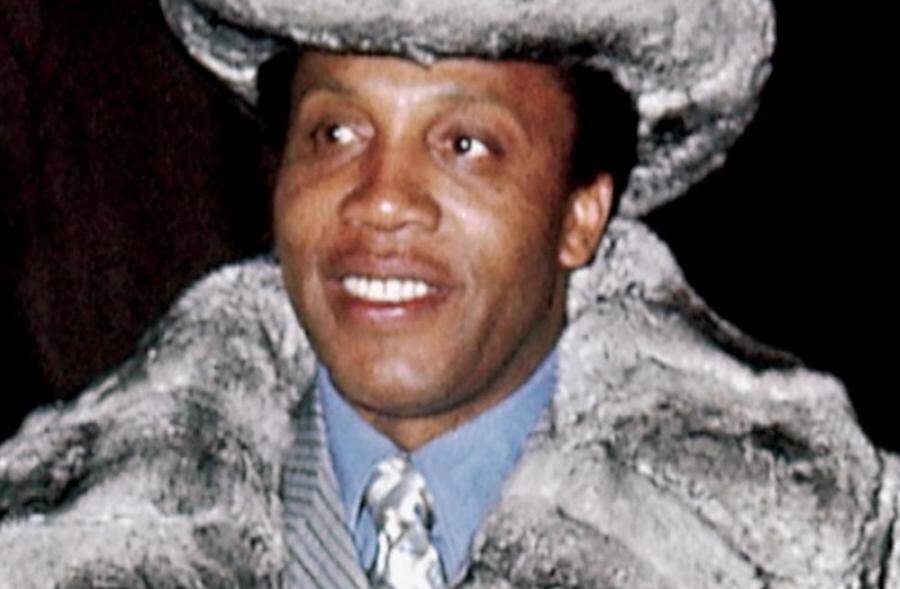
YouTubeDuring the late 1960s and early 1970s, Frank Lucas built a heroin empire in Harlem.
The most well-known profile of the man, Mark Jacobson’s “The Return of Superfly” (which the film is largely based on), relies primarily on Frank Lucas’s own firsthand account that is full of boasts and braggadocio from a notorious “braggart, trickster, and fibber.”
If you’re unfamiliar with Lucas or with the film, here are some of the wildest details about his life (have a few grains of salt handy).
Who Was Frank Lucas?
Born on September 9, 1930, in La Grange, North Carolina, Frank Lucas had a rough start to life. He grew up poor and spent a lot of time looking after his siblings. And living in the Jim Crow South took a toll on him.
According to Lucas, he was first inspired to enter a life of crime after he witnessed Ku Klux Klan members murder his 12-year-old cousin Obadiah when he was just six years old. The Klan claimed that Obadiah had engaged in some “reckless eyeballing” of a white woman, so they fatally shot him.
Lucas reportedly fled to New York in 1946 — after beating up his former boss at a pipe company and robbing him of $400. And he quickly realized there was much more money to be made in the Big Apple.
From robbing local bars at gunpoint to swiping diamonds from jewelry stores, he slowly became bolder and bolder with his crimes. He eventually caught the eye of drug trafficker Ellsworth “Bumpy” Johnson — who acted as a mentor of sorts to Lucas and taught him everything he knew.
While Lucas took Johnson’s teachings to the next level with his crime organization, there was a sad and ironic twist to Lucas’s desire to get back at the KKK members who murdered his cousin. Thanks to his deadly brand of imported heroin, known as “Blue Magic,” he ended up wreaking havoc in Harlem — one of America’s most iconic Black neighborhoods.
“Frank Lucas has probably destroyed more Black lives than the KKK could ever dream of,” prosecutor Richie Roberts told The New York Times in 2007. (Roberts was later portrayed by Russell Crowe in the movie.)

David Howells/Corbis/Getty ImagesRichie Roberts, who is portrayed by Russell Crowe in the American Gangster.
How Frank Lucas supposedly got his hands on this “Blue Magic” is perhaps the wildest detail of all: He allegedly smuggled the 98-percent-pure heroin into the United States by using the coffins of dead soldiers being returned from the Vietnam War. Jacobson calls it his “most culturally pungent” claim to fame:
“Of all the dreadful iconography of Vietnam — the napalmed girl running down the road, Calley at My Lai, etc., etc. — dope in the body bag, death begetting death, most hideously conveys ‘Nam’s spreading pestilence. The metaphor is almost too rich.”
To his credit, Lucas said that he didn’t put the smack next to the bodies or inside the bodies as some legends have suggested. (“No way I’m touching a dead anything,” he told Jacobson. “Bet your life on that.”) He instead said that he had a carpenter buddy flown in to make “28 copies” of government coffins rigged up with false bottoms.
With help from former U.S. Army sergeant Leslie “Ike” Atkinson, who just so happened to be married to one of his cousins, Lucas claimed to have smuggled more than $50 million worth of heroin into the U.S. He said $100,000 of that was on a plane carrying Henry Kissinger, and that he at one point dressed up as a lieutenant colonel to aide in the operation. (“You should have seen me — I could really salute.”)
If this so-called “Cadaver Connection” story sounds like an impossible operation, it just might have been.
“It is a total lie that’s fueled by Frank Lucas for personal gain,” Atkinson told the Toronto Star in 2008. “I never had anything to do with transporting heroin in coffins or cadavers.” Though Atkinson fessed up to smuggling, he said it was inside furniture, and that Lucas wasn’t involved with making the connection.
From Low-Ranking Drug Dealer To “American Gangster”

Wikimedia Commons/YouTubeFrank Lucas’s federal mugshot and Denzel Washington as Lucas in American Gangster.
How Frank Lucas managed to get his hands on “Blue Magic” might’ve been a fabrication, but there’s no denying that it made him a rich man. “I wanted to be rich,” he told Jacobson. “I wanted to be Donald Trump rich, and so help me God, I made it.” He claimed to be making $1 million per day at one point, but that, too, was later discovered to be an exaggeration.
In any case, he was still determined to show off his newly acquired wealth. So in 1971, he decided to wear a $100,000 full-length chinchilla coat bought by his wife Julianna Farrait — at a Muhammad Ali boxing match. But as he later wrote, this was a “massive mistake.” Apparently, Lucas’s coat caught the eye of law enforcement — who were surprised that he had better seats than Diana Ross and Frank Sinatra. As Lucas put it: “I left that fight a marked man.”
So regardless of how much money he was actually making, Lucas didn’t get to enjoy the fruits of his labor for very long. After supposedly hobnobbing with some of New York’s wealthiest and most famous folks in the early 1970s, the famously fur-clad Frank Lucas was arrested in 1975, thanks in part to Roberts’ efforts (and some Mafia snitching).
The drug lord’s assets were seized, including $584,683 in cash, and he was sentenced to 70 years in prison. Lucas later bristled at such a low count of cash money, and accused the DEA of stealing from him, according to Superfly: The True Untold Story of Frank Lucas, American Gangster:
“‘Five hundred and eighty-four thousand. What’s that?’ Superfly boasted. ‘In Las Vegas I lost 500 Gs in half an hour playing baccarat with a green haired whore.’ Later, Superfly would tell a television interviewer that the figure was actually $20 million. With time, the story has kept getting longer like Pinocchio’s nose.”
Lucas likely would’ve been in prison for the rest of his life — if he didn’t become a government informant, enter the witness protection program, and ultimately help the DEA nab more than 100 drug-related convictions. One relatively minor setback aside — a seven-year sentence for an attempted drug deal in his post-informant life — he went on parole in 1991.
Overall, Lucas managed to get through everything relatively unscathed and reportedly enriched. According to the New York Post, Lucas received “$300,000 from Universal Pictures and another $500,000 from the studio and [Denzel] Washington to buy a house and a new car.”
But at the end of the day, beyond the ravages of his famous “Blue Magic,” Lucas was an admitted killer (“I killed the baddest motherf–ker. Not just in Harlem but in the world.”) and an admitted liar, on a grand scale. Robin Hood, he was not.
In some of his last interviews, Frank Lucas walked back a bit of the braggadocio, admitting, for instance, that he only had one false-bottom coffin made.
And for what it’s worth, Lucas also admitted that only “20 percent” of American Gangster is true, but the guys that busted him said that’s also an exaggeration. DEA agent Joseph Sullivan, who raided Lucas’s home back in 1975, said it’s closer to the single digits.
“His name is Frank Lucas and he was a drug dealer — that’s where the truth in this movie ends.”
The Death Of Frank Lucas
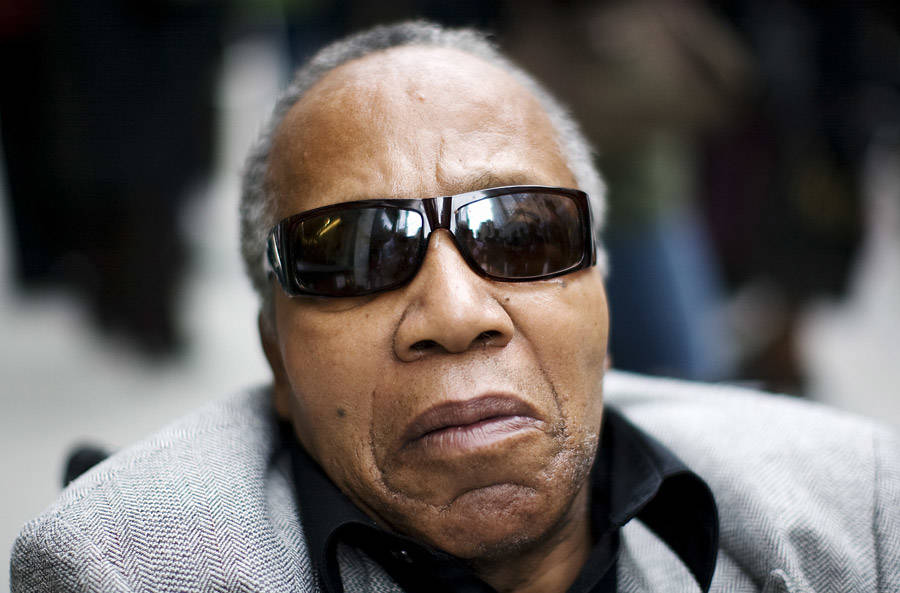
David Howells/Corbis/Getty ImagesFrank Lucas in his later years. The former gangster died of natural causes in 2019.
Unlike other famous gangsters, Frank Lucas didn’t go out in a blaze of glory. He died in 2019 at the age of 88 in New Jersey. His nephew, who confirmed his death to the press, said that he died of natural causes.
By the time Lucas died, he had become pretty good friends with Richie Roberts — the man who helped bust him. And ironically enough, Roberts eventually ended up getting in some trouble with the law himself — pleading guilty to tax crimes in 2017.
“I am not one to condemn anyone for anything that they do,” Roberts said after Frank Lucas’s death. “Everyone gets a second a chance in my world. Frank did the right thing [by cooperating].”
“Did he cause a lot of pain and hardship? Yeah. But that is all business. On a personal level, he was very charismatic. He could be very likable, but I wouldn’t want to, well, I was on the wrong end of him. There was a contract on me at one time.”
Roberts had the chance to talk to Lucas just a few weeks before he died and was able to tell him goodbye. Although he was aware that the former drug kingpin was in poor health, he still found it hard to believe that Frank Lucas was really gone.
He said, “You expected him to live forever.”
After learning about Frank Lucas and the real story of “American Gangster,” take a look at the history of 1970s Harlem in pictures. Then, explore the rest of the city in 41 horrifying photos of life in 1970s New York.
The post The True Story Of Frank Lucas, The Harlem Drug Lord Who Built A Heroin Empire appeared first on All That's Interesting.
Fotos International/Courtesy of Getty ImagesThe rumors about Mr. Rogers’ tattoos first began circulating before the 1990s.
If urban legend is to be believed, Mr. Rogers had a bunch of secret tattoos on his arms — and he hid them extremely well with his signature long-sleeve cardigan sweaters.
This story often goes hand-in-hand with the rumor that the host of the children’s TV show Mister Rogers’ Neighborhood was once a feared military sniper. Many people assume that if Mr. Rogers was indeed tattooed, he surely must have gotten his ink while he was a soldier. Some have even suggested these tattoos commemorated his “kills” in battle.
But did Mr. Rogers have tattoos in the first place? Did he really serve in the military? And how did these outlandish stories emerge?
Did Mr. Rogers Have Tattoos?
Getty ImagesMr. Rogers was known for wearing long-sleeve sweaters on his show.
To put it simply, the rumors about Mr. Rogers’ tattoos are not true at all. The man had zero ink on his arms — or anywhere else on his body.
It’s difficult to pinpoint when people started whispering about Mr. Rogers’ supposed tattoos — and his alleged military background — but the rumors trace back to sometime before the mid-1990s.
While the myth seemed to fizzle out in the decade before Mr. Rogers’ death in 2003, the rumor mill began turning again shortly after he passed away.
This fake chain email, which circulated in 2003, has been linked to the revival of the tall tale:
“There was this wimpy little man (who just passed away) on PBS, gentle and quiet. Mr. Rogers is another of those you would least suspect of being anything but what he portrayed. But Mr. Rogers was a U.S. Navy Seal, combat-proven in Vietnam with over twenty-five confirmed kills to his name. He wore a long-sleeve sweater to cover the many tattoos on his forearm and biceps. (He was) a master in small arms and hand-to-hand combat, able to disarm or kill in a heartbeat. He hid that away and won our hearts with his quiet wit and charm.”
While this email offered no proof of its jaw-dropping claims, the false story took on such a life of its own that the U.S. Navy issued a formal correction:
“Firstly, Mr. Rogers was born in 1928 and thus at the time of the U.S. involvement in the Vietnam conflict was too old to enlist in the U.S. Navy.”
“Secondly, he had no time to do so. Right after finishing high school, Mr. Rogers went straight into college, and after graduating college directly into TV work.”
Interestingly enough, the U.S. Navy even addressed the tattoo rumor: “He was purposely choosing long-sleeve clothes to keep his formality as well as authority not only to children but to their parents as well.”
While other false rumors have circulated that Mr. Rogers served in other branches of the military — such as the Marine Corps — the icon did not serve in the military at all.
He had no “kills” to commemorate and thus no “kill record” to ink on his skin or anywhere else.
How Did The Myth Of Mr. Rogers’ Tattoos Start?
Essentially, rumors about Mr. Rogers’ tattoos stem from the fact that he always wore long-sleeve sweaters on his show. Based on that alone, people started claiming that he did so in order to cover up secret tattoos.
But the real reasons why he swore by his sweaters are just as wholesome as the songs he sang on Mister Rogers’ Neighborhood.
First of all, his beloved mother Nancy knitted all his famous cardigans by hand. He thought very highly of his mother, so he wore the sweaters in honor of her.
Getty ImagesOne of Mr. Rogers’ sweaters on display at the Smithsonian’s American History Museum in 2012.
Secondly, the sweaters were part of the persona that Mr. Rogers created for his program. This stylistic choice allowed him to maintain formality with children. Although he was friendly with them, he also wanted to establish a relationship with them as an authority figure, similar to a teacher.
And finally, the sweaters were simply comfortable. While Mr. Rogers’ formal persona was important, he certainly didn’t want to feel uncomfortable in a stiff jacket while interacting with kids. Who would?
Why Do The Rumors Persist?
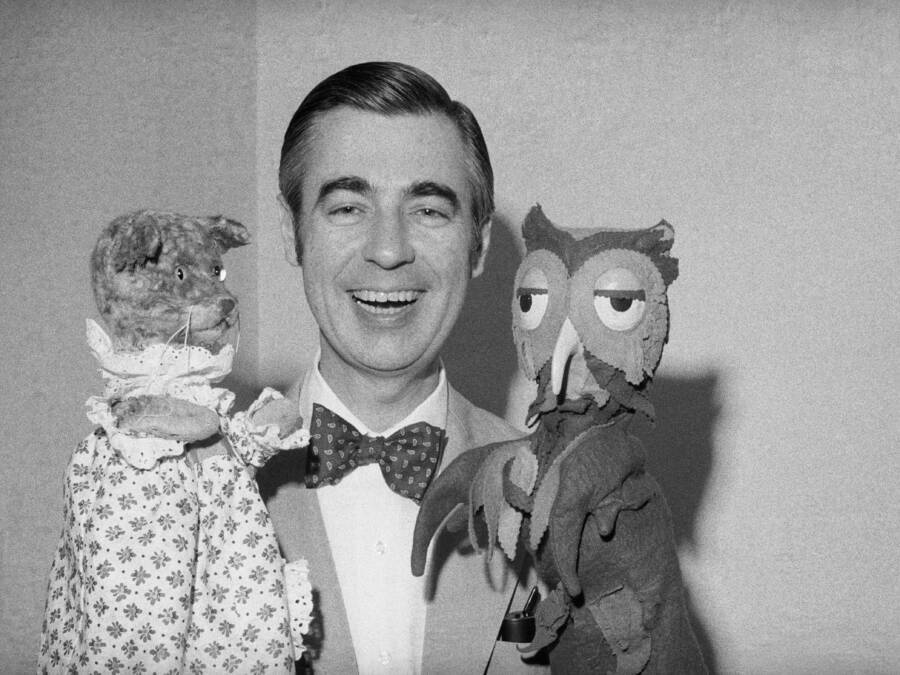
Getty ImagesMr. Rogers with his puppets.
The untrue rumors about Mr. Rogers’ tattoos and military service do not fit with the man’s gentle, peaceful personality at all. Some experts think that’s precisely the reason why he’s always been a target for these urban legends.
“Mr. Rogers, by all accounts, seems like a very mild-mannered, Puritan-esque character,” said folklore expert Trevor J. Blank, in an interview with The History Channel. “Him having a very macho back story or being a ruthless killer is kind of titillating; it runs counter to what you’re presented as true in your day-to-day experience.”
According to Blank, the very definition of an urban legend is a fictional story that has some type of believable component. Typically, these stories seem somewhat credible because they supposedly happen to a person we know or are familiar with. But these people — like Mr. Rogers in this case — are also far enough away from us that we can’t immediately verify the truth.
Another thing about urban legends is that they tend to focus on issues of morality and decency. And who was more associated with morality and decency than Mr. Rogers?
“He’s an individual to whom we trust our children,” said Blank. “He taught kids how take care of their bodies, associate with their community, how to relate to neighbors and strangers.”
When you think about it, Mr. Rogers is truly the perfect target for urban legends — especially ones that challenge his squeaky-clean image like tattoos of a “kill record.”
For what it’s worth, Neighborhood stage manager Nick Tallo had quite a chuckle over these rumors. As Tallo put it: “He didn’t know how to use a screwdriver, let alone kill a bunch of people.”
The Truth About Mr. Rogers
Mr. Rogers, born March 20, 1928 in Latrobe, Pennsylvania, eschewed an Ivy League education to graduate magna cum laude from Florida’s Rollins College with a degree in music in 1951. He learned to compose music and play the piano, talents that he put to good use in writing more than 200 songs that he’d later perform for children throughout his lifetime.
After graduation, he immediately embarked on a broadcasting career. And from 1968 to 2001, he was able to fulfill his mission of educating and enlightening children on Mister Rogers’ Neighborhood.
The worst curse word he’s said to have used was “mercy.” He would say it whenever he felt overwhelmed — like when he saw the stacks of fan mail he received every week. Undeterred, however, Rogers personally responded to every piece of fan mail he received over the course of his career.
Rogers never smoked, drank, or ate the flesh of animals. He was an ordained Presbyterian minister who always preached inclusion and tolerance by saying, “God loves you just the way you are.”
It’s no wonder why he was — and still is — admired by millions of Americans who grew up with him and his timeless words of wisdom.
Sadly, Fred Rogers died on February 27, 2003 of stomach cancer.
A few months before his death, Mr. Rogers recorded a message for his adult fans who watched his show every day:
“I would like to tell you what I often told you when you were much younger. I like you just the way you are. And what’s more, I’m so grateful to you for helping the children in your life to know that you’ll do everything you can to keep them safe. And to help them express their feelings in ways that will bring healing in many different neighborhoods. It’s such a good feeling to know that we’re lifelong friends.”
Now that’s the Mr. Rogers we all know and love.
After this look at the myth of Mr. Rogers’ tattoos, read more about Mr. Rogers’ incredible life. Then discover the full story of Bob Ross, the man behind the happy little trees.
The post The Truth Behind The Rumors About Mr. Rogers’ Tattoos appeared first on All That's Interesting.
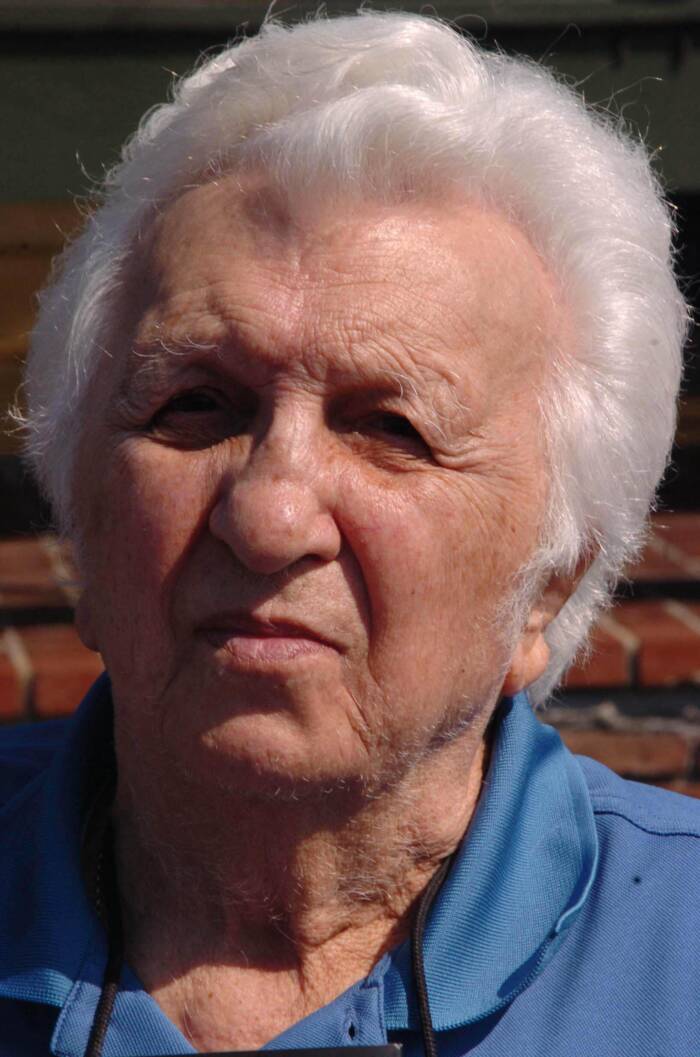
ZUMA Press, Inc./Alamy Stock PhotoGeorge “Dr. Nick” Nichopoulos, Elvis Presley’s personal doctor.
In his final years, Elvis Presley was in noticeably poor health. Although he had initially tried to avoid using any drugs, his time in the army had introduced him to amphetamines, and since these were prescription drugs, not street drugs, the rock star convinced himself it was safer. By the 1970s, however, he had expanded his drug intake to a number of other medications.
And, of course, someone had to write the prescriptions.
That person was usually George Nichopoulos, a.k.a. “Dr. Nick,” Elvis Presley’s personal physician. Nichopoulos once described Presley as “a person who thought that as far as medications and drugs went, there was something for everything.” So, for the last decade of Presley’s life, Dr. Nick supplied the King with drugs while developing a controversial friendship with him.
Even as Presley’s behavior grew more and more bizarre — and even after he suffered two overdoses in 1973 — Dr. Nick controversially continued to supply the prescriptions. By this point, Presley had gained a substantial amount of weight, his health had deteriorated, and on August 16, 1977, he died at his Graceland home. George Nichopoulos was the one who signed the death certificate. Some fans would argue he had been signing it over and over again each time he wrote Presley a prescription.
Although Dr. Nick was ultimately acquitted of any crime in regard to Elvis Presley’s death, the fact remains that in the 31 months leading up to that tragic day, the doctor had prescribed him 19,000 doses of drugs, including sedatives, amphetamines, and narcotics. Chillingly, the final prescription was written just 12 hours before Presley’s untimely demise.
So, was George Nichopoulos partly to blame?
How Dr. Nick Met The King
It’s not every day that you’re introduced to one of the most famous men on the planet, but the meeting between George Nichopoulos and Elvis Presley began with nothing more than a simple call. At that time, in 1967, the girlfriend of the DJ George Klein — a friend of Presley’s — was working in Nichopoulos’ office. So, when Presley got “saddle sore” after riding horses at the Circle G Ranch, he was recommended to call Nichopoulos.
“I went all the way up to the damn ranch, three times!” Dr. Nick told Andrew Hearn in an interview that was later archived by Elvis Australia. “I went all the way out there to take a look, and he asked if I wouldn’t mind stopping by Graceland to take a look at his grandma.”
But after Dr. Nick went from the ranch to Graceland, Elvis called him back out two more times. It wasn’t for anything serious. Nichopoulos, who was supposed to be on call at his practice, didn’t think much of it.
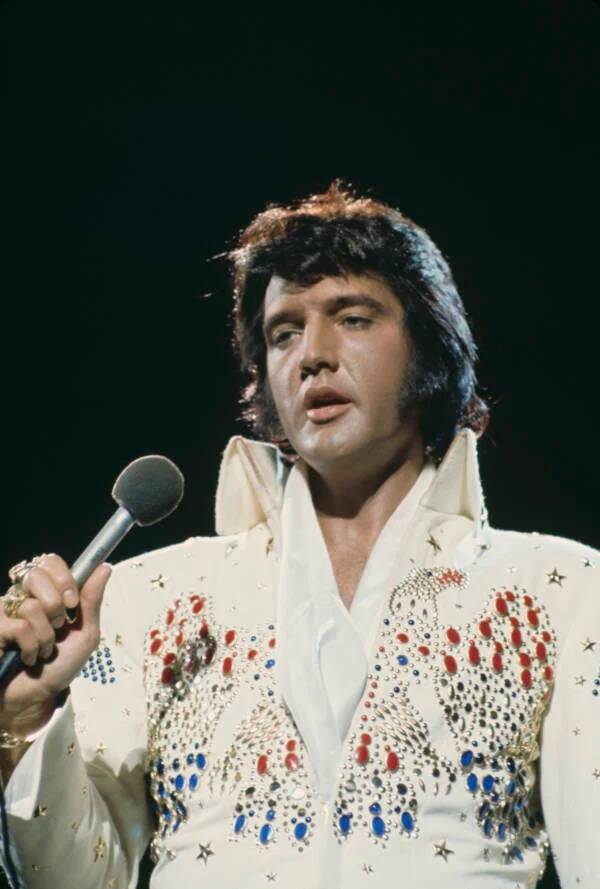
Fotos International/Archive Photos/Getty ImagesElvis Presley, pictured in 1973.
“He just liked having new people around, just someone new to talk to,” Nichopoulos said. “He’d get tired of the same people, some of the guys. He’d get tired of their conversations too. He loved to talk about a lot of things.”
Nichopoulos, who had spent much of his life in the South even though he had been born in Ridgway, Pennsylvania, on Oct. 29, 1927, found himself frequently departing from his Memphis office to treat Presley.
Eventually, when it came time for Presley to go on tour, he asked Nichopoulos to tag along — not just for his sake, either. Dr. Nick said he was looking after about 150 people associated with Presley while on the road. And although Nichopoulos was never officially on the payroll during the tour, he and Presley worked out a system so he would be paid the same amount that he would have made while he was in the office for that time period.
Before long, he became Elvis Presley’s personal physician.
“It was demanding,” Nichopoulos said. “When we were home, I’d still see Elvis probably five or six days out of the week. Every night on the way home, I’d go by his house just to check on him or just to sit and talk.”
How Elvis Presley’s Drug Abuse Escalated
George Nichopoulos told The Guardian in 2002 that he had initially been treating Elvis Presley for insomnia. Presley’s sleep issues had worsened after his mother’s death and his time in the army. Paired with his amphetamine use, this made it increasingly difficult to properly manage his sleep.
Nichopoulos didn’t get Presley started on drugs. By the time they met, the King was already taking Tiunal, Desbutal, Escatrol, and, soon enough, Placidyl. Eventually, Presley started sending other associates to Vegas to procure even more intense drugs for him, which started to affect his personality and eventually caused tension between him and Nichopoulos.
“I don’t know where he was getting it from, not that kind of thing anyway,” Nichopoulos remarked. “Elvis called me everything imaginable and another doctor went on the next tour. The new doctor changed the medicine around that I was giving him and the stuff that he gave him was a heavy tranquilizer… Elvis just couldn’t wake up.”
Other doctors were more than happy to give Elvis Presley whatever drugs he wanted at anytime he wanted. Dr. Nick said he felt a responsibility to keep him relatively stable, at least in comparison to other personal physicians.
“No one understands that Elvis was so complicated,” Nichopoulos told The Daily Beast in 2009. “I worked so hard just to keep things together and then they turned the tables on me after he died and decided I was to blame.”
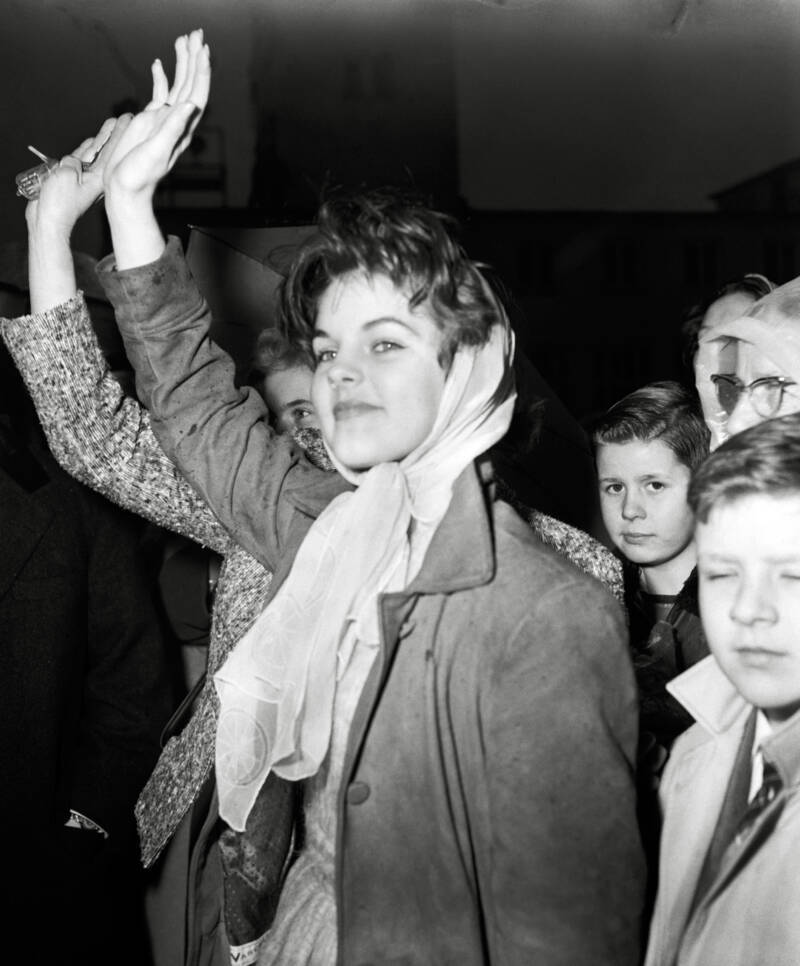
PictureLux/The Hollywood Archive/Alamy Stock PhotoA young Priscilla Beaulieu, pictured before she married Elvis Presley.
Things got worse when Presley’s wife Priscilla left him in 1971. Presley became more and more erratic. He was always on something — anything he could get, essentially. Then, in 1973, he overdosed twice on barbiturates.
Dr. Nick realized that Presley was continuing to get more drugs from other doctors. While there was little he could do about Presley’s other appointments, he said he tried to tell Presley to stop taking so many pills.
Eventually, Nichopoulos said he resorted to giving the rock star placebos, since it was clear the singer wouldn’t listen to his advice.
“I don’t think he ever realized how harmful these things could be to him,” Dr. Nick said. “If he got a sore throat, and I gave him a penicillin tablet — I gave him 20 to take, saying, ‘You take four a day of these things until you use these up,’ so he’s going to take eight or 12 a day until he uses them up, [because] he thinks he’ll get well faster that way.”
Of course, the exact opposite was true. Elvis Presley was only getting worse. And in August 1977, it all caught up to him.
Did George Nichopoulos Hasten — Or Cause — Elvis Presley’s Death?
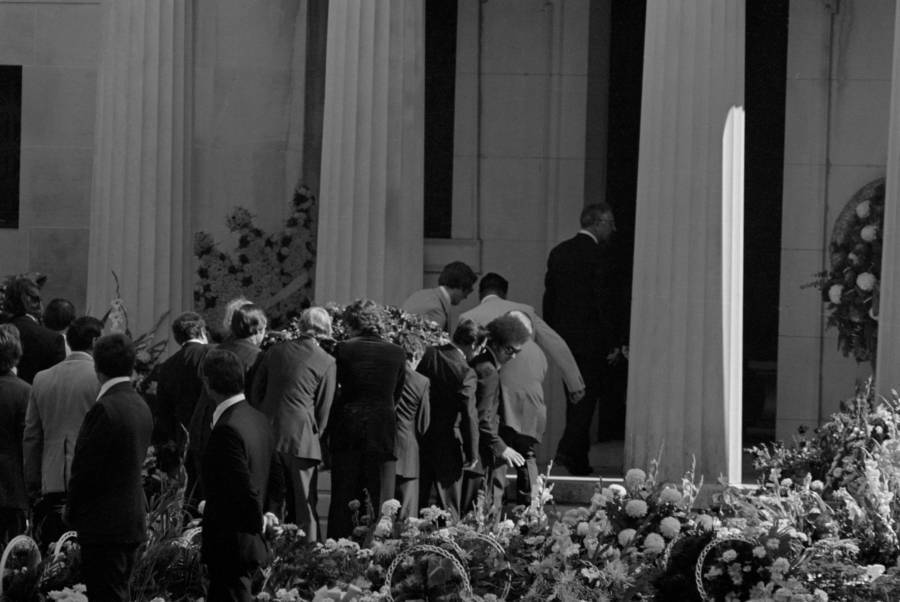
Bettmann/Getty ImagesPallbearers carrying Elvis Presley’s casket into a mausoleum in Memphis.
On August 16, 1977, Elvis Presley was found dead at the age of 42 in his bathroom at Graceland. At the time of his demise, he had been suffering from glaucoma, high blood pressure, liver damage, and an enlarged colon. All were either aggravated or caused by his many years of drug abuse.
By Dr. Nick’s own admission, he had written prescriptions totaling over 10,000 doses of sedatives, amphetamines, and narcotics for Presley that year alone. But he also said that, despite bearing Presley’s name, these doses were collectively for Presley and the 150-person crew that worked for him.
George Nichopoulos claimed that he was surprised when he got the call about Elvis Presley’s death. He was even more surprised, over the following months, about the number of death threats sent his way.
He said he was blindsided again in 1979 when the Tennessee Medical Board charged him with gross malpractice over the illegal prescription of painkillers and other drugs to Elvis Presley, the singer and pianist Jerry Lee Lewis, and 12 other patients. The district attorney’s office even looked into potential criminal charges against him related to Presley’s death.
In January 1980, the Medical Board Tribunal found Dr. Nick guilty of overprescription, resulting in a three-month suspension of his license and three years’ probation. Later that year, he faced criminal prosecution for abusing his license to prescribe controlled drugs and a potential prison sentence of up to 10 years. However, he was acquitted on all counts.
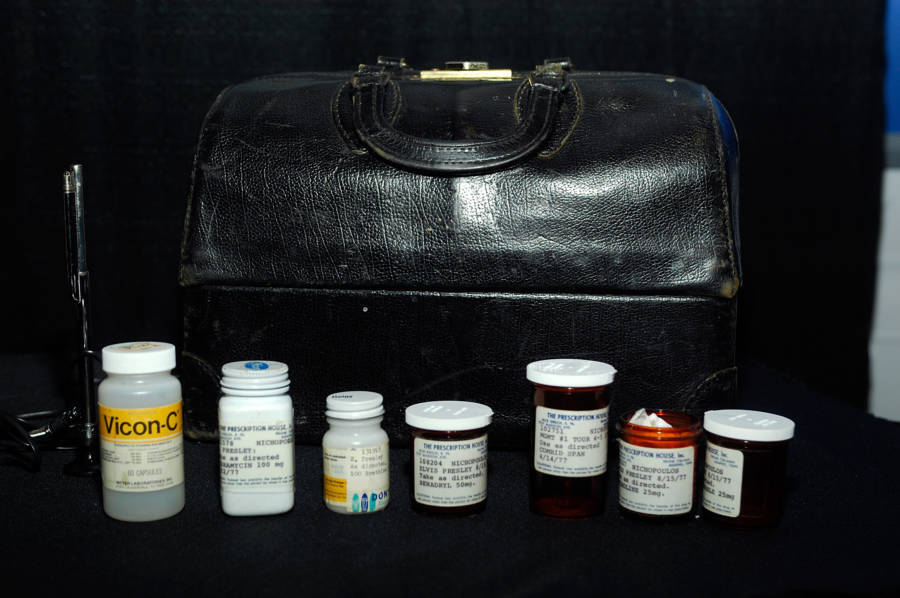
Joe Corrigan/Getty ImagesDr. Nick’s medical bag.
“I don’t regret any of the medications I gave him. They were necessities,” Nichopoulos insisted. “Later, everyone attacked me, saying all I was interested in was making money from Elvis. That’s just not true. I never charged him for a house call, and I’d make those four or five times a week.”
In 1994, Elvis Presley’s death was re-examined, and the coroner Dr. Joseph Davis determined that the cause of death was likely a heart attack, a claim that remains controversial to this day.
Still, just a year later, in 1995, the Tennessee Board of Medical Examiners permanently suspended Nichopoulos’ medical license, saying that it was because he had been overprescribing to numerous patients for years.
From then until his own death on Feb. 24, 2016, Nichopoulos would occasionally resurface in the news, sometimes selling Elvis Presley memorabilia or reappearing for an interview, always unable to escape the specter of Elvis Presley’s death looming over him.
“You break your balls to help somebody and try to keep him alive and it turns around you were in it for the money,” George Nichopoulos had lamented. “I was one of his closest friends. At times I was his father, his best friend, his doctor. Whatever role I needed to play at the time, I did.”
Next, learn about Elvis Presley’s father Vernon Presley. Then, go inside the tragic story of Benjamin Keough, Elvis Presley’s grandson.
The post Inside The Infamous Story Of George Nichopoulos, Elvis Presley’s Personal Physician appeared first on All That's Interesting.

University of AberdeenArchaeologists had to race against time to document the footprints before the sea swallowed them up.
In the aftermath of violent storms in eastern Scotland, two locals took their dogs for a stroll on the beaches of Lunan Bay along the Angus coast. While walking, they noticed that the storm had kicked up a layer of sand — revealing human and animal footprints from thousands of years ago.
Archaeologists hurried to the scene, though they only had a narrow window to document and examine the footprints before they were destroyed by the rising tides. During their analysis, they determined that the footprints were roughly 2,000 years old, dating to the time of the Roman invasion of Scotland.
Documenting The 2,000-Year-Old Footprints Found Along Scotland’s Lunan Bay
According to a statement from the University of Aberdeen, the footprints were spotted by a pair of locals, Ivor Campbell and Jenny Snedden, who decided to take a walk along the beach following a series of recent storms. While strolling with their dogs, Ziggy and Juno, Campbell and Snedden noticed that the storms had shifted the sands on the beach, exposing a layer of clay. And within the clay was a set of distinctive markings that looked like footprints.
Campbell and Snedden called council archaeologist Bruce Mann, who realized the possible significance of the discovery — as well as the need to document it before the tide rose again. He notified archaeologists at the University of Aberdeen, who sped to the scene to examine the exposed clay.
“We knew we were dealing with a really rare site and that this discovery offered a unique snapshot in time – but it was also clear that the sea would soon take back what had so recently been revealed,” said University of Aberdeen archaeology professor Kate Britton.
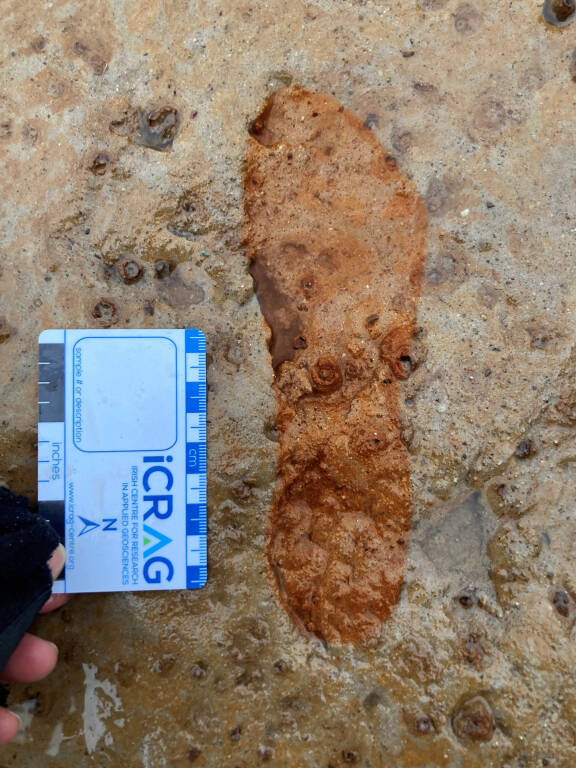
University of AberdeenA 2,000-year-old footprint found in the clay along Lunan Bay.
The incoming tide wasn’t the only challenge that the archaeologists faced. As they worked, 55 mile-per-hour winds whipped along the beach, stirring up loose sand and further damaging the delicate site.
“We had to work fast in the worst conditions I’ve ever encountered for archaeological fieldwork,” Britton recalled. “[T]he sea was coming in fast, with every high tide ripping away parts of the site, while wind-blown sand was simultaneously damaging it. We were effectively being sandblasted and the site was too, all while we were trying to delicately clean, study and document it, so it became a race against the elements.”
“And, within 48 hours,” she said, “the entire site was destroyed.”
But the archaeologists succeeded in documenting the footprints, which included both human prints and prints from animals like deer. And after examining these discoveries more closely, archaeologists realized just how incredible they truly were.
Footprints From The Era Of The Roman Invasion Of Scotland
By studying plants that were preserved just beneath the footprints, archaeologists determined that the prints were roughly 2,000 years old — and thus had been made “around the time of Boudicca, Jesus, and the height of the Roman Empire.”
Specifically, archaeologists suspect that the prints were made around the time of the Roman invasion of Scotland, and shortly before the rise of the ancient Scottish people known as the Picts.
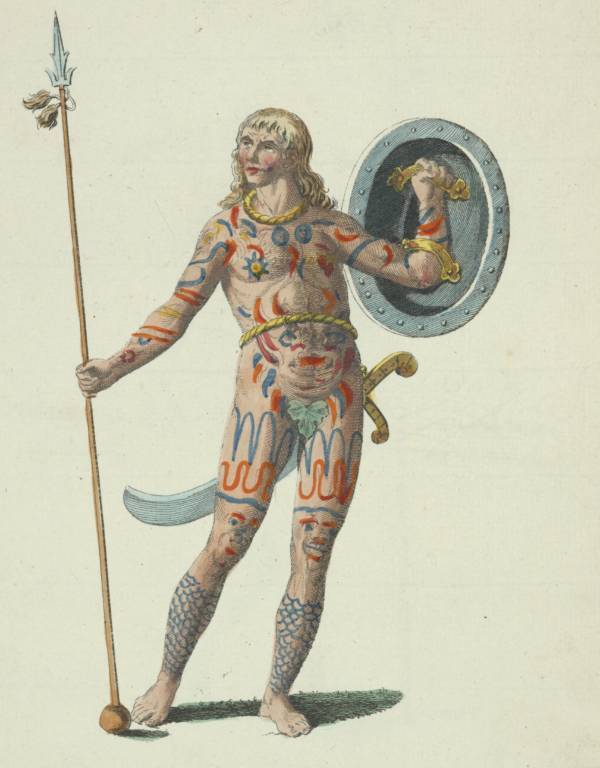
Wikimedia CommonsA depiction of a Pict warrior, as described by the Romans who encountered them.
“This is a real tangible link to the region’s past,” said team member Gordon Noble, an archaeology professor at the University of Aberdeen. “The late Iron Age dates are in keeping with what we know about the rich archaeology of nearby Lunan Valley. It’s very exciting to think these prints were made by people around the time of the Roman invasions of Scotland and in the centuries leading up to the emergence of the Picts.”
It’s not the first time that changing tides have revealed lost chapters of history. Last year, waves in Hawaii washed away sand and revealed centuries-old petroglyphs carved into the rock. And in Scotland, archaeologists suspect that other sandy beaches may conceal former muddy estuaries, where ancient people and animals once walked.
As such, though the Lunan Bay site was short-lived, it offered up an incredible look into Scotland’s ancient past. And archaeologists are grateful that the dog-walkers, Campbell and Snedden, happened to spot the exposed clay.
“It was a powerful reminder that some of the most important discoveries start with someone noticing something and choosing to report it,” said Mann. “What came next was a race against time… Standing there, watching the site being destroyed as the waves crashed over it, was heartbreaking in some ways, but at least we got the chance to record most of it.”
After reading about the Roman-era footprints found on a beach in Scotland, go inside the reasons behind the fall of the Roman Empire. Then, discover the stories of some of the worst Roman emperors, from Caracalla to Caligula.
The post A Couple Walking Their Dogs On A Scottish Beach Just Happened Upon Footprints That Date Back 2,000 Years appeared first on All That's Interesting.